Search this game’s family on Steam and Linux appears twice. Both hits are music. The Original Soundtrack and the Additional Soundtrack each flag Windows, Mac and Linux as supported platforms, and a scanner that reads flags without reading app types will report that Ori and the Blind Forest supports Linux. The game itself does not: the Definitive Edition, the only edition Steam sells today, flags Windows alone, carries no Linux requirements field in any form, and ships one content depot with no operating-system split.
What Linux players get instead is one of the strongest Proton files in this series: Platinum on every tier across a deep report pool, and a Verified Steam Deck badge whose test paperwork still matches the public branch build, because that branch has not moved since release week in 2016.
As an Amazon Associate, we earn from qualifying purchases.
Quick answer
Ori and the Blind Forest: Definitive Edition is not native on Linux. Steam flags the game Windows only, its Linux requirements field is an empty list, and its single content depot names no operating system. The Linux flags in the family sit on the two soundtrack apps. The working route is Proton: ProtonDB is Platinum across 354 reports, and Valve rates the game Verified on Steam Deck.
What Steam’s own record says
Steam’s record for the Definitive Edition (app 387290) names Moon Studios GmbH as developer and Xbox Game Studios as publisher, released 27 April 2016. The platform flags read Windows true, Mac false, Linux false. No second build hides beside the Windows one, on this edition or on the original 2015 release (app 261570), whose record shows the same shape: the Definitive Edition changed the content, not the platform list.
The Linux requirements field is an empty list outright, not the empty shell where headings sit over blank lists: the field holds nothing at all, so no Linux tab exists in any form. The Mac field is the same empty list. The Windows tab is populated at both tiers, from a Windows 7 minimum with a Core 2 Duo class processor up to a Core i5 2300 recommended tier. SteamDB’s information table publishes no osextended value for the app.
Two gaps are worth naming because the publisher’s name invites assumptions. The record carries no third-party DRM notice and no external account notice; both are recorded here as gaps rather than filled in from the publisher’s reputation. Steam lists the game as single-player with full controller support, Steam Achievements, Steam Cloud, stats and Family Sharing.
One depot, frozen since 2016
SteamDB’s depot table holds exactly one content depot: depot 387291, named Nightberry Content, at 10.30 GiB on disk. Its configuration line names no operating system, and there is no Linux or macOS depot in any branch. The only other entry is a shared Windows Visual C redistributable, plumbing rather than a build. The public branch stands on build 1096284, built on 26 April 2016, the day before release, and has never moved. That frozen branch matters later: it makes the Steam Deck test paperwork current.
The family sweep: the trap fires twice
The game’s full add-on array holds exactly two apps, both read individually. The Original Soundtrack (465980, type music) flags Windows, Mac and Linux all true, while its own Linux requirements field is an empty list outright. The Additional Soundtrack (466390, also music) repeats the pattern exactly. The family count is two Linux flags across three readable records, both on audio products whose fields describe nothing playable. A family scan crediting this game with Linux support is reading the music shelf. The not-native ruling rests on the game’s own flag, its empty field and its single unsplit depot.
Anti-cheat, from three sources
Three sources, kept separate, agree there is nothing to report. Steam’s record names no anti-cheat, fitting a single-player-only listing with no account notice. SteamDB’s detected technologies are the Unity Engine and the Mono SDK, engine plumbing only. The Are We Anti-Cheat Yet dataset, searched by name and by app id, carries no entry for this game. No anti-cheat layer sits between a Linux player and this title; the only layer is Proton itself.
The Proton file
ProtonDB’s summary record for app 387290, read directly this session, is unanimous: Platinum on the headline, best-reported and trending tiers, across 354 reports with strong confidence, one of the deepest files this series has recorded for a Windows-only game, claimed here at exactly that size. One check could not be completed: the ProtonDB game page timed out when fetched this session, so no classification header from that page is claimed either way. The figures describe the Windows build under Proton, the only build a Linux buyer receives.
The Steam Deck sheet
Valve rates the game Verified on Steam Deck, its top category, and SteamOS separately Compatible. The verdict and its items were read from Valve’s own compatibility endpoint directly this session: all four Verified items pass, covering the default controller configuration, the glyphs, legible interface text and default-configuration performance. One note item rides along: the game does not default to external controllers for the primary player, so a paired pad may need a manual Quick Access Menu switch.
The dated paperwork comes from SteamDB’s republication of Valve’s compatibility data, disclosed as such. Valve tested the game on 19 March 2022, on build 1096284, with the stable Proton runtime recommended. Two currency facts follow. First, the runtime names Proton, so the badge certifies the Windows build under Proton, not a native build. Second, the tested build is the build the public branch still serves: unusually for this series, the paperwork does not predate the current branch build.
The storefront ruling
A GOG edition of the Definitive Edition exists, and it is Windows only. The ruling rests on GOG’s live product page, read directly this session, which lists the Definitive Edition as a Windows product; GOG’s own catalogue search returned nothing for the title, the known blind spot in that search, so the page itself is the evidence. No Linux build is offered there, matching the wider record: no Linux build of this game exists on any storefront.
Gear that fits the record
The gear below follows the record’s shape: the handheld the badge was written for, two pads, a desktop mouse, and library storage.
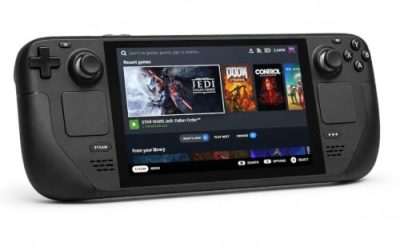
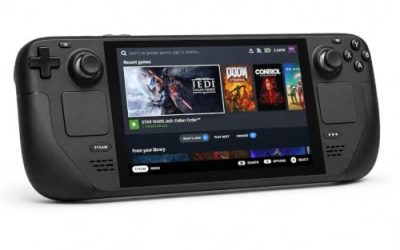
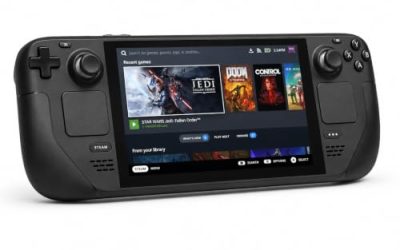
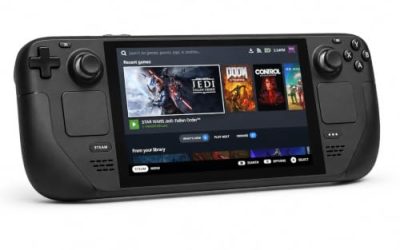
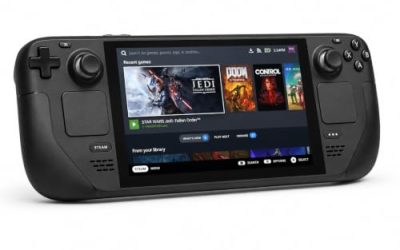
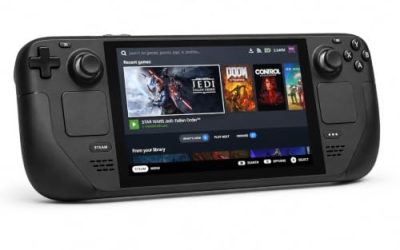
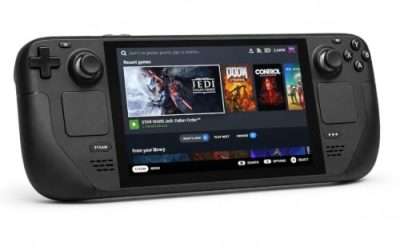
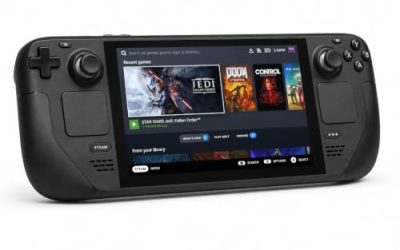
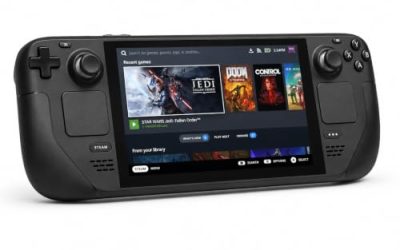
Valve Steam Deck OLED 512GB

The handheld the Verified badge was written for. Valve’s test sheet gives the Windows build a clean pass under the stable Proton runtime, and the game’s 2016 hardware bar is far below what the Deck’s APU offers.
Specs
- Display: 7.4-inch HDR OLED, 1280 by 800, up to 90 Hz
- Processor: AMD Zen 2 and RDNA 2 custom APU
- Memory: 16 GB LPDDR5
- Storage: 512 GB NVMe, plus a microSD slot
- Wireless: Wi-Fi 6E and Bluetooth
- Channel note: Valve sells the Deck mainly through its own store, so Amazon listings are third-party sellers
8BitDo Ultimate 2 Bluetooth Controller

The docked and desktop pad pick. Steam lists full controller support, and this pad covers the couch case with modern sticks, triggers and back buttons.
Specs
- Connectivity: Bluetooth wireless and USB-C wired
- Joysticks: TMR electromagnetic, anti-drift design
- Triggers: Hall effect, with mode switching
- Extras: two remappable back buttons, motion control
- In the box: charging dock included
Xbox Wireless Controller, Carbon Black

The safest guest pad in PC gaming: Steam Input support is universal, the glyphs match what most games display, and it pairs over Bluetooth or its own wireless standard. On the handheld, the test sheet’s note applies: an external pad may need a manual Quick Access Menu switch.
- Connectivity: Xbox Wireless and Bluetooth
- Port: USB-C for wired play
- Controls: hybrid D-pad, dedicated Share button
- Power: AA batteries or optional rechargeable pack
Logitech G502 HERO

At a desk, a precise wired mouse turns map checks, settings trips and library management into single clicks. Eleven programmable buttons cover the inputs a long session repeats.
Specs
- HERO optical sensor, up to 25,600 DPI
- 11 programmable buttons
- Adjustable weight system
- Wired USB connection
- On-board memory profiles
Samsung T9 Portable SSD 2TB

The game’s single depot runs past ten gigabytes on disk, and a Linux library adds up quickly. For moving it between machines, or keeping an offline backup, a fast USB-C drive is the simple answer. The headline figure needs a Gen 2×2 host port; on a lesser port the drive runs at that ceiling.
Specs
- Capacity: 2 TB portable SSD
- Interface: USB 3.2 Gen 2×2, USB-C connector
- Maker-rated speeds: up to 2,000 MB per second read, 1,950 MB per second write
- Features: Dynamic Thermal Guard, maker-rated drop resistance
How to choose
Choose the Steam copy if you want the build both compatibility records describe: the ProtonDB file and the Deck sheet were both written against the Steam edition. On desktop, install and leave the compatibility tool at its default; a unanimous Platinum file across 354 reports says current Proton builds run the game without tinkering. On a Steam Deck, the Verified badge means no configuration work is expected, with the single caveat that an external controller may need the manual Quick Access Menu switch. The GOG copy is a fair alternative for players who prefer that store’s installer model, as the same Windows build on the same Proton route.
Who should skip
Skip this one if you are shopping for a native Linux platformer: this game is not it, whatever the soundtrack flags suggest, and the genre has genuine native builds elsewhere. Skip it if the soundtrack listings were your evidence of support and you are unwilling to play through a compatibility layer at all. And skip it if a platformer built around precise movement and repeated attempts is not your kind of difficulty, because the Proton layer changes nothing about the game itself.
FAQ
Is Ori and the Blind Forest native on Linux?
No. The Definitive Edition’s Steam record flags Windows only, the Linux requirements field is an empty list, and the depot table holds a single content depot with no operating-system split. The family’s Linux flags belong to the two soundtrack apps, both music products with empty requirements fields.
Why do the soundtrack listings flag Linux?
Each soundtrack app flags all three platforms true while its own Linux requirements field is an empty list. The flags describe nothing playable; they are bare flags on audio products. A scan that reads flags without reading app types credits that support to the game, the error this article exists to correct.
How well does the game run under Proton?
ProtonDB’s summary record reads Platinum on the headline, best-reported and trending tiers, across 354 reports with strong confidence, one of the strongest records in this catalogue. That file grades the Windows build under Proton, the only build a Linux buyer receives.
Is the game Steam Deck Verified?
Yes. Valve’s own record gives the game its top category, Verified, with all four checks passing, and SteamOS separately Compatible. The paperwork dates to March 2022 and names the stable Proton runtime, and because the public branch has not moved since 2016, the tested build is still the build served today.
Final verdict
Ori and the Blind Forest: Definitive Edition is a Windows-only release whose paper trail misleads in exactly one direction: two soundtrack listings carry Linux flags that belong to no playable build. Underneath that wrinkle the practical case is as strong as a Proton case gets: a unanimous Platinum file across 354 reports, a Verified Deck badge whose tested build is still the current build, full controller support, and no anti-cheat or account layer on the record. Buy the Steam copy, play it under Proton, and let the music apps keep their flags.
Product and ASIN Reference
| Product | ASIN |
|---|---|
| Valve Steam Deck OLED 512GB | B0CQ3RWQQZ |
| 8BitDo Ultimate 2 Bluetooth Controller | B0F194QFT2 |
| Xbox Wireless Controller, Carbon Black | B08DF248LD |
| Logitech G502 HERO | B07GBZ4Q68 |
| Samsung T9 Portable SSD 2TB | B0CHFS9K14 |