INSIDE is Playdead’s second game, released on Steam on 7 July 2016: a side-scrolling platformer in which a boy, hunted and alone, is drawn into the centre of a dark project. The play is built from running, climbing, swimming and quiet puzzle-solving, told almost entirely without words, and a full run is measured in a few hours.
For a Linux player the practical question is which build Steam actually sells and how it behaves today. There is no native Linux build behind this store page — but the Windows build standing in its place carries one of the strongest compatibility files in this catalogue.
As an Amazon Associate, we earn from qualifying purchases.
Quick answer
INSIDE is not native on Linux. Steam’s record flags Windows only, the Linux requirements field is an empty list and no Linux depot exists, so the Windows build runs through Proton — where it holds a Platinum rating across 187 reports. Valve rates that build Verified on Steam Deck, and no GOG edition exists.
What Steam’s own record says
Steam’s record for app 304430 names Playdead as both developer and publisher and reads windows true, mac false, linux false. The Windows requirements tab is genuinely populated at both tiers: Windows 10 in 64-bit form, an Intel Core 2 Quad Q6600 or AMD FX 8120 at minimum, 4 GB of memory, a GeForce GT 630 class graphics card and 3 GB of storage. Against that full tab, the Linux requirements field is an empty list outright — no hollow shell, just nothing.
The Mac side carries an inverse wrinkle. A full macOS requirements text sits on the record, naming High Sierra and Catalina-era hardware, yet the mac flag reads false — paperwork describing a platform the store does not flag as sold. The calibration point matters: on this record a written tab is not by itself proof of a delivered build, so the Linux ruling below rests on flags and depots.
Two further fields are simply absent: no DRM notice and no third-party account notice anywhere on the record. Stated as gaps: an absent notice is not a promise. The categories read single-player, achievements, full controller support, trading cards, Steam Cloud and Family Sharing, and the record also carries accessibility listings — colour alternatives, a keyboard-only option, play without timed input and stereo sound — stated as listed capabilities only.
The depot table: two Windows depots and a Mac ghost
What Steam delivers settles the question the tabs leave open. SteamDB’s depot table for this app holds three content depots: two Windows depots of about 2.19 and 2.16 GB, and a macOS depot of about 2.12 GB. Filtered to Windows, the download totals about 4.35 GB on disk. There is no Linux depot in any branch — no sized depot, no zero-byte placeholder, no depot marked unused. The public branch stands on a build from April 2025, so this table describes the game as sold today, not a launch-era leftover.
The macOS depot is the record’s one ghost: a real build sitting in the table while the store flag above it reads false, so it is not part of what the store page sells. SteamDB’s extended-OS string is an empty string, offering no third platform either, and its detected technologies are Unity Engine, Mono, SteamworksNET and Wwise — engine, networking and audio plumbing only. On anti-cheat, three sources agree by saying nothing: Steam names none, the technology list contains no anti-cheat product, and Are We Anti-Cheat Yet carries no entry for this game.
The family sweep: a family of one
Some records hide their only Linux flag on a soundtrack or art book while the game itself points the other way. That trap cannot form here, because there is nothing else in the family: the record carries no DLC array at all — no soundtrack, no art book, no demo, no expansion. The family Linux-flag count is zero of one: the only flag is the game’s own, reading false alongside every other layer.
ProtonDB: Platinum across 187 reports, and a header that disagrees
ProtonDB’s summary record for this app is one of the deepest files in this series: Platinum at headline, best-reported and trending level, across 187 reports, with strong confidence. Read at exactly that size, it says current Proton builds run this Windows build about as well as a compatibility layer can run anything. The texture underneath is mostly silence — report after report of clean completions on desktop and Deck alike. A minority strand stays at report weight: one Intel graphics reporter switched the rendering path to get a picture, one experimental-build report noted missing textures, and one older setup preferred an older Proton release for steadier frame rates.
One contradiction has to be named. ProtonDB’s game page carries a “Natively Supports” header for this title. Steam’s own record contradicts it on every layer that carries weight — a false flag, an empty-list requirements field and a depot table with no Linux entry — so this article follows Steam and treats the header as the recurring classification error seen across this catalogue. The game runs on Linux through Proton, superbly; it does not run natively.
Steam Deck: Verified, on 2022 paperwork
Valve’s own compatibility endpoint returned garbled bytes this session, so the Deck record here is read from SteamDB’s republication of Valve’s compatibility data, disclosed rather than hidden. The republication reads: category Verified, with all four checks passing — full functionality on the default controller configuration, Deck controller icons shown, interface text legible, and the default graphics configuration performing well. SteamOS is separately rated Compatible, the recommended runtime is proton-stable, the tested input is gamepad, and the sheet records no manual keyboard invocation, no launcher navigation and no internet requirement.
The dated paperwork: tested 16 February 2022, on build 5835756. The public branch has since moved to a newer build from April 2025, so the sheet predates the exact download on sale today — a Verified badge describes the build Valve tested. Nothing in the much larger ProtonDB file, with its many recent Deck reports, suggests the newer build broke what the sheet certified.
The second storefront: no GOG edition
The natural product address on GOG redirects to the store’s general catalogue, which is how GOG treats titles it does not carry, and GOG’s catalogue record contains no INSIDE product — the near matches are other games with the word in their titles. A community wishlist entry, if one exists, is not an edition. The Steam copy is therefore the only PC edition.
Gear that fits the record
The gear below follows the record’s shape: the handheld the badge was written for, two pads, a desk mouse and fast portable storage.
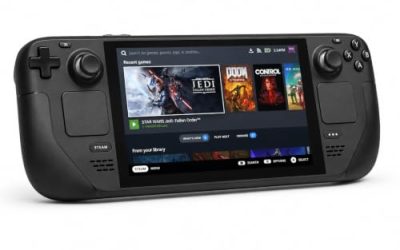
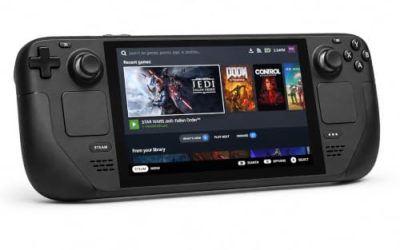
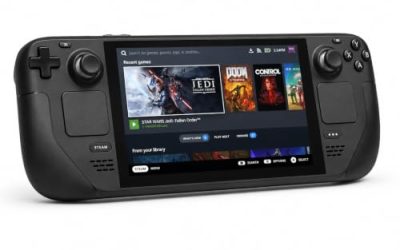
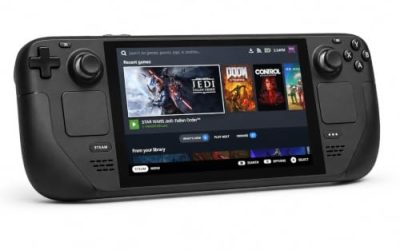
Valve Steam Deck OLED 512GB

The handheld Valve’s test sheet was written for. INSIDE’s dark, high-contrast scenes flatter an OLED panel, and the sheet gives the Windows build a clean pass under proton-stable.
Specs
- Display: 7.4-inch HDR OLED, 1280 by 800, up to 90 Hz
- Processor: AMD Zen 2 and RDNA 2 custom APU
- Memory: 16 GB LPDDR5
- Storage: 512 GB NVMe, plus a microSD slot
- Wireless: Wi-Fi 6E and Bluetooth
- Channel note: Valve sells the Deck mainly through its own store, so Amazon listings are third-party sellers
8BitDo Ultimate 2 Bluetooth Controller

The docked and desktop pad pick. Steam lists full controller support for this game, and this pad covers the couch case with modern sticks and triggers plus back buttons for the inputs this quiet platformer repeats.
Specs
- Connectivity: Bluetooth wireless and USB-C wired
- Joysticks: TMR electromagnetic, anti-drift design
- Triggers: Hall effect, with mode switching
- Extras: two remappable back buttons, motion control
- In the box: charging dock included
Xbox Wireless Controller, Carbon Black

The safest guest pad in PC gaming: universal Steam Input support, glyphs that match what games display, and Bluetooth or its own wireless standard for pairing.
- Connectivity: Xbox Wireless and Bluetooth
- Port: USB-C for wired play
- Controls: hybrid D-pad, dedicated Share button
- Power: AA batteries or optional rechargeable pack
Logitech G502 HERO

INSIDE itself is a pad game, but a Linux gaming desk still earns a precise wired mouse for everything around it — library management, launchers and desktop sessions between games.
Specs
- HERO optical sensor, up to 25,600 DPI
- 11 programmable buttons
- Adjustable weight system
- Wired USB connection
- On-board memory profiles
Samsung T9 Portable SSD 2TB

For moving a Linux game library between machines, or keeping an offline backup of installers, a fast USB-C drive is the simple answer. The headline figure needs a Gen 2×2 host port; on a lesser port the drive runs at that ceiling.
Specs
- Capacity: 2 TB portable SSD
- Interface: USB 3.2 Gen 2×2, USB-C connector
- Maker-rated speeds: up to 2,000 MB per second read, 1,950 MB per second write
- Features: Dynamic Thermal Guard, maker-rated drop resistance
How to choose
Choose the Steam copy, because it is the only PC edition on sale and the exact build both records describe. On a desktop or laptop, install it under Proton and leave the compatibility tool at its default; a Platinum headline across 187 reports says current builds need no tinkering for the great majority of setups. On a Steam Deck, the Verified badge means install and launch, with no configuration work expected. For input, follow the record: full controller support is listed and the Deck sheet names the gamepad as the tested input, so a pad is the native shape of this game.
Who should skip
Skip this one if a native Linux build is a condition of purchase: there is none, and no layer of the record suggests one is coming. Skip it if you want multiplayer of any kind — the record is single-player only. And check Steam’s own content descriptors before buying for a shared screen: the store lists frequent violence or gore, some nudity or sexual content and general mature content — a dark game with dark scenes, stated as label facts only. Players who want a long game should note the shape: a short, linear run with no side content.
FAQ
Is INSIDE native on Linux?
No. Steam flags the game Windows only, the Linux requirements field is an empty list, and the depot table holds two Windows depots and a macOS depot but no Linux depot. The ProtonDB page’s “Natively Supports” header contradicts that record and is not followed here.
How well does INSIDE run under Proton?
ProtonDB’s summary reads Platinum at headline, best-reported and trending level, across 187 reports with strong confidence — one of the deepest files in this catalogue. A small minority of reports describe workarounds on particular hardware; the default Proton build is the starting point the file supports.
Is INSIDE Steam Deck Verified?
Yes. Valve’s compatibility record, read through SteamDB’s republication after Valve’s endpoint returned garbled data this session, rates the game Verified with all four checks passing, tested 16 February 2022 on proton-stable. The branch has since been rebuilt, so the paperwork predates the current download; recent Deck reports in the ProtonDB file remain clean.
Can I buy INSIDE on GOG instead?
No. GOG’s product address for this title redirects to its general catalogue and its catalogue record holds no INSIDE product, so no GOG edition exists. The Steam copy is the only PC edition.
Final verdict
INSIDE on Linux is a closed question with an unusually good answer. The native side of the record is empty at every layer — false flag, empty-list field, no Linux depot, a family of one — and the one header claiming otherwise does not survive contact with Steam’s own data. The Proton side is the opposite: a Platinum file 187 reports deep and a Verified Deck badge. Buy the Steam copy, play it through Proton, and expect the experience the file describes — just do not call it native.
Product and ASIN Reference
| Product | ASIN |
|---|---|
| Valve Steam Deck OLED 512GB | B0CQ3RWQQZ |
| 8BitDo Ultimate 2 Bluetooth Controller | B0F194QFT2 |
| Xbox Wireless Controller, Carbon Black | B08DF248LD |
| Logitech G502 HERO | B07GBZ4Q68 |
| Samsung T9 Portable SSD 2TB | B0CHFS9K14 |