Beyond: Two Souls is Quantic Dream’s interactive drama built around Jodie Holmes, a young woman linked since childhood to an unseen entity called Aiden. The chapters jump back and forth across her life, from a childhood under observation to fugitive years, and the play is mostly conversation choices, exploration and quick-time sequences. A second player can take control of Aiden in the game’s two-player mode. Steam’s record dates this PC edition to 18 June 2020, with Quantic Dream named as both developer and publisher.
For Linux players the question is what kind of edition this is. Late ports sometimes hide surprises in their paperwork. This article reads the record layer by layer: flags and tabs, depots, family, ProtonDB, the Deck sheet and the second storefront.
As an Amazon Associate, we earn from qualifying purchases.
Quick answer
Beyond: Two Souls is not native on Linux. Steam flags Windows only, the Linux requirements tab is an empty shell, and SteamDB’s depot table holds no Linux build; the free demo repeats the same flags. Valve rates the Windows build Verified on Steam Deck on paperwork that still matches the served build, and Proton is the only route.
What Steam’s own record says
Steam’s record for app 960990 reads windows true, mac false and linux false. The Linux requirements field is the empty shell: Minimum and Recommended headings printed over empty lists, with no distribution, processor or storage line behind either. The Mac field is the same shell under its own false flag. Only the Windows tab is genuinely populated, and it is modest: a minimum tier around a Core i5-4430, 4 GB of memory and a GeForce GTX 660, noted for 720p at 30 frames per second, and a recommended tier around a Core i5-6600K, 8 GB of memory and a GTX 970, noted for 1080p at 60. Both tiers ask for 49 GB of storage.
The categories describe the game’s shape: single-player, multi-player and co-op entries resolving into shared and split screen co-op, full controller support, Steam Achievements, Steam Cloud and Remote Play Together. No online co-op category appears; the two-player mode is the shared-screen kind, with the second player driving Aiden. Two gaps are worth naming: no DRM notice and no third-party account notice appear on the record. SteamDB’s configuration carries a licence-agreement entry, ordinary licence text rather than a platform signal.
The depot table: twelve Windows depots, no second platform
Flags and tabs can both be leftover paperwork, so the deciding layer is what Steam actually delivers. SteamDB’s depot table holds twelve depots and every one is configured for 64-bit Windows: a main depot of 43.15 GiB on disk and eleven language depots of roughly 2.8 GiB each. The only redistributables are Windows shared installs, the Visual C 2019 and DirectX June 2010 runtimes. There is no Linux depot and no macOS depot in any branch.
The filtered total makes the point: filtered to Windows, English and no DLC, the size on disk is 43.15 GiB, the main depot alone, to the byte, out of a 73.83 GiB grand total that is otherwise language content. The public branch stands on build 5117920, from June 2020. One field could not be read: SteamDB’s extracts publish no extended-OS string for this app, so no value is claimed for it, and the ruling rests on flags, field and depots.
The family sweep: no DLC array, and the demo agrees
Some records hide their only Linux flag on a soundtrack or art book. That trap cannot form here: the game’s record carries no DLC array at all, no soundtrack app, art book or expansion attached to app 960990. The whole family on Steam is two apps, the game and the free BEYOND: Two Souls Demo (app 1248980), released in May 2020 ahead of the full edition.
The demo was read individually, and it repeats the game’s answer exactly: windows true, mac false, linux false, with the same empty-shell Linux field. The family Linux-flag count is zero of two.
The ProtonDB file: a gap, stated plainly
ProtonDB’s summary record for this app could not be read during this session: the summary endpoint returned a page-not-found response on repeated attempts, and the game page itself did not load in time. So this article claims no headline tier, no best-reported tier and no report count, because none was read. The gap is stated rather than smoothed over: the planning figures in most of these status articles come from that summary.
What remains is still enough to plan around. Steam’s own record is a closed Windows-only file, and Valve’s Deck test sheet, covered next, certifies the Windows build under Proton on the exact build Steam still serves. Readers who want the community tier first should read ProtonDB’s page for app 960990 directly; this article will not invent the figure it failed to load.
Steam Deck: Verified, on the build still served
Valve’s own compatibility endpoint returned garbled bytes this session, so the verdict, its items and its paperwork were read from SteamDB’s republication of Valve’s compatibility data. The republication gives the game Valve’s top category: Verified, with SteamOS separately rated Compatible.
All four Verified checks pass: full functionality with the default controller configuration, Steam Deck controller icons, legible interface text, and a default graphics configuration that performs well. The configuration notes gamepad input, with no manual keyboard invocation, no launcher navigation, no internet requirement for single-player and no small-text flag. One line matters for docked play: an external controller does not take the primary-player slot by default, so a paired pad may need a manual switch. The paperwork dates the test to 19 March 2022, on build 5117920, with proton-stable as the recommended runtime, and that build is the one the public branch still serves. The runtime line is the honest summary of the whole article: the badge certifies the Windows build under Proton, because no other build exists.
The second storefront: GOG sells it, Windows only
A GOG edition exists. GOG’s live product page sells Beyond: Two Souls under its own title, and its works-on line names Windows alone. GOG’s product API record reads the same way: Windows true, Mac false, Linux false. So the second storefront is a second Windows copy, not a second platform. A Linux buyer choosing between the two is choosing a storefront, not a build: on Linux either copy runs the same way, through Proton.
Gear that fits the record
The record points to pad-first play: full controller support, a gamepad-tested Deck sheet, and a two-player mode built for a shared screen.
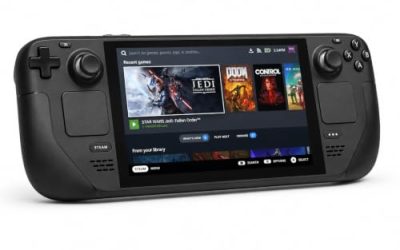
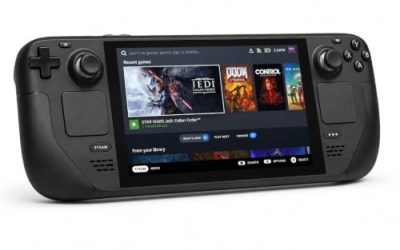
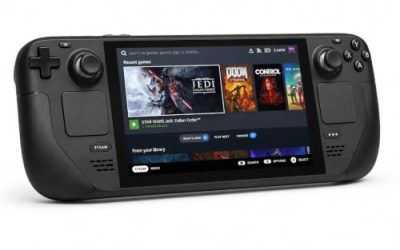
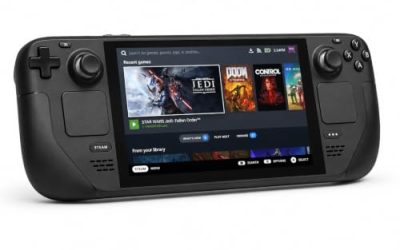
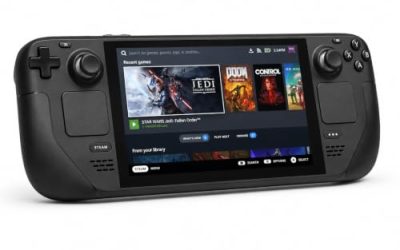
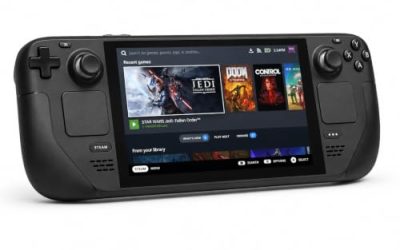
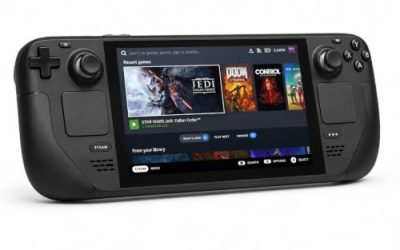
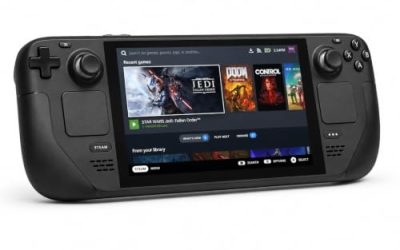
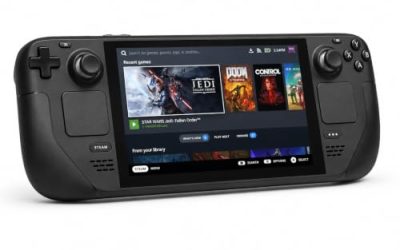
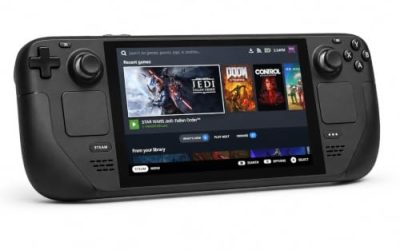
Valve Steam Deck OLED 512GB

The handheld the Verified badge was written for: Valve reviewed this exact build on the Deck and passed it on every check.
Specs
- Display: 7.4-inch HDR OLED, 1280 by 800, up to 90 Hz
- Processor: AMD Zen 2 and RDNA 2 custom APU
- Memory: 16 GB LPDDR5
- Storage: 512 GB NVMe, plus a microSD slot
- Wireless: Wi-Fi 6E and Bluetooth
- Channel note: Valve sells the Deck mainly through its own store, so Amazon listings are third-party sellers
8BitDo Ultimate 2 Bluetooth Controller

The pad for the second chair: the record’s two-player mode hands Aiden to a second player on a shared screen.
Specs
- Connectivity: Bluetooth wireless and USB-C wired
- Joysticks: TMR electromagnetic, anti-drift design
- Triggers: Hall effect, with mode switching
- Extras: two remappable back buttons, motion control
- In the box: charging dock included
Xbox Wireless Controller, Carbon Black

The safest guest pad in PC gaming: Steam Input support is universal, and it pairs over Bluetooth or its own wireless standard. On the handheld, an external pad may need a manual Quick Access Menu switch before it takes over.
- Connectivity: Xbox Wireless and Bluetooth
- Port: USB-C for wired play
- Controls: hybrid D-pad, dedicated Share button
- Power: AA batteries or optional rechargeable pack
Logitech G502 HERO

For desktop sessions, the game’s menus and chapter select are pointer-friendly, and a precise wired mouse makes scene navigation quick.
Specs
- HERO optical sensor, up to 25,600 DPI
- 11 programmable buttons
- Adjustable weight system
- Wired USB connection
- On-board memory profiles
Samsung T9 Portable SSD 2TB

The main depot alone is 43.15 GiB before any language packs, so library space matters, and a fast USB-C drive keeps a game library portable between machines.
Specs
- Capacity: 2 TB portable SSD
- Interface: USB 3.2 Gen 2×2, USB-C connector
- Maker-rated speeds: up to 2,000 MB per second read, 1,950 MB per second write
- Features: Dynamic Thermal Guard, maker-rated drop resistance
How to choose
Start with the storefront decision. The Steam copy is the build Valve’s Deck sheet certifies and the one carrying Steam Cloud saves; the GOG copy is the same Windows edition under different storefront terms. On a Linux desktop or laptop, either installs under Proton, and the engine demands are light: the published recommended tier is a GTX 970 class card with 8 GB of memory. Reserve the 49 GB the Windows tab asks for. On Steam Deck, no choosing is left: the Verified badge on the current build means install and launch, with the one manual controller switch if you dock a pad. For input, plan on a gamepad as the primary device; a mouse is a desktop convenience for menus.
Who should skip
Skip this one if you are shopping for a native Linux edition: none exists on either storefront, and the family’s only other app, the free demo, is Windows-only too. Skip it if an unread ProtonDB file is a deal-breaker: this session could not load the summary, so if you buy on tiers, read that page yourself. Skip it if you want online co-op, because the record’s co-op is shared-screen, not online. And skip it if the store’s content descriptors, frequent violence or gore and general mature content, rule a game out for your household; the record carries an age rating of 17.
FAQ
Is Beyond: Two Souls native on Linux?
No. Steam flags Windows only, the Linux requirements field is an empty shell, and SteamDB’s depot table holds twelve Windows depots and no Linux depot. The free demo repeats the same flags, so the family count is zero of two.
Why does this article give no ProtonDB tier?
Because the record could not be read this session: the summary endpoint returned page-not-found on repeated attempts and the game page did not load. Rather than guess, the article claims no tier and no count, and leans on Valve’s Deck test sheet.
What does the Steam Deck Verified badge certify here?
It certifies the Windows build running under Proton, tested by Valve on 19 March 2022 against build 5117920, the build the public branch still serves. All four checks pass, the recommended runtime is proton-stable, and SteamOS is separately Compatible.
Does the GOG copy run natively on Linux?
No. GOG sells the game, but its product record reads Windows true and Linux false. The GOG edition is a second Windows copy; on Linux it runs through Proton like the Steam copy.
Final verdict
Beyond: Two Souls on Linux is a closed record with a reassuring badge. Every primary layer says the same thing: a false Linux flag, an empty-shell tab, twelve Windows depots, a two-app family, and a second storefront selling the same Windows edition. Against that closed file stands Valve’s test sheet: Verified, all checks passing, paperwork dated March 2022 against the very build Steam still serves. The one honest gap is ProtonDB’s summary, which this session could not read and which this article leaves blank rather than filling from habit. Buy it as a Windows game that Proton carries, on the storefront you prefer, pad in hand; do not buy it expecting a native build hiding in the paperwork.
Product and ASIN Reference
| Product | ASIN |
|---|---|
| Valve Steam Deck OLED 512GB | B0CQ3RWQQZ |
| 8BitDo Ultimate 2 Bluetooth Controller | B0F194QFT2 |
| Xbox Wireless Controller, Carbon Black | B08DF248LD |
| Logitech G502 HERO | B07GBZ4Q68 |
| Samsung T9 Portable SSD 2TB | B0CHFS9K14 |