Codename: Panzers, Phase One is Stormregion’s 2004 real-time tactics game — no base building, a core force that persists and gains experience across three World War II campaigns, and armour that matters by facing. THQ Nordic brought it back to Steam in February 2016; Steam’s record names Stormregion and THQ Nordic as developers, THQ Nordic as publisher. That re-release is the record under examination here.


The Linux question has a short answer and one long footnote. The short answer: no native build exists at any layer of the record. The footnote is a soundtrack that flags all three platforms and fools family-level scans into crediting the game with support it does not have. Below, each layer is read on its own: the packages, the fields, the depots, the add-on family, the Proton file, the Deck sheet and the second storefront.
As an Amazon Associate, we earn from qualifying purchases.
Quick answer
Codename: Panzers, Phase One has no native Linux build: Steam’s flags, both purchase packages and every depot read Windows-only, and the Linux requirements field is an empty list. The route is Proton — ProtonDB rates the Windows build Platinum on all tiers, albeit on four reports — and Valve rates the game Playable on Steam Deck. GOG sells the same Windows build.
What a purchase actually delivers
Start with identity. SteamDB separates the dates cleanly: the original release was 16 June 2004, the Steam release 18 February 2016. The platform flags read Windows true, Mac false, Linux false.
The purchase package is the decisive layer, because it describes what a buyer actually receives. The base package, 81998, grants the base app alone and repeats the flags exactly: Windows true, Mac false, Linux false. The second way to buy, the Codename: Panzers Bundle (92888), adds Phase Two, Cold War and three soundtracks — and reads Windows-only as well. No bundle or variant hides a Linux grant inside this record.
The published Windows minimum is a period piece: Windows XP through 10, a 1.0 GHz processor, a 64 MB 3D card with hardware transform and lighting, DirectX 9.0c and 3 GB of storage. Any modern Linux machine clears that bar without noticing; the bar was simply never set for Linux.
The missing tab and the Windows-only depot table
The Linux requirements field is an empty list outright — not the empty shell of headings over blank lists, but no Linux tab in any form. The Mac field is the same empty list. There is nothing on the store page a reader could mistake for a Linux specification.
SteamDB’s depot table agrees. The content depot (411311) holds 2.29 GiB, followed by nine language depots plus two size-less ones. Every redistributable is a Windows package: the VC 2013 and VC 2015 runtimes and the DirectX June 2010 redistributable. No depot carries a Linux configuration, and the icon set registers no Linux client icon.
No anti-cheat anywhere on the record
Three sources were checked, and all three are silent. Steam names no anti-cheat: no anti-cheat category, no third-party DRM notice, no external account notice. SteamDB’s detection finds only the Bink Video and Miles Sound System SDKs. The AreWeAntiCheatYet dataset carries no entry for this app. Silence is not a ruling, and none is claimed — but nothing suggests a compatibility blocker of that kind, and no launcher stands between the buyer and the game.
The soundtrack that flags every platform
The base record’s add-on array holds exactly one app: the Codename Panzers Phase One Soundtrack (443740), read individually. It is a music product, and its flags read Windows, Mac and Linux all true. Its own package (94244) repeats the all-true line, so the trap survives even a package-level scan of the family.
This is the soundtrack-flag trap in its fullest form. A family sweep sees a Linux flag inside this game’s family and reports the game as Linux-supported; the flag belongs to an audio product that ships no game build at all. Ruled app by app, the family is one dissenting music app against a Windows-only game. The bundle-mates Phase Two and Cold War are separate games, and nothing about their flags transfers here either.
The Proton file: Platinum on a thin file
ProtonDB’s summary record, read directly this session, is unanimous and thin at the same time: Platinum on the headline, best-reported and trending tiers, across just 4 reports with low confidence. The tier is real, and its footing is narrow — four filings is a small base for ProtonDB’s strongest grade.
The page’s own heading needs correcting. ProtonDB heads the game’s requirements block “Natively Supports:”, which Steam’s record contradicts at every layer. The article follows Steam and treats the heading as a labelling artefact.
The report texture, at report weight: the newest filings run the game on Proton 8.0-3 with a WineD3D launch-option flag set, and an older filing on Proton 5.0-7 reports a black screen after the intro and freezes. The Platinum headline rests on the recent reports: current Proton builds handle the game, early ones struggled.
The Deck sheet: a 2023 test of a 2016 build
Valve rates the game Playable on Steam Deck, and SteamOS separately Compatible. One evidence note: Valve’s own compatibility endpoint returned garbled responses this session, so the verdict and its paperwork were read through SteamDB’s republication of Valve’s sheet, the fallback route this project uses when the endpoint misbehaves.
The deductions are interface items only: the game sometimes shows mouse, keyboard or non-Deck controller icons, entering text requires manually invoking the on-screen keyboard, and some in-game text is small. Against those, the default controller configuration is fully functional and the default graphics configuration performs well. The sheet’s recommended runtime is proton-8.0-3 — Valve graded the Windows build under Proton, the only build there is.
The paperwork has an unusual virtue. The test dates to 5 July 2023 and ran on build 1020194; the public branch still stands on that same build, dating to March 2016. The branch never moved, so the 2023 test grades exactly the build sold today.
The second storefront
GOG does sell this game, and the ruling comes from GOG’s own live product page, not from a search box — GOG’s catalogue and embed searches return no product for it, the known blind spot, while the product page itself resolves and is unambiguous. Its identity checks out: the title is Codename Panzers: Phase One and its release date matches the 2004 original. Its compatibility line reads Works on: Windows — and nothing else.
So the second storefront changes the terms, not the platform: the same Windows build in DRM-free form, with no Linux installer. A Linux buyer chooses between two Windows copies, and the Steam copy is the one both records describe.
Gear that fits the record
The gear below follows the record’s shape: the handheld the Playable badge was written for, two pads for docked play, a mouse for the desktop sessions this tactics game was designed around, and library storage.
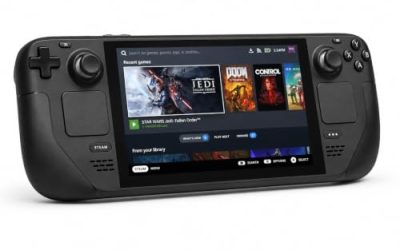
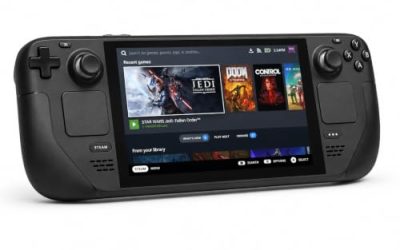
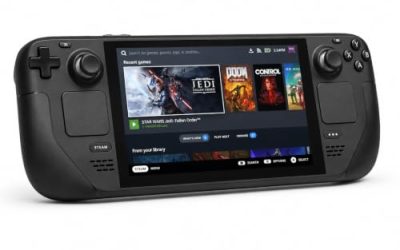
Valve Steam Deck OLED 512GB
The handheld the Playable badge was written for. The game’s 2004 requirements are a rounding error next to the Deck’s APU, and Valve’s sheet confirms the default configuration performs well under Proton.
Specs
- Display: 7.4-inch HDR OLED, 1280 by 800, up to 90 Hz
- Processor: AMD Zen 2 and RDNA 2 custom APU
- Memory: 16 GB LPDDR5
- Storage: 512 GB NVMe, plus a microSD slot
- Wireless: Wi-Fi 6E and Bluetooth
- Channel note: Valve sells the Deck mainly through its own store, so Amazon listings are third-party sellers
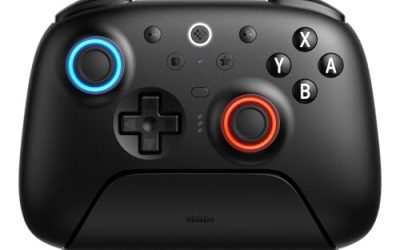
8BitDo Ultimate 2 Bluetooth Controller
The docked and desktop pad pick. Valve’s sheet passes the default controller configuration as fully functional, and this pad covers the couch case with back buttons for camera and selection shortcuts.
Specs
- Connectivity: Bluetooth wireless and USB-C wired
- Joysticks: TMR electromagnetic, anti-drift design
- Triggers: Hall effect, with mode switching
- Extras: two remappable back buttons, motion control
- In the box: charging dock included
Xbox Wireless Controller, Carbon Black

The safest guest pad in PC gaming: Steam Input support is universal, and it pairs over Bluetooth or its own wireless standard. Note the sheet’s one pad-related deduction: the game sometimes shows non-Deck controller icons, so expect occasional glyph mismatches.
- Connectivity: Xbox Wireless and Bluetooth
- Port: USB-C for wired play
- Controls: hybrid D-pad, dedicated Share button
- Power: AA batteries or optional rechargeable pack
Logitech G502 HERO

Phase One is a mouse game at heart: unit selection, facing and formation orders are pointer work. Eleven programmable buttons cover the group, stance and camera inputs a long mission repeats.
Specs
- HERO optical sensor, up to 25,600 DPI
- 11 programmable buttons
- Adjustable weight system
- Wired USB connection
- On-board memory profiles
Samsung T9 Portable SSD 2TB

For moving a Linux game library between machines, or keeping an offline backup of installers, a fast USB-C drive is the simple answer. The headline figure needs a Gen 2×2 host port; on a lesser port the drive runs at that ceiling.
Specs
- Capacity: 2 TB portable SSD
- Interface: USB 3.2 Gen 2×2, USB-C connector
- Maker-rated speeds: up to 2,000 MB per second read, 1,950 MB per second write
- Features: Dynamic Thermal Guard, maker-rated drop resistance
How to choose
Choose the Steam copy if you want the build both records describe: it is the edition ProtonDB’s Platinum file and Valve’s Playable sheet were written against. Choose the GOG copy if a DRM-free offline installer matters more; the build underneath is the same Windows one, running through the same Proton route. On the Deck, install and play — the deductions are text size and glyph cosmetics, not performance. On a desktop, leave the compatibility tool at its default first, and only reach for the WineD3D launch-option flag the recent filings describe if the intro misbehaves.
Who should skip
Skip this one if you are shopping for a native Linux tactics game: this is not one, and the Linux flag in its family belongs to a soundtrack. Skip it if a Platinum tier resting on four reports is not reassurance enough — the file is unanimous but thin. Skip the Deck plan if small in-game text and manual keyboard invocation are deal-breakers. And skip it if the multiplayer you remember is the point: community reports describe the old server scene as long gone, and nothing on the current record revives it.
FAQ
Is Codename: Panzers, Phase One native on Linux?
No. Steam’s flags, both packages and every depot read Windows-only, and the Linux requirements field is an empty list. The only Linux flag anywhere near the game belongs to its soundtrack, a music product.
How well does it run under Proton?
ProtonDB rates it Platinum on its headline, best-reported and trending tiers, across 4 reports with low confidence. Recent filings run it well, one with a WineD3D launch-option flag; an older filing on an early Proton build reported a black screen after the intro.
What is the Steam Deck verdict?
Playable, with SteamOS separately Compatible. The deductions are non-Deck controller glyphs, manual keyboard invocation and small text; the default controller configuration is fully functional and the default graphics configuration performs well. The July 2023 test ran on the same build the public branch still ships.
Is there a GOG version, and is it any different on Linux?
Yes, GOG sells the game, ruled from its live product page: the compatibility line reads Windows only. It is the same Windows build in DRM-free form, so on Linux it needs the same Proton route.
Final verdict
Codename: Panzers, Phase One is a Windows-only record from top to bottom: flags, packages, depots and fields all agree, and the single Linux flag in its orbit belongs to a soundtrack. What saves the game for Linux players is the quality of the detour — a unanimous if thin Platinum Proton file, a Playable Deck badge whose paperwork still matches the frozen build on sale, and no anti-cheat or launcher anywhere on the record. Buy it as a Proton game with your eyes open about the four-report file, and it earns its place in a tactics library.
Product and ASIN Reference
| Product | ASIN |
|---|---|
| Valve Steam Deck OLED 512GB | B0CQ3RWQQZ |
| 8BitDo Ultimate 2 Bluetooth Controller | B0F194QFT2 |
| Xbox Wireless Controller, Carbon Black | B08DF248LD |
| Logitech G502 HERO | B07GBZ4Q68 |
| Samsung T9 Portable SSD 2TB | B0CHFS9K14 |