Gary Grigsby’s War in the East 2 is the deepest operational wargame of the Eastern Front ever put on a PC: a hex-and-counter simulation of the entire German-Soviet war from 1941 to 1945, built by 2by3 Games and sold through Matrix Games, the wargaming label of the Slitherine group. For Linux players the question is narrower. Is there a native build, does the Windows version behave under Proton, and what does Valve say about the Steam Deck? Each question has a record behind it, and the records do not all point the same way.


The short version is that the port was never made. Steam’s record is Windows-only at every layer that can carry a platform, the one expansion follows the same flag, and the second big storefront does not sell this game at all. What Linux players have is a Proton route with a flattering headline tier built on very few reports, and a Deck sheet whose paperwork predates the current build by years.
As an Amazon Associate, we earn from qualifying purchases.
Quick answer
No native Linux build of Gary Grigsby’s War in the East 2 exists on any storefront: Steam’s package sells Windows only, and GOG stocks only the 2010 original. The Windows build runs under Proton with a Platinum headline on ProtonDB, but that rests on just nine reports. Valve rates the game Unsupported on Steam Deck.
What Steam’s record actually sells
Start with the layer that decides what a purchase delivers. The game’s single purchase package, package 637251, reads windows true, mac false, linux false, and grants the base app alone. The app-level platform flags read identically. There is no second edition, bundle or alternate package in which a Linux build could hide.
The requirements fields tell the same story by omission. The Windows field is genuinely populated, naming Windows 7, 8 or 10, a 1.5 GHz processor, 4 GB of memory and a DirectX 9.0c graphics card. The Mac field is an empty list, and the Linux field is an empty list too: the strongest form of absence the store record offers, with no Linux tab in any form and nothing a port could be read into.
The depot table closes the question. SteamDB lists two content depots: a fileset depot of 1.35 GiB and a production depot of about 240 MB, neither carrying an operating-system configuration, plus the shared Windows redistributables installed alongside them, the DirectX June 2010 package and the .NET 4.7 runtime. There is no Linux depot of any size, no emptied depot that once held one, and no stranded depot from a cancelled port. The registered icon set is the plain Windows set, with no Linux client icon among the assets. Every delivery layer agrees because there is only one delivery: a Windows build.
The expansion follows the same flag
A family sweep matters because expansions occasionally carry platforms the base game lacks. Here the family is small enough to read completely. The downloadable content array holds exactly one app: Steel Inferno, the 2022 expansion adding late-war campaigns. On its own record, Steel Inferno flags windows true, mac false, linux false, its Mac and Linux fields are the same empty lists, and its depot sits inside the base game’s depot table at under 40 MB. One for one, the family agrees, and no soundtrack or artbook app exists to muddy the flags. Whatever a buyer owns is Windows software from top to bottom.
The account layer is PBEM++, not anti-cheat
Three sources normally name a game’s anti-cheat. Steam’s own record carries no anti-cheat category and no DRM notice. SteamDB’s detection finds a single technology, the SteamworksNET SDK, a wrapper for Steam’s own features and nothing more. The AreWeAntiCheatYet catalogue, tracking well over a thousand games, carries no entry for this app at all.
What the record does carry is a third-party account notice: Slitherine PBEM++ for Multiplayer. That is an account system for play-by-email and server-mediated multiplayer turns, the traditional way games of this scale are played against another person. It is not anti-cheat software, installs no driver and has no bearing on whether the game starts under Proton. It does mean multiplayer, unlike the solo campaigns against the AI, runs through a publisher account rather than Steam alone, and Linux players weighing that side should know the account layer exists before they buy.
ProtonDB’s Platinum rests on nine reports
ProtonDB’s summary for this app is the most encouraging document in the file and the thinnest. The headline tier is Platinum, the best-reported tier is Platinum, and the trending tier is Platinum: a clean sweep at the top of the scale. The confidence behind it, though, is rated only moderate, and the whole file rests on nine reports in total. Nine filings say the game demonstrably starts and runs under Proton on real machines; they cannot promise that every distribution, driver stack and campaign length will behave. The Platinum is real but provisional, a verdict from a small room.
One check could not be completed. ProtonDB’s game page would not render its requirements heading to any fetch route used here, so no claim is made about whether the page heads its block with a native-support label. The figures above are the full API record; the heading question is left open rather than guessed at.
Valve’s Deck sheet says Unsupported, and it is old
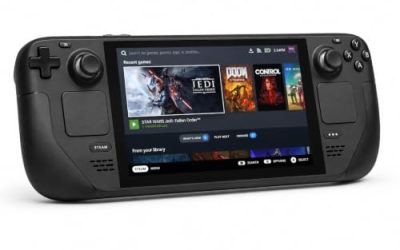
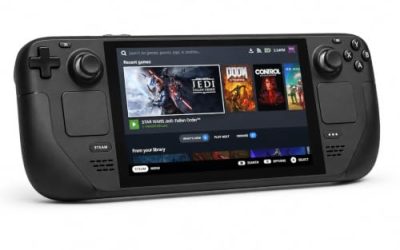
Valve’s own compatibility sheet rates the game Unsupported on Steam Deck, and Unsupported again for SteamOS separately. The sheet was read through SteamDB’s republication of Valve’s data, because Valve’s endpoint returned unreadable bytes on repeated direct reads this session; the verdict, test date and tested build are Valve’s own figures either way. The single test result is the plain one: SteamOS does not support this game, with proton-stable named as the recommended runtime for the attempt.
The paperwork, however, is stale in a way readers should weigh. The test is dated 17 June 2022 and ran on build 8582983. The game’s public branch has moved since, and its current build is 25939632, built in October 2026. So the badge grades a build from more than four years ago, not the code on sale today: a genuine Valve verdict, but about an old version of a game whose Proton file, thin as it is, reports Platinum results. Treating the badge as the last word on the current build reads more into it than Valve put there. The record also lists no controller support at all, which fits a hex-grid wargame designed around a mouse.
GOG sells the father, not the sequel
The natural second storefront offers no route around any of this. GOG’s catalogue carries Gary Grigsby’s War in the East, the 2010 original, identity-checked against its own product record, along with that game’s two expansions, Don to the Danube and Lost Battles. Every one of those listings is Windows-only. The sequel is simply absent: its natural product address redirects to GOG’s general catalogue, and the catalogue holds no product for it. So there is no DRM-free copy of this game to buy anywhere, and the GOG shelf repeats the same Windows-only split as Steam.
Gear for a desktop wargame
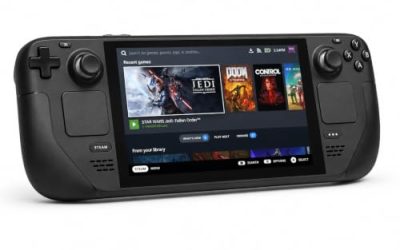
Because the Deck verdict is Unsupported and the record lists no controller support, the sensible shape of play is a Linux desktop with Proton, a keyboard and a precise mouse.
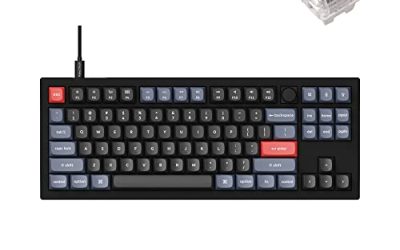
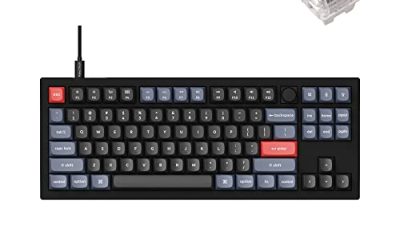
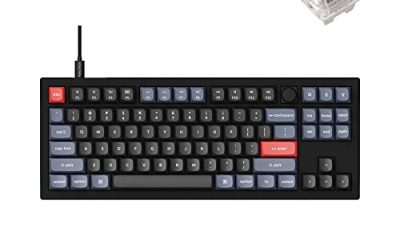
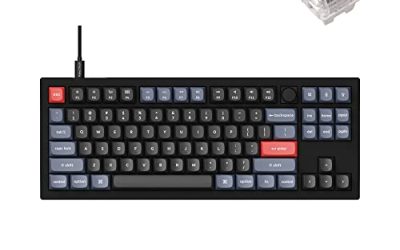
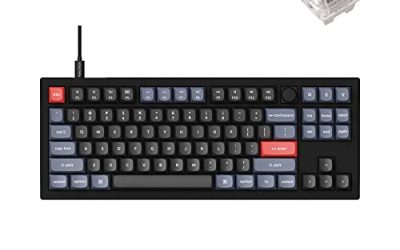
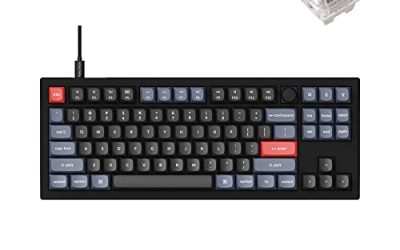
Keychron V3
A wargame of this density lives on hotkeys: end turn, next unit, rail mode, air directives. Keyboard-level remapping lets those bindings travel with the hardware instead of being rebuilt in every install.
Specs
- Tenkeyless layout with rotary knob
- QMK and VIA remapping support
- Hot-swappable K Pro Brown switches
- Wired USB-C connection
- Maker-rated 1,000 Hz polling
Logitech G502 HERO
Hundreds of counters on a single map turn is mouse work, and a wired sensor with on-board profiles keeps pointer behaviour identical across machines.
Specs
- HERO optical sensor, up to 25,600 DPI
- 11 programmable buttons
- Adjustable weight system
- Wired USB connection
- On-board memory profiles
Samsung T9 Portable SSD 2TB

Campaign saves in a game this size accumulate, and a fast external drive keeps a Linux library, save archive and installer backups in one place when moving between machines.
Specs
- Capacity: 2 TB portable SSD
- Interface: USB 3.2 Gen 2×2, USB-C connector
- Maker-rated speeds: up to 2,000 MB per second read, 1,950 MB per second write
- Features: Dynamic Thermal Guard, maker-rated drop resistance
8BitDo Ultimate 2 Bluetooth Controller

Not for this game, which has no controller support to speak of, but for the rest of a desktop library built around pads.
Specs
- Connectivity: Bluetooth wireless and USB-C wired
- Joysticks: TMR electromagnetic, anti-drift design
- Triggers: Hall effect, with mode switching
- Extras: two remappable back buttons, motion control
- In the box: charging dock included
Xbox Wireless Controller, Carbon Black

The second wider-library pick: the pad whose glyphs most PC games display by default.
- Connectivity: Xbox Wireless and Bluetooth
- Port: USB-C for wired play
- Controls: hybrid D-pad, dedicated Share button
- Power: AA batteries or optional rechargeable pack
How to choose
Choose the Steam copy, because it is the only copy: no GOG edition of the sequel exists, and the Steam package is the build both compatibility records describe. Run it on a desktop or laptop under Proton, and read the Platinum headline at its proper weight, as a strong result from a small number of reports rather than a guarantee. If multiplayer matters, choose it knowing the PBEM++ account layer is part of the deal. The 2010 original on GOG is a separate, older game, also Windows-only, and buying it puts no Linux build of anything on your machine.
Who should skip
Skip this if you are looking for a native Linux wargame: the record is unambiguous, and no layer hints at a port made or withdrawn. Skip it if a nine-report Proton file is too thin a basis for a purchase, because that file is the entire practical case for playing on Linux today. Skip it if the Steam Deck is your only machine, since Valve’s verdict is Unsupported and the game expects a mouse and keyboard anyway. And skip it if you want the game free of third-party accounts, because multiplayer runs through PBEM++.
FAQ
Is War in the East 2 native on Linux?
No. The purchase package flags Windows only, the Linux requirements field is an empty list, and no Linux depot exists on the record. No storefront sells a Linux build.
How well does it run under Proton?
ProtonDB’s full summary is Platinum on its headline, best-reported and trending tiers, but the file holds only nine reports at moderate confidence, so treat the tier as encouraging and provisional rather than settled.
Can I play it on a Steam Deck?
Valve rates it Unsupported on Steam Deck and on SteamOS. That test dates from June 2022 and grades an older build than the one on sale now, but it remains the only official verdict, and the game lists no controller support.
Is PBEM++ an anti-cheat system?
No. It is Slitherine’s account system for play-by-email and server-mediated multiplayer turns. Steam names no anti-cheat and no DRM on this record, and the anti-cheat catalogue carries no entry for the game.
Final verdict
The records agree on the central fact: Gary Grigsby’s War in the East 2 is a Windows game, sold as a Windows game, with no native Linux build on Steam and no edition at all on GOG. What surrounds that fact is less tidy. The Proton evidence points to a game that runs well, on the strength of just nine reports. The Deck evidence is an official Unsupported whose paperwork is years behind the current build. For a Linux desktop player who wants the definitive Eastern Front simulation and accepts a thin compatibility file, the Steam copy under Proton is a reasonable buy. For anyone who needs a native port, a handheld verdict or a DRM-free installer, none of those exists for this game.
Product and ASIN Reference
| Product | ASIN |
|---|---|
| Keychron V3 | B0B2DMMMG2 |
| Logitech G502 HERO | B07GBZ4Q68 |
| Samsung T9 Portable SSD 2TB | B0CHFS9K14 |
| 8BitDo Ultimate 2 Bluetooth Controller | B0F194QFT2 |
| Xbox Wireless Controller, Carbon Black | B08DF248LD |