Close Combat: The Bloody First brought the long-running tactical series into 3D in October 2019, following the American push through Normandy after D-Day. It is a mouse-driven, squad-level wargame in the classic mould: no base building, no resource race, just infantry, armour and morale under fire. For Linux players the first question is simpler than any battle in the campaign — is there a native build at all?


The short answer is no, and unusually for this series of checks, Steam’s record does not argue with itself. Every layer points the same way, so this article reads as an inventory: what the record contains, what the Proton file shows underneath a flattering headline tier, and why the Deck badge deserves a second look at its date stamp.
As an Amazon Associate, we earn from qualifying purchases.
Quick answer
Close Combat: The Bloody First has no native Linux build: Steam’s record is Windows-only at every layer, from the platform flags to the single purchase package. Linux players run the Windows build through Proton, where ProtonDB rates it Platinum on a thin file of reports, and Valve rates it Playable on the Steam Deck.
What the record actually contains
Start with the app record itself. The platform flags read windows true, mac false, linux false. The Windows requirements field is genuinely populated — Windows 7, 8 or 10, a 2 GHz processor, 4 GB of RAM, a DirectX 9.0c-class graphics card and 4 GB of storage — while the Mac and Linux requirements fields are empty lists outright. There is no Linux tab in any form: not a populated field with no build behind it, not a vintage port spec, just an empty list where a tab would sit.
The purchase package settles the question at the decisive layer. The game sells through exactly one package, which reads windows true, mac false, linux false while granting the base app alone. No second edition, bundle or platform-split package complicates the reading.
The depot table agrees. SteamDB lists two content depots — a base fileset of 3.88 GiB and a base production files depot of 18.39 MiB — with no OS split and no Linux depot of any size: nothing emptied, nothing stranded, nothing left by a withdrawn port. The only redistributable is the Windows DirectX June 2010 package, and the icon set registers no Linux client icon. This is the plainest shape a record can take: a Windows build, documented and sold as one.
One naming note: the current record names Matrix Games as developer and publisher, not Slitherine — Matrix is the Slitherine group’s label, and the game’s social links point at the Slitherine Group, so the article follows the live record. Title, series and the 3 October 2019 release date match the pinned app exactly.
Family of one
Most records in this cluster carry a tail of expansions and soundtrack apps whose flags must be swept one by one. This record has no tail: the base record exposes no DLC field at all, and SteamDB associates no add-on apps with it, so the family size is zero. No soundtrack app springs the all-true trap, and there is nothing outside an array to recover.
The account layer, and the anti-cheat question
Three sources normally answer the anti-cheat question, and here all three stay silent. Steam’s record names no anti-cheat: no category, no DRM notice. SteamDB’s detected technologies are the Lua SDK and the Miles Sound System — plumbing, not protection. The AreWeAntiCheatYet catalogue carries no entry for this app at all. Silence is not a ruling; it simply means no layer of the record raises an anti-cheat blocker for Proton play.
What the record does name is an account. The app carries a third-party account notice for Slitherine, and the Windows requirements add that an internet connection is required for two-player head-to-head play. That is an account system for multiplayer, not anti-cheat — and it matters because the lobby, not the battlefield, is where Linux players have reported friction.
Platinum on paper, tinkering in the filings
ProtonDB’s summary reads Platinum across the board — headline, best-reported and trending tiers alike — on a file of eight reports with moderate confidence. The heading check could be completed this time: the game page heads its requirements block with the words “Natively Supports:”, a claim Steam’s record contradicts at every layer. The heading is a labelling artefact of the page template; this article follows Steam.
The filings underneath the headline are more mixed than the tier suggests. One Steam Deck filing reports shader compilation errors with every stock Proton version, and a start only after switching to a community Proton build and installing a specific DirectX component through protontricks. A desktop filing reports the multiplayer lobby refusing the connection with a serial number check failure — the Slitherine account layer surfacing where the record said it would. Older filings are kinder: several report the game simply running, fullscreen and stable. Single-player looks well within Proton’s reach; the Platinum is a ceiling set by the best reports, not a promise about the lobby.
A Deck sheet older than the current build
Valve’s own compatibility endpoint returned garbled bytes on repeated reads this session, so the Deck verdict here was read through SteamDB’s republication of Valve’s sheet. The sheet rates the game Playable, with SteamOS separately Compatible. The passing side is solid: all functionality is accessible on the default controller configuration, it performs well, and interface text is legible. The single deduction is cosmetic — the game sometimes shows mouse, keyboard or non-Deck controller icons.
The date stamp is the catch. The test behind the badge ran in April 2022 on build 5681877, with proton-stable as the recommended runtime. The public branch has moved since: its current build is 13370404, from February 2024. The badge therefore grades a superseded build — a supplement-candidate shape, paperwork that predates the code it certifies. Nothing in the newer filings suggests the game fell apart in those updates, but the badge has not been re-earned on today’s build.
Second storefront
GOG sells this game, and the ruling rests on GOG’s own catalogue and product records, not a search box. The catalogue API returns the title under its exact name, and the product record’s compatibility flags read windows true, osx false, linux false. The second storefront mirrors the first: a DRM-free Windows installer, and no Linux build. Choosing between storefronts means choosing between two copies of the same Windows build, only one of which comes with Steam’s Proton tooling and the Deck sheet.
Gear that fits the record
The gear below follows the record’s shape: a Playable-rated handheld, two pads for docked play, a precise mouse, and fast library storage.
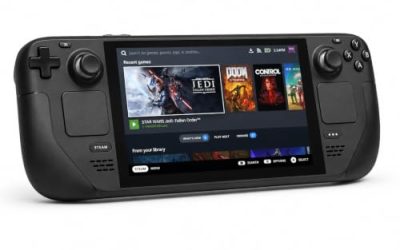
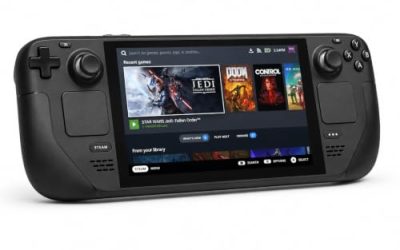
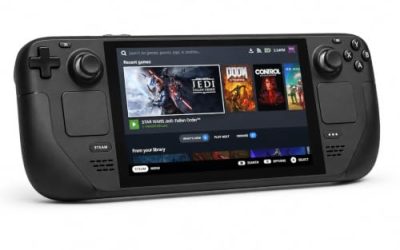
Valve Steam Deck OLED 512GB
The handheld Valve’s Playable sheet was written for. The game’s requirements are modest next to the Deck’s APU, and the sheet’s only deduction is mismatched controller glyphs.
Specs
- Display: 7.4-inch HDR OLED, 1280 by 800, up to 90 Hz
- Processor: AMD Zen 2 and RDNA 2 custom APU
- Memory: 16 GB LPDDR5
- Storage: 512 GB NVMe, plus a microSD slot
- Wireless: Wi-Fi 6E and Bluetooth
- Channel note: Valve sells the Deck mainly through its own store, so Amazon listings are third-party sellers
8BitDo Ultimate 2 Bluetooth Controller
The docked pad pick. Valve’s sheet confirms the default controller configuration is fully functional, and this pad adds back buttons for the camera and order shortcuts a long battle repeats.
Specs
- Connectivity: Bluetooth wireless and USB-C wired
- Joysticks: TMR electromagnetic, anti-drift design
- Triggers: Hall effect, with mode switching
- Extras: two remappable back buttons, motion control
- In the box: charging dock included
Xbox Wireless Controller, Carbon Black

The safest guest pad in PC gaming: Steam Input support is universal, and it pairs over Bluetooth or its own wireless standard. On the handheld, an external pad may need a manual Quick Access Menu switch before it takes over.
- Connectivity: Xbox Wireless and Bluetooth
- Port: USB-C for wired play
- Controls: hybrid D-pad, dedicated Share button
- Power: AA batteries or optional rechargeable pack
Logitech G502 HERO

The Bloody First is a mouse game at heart: orders, line-of-sight checks and unit selection all run through the pointer. Eleven programmable buttons cover the confirm, cancel and camera inputs.
Specs
- HERO optical sensor, up to 25,600 DPI
- 11 programmable buttons
- Adjustable weight system
- Wired USB connection
- On-board memory profiles
Samsung T9 Portable SSD 2TB

For moving a Linux game library between machines, or keeping an offline backup of installers, a fast USB-C drive is the simple answer. The headline figure needs a Gen 2×2 host port; on a lesser port the drive runs at that ceiling.
Specs
- Capacity: 2 TB portable SSD
- Interface: USB 3.2 Gen 2×2, USB-C connector
- Maker-rated speeds: up to 2,000 MB per second read, 1,950 MB per second write
- Features: Dynamic Thermal Guard, maker-rated drop resistance
How to choose
Choose the Steam copy if the Deck badge and Steam Input matter: the Playable rating, the fully functional default configuration and proton-stable as the recommended runtime all live on that side. Choose the GOG copy only if a DRM-free Windows installer is the priority and you are content to run it under your own Wine or Proton setup. Either way, budget patience for the first launch — a community build plus a protontricks step is the documented fallback when shader errors appear. If multiplayer is the main attraction, weigh the account requirement first: one Linux filing reports that layer, not the game, refusing the connection.
Who should skip
Skip this one if you only buy native Linux builds — there is none here, on either storefront, and no layer of the record hints at one coming. Skip it if your interest is mainly online play and you will not gamble on the account layer under Proton; the campaign is the well-documented part of the file. And skip the Deck as your only platform if an April 2022 test on a superseded build feels too thin a basis for a badge — that is what the Playable rating rests on until Valve retests.
FAQ
Is Close Combat: The Bloody First native on Linux?
No. The platform flags, the single purchase package and the depot table all read Windows-only, the Mac and Linux requirements fields are empty lists, and no Linux depot or client icon exists on the record. GOG’s edition is Windows-only too.
How well does it run under Proton?
ProtonDB rates it Platinum on all three tiers, but the file is only eight reports at moderate confidence. Most filings describe the campaign running well; one Deck filing needed a community Proton build and a protontricks step to get past shader errors, and one reports the multiplayer lobby failing its serial check.
What does the Steam Deck Playable badge rest on?
A Valve test from April 2022, read here through SteamDB’s republication because Valve’s endpoint returned garbled data. The sheet passes the default controller configuration, performance and legibility, deducting only for mismatched glyphs — but it tested build 5681877, while the public branch now ships a February 2024 build, so the badge predates the current code.
Is there any anti-cheat to worry about?
No anti-cheat is named anywhere: Steam lists no anti-cheat category or DRM notice, SteamDB detects only Lua and Miles Sound middleware, and the AreWeAntiCheatYet catalogue has no entry for the game. The one named layer is a Slitherine third-party account for head-to-head play — an account system, not anti-cheat.
Final verdict
Close Combat: The Bloody First is a Windows-only release with an unusually unanimous record: flags, fields, package and depots all say the same thing, the family has no add-on apps to argue otherwise, and GOG repeats the verdict. Linux play means Proton, where a Platinum headline sits on a thin but mostly positive file whose weak point is the account-gated lobby rather than the battles. The Deck’s Playable badge is genuine but dated. Buy it for the single-player campaign with your eyes open about the paperwork, and it is a sound Proton title; buy it for native Linux or for the lobby, and it is not.
Product and ASIN Reference
| Product | ASIN |
|---|---|
| Valve Steam Deck OLED 512GB | B0CQ3RWQQZ |
| 8BitDo Ultimate 2 Bluetooth Controller | B0F194QFT2 |
| Xbox Wireless Controller, Carbon Black | B08DF248LD |
| Logitech G502 HERO | B07GBZ4Q68 |
| Samsung T9 Portable SSD 2TB | B0CHFS9K14 |