UBOAT, the World War II submarine simulator from Deep Water Studio and PlayWay S.A., spent five years in Early Access before its full release in August 2024, building a following as a survival sandbox where crew management matters as much as torpedoes. Its store page never mentions Linux at all, which raises the question: is that silence just missing paperwork, or is there really no Linux build anywhere in the record?


The answer, after reading every layer of the game’s Steam record, is that the silence is accurate. There is no native Linux build of UBOAT, and none has ever hidden behind a stray depot or a forgotten flag. What the record does offer is an unusually strong compatibility story: a top-tier ProtonDB file, a Playable rating from Valve for the Steam Deck, and a DRM-free edition on a second storefront confirming the same picture.
As an Amazon Associate, we earn from qualifying purchases.
Quick answer
UBOAT has no native Linux build: Steam’s app flags, both purchase packages and the depot table are Windows-only, and the Linux requirements field is empty. The practical route is Proton — ProtonDB rates it Gold overall with Platinum best-reported and trending tiers from 125 reports — and Valve rates the game Playable on Steam Deck.
The Steam record, layer by layer
Start with the layer that decides what a purchase delivers. UBOAT sells through two packages — the standard package and a Commercial License package. Both return the same platform mask: Windows true, Mac false, Linux false, each granting the base app alone. When the packages that take the money deny Linux, the question is settled at the decisive layer, and every other layer agrees.
The app flags repeat the verdict exactly. The requirements fields tell the same story with one wrinkle. The Windows field is genuinely populated in minimum and recommended forms — 64-bit Windows 7 through 11, DirectX 11 and 71 GB of storage. The Linux field is an empty list. The Mac field is the wrinkle: it carries a genuinely written minimum — Mac OS X 10.7 and a 1.8 GHz Intel Core i5 — yet the Mac flag reads false on the app and both packages, and no Mac build exists in the delivery layer. That field is leftover text, not a port.
The depot table closes the case. SteamDB lists exactly one content depot: a Windows depot holding 68.92 GiB. There is no Linux depot of any size. The shared redistributables are the Windows VC 2019 and .NET runtimes, and the registered icon set holds no Linux client icon. A native port leaves traces in at least one of these places; UBOAT leaves none.
The family check: two DLC, one answer
The base record’s downloadable content array holds exactly two apps, both read individually. UBOAT – Type IX: Distant Coasts, the Type IX expansion, flags Windows true and Mac and Linux false, shipping through its own Windows depot of 8.78 GiB. The UBOAT – Supporter Pack flags the identical mask and delivers through a Windows depot of 10.11 GiB. Two for two, in agreement with the base game. SteamDB’s depot listing associates the same two expansions and nothing outside the array, and there is no soundtrack or artbook app in this family — so the all-true soundtrack trap cannot form here.
What ProtonDB and the Deck sheet say
With the native question closed, the practical question is how the Windows build behaves under Proton, and here the record turns encouraging. ProtonDB’s summary reads in full: a headline tier of Gold, a best-reported tier of Platinum and a trending tier of Platinum, across 125 reports with strong confidence. The report text cites an alt-tab freeze that borderless fullscreen resolves, and stutter that several filers trace to the texture resolution setting rather than to Proton itself. One honest limitation: the ProtonDB game page rendered as report text only during this check, so the page’s heading could not be verified, and this article makes no claim about it.
Valve’s compatibility sheet rates UBOAT Playable on Steam Deck, with SteamOS separately rated Compatible. Two deductions keep it out of the Verified tier: the game sometimes shows mouse, keyboard or non-Steam-Deck controller icons, and some in-game text is small. Against those, the sheet passes the points that matter — all functionality is accessible with the default controller configuration, and the default graphics configuration performs well — and recommends a pinned Proton 10.0 build as the runtime. One paperwork footnote: the test was recorded on 26 August 2026 against build 23368938, while the public branch now ships build 24913406 — the badge grades a build one update behind the one sold today. Because Valve’s endpoint returned garbled data, the sheet was read through SteamDB’s republication of Valve’s data. Note, too, that the game’s record lists no controller support at all, so the Playable grade rests entirely on Steam Input mapping the pad.
Anti-cheat and the GOG edition
Three sources were checked for an anti-cheat layer, and all three are silent. Steam’s record names no anti-cheat in its categories and carries no DRM notice and no external account notice. SteamDB’s technology detection lists the Unity engine, Mono, SteamworksNET and support libraries, with no anti-cheat among them. The AreWeAntiCheatYet catalogue holds no entry for this app. Silence is not a formal ruling, but context does the rest: UBOAT is single-player, with no multiplayer layer for an anti-cheat to guard. Nothing stands between a Linux player and the Proton route.
The game also sells on GOG, verified on GOG’s live product page: it names Deep Water Studio, carries the same August 2024 release date, and states plainly that the game works on Windows, with Windows 10 and 11 in its requirements. Both expansions are sold there too. The second storefront confirms the first — a DRM-free Windows edition exists, and no storefront sells a Linux build.
Gear for a long patrol
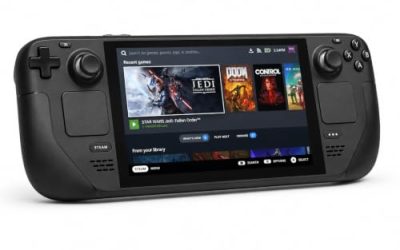
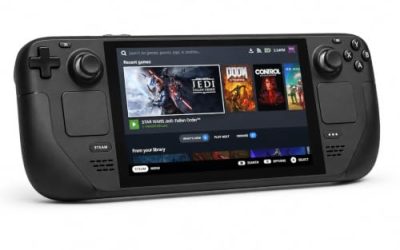
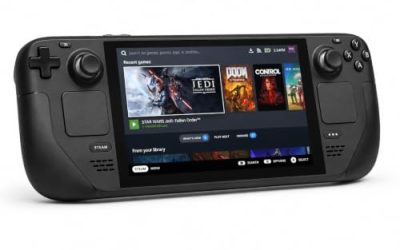
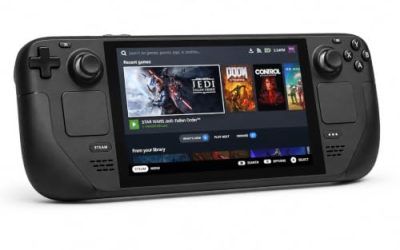
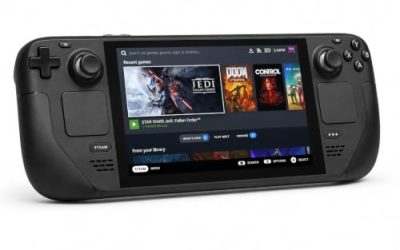
Valve Steam Deck OLED 512GB
The handheld the Playable badge was written for. Valve’s sheet passes the default graphics configuration as performing well on the Deck, with a pinned Proton 10.0 runtime — a legitimate way to run a patrol, small text aside.
Specs
- Display: 7.4-inch HDR OLED, 1280 by 800, up to 90 Hz
- Processor: AMD Zen 2 and RDNA 2 custom APU
- Memory: 16 GB LPDDR5
- Storage: 512 GB NVMe, plus a microSD slot
- Wireless: Wi-Fi 6E and Bluetooth
- Channel note: Valve sells the Deck mainly through its own store, so Amazon listings are third-party sellers
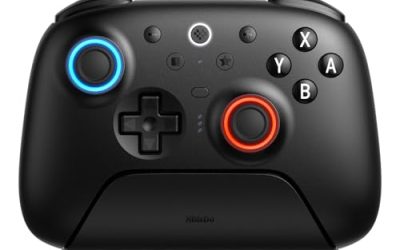
8BitDo Ultimate 2 Bluetooth Controller
The docked and desktop pad pick. The game’s record lists no controller support, so any pad works through Steam Input — and this one covers the couch case with modern sticks, triggers and back buttons for menu shortcuts.
Specs
- Connectivity: Bluetooth wireless and USB-C wired
- Joysticks: TMR electromagnetic, anti-drift design
- Triggers: Hall effect, with mode switching
- Extras: two remappable back buttons, motion control
- In the box: charging dock included
Xbox Wireless Controller, Carbon Black

The safest guest pad in PC gaming: Steam Input support is universal, the glyphs match what most games display, and it pairs over Bluetooth or its own wireless standard.
- Connectivity: Xbox Wireless and Bluetooth
- Port: USB-C for wired play
- Controls: hybrid D-pad, dedicated Share button
- Power: AA batteries or optional rechargeable pack
Logitech G502 HERO

UBOAT is a mouse game at heart — periscope, hydrophone, map table and crew rosters are all pointer work — so at a desk a precise wired mouse is the primary input, not a fallback. Eleven programmable buttons cover the inputs a long session repeats.
Specs
- HERO optical sensor, up to 25,600 DPI
- 11 programmable buttons
- Adjustable weight system
- Wired USB connection
- On-board memory profiles
Samsung T9 Portable SSD 2TB

This is a heavy install: the Windows depot alone is 68.92 GiB, and the two expansions add roughly nineteen more. For moving a Linux game library between machines, a fast USB-C drive is the simple answer. The headline figure needs a Gen 2×2 host port; on a lesser port it runs at that ceiling.
Specs
- Capacity: 2 TB portable SSD
- Interface: USB 3.2 Gen 2×2, USB-C connector
- Maker-rated speeds: up to 2,000 MB per second read, 1,950 MB per second write
- Features: Dynamic Thermal Guard, maker-rated drop resistance
How to choose
Choose your storefront first, because it changes nothing about the build and everything about the wrapper. The Steam copy is the path of least resistance: Valve’s Playable sheet and pinned Proton runtime apply to it directly, Workshop mods install in one click, and the ProtonDB file’s 125 reports describe exactly this version. The GOG copy trades that integration for a DRM-free offline installer; it is the same Windows build, so expect to supply your own compatibility setup and lean on the same report fixes.
Choose your input second. On a desktop, a mouse is not optional; the simulation’s stations are pointer-driven, and the pad route exists mainly for the couch. On the Deck, accept the two deductions before buying: small text in a game full of rosters and readouts, and occasional glyphs that will not match the controls in your hands. If either sounds like a deal-breaker, the desktop route is the better buy. Either way, budget storage honestly: base game and expansions approach ninety gibibytes together.
Who should skip
Skip this one if a native build is a hard requirement rather than a preference. The record is unanimous — flags, packages, depots and the second storefront all say Windows only — and the populated Mac field shows this paperwork has carried stray platform text before without a port following, so nothing signals a Linux port is coming. Skip it, too, if you want a game that treats a controller as a first-class input: the record lists no controller support, and the Deck’s Playable grade is Steam Input doing translation work. Players who dislike per-game graphics tuning should weigh the ProtonDB texture honestly — the fixes are small, but they are fixes a native game would not ask for. And if small text on a handheld screen is a known problem for you, the Deck route is the wrong way in.
FAQ
Is UBOAT native on Linux?
No. Both purchase packages read Windows true and Mac and Linux false, the app flags agree, the single content depot is a Windows depot, and the Linux requirements field is empty. No Linux build exists on Steam or GOG.
How well does UBOAT run through Proton?
ProtonDB’s full summary gives a Gold headline tier with Platinum best-reported and trending tiers, from 125 reports at strong confidence. The known issues are documented and fixable: borderless fullscreen avoids an alt-tab freeze, and a lower texture resolution addresses the reported stutter.
Is UBOAT Playable on Steam Deck?
Yes — Valve rates it Playable, with SteamOS Compatible, read through SteamDB’s republication of the sheet after Valve’s endpoint returned garbled data. The deductions are small text and occasional non-Deck glyphs. The test paperwork grades build 23368938 while the public branch now ships build 24913406, so the badge trails the current build.
Does the GOG version change anything for Linux players?
It changes the wrapper, not the build. The GOG edition, verified on its live product page, is Windows-only like the Steam copy, though DRM-free with an offline installer. No storefront sells a Linux build, so GOG buyers use the same Proton route.
Final verdict
UBOAT is one of the cleanest not-native cases in this cluster: every layer of the Steam record, the full two-app DLC family and a second storefront all give the same answer, and the only contrary artefact — a populated Mac requirements field — has no flag, package or depot behind it. Judge it instead on its compatibility record, which is strong: a Gold headline with Platinum best and trending tiers on ProtonDB, no anti-cheat layer anywhere, and a Playable Deck grade whose only real costs are small text and translated controls. Linux players can buy it with clear eyes — as a Proton game, bought for what the Windows build does under the compatibility layer, not in hope of a port the record gives no reason to expect.
Product and ASIN Reference
| Product | ASIN |
|---|---|
| Valve Steam Deck OLED 512GB | B0CQ3RWQQZ |
| 8BitDo Ultimate 2 Bluetooth Controller | B0F194QFT2 |
| Xbox Wireless Controller, Carbon Black | B08DF248LD |
| Logitech G502 HERO | B07GBZ4Q68 |
| Samsung T9 Portable SSD 2TB | B0CHFS9K14 |