Think of the Children is a frantic local co-op game from Jammed Up Studios, published by Surprise Attack in October 2017, built around one repeated emergency: children wander toward hazards, and up to four players scramble to pull them back. It is the kind of small, pad-driven party game Linux players check for a native build before a game night.


There is no native build to find. Steam’s record flags this game for Windows alone, and every delivery layer underneath agrees. What the game does carry is a Steam Deck Verified badge, earned on a build unchanged since 2017, and a thin, dated ProtonDB file. This article reads the record layer by layer: the flags, the depots, the one add-on app that publishes nothing, the community file, Valve’s test sheet and the second storefront.
As an Amazon Associate, we earn from qualifying purchases.
Quick answer
Think of the Children is not native on Linux: Steam flags the game Windows only, its Linux requirements field is an empty list, and no Linux depot exists. The route is Proton: ProtonDB’s page shows a Gold tier across seven reports, and Valve rates the game Verified on Steam Deck on the build still being served.
What the store record actually sells
Start with the flags, because here they are the whole story. Steam’s appdetails record for app 573600 reads windows true, mac false, linux false. The Windows requirements are genuinely written out, down to a GeForce 8800-class minimum card and 1500 MB of storage. The Mac and Linux requirements fields, by contrast, are empty lists outright: no shell with headings, no copied Windows text wearing a Linux label.
The purchase layer matches. The game’s one store package, sub 145971, reads windows true and false for both other platforms on Steam’s own package record, and grants the game app alone: a normal purchase can only ever install the Windows build. The record carries no DRM notice and no external-account notice, and its categories are the local-multiplayer set: co-op, shared and split screen, full controller support, Remote Play Together. Nothing describes an online service, and this article makes no server claim for it.
One depot tree, all of it Windows
SteamDB’s depot table removes any remaining doubt. The content depot a purchase installs, 573601, is named outright: Windows Think of the Children Content, at 786.58 MiB. Around it sit historical update depots, none tagged for another operating system. There is no Linux depot in any form: no build, no stub, no depot parked outside the package list.
The branch record underlines how settled this is. The public branch serves build 2262920, built in November 2017, weeks after launch, and it has not moved since: a Windows-only release that finished updating in its launch season. Whatever runs on Linux here will be the Windows build, carried by a compatibility layer.
The soundtrack that publishes nothing
The family sweep is this article’s oddity, because there is barely a family to sweep. The store record carries no DLC array at all: no soundtrack, artbook, supporter pack or demo among its related apps. The deeper dig mostly agrees, with one wrinkle worth naming.
SteamDB’s depot table associates one extra app with the game: app 735300, labelled the Think of the Children Official Soundtrack, holding a depot with no recorded size. But the store API returns no record for that app at all: no flags, no fields, no platform claim of any kind. The usual trap in this cluster is a soundtrack whose bare three-platform flag inflates a family’s Linux count; here the soundtrack cannot inflate anything, because it publishes nothing. It is named so the sweep’s one unreadable app sits on the record; it changes the verdict not at all.
Anti-cheat: three empty columns
Three separate sources, three blanks. Steam’s record names no anti-cheat. SteamDB’s detection finds engine plumbing only: the Unity Engine and the Mono SDK. The Are We Anti-Cheat Yet dataset, all 1,167 games on its master branch, searched by name and by app id 573600, carries no entry for this game.
The Proton file: thin, old and split
ProtonDB’s summary endpoint failed on repeated attempts this session, so what follows is page-level evidence only, thinner than most files in this cluster. The game’s page displays a Gold tier beside its name across seven reports, every one filed under a named Proton version, from the 5.0 line through 6.3-4.
The texture is genuinely split, carried here at report weight. The multiplayer filter rates local play Excellent. Two Silver filings describe the same narrow fault: controllers work in the game itself but not in its menus. One filing reaches Platinum after an earlier failure to launch. One is Borked outright: a crash dialogue appears, the process keeps running, and the game window never arrives. The newest filings are years old, so the file describes those reporters’ machines, not a current distribution.
One label on that page needs correcting in print. The page heads its requirements block with a native-support label, presenting the game as though it supports Linux natively. Steam’s record contradicts that on every layer read here. That heading is the stray-tag pattern that recurs across this cluster, and the article follows Steam.
A Verified badge on the build still being served
The Steam Deck sheet, read here through SteamDB’s republication of Valve’s compatibility data, gives the game Valve’s top category: Verified, with SteamOS separately rated Compatible. All four Verified items pass, and the configuration block is clean: gamepad input, no manual keyboard invocation, no internet required for setup or single-player. The recommended runtime is proton-stable, which states plainly what the badge certifies: the Windows build, running under Proton.
The paperwork carries one distinction most games in this cluster cannot claim. Valve tested the game on 18 February 2022 against build 2262920, and that is still the public branch build today: the badge is old, but the build it graded never changed underneath it. It is not a supplement candidate.
The second storefront sells the same Windows build
A GOG edition of this game exists, which GOG’s own search surfaces hide: its product search and catalogue endpoints return zero results for the title. The ruling rests on GOG’s product record itself, reached from the live product page, with identity verified: the title matches Steam’s listing and the release date is the same 19 October 2017. That record’s system compatibility reads windows true, osx false, linux false. The DRM-free copy is the same Windows build: choosing between storefronts is choosing a launcher, not a different game.
Gear that fits the record
The gear below follows the shape of this record: the handheld whose test sheet is current, pads for a four-player couch session, a mouse for desktop menu work, and library storage.
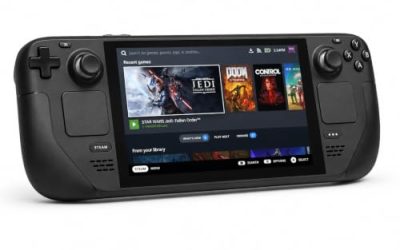
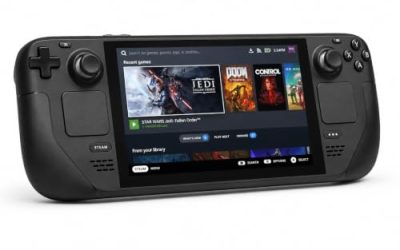
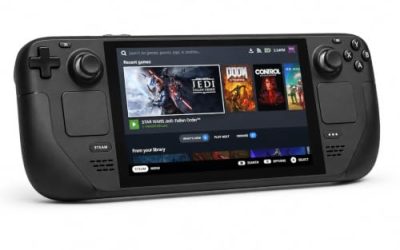
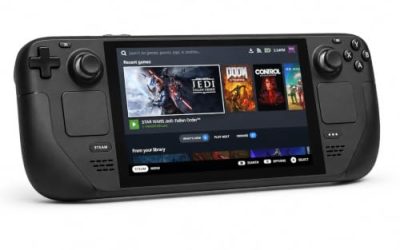
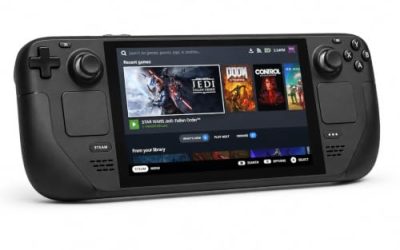
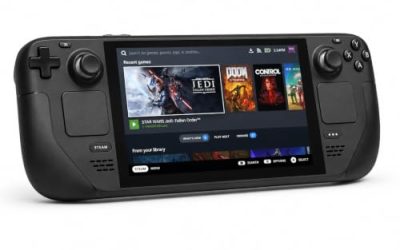
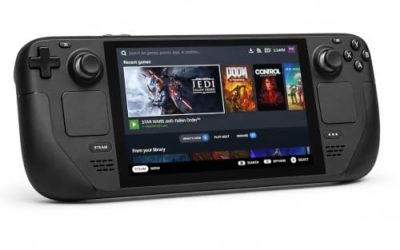
Valve Steam Deck OLED 512GB
The handheld the Verified badge was written for, and here the badge still describes the shipping build: the one machine where this game’s Linux route arrives pre-tested.
Specs
- Display: 7.4-inch HDR OLED, 1280 by 800, up to 90 Hz
- Processor: AMD Zen 2 and RDNA 2 custom APU
- Memory: 16 GB LPDDR5
- Storage: 512 GB NVMe, plus a microSD slot
- Wireless: Wi-Fi 6E and Bluetooth
- Channel note: Valve sells the Deck mainly through its own store, so Amazon listings are third-party sellers
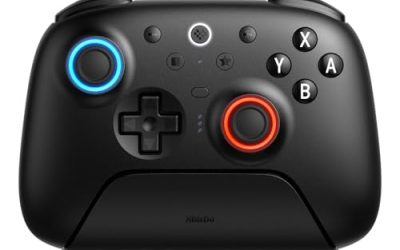
8BitDo Ultimate 2 Bluetooth Controller
The first pad to hand a guest. The game’s design is shared-screen co-op for up to four players, and this pad covers a couch slot with modern sticks, triggers and back buttons.
Specs
- Connectivity: Bluetooth wireless and USB-C wired
- Joysticks: TMR electromagnetic, anti-drift design
- Triggers: Hall effect, with mode switching
- Extras: two remappable back buttons, motion control
- In the box: charging dock included
Xbox Wireless Controller, Carbon Black
The safest guest pad in PC gaming: Steam Input support is universal, the glyphs match what most games display, and it pairs over Bluetooth or its own wireless standard. For a game that fills four controller slots, pads in this shape are the simple way to seat everyone.
- Connectivity: Xbox Wireless and Bluetooth
- Port: USB-C for wired play
- Controls: hybrid D-pad, dedicated Share button
- Power: AA batteries or optional rechargeable pack
Logitech G502 HERO
The menus the ProtonDB filings complain about are mouse territory, and a precise wired mouse makes navigation single clicks. Eleven programmable buttons cover the confirm and cancel inputs a session repeats.
Specs
- HERO optical sensor, up to 25,600 DPI
- 11 programmable buttons
- Adjustable weight system
- Wired USB connection
- On-board memory profiles
Samsung T9 Portable SSD 2TB
For moving a Linux game library between machines, or keeping an offline backup of installers, a fast USB-C drive is the simple answer. The headline figure needs a Gen 2×2 host port; on a lesser port the drive runs at that ceiling.
Specs
- Capacity: 2 TB portable SSD
- Interface: USB 3.2 Gen 2×2, USB-C connector
- Maker-rated speeds: up to 2,000 MB per second read, 1,950 MB per second write
- Features: Dynamic Thermal Guard, maker-rated drop resistance
How to choose
Choose either storefront copy on library preference alone, because both sell the identical Windows build; the Steam copy is the one both compatibility records describe. On a Steam Deck, the choice makes itself: the Verified badge was graded against the build still being served, so install and launch. On desktop or laptop, install under Proton with the default compatibility tool; the Gold headline says the route works, and the texture says where it frays. If your controllers go quiet in the menus, navigate with a mouse, then play on pads.
Who should skip
Skip this one if you are shopping for a native Linux build, because none exists and none is hinted at anywhere in the record. Skip it if a seven-report community file is too thin a basis for a purchase: the Proton evidence is a handful of dated filings, one an outright failure to launch. Skip it if you play solo by preference, since the design centres on shared-screen rescue chaos. And skip the GOG copy if you hoped the DRM-free edition differs from Steam’s; it is the same Windows build.
FAQ
Is Think of the Children native on Linux?
No. Steam flags app 573600 for Windows only, the Linux requirements field is an empty list, the content depot is named as Windows content, and the purchase package is Windows-only.
How well does Think of the Children run under Proton?
ProtonDB’s page shows a Gold tier across seven reports, all filed under named Proton versions. The texture is mixed: local multiplayer is rated Excellent, two Silver filings report controllers working in game but not in menus, one filing is Platinum, and one is Borked. The file is thin and dated: a steer, not a guarantee.
Is Think of the Children Steam Deck Verified?
Yes. Valve’s record gives the game its top category, Verified, with all four checks passing under proton-stable, and SteamOS rated Compatible. Unusually, the February 2022 test ran against build 2262920, still the build the public branch serves, so the badge describes the game as it ships today.
Can I buy Think of the Children on GOG instead?
Yes, but it changes nothing about Linux. GOG’s product record, verified against Steam’s title and release date, lists the game for Windows only, so the DRM-free edition still needs Proton on a Linux machine.
Final verdict
Think of the Children is a Windows-only release whose record leaves nothing to argue about: the flag, the empty Linux field, the Windows-named depot, the single-platform package and the frozen 2017 build all say the same thing, and the one associated soundtrack app publishes no record that could muddy the count. What Linux players get instead is a workable Proton route with honest limits: a thin, dated Gold file, and a Deck Verified badge graded on the exact build still being served. Buy it for a couch, play it under Proton, and do not let a stray page heading sell you a native build that does not exist.
Product and ASIN Reference
| Product | ASIN |
|---|---|
| Valve Steam Deck OLED 512GB | B0CQ3RWQQZ |
| 8BitDo Ultimate 2 Bluetooth Controller | B0F194QFT2 |
| Xbox Wireless Controller, Carbon Black | B08DF248LD |
| Logitech G502 HERO | B07GBZ4Q68 |
| Samsung T9 Portable SSD 2TB | B0CHFS9K14 |