Thief Simulator is a first-person stealth simulation from Noble Muffins, published by PlayWay S.A. and released on Steam on 9 November 2018. Linux players get an unusually tidy answer: Steam sells exactly two builds of this game, Windows and macOS, and every layer of the record agrees Linux was never one of them.


So this is a Proton article, not a port article: the practical questions are how well the Windows build behaves under Proton, what the Steam Deck badge is worth in 2026, and whether the GOG edition changes the picture.
As an Amazon Associate, we earn from qualifying purchases.
Quick answer
Thief Simulator has no native Linux build. Steam sells Windows and macOS builds only: the Linux flag is false, the Linux requirements tab is an empty shell, and no Linux depot or launch entry exists. On Linux the route is Proton, where 48 reports hold a Gold tier, and the Steam Deck carries a Playable badge.
The record sells two platforms, and both are real
The flags survive every test here. The app record reads windows true, mac true, linux false, and the game’s only purchase package, package 203389, read individually, repeats that mask exactly: it grants the base app for Windows and macOS, with no bundle or subscription variant in which a Linux grant could hide.
The macOS side is not paperwork. The Mac requirements field is genuinely populated in both tiers, asking for macOS 10.13.6 or later with a Core i5 at minimum and a Core i7 recommended. The extended OS field reads macos64 and macosnotarized, the signature of a maintained 64-bit Mac build.
The Linux side is an empty shell: the Linux requirements field holds only its Minimum and Recommended headings over empty lists, the store template rendered for a platform the developer never filled in. Two smaller points complete the picture: no DRM notice, no external-account notice, and no entry in the anti-cheat database AreWeAntiCheatYet — silence on all three routes. Controller support is declared partial in the store category list, and the package’s full-gamepad flag reads false.
Depots and launch entries close the case
SteamDB’s depot list is where claims become payloads, and here it is short: depot 704851, Windows content at 11.39 GiB, and depot 704852, macOS content at 8.82 GiB. No Linux depot exists in any state — none sized, none emptied, none stranded.
The launch configuration matches: two entries, thief.exe for Windows at 64-bit and a macOS entry pointing into the thief.app bundle. No Linux executable is registered, and the icon set holds no Linux client icon. Nor is this a fossil: the public branch stands at build 21239852, assembled in December 2025 — still maintained, in the same two-platform shape.
The add-ons repeat the split, with one narrower sibling
The DLC array holds three apps, each read individually. The Luxury Houses DLC (app 1840650, April 2023) matches the base game exactly — windows and mac true, linux false — with its own Windows and macOS depots of about 31 MB each. The Shopping Center DLC (app 2518240, December 2024) is narrower than its parent — windows true, mac false, linux false, one Windows depot — so the newest expansion quietly drops the Mac build the base game still sells. The Private Collection DLC (app 4874500) is listed as coming soon and flags Windows only.
On Linux all three agree with the base game, and the family holds no traps: no all-true soundtrack or artbook app, no dissenting demo, no ghost app. Three siblings, three readings of the same answer — one narrower on Mac, none different on Linux.
Proton carries the Linux case, and carries it well
With no native build, ProtonDB is the operative file, and it is substantial: Gold on the headline tier, Platinum on best-reported and Platinum on trending, across 48 reports with strong confidence — a very good typical experience, a flawless best-configured one.
The reports support the tiers. Recent filings on Proton 9 and 10 describe out-of-the-box play, clean alt-tab behaviour and full playthroughs; Deck filings report it working with settings lowered for battery life. The honest caveat is the newest filing, which reports memory climbing over a long session until the system ended the process after roughly an hour — one report at report weight, against dozens of uneventful ones. The ugliest entries are the oldest, from the Proton 5 and 6 era, when some systems could not launch the game at all.
One heading needs correcting: the ProtonDB page heads its requirements block Natively Supports, which Steam’s record contradicts at every layer above. The heading is a template artefact whose real referent is the genuine macOS build — the Mac-shaped variant of a familiar pattern. This article follows Steam: not native; the Gold file describes the Windows build under Proton.
A Playable badge from an older build
Valve’s compatibility endpoint returned an empty result for this app this session, so this sheet was read from SteamDB’s republication of Valve’s data. The verdict is Playable, SteamOS separately Compatible, recommended runtime proton-stable.
The deductions are the input-and-text cluster, not performance: the default controller configuration is not fully functional (some functions need the touchscreen, virtual keyboard or a community layout); the game sometimes shows mouse, keyboard or non-Deck glyphs; some text entry requires manually invoking the on-screen keyboard; some in-game text is small; and external controllers do not take over by default, needing a Quick Access Menu switch. The positive line matters most: the default graphics configuration performs well.
The staleness warning is plain: the sheet’s single test is dated 4 February 2022 and graded build 7656789, while the public branch now stands at build 21239852 from December 2025. The badge grades an ancestor of the build on sale — a supplement-candidate shape, and Valve has not re-graded the current build.
GOG sells the game with one platform fewer
GOG does sell Thief Simulator — ruled from the identity-verified live product page, which names Noble Muffins and the 9 November 2018 release date. But its edition is narrower: the page reads Works on Windows, its FAQ states the game is officially supported on Windows, and its requirements list Windows alone. GOG’s copy lacks even the macOS build Steam sells — no route around Proton.
Its review section adds a caution: owners complained for a long stretch that the GOG build trailed Steam’s version and lacked the Luxury Houses DLC, though a later owner notes it eventually caught up. For Linux buyers, Steam’s is the better-maintained copy, and the one ProtonDB’s 48 reports describe.
Gear for a Proton-first stealth sim
The record’s shape decides the gear: a Deck Playable game running through Proton, partial controller support, and an 11 GB payload that travels with your library.
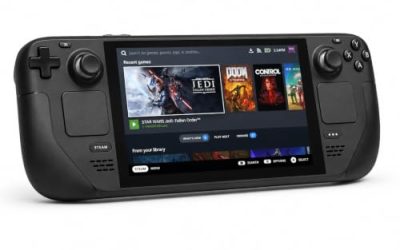
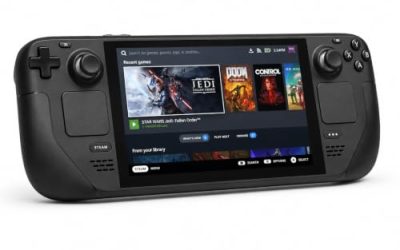
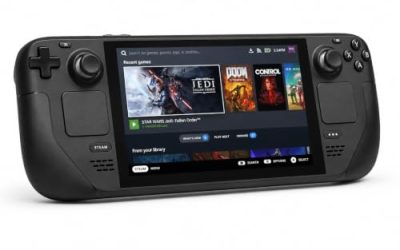
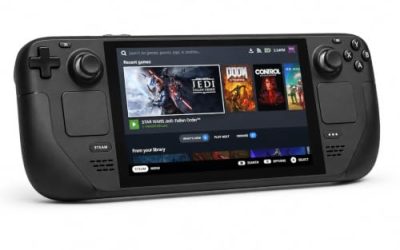
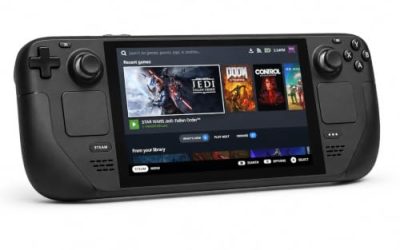
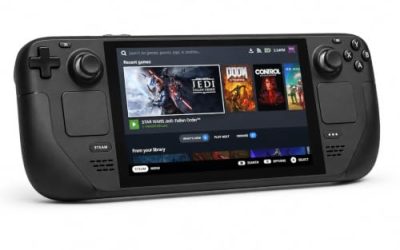
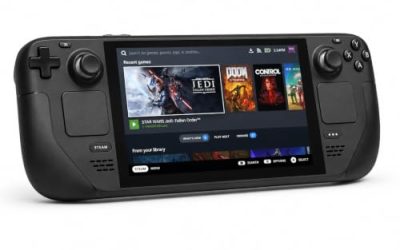
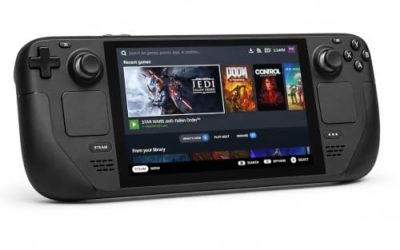
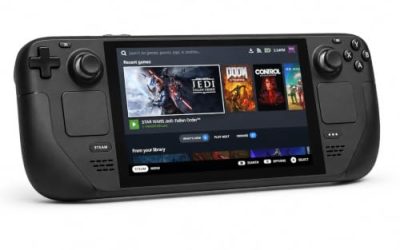
Valve Steam Deck OLED 512GB
The handheld behind the Playable badge: Valve graded this game on the Deck itself, its default graphics perform well there, and the game’s modest requirements sit far under the APU’s ceiling.
Specs
- Display: 7.4-inch HDR OLED, 1280 by 800, up to 90 Hz
- Processor: AMD Zen 2 and RDNA 2 custom APU
- Memory: 16 GB LPDDR5
- Storage: 512 GB NVMe, plus a microSD slot
- Wireless: Wi-Fi 6E and Bluetooth
- Channel note: Valve sells the Deck mainly through its own store, so Amazon listings are third-party sellers
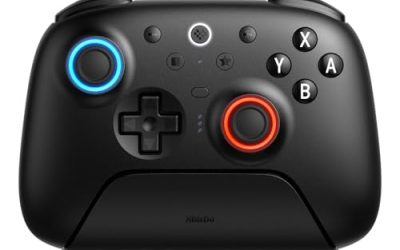
8BitDo Ultimate 2 Bluetooth Controller
The docked pad. The record promises only partial controller support, and Valve’s sheet warns an external pad does not take over by default on the Deck — strong Steam Input behaviour and remappable back buttons answer both notes.
Specs
- Connectivity: Bluetooth wireless and USB-C wired
- Joysticks: TMR electromagnetic, anti-drift design
- Triggers: Hall effect, with mode switching
- Extras: two remappable back buttons, motion control
- In the box: charging dock included
Xbox Wireless Controller, Carbon Black

The guest pad and glyph reference: most Proton titles that show controller icons show these, and on the handheld an external pad may need a manual Quick Access Menu switch before it takes over.
- Connectivity: Xbox Wireless and Bluetooth
- Port: USB-C for wired play
- Controls: hybrid D-pad, dedicated Share button
- Power: AA batteries or optional rechargeable pack
Logitech G502 HERO

The Deck deductions point at menus and text entry as this game’s friction; at a desk, a precise wired mouse removes that class of problem, and eleven programmable buttons cover the inputs a long session repeats.
Specs
- HERO optical sensor, up to 25,600 DPI
- 11 programmable buttons
- Adjustable weight system
- Wired USB connection
- On-board memory profiles
Samsung T9 Portable SSD 2TB

An 11 GB game is small, but a Proton library is not, and prefixes travel with it. A fast USB-C drive keeps the library portable; the headline figure needs a Gen 2×2 host port, and on a lesser port the drive runs at that ceiling.
Specs
- Capacity: 2 TB portable SSD
- Interface: USB 3.2 Gen 2×2, USB-C connector
- Maker-rated speeds: up to 2,000 MB per second read, 1,950 MB per second write
- Features: Dynamic Thermal Guard, maker-rated drop resistance
How to choose
Buy the Steam copy: it is the best-maintained edition, the copy ProtonDB’s file describes, and the two-platform purchase; the GOG copy is Windows-only with a documented history of trailing Steam’s version. On the budget tier, a standard Linux desktop with a current Proton release is all this game asks for. The mid-range tier adds a Deck or docked setup for couch play, accepting the badge’s input caveats. The premium tier is comfort rather than compatibility: an OLED Deck, a remappable pad, fast portable storage.
Set expectations by the modern reports: current Proton builds hold the Platinum best-reported tier. For very long sessions, remember the single memory-growth filing — saving before the hour mark costs nothing.
Who should skip
Skip this if you only buy native Linux games on principle: no Linux build exists, none is promised, and the maintained branch has kept the same shape for years. Skip the GOG edition when choosing between storefronts — it is the narrower, historically slower-updated copy. Mac buyers should note the family split: the base game and Luxury Houses sell Mac builds, while the Shopping Center DLC is Windows-only. And if small handheld text is a hard limit, the Deck sheet flags exactly that.
FAQ
Is Thief Simulator native on Linux?
No: the record flags Linux false, the sole package grants Windows and macOS only, the Linux requirements tab is an empty shell, and SteamDB lists no Linux depot or launch entry. Linux play runs the Windows build through Proton.
How well does Thief Simulator run under Proton?
Well, on current builds: Gold headline, Platinum best-reported and trending, across 48 reports at strong confidence. Recent filings describe out-of-the-box play; one reports memory growth over a long session, and the oldest filings, from the Proton 5 and 6 era, include launch failures the modern file has outgrown.
Is Thief Simulator Steam Deck Verified?
Playable, not Verified, with SteamOS rated Compatible. The sheet was read from SteamDB’s republication of Valve’s data after Valve’s endpoint returned an empty result this session. Its deductions cover the default controller configuration, glyphs, manual keyboard invocation and small text, and its single test dates from February 2022 — a far older build than the one on sale.
Does the GOG version of Thief Simulator run on Linux or Mac?
Neither: GOG’s identity-verified page lists Windows as the only supported system, making its edition narrower than Steam’s, which also sells a genuine macOS build. No storefront sells a Linux build.
Final verdict
Thief Simulator is one of the cleanest not-native records in this series: two platforms claimed, two delivered, and Linux absent from the flags, the package, the requirements field, the depots and the launch configuration alike. The Linux experience rests on Proton, where a 48-report Gold file with Platinum best and trending tiers says the Windows build is healthy on modern Proton. Add a dated but plausible Deck Playable badge and a GOG edition that drops even the Mac build, and the advice writes itself: Steam copy, current Proton, desk or Deck — just do not wait for a native port the record gives no sign of shipping.
Product and ASIN Reference
| Product | ASIN |
|---|---|
| Valve Steam Deck OLED 512GB | B0CQ3RWQQZ |
| 8BitDo Ultimate 2 Bluetooth Controller | B0F194QFT2 |
| Xbox Wireless Controller, Carbon Black | B08DF248LD |
| Logitech G502 HERO | B07GBZ4Q68 |
| Samsung T9 Portable SSD 2TB | B0CHFS9K14 |