The Tenants is a landlord simulator about buying tired apartments, renovating them room by room, and keeping the people who move in happy enough to pay on time. It left Early Access on 20 October 2022 under developer and publisher EndGameLoop Games, and it is exactly the kind of relaxed, mouse-driven management game Linux players routinely ask about.


The record tells a plainer story. Steam sells a Windows build and nothing else, and every layer underneath the store page agrees. What makes the game still worth a Linux player’s time is the compatibility file around that build: a Platinum record on ProtonDB and a Playable badge on Steam Deck.
As an Amazon Associate, we earn from qualifying purchases.
Quick answer
No. The Tenants has no native Linux build: Steam’s record is Windows-only at every layer, from the platform flags and the single purchase package to the depot list and launch configuration. Linux players use Proton instead, where the game holds a Platinum file on ProtonDB, and Valve rates it Playable on Steam Deck.
What Steam’s own record says
Start with the flags, because here they turn out to be honest. The store record for app 1009560 lists Windows true, Mac false and Linux false. The game’s only purchase package, package 334048, was read individually and repeats that mask exactly: the base app alone, Windows only, its controller field reading full gamepad false. No second package or bundle exists to soften the ruling.
The requirements tabs tell the same story in two shapes. The Windows field is genuinely populated: Windows 7 64-bit or newer, a Core i3-4130 at minimum and a Core i5-8400 recommended, 6 GB of RAM rising to 8 GB, a GeForce GTX 560 floor with a GTX 970 recommended, DirectX 11, and 6 GB of storage. The Mac and Linux fields are empty shells: Minimum and Recommended headings over empty lists. A heading with nothing under it is a template, not a port.
SteamDB closes the question at the delivery layer. The depot list holds exactly two content depots: the main content depot 1009561 at 6.52 GiB with no operating-system split, and the Pets DLC depot at 85.20 MiB. Filtered to Windows, the set is the whole set; no Linux depot exists in any state. The launch configuration registers three entries, all Windows, all pointing at the same executable: a default launch, a windowed safe-mode option, and an extended-logging option.
Two smaller details deserve naming because they mislead quick checks. The record registers a LinuxClientIcon, but its file hash is identical to the macOS icon asset on the same record, and no Linux depot, package or launch entry stands behind it; it is leftover paperwork, not a build. The record also carries no controller support declaration at all, so any pad used with this game speaks through Steam Input translation, a point the gear section below respects.
The family sweep: one expansion, same answer
The base record’s DLC array holds exactly one app, read individually. The Tenants – Pets DLC (app 2255330, released 31 August 2023) flags Windows true, Mac false and Linux false, and its own purchase package 809124 repeats the Windows-only mask. Its Linux requirements field is an empty list outright, a slightly barer shape than the base game’s empty shell, but the ruling is identical: the expansion agrees with the game it extends.
Two footnotes complete the sweep. The DLC’s record names Ancient Forge as developer where the base game names EndGameLoop Games; the discrepancy sits on the records and changes nothing about platforms. And no soundtrack, artbook or demo app is attached to the family, so the usual all-true scenery trap never forms here. Family size one, agreement one.
The Proton file
ProtonDB’s summary for this app reads Platinum on the headline tier, Platinum on the best-reported tier and Platinum on the trending tier, across 14 reports with moderate confidence. That is the strongest practical news in this article: the Windows build is a well-behaved Proton citizen, and the report texture backs the tiers. Recent filings on the Proton 8.0 series describe plain out-of-the-box runs on ordinary hardware, integrated graphics included. One Steam Deck filing notes the small interface text and some control tweaks, matching Valve’s own sheet below.
The older filings carry early-era noise, a resolution-switch failure and an ultrawide performance complaint from the 6.3-series years, and neither pattern repeats in newer reports. One caution belongs to ProtonDB itself: its game page heads the requirements block with the words Natively Supports, a classification Steam’s record contradicts at every layer. The heading is stray. This article follows Steam, and the Platinum file should be read for what it is: a grade for the Windows build under Proton.
Anti-cheat, for completeness, is a silence rather than a finding. The Steam record carries no DRM or external-account notice, SteamDB’s detection finds a Unity stack with no anti-cheat, and the Are We Anti-Cheat Yet catalogue holds no entry for this app. It is a single-player game; there is nothing to switch on.
The Steam Deck sheet: Playable, and dated
Valve’s compatibility endpoint, read directly for this article, resolves the game to category 2: Playable on Steam Deck, SteamOS separately Compatible, proton-stable the recommended runtime. The deductions are the management-game usual set: the default controller configuration is not fully functional, the game can show non-Deck glyphs, entering text needs a manually invoked keyboard, and some interface text is small enough to be hard to read. External controllers do not take over by default and may need a Quick Access Menu switch. Against those, the sheet’s one positive matters most: the default graphics configuration performs well.
The paperwork, though, is old. SteamDB’s republication of the same sheet dates the single test to 26 February 2022, on build 7969662. The public branch now stands at build 12518562, assembled in October 2023, and the game did not reach its 1.0 release until October 2022, months after the test. The badge therefore grades an Early Access ancestor of the build on sale. That does not make the verdict wrong, and ProtonDB’s newer Deck filing points the same way, but the badge is a supplement candidate: a rating that deserves a fresh test on the current branch.
The storefront ruling
There is no second storefront to fall back on. GOG’s natural product address for this title redirects to the general catalogue, with no product page behind it, and GOG’s catalogue holds no product for the game; the ruling rests on that redirect and the absent record, not on any search result. No GOG edition exists, in any platform mix. Steam is the only place the game is sold, so its Windows-only shape is the whole market’s shape.
Gear for a Proton landlord setup
The picks below follow the record: the handheld whose badge this is, two pads that work as Steam Input devices for a game declaring no controller support of its own, a precise mouse for the renovation screens, and fast storage for a travelling library.
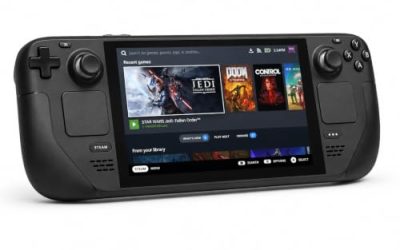
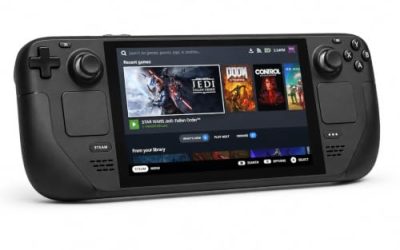
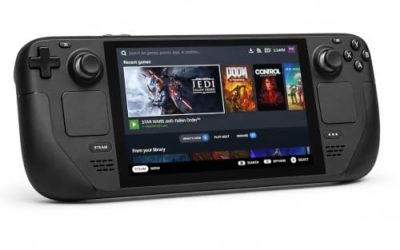
Valve Steam Deck OLED 512GB
The handheld the Playable badge was written for. The game’s Windows requirements sit far below the Deck’s hardware, and Valve’s sheet confirms the default graphics configuration performs well, small text aside.
Specs
- Display: 7.4-inch HDR OLED, 1280 by 800, up to 90 Hz
- Processor: AMD Zen 2 and RDNA 2 custom APU
- Memory: 16 GB LPDDR5
- Storage: 512 GB NVMe, plus a microSD slot
- Wireless: Wi-Fi 6E and Bluetooth
- Channel note: Valve sells the Deck mainly through its own store, so Amazon listings are third-party sellers
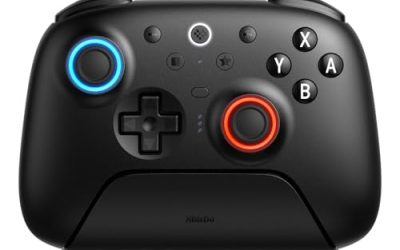
8BitDo Ultimate 2 Bluetooth Controller
A couch option for sofa play. The Tenants declares no controller support, so this pad works purely as a Steam Input device, translating its inputs into the mouse-and-keyboard language the game expects.
Specs
- Connectivity: Bluetooth wireless and USB-C wired
- Joysticks: TMR electromagnetic, anti-drift design
- Triggers: Hall effect, with mode switching
- Extras: two remappable back buttons, motion control
- In the box: charging dock included
Xbox Wireless Controller, Carbon Black

The safest guest pad in PC gaming: Steam Input support is universal, the glyphs match what most games display, and it pairs over Bluetooth or its own wireless standard. On the handheld, the test sheet’s note applies: an external pad may need a manual Quick Access Menu switch before it takes over.
- Connectivity: Xbox Wireless and Bluetooth
- Port: USB-C for wired play
- Controls: hybrid D-pad, dedicated Share button
- Power: AA batteries or optional rechargeable pack
Logitech G502 HERO

The input this game was built around. Renovating apartments is a menu-and-cursor workload, and a precise wired mouse covers the confirm, cancel and camera inputs a long session repeats.
Specs
- HERO optical sensor, up to 25,600 DPI
- 11 programmable buttons
- Adjustable weight system
- Wired USB connection
- On-board memory profiles
Samsung T9 Portable SSD 2TB

For moving a Linux game library between machines, or keeping an offline backup of installers, a fast USB-C drive is the simple answer. The headline figure needs a Gen 2×2 host port; on a lesser port the drive runs at that ceiling instead.
Specs
- Capacity: 2 TB portable SSD
- Interface: USB 3.2 Gen 2×2, USB-C connector
- Maker-rated speeds: up to 2,000 MB per second read, 1,950 MB per second write
- Features: Dynamic Thermal Guard, maker-rated drop resistance
How to choose
Choose the Steam copy, the only edition sold anywhere, and on Linux treat Proton as the platform. Desktop players should install, leave the compatibility tool on its default or the proton-stable line Valve recommends, and play; the Platinum file says the current build needs no tinkering. Deck players get the same game with the badge’s known compromises, small text chief among them. For input, budget-tier money belongs to a good mouse first, since every pad here is a Steam Input translation layer; premium-tier spending makes sense only on the handheld itself or on library storage.
Who should skip
Skip the purchase if a native build is a hard requirement: none exists, none is sold anywhere, and the leftover icon and empty requirement shells are paperwork, not promises. Skip it on Deck if small interface text is a deal-breaker, because Valve’s sheet lists legibility as a deduction and ProtonDB’s detailed Deck filing says the same. And skip it if a dated badge bothers you: the Playable rating was earned on an Early Access build from February 2022, and no verdict on the current branch is published yet.
FAQ
Is The Tenants native on Linux?
No. Steam’s flags, the purchase package, the depot list and the launch configuration are all Windows-only, the Linux requirements field is an empty shell, and no other storefront sells a Linux build. The Linux route is Proton.
How well does The Tenants run under Proton?
Very well on the published file. ProtonDB rates it Platinum on all three tiers across 14 reports with moderate confidence, and recent filings describe out-of-the-box runs. Ignore the page’s Natively Supports heading; it contradicts Steam’s record.
Is The Tenants Steam Deck Verified?
No, it is rated Playable, one step below Verified, with deductions for the default controller configuration, non-Deck glyphs, manual keyboard invocation and small text. Valve’s test ran in February 2022 on an Early Access build; the current branch dates from October 2023.
Can I buy The Tenants on GOG instead?
No. GOG’s address for the title redirects to its general catalogue and its catalogue holds no product for the game. Steam is the only storefront selling it.
Final verdict
The Tenants is not a Linux game, and its record never really pretends otherwise once read past the flags: one Windows package, one Windows depot set, three Windows launch entries, and an expansion in full agreement. What it is, is a Windows game with an unusually clean compatibility file: Platinum across ProtonDB’s tiers and a Playable Deck badge whose only real fault is its age. Linux players who accept Proton as the deal get a relaxed landlord sim that asks almost nothing of them; players holding out for a native port should hold their money instead.
Product and ASIN Reference
| Product | ASIN |
|---|---|
| Valve Steam Deck OLED 512GB | B0CQ3RWQQZ |
| 8BitDo Ultimate 2 Bluetooth Controller | B0F194QFT2 |
| Xbox Wireless Controller, Carbon Black | B08DF248LD |
| Logitech G502 HERO | B07GBZ4Q68 |
| Samsung T9 Portable SSD 2TB | B0CHFS9K14 |