Septerra Core is a console-style role-playing game built around a living world-machine of seven continents orbiting a biocomputer core. SteamDB’s record carries the original release date, 31 October 1999; Steam’s store record dates this edition 27 September 2013 and names Topware Interactive as publisher. The modern listing is not a Windows-only relic: Steam flags the game for Windows, Mac and Linux alike.
The flag is not paperwork. The Linux requirements tab is written out in full at both tiers, and the depot table holds Linux builds in English and German. The complication sits downstream: community reports describe the shipped Linux package as an ageing wrapper that often fails to start, and Valve’s own Deck test was run under Proton.
As an Amazon Associate, we earn from qualifying purchases.
Quick answer
Yes, Septerra Core is native on Linux by Steam’s own record: the Linux flag is set, the requirements tab is fully written at both tiers, and sized Linux depots ship in the package. In practice many players force Proton, because reports describe the native package as an old wrapper that can fail to start.
The status at a glance
| Question | Answer from the record |
|---|---|
| Native Linux build | Yes — flag set, tab fully written, depots sized |
| Add-on apps | Soundtrack and Digital Deluxe Content, both flag Linux too |
| ProtonDB record | Summary feed unread; page classifies it Native, 16 reports |
| Steam Deck verdict | Playable, tested January 2023 under Proton 7.0-6 |
| GOG edition | Exists, and lists Linux |
Three layers that agree: flag, tab and depots
Steam’s appdetails record for Septerra Core (app 253940, the app id confirmed against Steam’s own store search) lists the platforms as Windows true, Mac true, Linux true.
The Linux requirements field is the genuine article, not the empty shell this series so often finds. The minimum tier names Ubuntu 16.04 LTS or SteamOS, a single-core Intel or AMD processor, 512 MB of RAM, a 64 MB graphics card, 1 GB of storage and a sound card with 5.1 support. The recommended tier raises the processor to a 1.5 GHz single core, memory to 1 GB and graphics memory to 128 MB.
SteamDB’s depot table settles the question the tab raises. Alongside the Windows and macOS depots sit two Linux depots: a Linux English depot (253946) at 1.35 GiB and a Linux German depot (253947) at 1.43 GiB. The public branch stands on build 3550541, set in February 2019. SteamDB publishes no osextended value for this app, so none is claimed; its osarch field is an empty string. The store record names no third-party DRM notice and no external account requirement, and lists single-player, Steam Trading Cards, Steam Cloud and Family Sharing, in English and German with full audio.
The family shelf: even the soundtrack flags Linux, and it proves nothing extra
The game’s own record lists a DLC array of exactly two apps, and both were read individually. The Septerra Core Soundtrack (1026170) and the Digital Deluxe Content (1026171), both dated February 2019, each flag Windows, Mac and Linux true, and each carries a populated Linux requirements field of its own.
In most articles in this series that pattern is the trap: a music app’s Linux flag inflating a family scan for a game that has no build. Here the direction is reversed. The add-ons flag Linux, and so does the game, backed by its own tab and depots. The family count is three Linux flags from three readable records.
What the Proton file can and cannot say
One evidence gap: ProtonDB’s summary feed returned a page-not-found response this session, so no headline tier, tier split or confidence figure is claimed anywhere here. What could be read is the game page itself. It classifies Septerra Core as Native under its Natively Supports heading, and for once that classification agrees with Steam’s record rather than contradicting it. The page shows 16 reports.
The reports are where the record’s clean answer gets its texture, quoted here at report weight, not as record facts. Several reporters describe the same failure: the shipped native package behaves like an outdated Wine wrapper rather than a true port, starts once or not at all, and in some cases stops on a fatal panic error saying the game was not properly installed. The recurring remedy is to force a Proton version, after which the same reporters describe the game running well, with occasional crashes when moving between areas. The file disputes not the build’s existence but its reliability as packaged.
The Deck sheet: Playable, and tested under Proton
Valve’s own compatibility endpoint answered directly this session. It rates Septerra Core Playable on Steam Deck, resolved category two, and SteamOS separately Compatible. Three checks pass outright: all functionality is accessible with the default controller configuration, in-game interface text is legible, and the default graphics configuration performs well. The single note is that entering some text requires manually invoking the on-screen keyboard.
The dated paperwork comes from SteamDB’s republication of Valve’s compatibility data: the test is dated 11 January 2023, on build 3550541, exactly the build the public branch still serves, so the paperwork is current. One line deserves its own sentence: the recommended runtime is recorded as proton-7.0-6. Valve tested the Windows build under Proton, so the Playable badge certifies that route, even though a native build sits in the same package.
The second storefront: GOG sells it, and lists Linux
A GOG edition exists. GOG’s own catalogue record for Septerra Core: Legacy of the Creator (product 1207658742) reads its system compatibility as Windows true, Mac false, Linux true, so the DRM-free copy also lists a Linux version. Two search caveats, the standing blind spot in this series: the plain product address on GOG resolves to the general catalogue, and GOG’s embed and ajax searches return zero for the title. The ruling rests on the catalogue and product records, not on search.
Anti-cheat, in three sources
Steam’s record names no anti-cheat and no DRM notice. SteamDB’s detected technologies are the MonoGame engine, the XNA engine and the OpenAL SDK: engine and audio plumbing for a single-player game. The Are We Anti-Cheat Yet dataset, all 1,167 entries, carries no entry for this game by name or app id.
Gear that fits the record
The gear follows the record’s shape: the handheld Valve tested, two pads, a mouse for a game designed around one, and library storage.
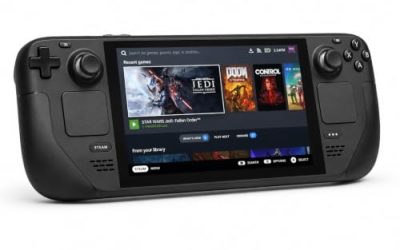
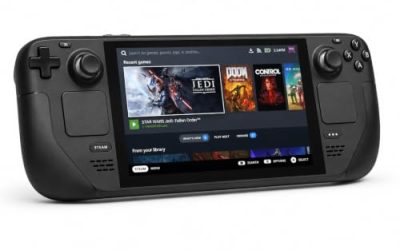
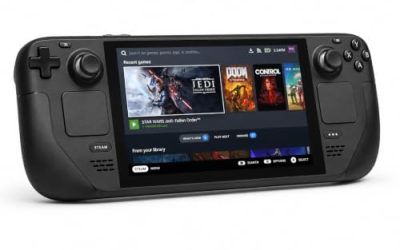
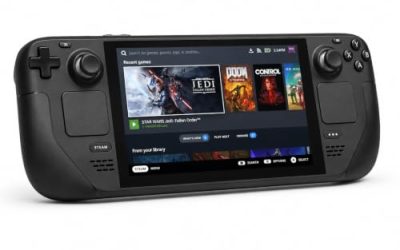
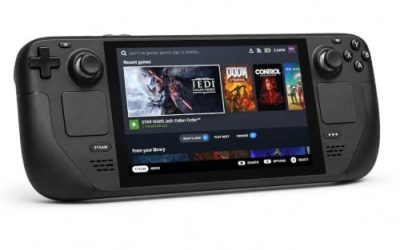
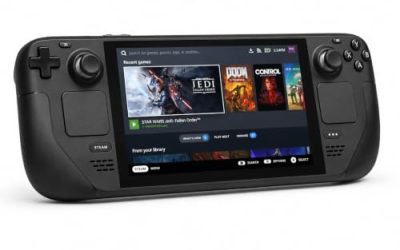
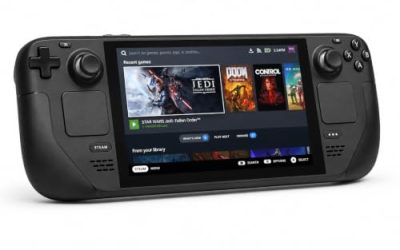
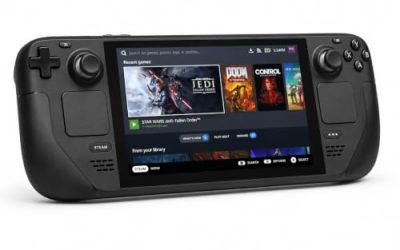
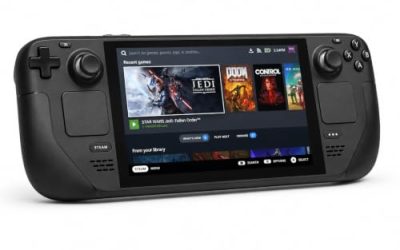
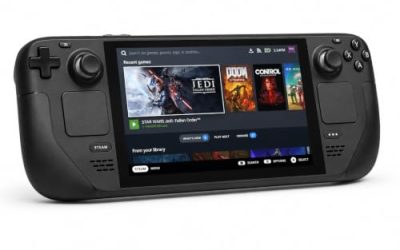
Valve Steam Deck OLED 512GB

The handheld on Valve’s test sheet. The game is mouse-led, and the Deck’s trackpads are the closest handheld equivalent; the Playable rating was earned under Proton.
Specs
- Display: 7.4-inch HDR OLED, 1280 by 800, up to 90 Hz
- Processor: AMD Zen 2 and RDNA 2 custom APU
- Memory: 16 GB LPDDR5
- Storage: 512 GB NVMe, plus a microSD slot
- Wireless: Wi-Fi 6E and Bluetooth
- Channel note: Valve sells the Deck mainly through its own store, so Amazon listings are third-party sellers
8BitDo Ultimate 2 Bluetooth Controller

The docked pad pick. Steam lists no controller support category for this game, so a pad is a Steam Input mapping exercise; this one covers it with modern sticks, triggers and back buttons.
Specs
- Connectivity: Bluetooth wireless and USB-C wired
- Joysticks: TMR electromagnetic, anti-drift design
- Triggers: Hall effect, with mode switching
- Extras: two remappable back buttons, motion control
- In the box: charging dock included
Xbox Wireless Controller, Carbon Black

The safest guest pad in PC gaming: Steam Input support is universal, and it pairs over Bluetooth or its own wireless standard.
- Connectivity: Xbox Wireless and Bluetooth
- Port: USB-C for wired play
- Controls: hybrid D-pad, dedicated Share button
- Power: AA batteries or optional rechargeable pack
Logitech G502 HERO

This game was designed to be played exclusively with a mouse, so at a desk the mouse is the intended instrument, not an accessory. Eleven programmable buttons cover the movement, sprint and menu inputs.
Specs
- HERO optical sensor, up to 25,600 DPI
- 11 programmable buttons
- Adjustable weight system
- Wired USB connection
- On-board memory profiles
Samsung T9 Portable SSD 2TB

For moving a Linux game library between machines, or keeping an offline backup of installers, a fast USB-C drive is the simple answer. The headline figure needs a Gen 2×2 host port; on a lesser port the drive runs at that ceiling.
Specs
- Capacity: 2 TB portable SSD
- Interface: USB 3.2 Gen 2×2, USB-C connector
- Maker-rated speeds: up to 2,000 MB per second read, 1,950 MB per second write
- Features: Dynamic Thermal Guard, maker-rated drop resistance
How to choose
Choose between the two storefronts on the terms you value: the Steam copy carries the Steam Cloud saves the store record lists; the GOG copy is the DRM-free installer and also lists Linux. On either copy, expect one decision at first launch. If the native package runs, the record says you are playing a real Linux build. If it fails the way the reports describe, force a current Proton version and play the Windows build that way; that is the route Valve tested on Deck and the report file endorses. For input, plan around a mouse or the Deck’s trackpads first.
Who should skip
Skip the native-first plan if you have no patience for a 1999 package: the report file is frank that the shipped Linux build can fail, and the reliable route is a compatibility layer. Skip this game if you want controller support out of the box; the store record lists none. Skip the GOG copy if you want the Mac build, which that storefront does not list. And skip it if a 16-report community file is too thin a basis for a purchase.
FAQ
Is Septerra Core native on Linux?
Yes, by Steam’s own record. The Linux flag is set on app 253940, the requirements tab is fully written at both tiers, and SteamDB’s depot table holds sized Linux depots in English and German. Community reports add a caution: many players find the shipped package unreliable and force Proton instead.
Why do ProtonDB reports tell me to force Proton on a native game?
Because the reports describe the packaged Linux build as an old wrapper that often fails to start, while the Windows build under a current Proton version runs well for the same reporters. That is report-level experience across 16 reports, not a store record; the store record still lists a Linux build.
Is Septerra Core Steam Deck Playable?
Yes. Valve’s compatibility record, read directly, rates it Playable, with SteamOS separately Compatible. The paperwork dates to 11 January 2023 on the build the public branch still serves, and the recommended runtime on the sheet is Proton 7.0-6, so the badge certifies the Windows build under Proton. The one note is that some text entry needs the on-screen keyboard invoked manually.
Can I buy Septerra Core on GOG instead?
Yes, and the GOG edition lists Linux too. GOG’s product record for Septerra Core: Legacy of the Creator reads Windows and Linux true and Mac false. GOG’s own searches do not surface the title, a search blind spot rather than an absence; the catalogue record is the evidence.
Final verdict
Septerra Core is the rare old game whose Linux paperwork is all real: a set flag, a requirements tab written out in full, and Linux depots larger than the Windows content, with a second storefront listing the same platform. The record’s only dissent comes from the players: a community file that calls the packaged build a wrapper past its prime, and a Deck badge earned under Proton rather than on the native build. Buy it on Steam or GOG, and be ready for the one choice the evidence points to: try the native build, and if it falters, force Proton and play the version every tester vouches for.
Product and ASIN Reference
| Product | ASIN |
|---|---|
| Valve Steam Deck OLED 512GB | B0CQ3RWQQZ |
| 8BitDo Ultimate 2 Bluetooth Controller | B0F194QFT2 |
| Xbox Wireless Controller, Carbon Black | B08DF248LD |
| Logitech G502 HERO | B07GBZ4Q68 |
| Samsung T9 Portable SSD 2TB | B0CHFS9K14 |