UnEpic is the 2D RPG platformer from developer @unepic_fran and publisher Unepic Games, released on Steam on 25 July 2014: Daniel, a tabletop player pulled into Harnakon’s Castle mid-session, works through some 200 rooms of melee, spells and pop-culture gags.
The Linux question here is pointed. Steam’s record flags Linux as supported, yet publishes no Linux system requirements at all — the field is an empty list, exactly the shape that turns out to be leftover paperwork on other games. So this article reads the delivery layer underneath the flag: depots, family, Proton file, Deck sheet and the GOG edition.
As an Amazon Associate, we earn from qualifying purchases.
Quick answer
Yes. UnEpic is genuinely native on Linux. Steam flags Windows, Mac and Linux all true, and although the Linux requirements field is an empty list, the depot table holds a dedicated Linux content depot of 244.28 MiB in the current branch. Valve rates the game Playable on Steam Deck, and GOG sells a Linux edition.
The flag says yes; the spec sheet says nothing
The store record’s layers do not tell the same story. The platform flags are unambiguous: windows true, mac true, linux true. The Windows requirements tab is genuinely populated — Windows XP, a dual-core processor, 4 GB of memory, OpenGL-compatible graphics and 256 MB of disk space at minimum, plus a recommended tier. The Linux requirements field is an empty list outright: no tab, no lines. The Mac field is the same empty list.
That combination cuts both ways: a populated tab under a false flag is paperwork without a build, while an empty field under a true flag can mean a spec sheet never written. Flags and fields cannot settle this one, so the ruling comes from what Steam delivers. The record also carries no DRM notice and no external account notice — gaps, not promises.
The depot table settles it
SteamDB’s depot table for the current public branch is where the native case stops being arguable. Alongside the Windows content depot (239.29 MiB) and the macOS depot (250.93 MiB) sits depot 233985, named Unepic Linux, at 244.28 MiB — a full content depot in the same size class as the other platforms, not a stub. A second Linux depot carries the Spanish voice files at 112.06 MiB, mirroring the other platforms. The branch stands on build 13630646, set in March 2024 — the build a buyer downloads today.
The verdict follows: UnEpic ships a real native Linux build, in the inverse of the usual leftover-paperwork shape — the descriptive layer is missing, while flag, depots and branch agree the build exists and is delivered. SteamDB’s detected technologies fit a small self-contained port: Ogg and Vorbis audio, SDL and cURL — plumbing, not a compatibility layer.
The family: one soundtrack, and its flag proves nothing
The game’s DLC array holds exactly one app: Unepic – OST, the soundtrack, released 14 October 2016. On its own record it flags Windows, Mac and Linux all true, with the same empty-list Linux field as the parent game, and its audio sits in a 40.47 MiB depot inside the game’s depot table. So the family count is two Linux flags from two readable records, and only one means anything: the game’s flag is backed by a sized Linux depot, the soundtrack’s is a bare flag on an audio product — the recurring trap in its harmless form. UnepicTale is a separate app outside this record and was not read here.
Multiplayer, co-op and the anti-cheat check
Steam’s category list reads, in full: Single-player, Multi-player, Co-op, Steam Achievements, Steam Trading Cards, Partial Controller Support, Steam Cloud, Includes level editor, Remote Play on Tablet and Family Sharing — stated exactly as listed. The record carries no server-status claim, and this article makes none.
Two notes qualify that picture. GOG’s product page states that multiplayer is available only for the Windows version of UnEpic. At report weight, one ProtonDB reporter advises the Windows build over the native one for multiplayer, saying the native build is no longer updated and falls out of sync — a single reporter’s account.
On anti-cheat, three sources were kept separate and all come back negative: Steam’s record names none; SteamDB’s technologies are the Ogg, SDL, Vorbis and cURL libraries, plumbing rather than anti-cheat; the Are We Anti-Cheat Yet dataset, searched by name and app number across its full list, carries no entry for UnEpic.
The Proton file: a native classification Steam agrees with
ProtonDB’s summary feed could not be read here — the summary address returned a page-not-found response — so no tier split and no confidence figure is claimed. What the game page shows is claimed at exactly that size: it classifies UnEpic as Native under its Natively Supports heading, Steam’s record agrees because the depot table backs both, and the page holds seven reports.
The texture matches the record: two reports are native runs, one a complete playthrough with no problems met; Deck reports note the small-text problem Valve’s sheet also records; a Proton-side multiplayer report rates online play Acceptable on an older Proton build. For a native title, this file grades the fallback route.
The Steam Deck sheet: Playable, with old paperwork
Valve’s own compatibility endpoint returned no usable answer this session, so the Deck record is read from SteamDB’s republication of Valve’s compatibility data, stated openly. The verdict is Playable, SteamOS Compatible alongside. The sheet passes all functionality on the default controller configuration, legible text and good default performance; two notes keep it out of Verified territory — non-Steam-Deck controller icons sometimes appear, and text entry requires manually invoking the on-screen keyboard. The test configuration names gamepad input.
Two dates matter. The test was recorded on 16 February 2022 against build 2940615, and its configuration names proton-7.0-1 as the recommended runtime — so the Playable grade as tested describes a Proton run, even though a native build sits in the same table. The branch has since moved to build 13630646 (March 2024): the paperwork predates today’s download.
The GOG edition lists Linux too
GOG sells UnEpic, and its product record — read directly, not from search — lists the edition for Windows and Linux: windows true, linux true, osx false, and the live page names the same two systems. The native build is no Steam-only artefact. The one asymmetry is Mac: Steam flags macOS true with depots to match, while GOG lists no Mac edition.
Gear that fits the record
The picks follow the record: the graded handheld, two pads, a desktop mouse, and library storage.
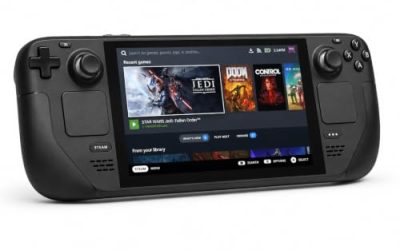
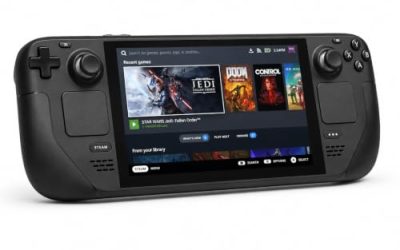
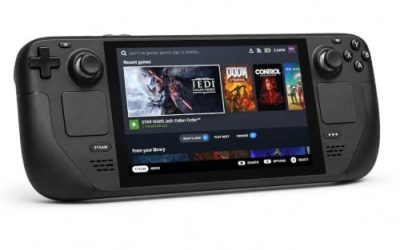
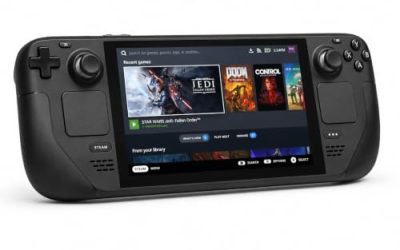
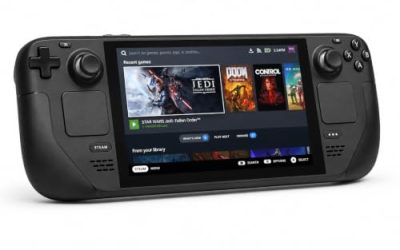
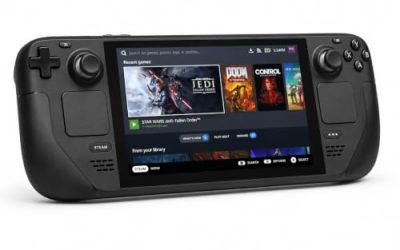
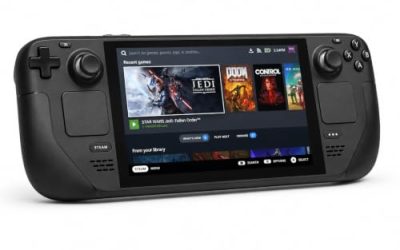
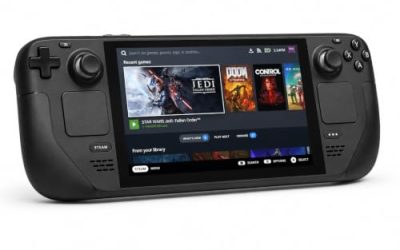
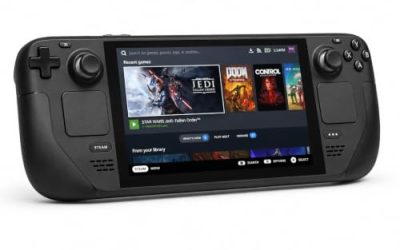
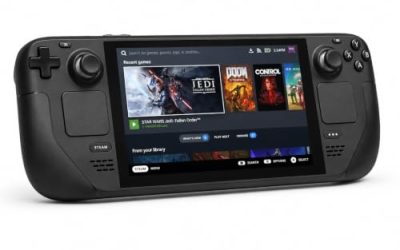
Valve Steam Deck OLED 512GB

The handheld behind the Playable sheet, and the one device Valve has graded for this game. The 2D castle crawl is light work for the APU, small-text note and all.
Specs
- Display: 7.4-inch HDR OLED, 1280 by 800, up to 90 Hz
- Processor: AMD Zen 2 and RDNA 2 custom APU
- Memory: 16 GB LPDDR5
- Storage: 512 GB NVMe, plus a microSD slot
- Wireless: Wi-Fi 6E and Bluetooth
- Channel note: Valve sells the Deck mainly through its own store, so Amazon listings are third-party sellers
8BitDo Ultimate 2 Bluetooth Controller

The docked and desktop pad pick for a game with partial controller support: modern sticks and triggers, plus back buttons for menu shortcuts.
Specs
- Connectivity: Bluetooth wireless and USB-C wired
- Joysticks: TMR electromagnetic, anti-drift design
- Triggers: Hall effect, with mode switching
- Extras: two remappable back buttons, motion control
- In the box: charging dock included
Xbox Wireless Controller, Carbon Black

The safest guest pad in PC gaming: universal Steam Input support, familiar glyphs, Bluetooth or its own wireless standard. On the handheld, an external pad may need a manual Quick Access Menu switch before it takes over.
- Connectivity: Xbox Wireless and Bluetooth
- Port: USB-C for wired play
- Controls: hybrid D-pad, dedicated Share button
- Power: AA batteries or optional rechargeable pack
Logitech G502 HERO

The character sheet, shops and spell lists are menu work; a precise wired mouse turns inventory trips into single clicks, and eleven programmable buttons cover the repeated confirm, cancel and map inputs.
Specs
- HERO optical sensor, up to 25,600 DPI
- 11 programmable buttons
- Adjustable weight system
- Wired USB connection
- On-board memory profiles
Samsung T9 Portable SSD 2TB

For moving a Linux game library between machines, or keeping an offline backup of installers, a fast USB-C drive is the simple answer. The headline figure needs a Gen 2×2 host port; on a lesser port the drive runs at that ceiling.
Specs
- Capacity: 2 TB portable SSD
- Interface: USB 3.2 Gen 2×2, USB-C connector
- Maker-rated speeds: up to 2,000 MB per second read, 1,950 MB per second write
- Features: Dynamic Thermal Guard, maker-rated drop resistance
How to choose
Install the native build first: it is what Steam delivers to a Linux library by default, the current branch’s depot table backs it, and native reports describe clean full playthroughs. Keep Proton in reserve as the documented fallback — forcing a Proton version runs the Windows build, and the community file shows that route working, Deck included. Both storefronts list a Linux edition; read GOG’s multiplayer notice if co-op is the point. On Deck, expect Playable on 2022 paperwork.
Who should skip
Skip the native build as your multiplayer plan: the categories promise Multi-player and Co-op, but GOG’s notice limits multiplayer to the Windows version and a community report describes the native build as out of sync online — treat co-op as a Windows-build activity. Skip the game if an empty spec sheet bothers you more than a working depot reassures you: the port is real, but its documentation is a blank page and its Deck sheet is four years old. Players wanting a Verified-badge handheld game with no caveats should look elsewhere too.
FAQ
Is UnEpic native on Linux?
Yes. Steam flags Linux true, the depot table holds a dedicated Linux content depot of 244.28 MiB plus a Linux voice depot in the current branch, ProtonDB classifies the game as Native, and GOG lists Linux. The empty requirements field is a missing spec sheet, not a missing build.
Why does Steam show no Linux system requirements for UnEpic?
Because the developer never published them: the Linux field is an empty list, the Mac field is empty too, and only the Windows tab is written out. The delivery layer underneath — flags, depots and branch — is complete, which is why the ruling rests on the depot table, not the spec sheet.
How well does UnEpic run on Steam Deck?
Valve rates it Playable, SteamOS Compatible. The sheet passes full functionality on the default controller configuration, legible text and good default performance, with two notes: non-Deck controller icons sometimes appear, and text entry needs the on-screen keyboard invoked manually. The test dates from February 2022, names a Proton runtime, and the branch has been rebuilt since.
Can I play UnEpic multiplayer on Linux?
Steam lists Multi-player and Co-op among the game’s categories, stated exactly as listed. Against that, GOG’s page states multiplayer is available only for the Windows version, and a ProtonDB reporter advises the Windows build for multiplayer because the native build is no longer updated. Plan single-player on the native build; treat multiplayer as Windows-build territory.
Final verdict
UnEpic is genuinely native on Linux, and the proof sits in the delivery layer rather than the paperwork: a true flag, a 244.28 MiB Linux content depot with its own voice depot in the standing branch, a ProtonDB Native classification Steam’s record agrees with, and a GOG edition listing Linux. The caveats are documentary, not structural — an empty requirements field, a soundtrack flag that proves nothing, a 2022 Deck sheet that graded a Proton run, and multiplayer tied to the Windows build. For single-player castle crawling on Linux, the native build is the answer the record supports.
Product and ASIN Reference
| Product | ASIN |
|---|---|
| Valve Steam Deck OLED 512GB | B0CQ3RWQQZ |
| 8BitDo Ultimate 2 Bluetooth Controller | B0F194QFT2 |
| Xbox Wireless Controller, Carbon Black | B08DF248LD |
| Logitech G502 HERO | B07GBZ4Q68 |
| Samsung T9 Portable SSD 2TB | B0CHFS9K14 |