The Turing Test is a first-person puzzle game about a machine that may or may not be thinking; its Linux paperwork poses no such riddle. BULKHEAD’s 2016 release, which sends engineer Ava Turing through a research station on Jupiter’s moon Europa, was built for Windows alone, and Steam’s record says so plainly: the Linux and Mac flags are off, and both requirements fields are empty lists outright.
The genuinely unusual detail sits in the Steam Deck paperwork. Valve’s testers rated the game Playable on 14 June 2022, and the build they tested, 2716157, is the same build that still stands on the public branch today. Deck badges usually describe a download long since patched past them; this one describes the exact files a buyer receives now. Add a ProtonDB file whose headline tier is Platinum across a hundred reports, and the travel documents are stronger than most.
As an Amazon Associate, we earn from qualifying purchases.
Quick answer
The Turing Test is not native on Linux: Steam flags it Windows only and its Linux requirements field is an empty list. The route is Proton: ProtonDB rates the Windows build Platinum on its headline and best tiers across 100 reports, and Valve rates it Playable on Steam Deck. Buy the Steam copy, the only PC edition sold.
A record with nothing to misread
Start with the flags. Steam’s record for app 499520, The Turing Test, developed and published by BULKHEAD and released on 30 August 2016, lists Windows as the only platform. The Windows requirements tab is populated at both tiers, with modest minimums. The Linux requirements field is not an empty shell of Minimum and Recommended headings; it is an empty list outright, and the Mac field is the same.
SteamDB’s depot table closes the question from the delivery side. The whole game ships as one content depot, Windows 64-bit, 9.34 GiB on disk, joined only by Windows shared-install redistributables. No Linux depot exists in any branch. The public branch has stood on build 2716157 since April 2018. SteamDB’s extracts publish no extended OS value for this app, so none is claimed here; the ruling rests on flags, fields and depots, and all three agree.
Two gaps are worth stating plainly: the record carries no DRM notice and no external account notice. Those are absences on the paperwork, not promises about how the game behaves. The categories list is equally plain: single-player, Steam Achievements, full controller support, Steam Trading Cards, Steam Cloud, Remote Play on TV and Family Sharing.
The family sweep: two apps, zero Linux flags
Steam’s DLC array holds exactly one app: The Turing Test – Upgrade Pack, app 508340. It repeats the parent record exactly: Windows flagged, Mac and Linux flags off, and a Linux requirements field that is an empty list outright. Its content also ships as a Windows 64-bit depot on SteamDB’s table.
That makes the family count zero Linux flags out of two apps. No soundtrack, art book or demo app sits in the array, so the familiar trap of this column, a music app’s all-platforms flag making a Windows-only game look supported, cannot form here. Anti-cheat is a three-source negative: Steam names none, SteamDB’s detected technologies are Unreal Engine with NVIDIA APEX and PhysX, Ogg, Vorbis and OpenVR libraries, which is engine plumbing rather than protection, and Are We Anti-Cheat Yet carries no entry for the game at all. A single-player puzzle game needs none.
The Proton file: Platinum headline, Gold trend
ProtonDB’s summary record is the strongest part of this game’s Linux story. Across 100 reports with strong confidence, the headline tier is Platinum and the best-reported tier is Platinum, while the trending tier reads Gold. Read the split correctly: the settled judgement of the file is the top tier, and the trend line says the most recent run of reports has been a step below it, which for a game of this age usually reflects new Proton versions and hardware meeting an unpatched 2016 build, not a game that fails to run.
Nothing in the summary suggests a blocker. There is no anti-cheat wall, no launcher account, no third-party DRM notice on the Steam record. The practical reading is simple: install the Steam copy, let Proton handle it, and expect the experience the Platinum headline describes, with the Gold trend as a reminder that an older Unreal Engine title can still ask patience on a brand-new setup.
The Steam Deck sheet: a test that still matches the download
Valve’s own compatibility record rates The Turing Test Playable on Steam Deck, category two, and SteamOS separately Compatible. The passing items cover the ground that matters: full functionality on the default controller configuration, Steam Deck controller icons, legible interface text, and a default graphics configuration that performs well. One item keeps it out of the top category: the launcher or setup tool may require the touchscreen or virtual keyboard, or have difficult to read text. A further note warns that external controllers may need a manual switch through the Quick Access Menu before they take over.
The paperwork behind the badge comes from SteamDB’s republication of Valve’s compatibility data, and it is unusually reassuring. The test is dated 14 June 2022, the tested build is 2716157, and the recommended runtime recorded on the sheet is Proton 7.0-3. Because the public branch still serves that build, the test describes the current download exactly, a claim few badges in this series can make. The badge certifies the Windows build running under Proton, but here there is no newer build for that certification to have drifted away from.
The storefront ruling
There is no second PC edition to weigh. GOG’s own site answers directly: the game’s natural GOG product address resolves to the general catalogue, not a product page, and GOG’s catalogue query returns no product for the title. No GOG edition exists to buy, so no DRM-free alternative is on the table. The Steam copy is the only PC edition, and it is the build both the ProtonDB file and the Deck sheet describe.
Gear that fits the record
The gear below follows the record’s shape: the handheld the Playable badge was written for, two pads for docked and desktop play, a mouse for desktop sessions, and library storage.
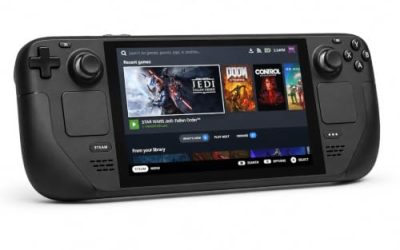
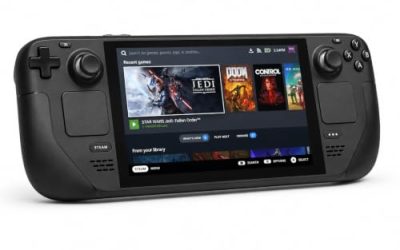
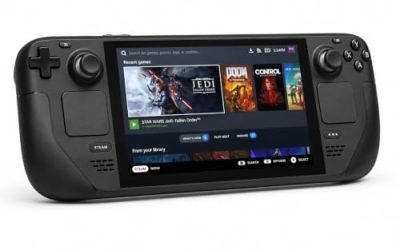
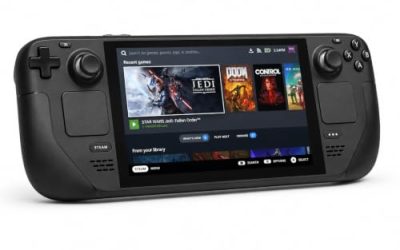
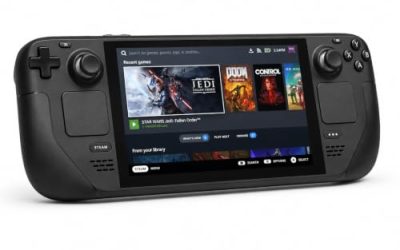
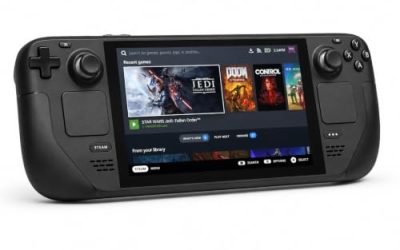
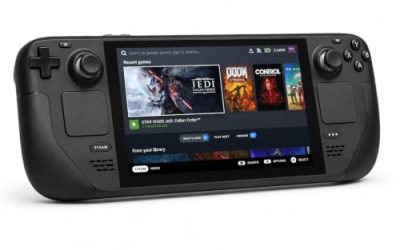
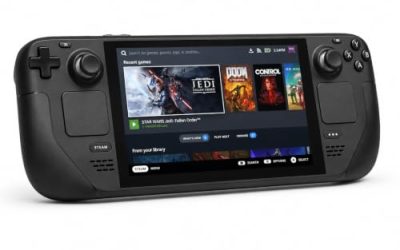
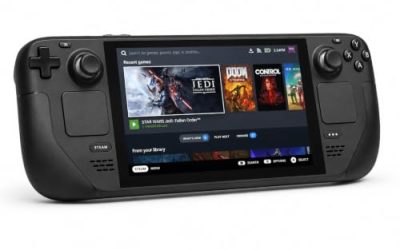
Valve Steam Deck OLED 512GB

The handheld behind the badge. Valve’s testers rated this game Playable on the exact build still shipping, and its published requirements sit far below the Deck’s APU.
Specs
- Display: 7.4-inch HDR OLED, 1280 by 800, up to 90 Hz
- Processor: AMD Zen 2 and RDNA 2 custom APU
- Memory: 16 GB LPDDR5
- Storage: 512 GB NVMe, plus a microSD slot
- Wireless: Wi-Fi 6E and Bluetooth
- Channel note: Valve sells the Deck mainly through its own store, so Amazon listings are third-party sellers
8BitDo Ultimate 2 Bluetooth Controller

The pad for docked and desktop play. Full controller support is listed, and this one adds two remappable back buttons for the shortcuts a long puzzle session repeats, with its charging dock in the box.
Specs
- Connectivity: Bluetooth wireless and USB-C wired
- Joysticks: TMR electromagnetic, anti-drift design
- Triggers: Hall effect, with mode switching
- Extras: two remappable back buttons, motion control
- In the box: charging dock included
Xbox Wireless Controller, Carbon Black

The default guest pad: Steam Input support is universal, its glyphs match what the game displays, and it pairs over Bluetooth or its own wireless standard. On the handheld, Valve’s note applies: an external pad may need a manual Quick Access Menu switch before it takes over.
- Connectivity: Xbox Wireless and Bluetooth
- Port: USB-C for wired play
- Controls: hybrid D-pad, dedicated Share button
- Power: AA batteries or optional rechargeable pack
Logitech G502 HERO

The Turing Test is played in first person, and at a desk a precise wired mouse makes aiming the energy tool feel exact. Eleven programmable buttons cover the interact, tool and menu inputs a long session repeats.
Specs
- HERO optical sensor, up to 25,600 DPI
- 11 programmable buttons
- Adjustable weight system
- Wired USB connection
- On-board memory profiles
Samsung T9 Portable SSD 2TB

The install is small, but a Linux library grows, and a fast USB-C drive moves it between a desktop and a laptop or keeps an offline backup of it. The headline speed needs a Gen 2×2 host port; on a lesser port the drive runs at that ceiling.
Specs
- Capacity: 2 TB portable SSD
- Interface: USB 3.2 Gen 2×2, USB-C connector
- Maker-rated speeds: up to 2,000 MB per second read, 1,950 MB per second write
- Features: Dynamic Thermal Guard, maker-rated drop resistance
How to choose
Choose the Steam copy, because it is the only PC edition on sale and the exact build both records describe. On a desktop or laptop, install under Proton and leave the compatibility tool at its default; a Platinum headline across a hundred reports says the game runs as intended, and the Gold trending tier is a caution, not a warning. On a Steam Deck, the Playable badge plus a tested build that still matches the public branch means the download behaves as the sheet describes: expect the launcher step to want the touchscreen, and an external pad to need the Quick Access Menu switch before it takes over. A pad is a first-class way to play, since full controller support is listed; a mouse earns its place for first-person precision at a desk.
Who should skip
Skip this one if you are shopping for a native Linux puzzle game: this is not one, and nothing in its family pretends otherwise. Skip it if you want a DRM-free offline installer, because no GOG edition exists. Skip it on Deck if a launcher that asks for the touchscreen is a deal-breaker, since that single item holds the badge at Playable. And skip it if a science-fiction mystery told through logs, recordings and conversations with the station’s AI is not your taste; the record cannot fix that.
FAQ
Is The Turing Test native on Linux?
No. Steam’s record for app 499520 flags Windows only, the Linux requirements field is an empty list outright, and SteamDB’s depot table holds a single Windows content depot. The one family app, the Upgrade Pack, is Windows-only too.
How well does The Turing Test run under Proton?
ProtonDB’s summary record reads Platinum on the headline and best-reported tiers and Gold on the trending tier, across 100 reports with strong confidence. The settled verdict is the top tier; the trend line says recent reports have run a step below it.
Is The Turing Test Steam Deck Verified?
It is rated Playable, one step below Verified. Valve’s sheet, dated 14 June 2022 in SteamDB’s republication of the compatibility data, passes controller configuration, glyphs, legible text and default performance, and withholds the top badge over the launcher step. The tested build is the build still on the public branch.
Can I buy The Turing Test on GOG instead?
No. The game’s GOG product address resolves to the general catalogue and GOG’s catalogue query returns no product for it, so no GOG edition exists. The Steam copy is the only PC edition.
Final verdict
The Turing Test is a Windows-only release whose paperwork never overpromises: flags off, fields empty, one Windows depot, a two-app family with no Linux flag anywhere, and no second storefront selling a copy. What Linux players get instead is a well-documented Proton route: a Platinum headline on a hundred reports, and a Playable Deck badge whose 2022 test was run on the very build still being sold. Buy the Steam copy, play it under Proton, and trust the records, because every one of them agrees.
Product and ASIN Reference
| Product | ASIN |
|---|---|
| Valve Steam Deck OLED 512GB | B0CQ3RWQQZ |
| 8BitDo Ultimate 2 Bluetooth Controller | B0F194QFT2 |
| Xbox Wireless Controller, Carbon Black | B08DF248LD |
| Logitech G502 HERO | B07GBZ4Q68 |
| Samsung T9 Portable SSD 2TB | B0CHFS9K14 |