Most titles in this series arrive with a contradiction to untangle: a flag the depots deny, or a requirements tab with nothing behind it. Quern: Undying Thoughts, Zadbox Entertainment’s 2016 first-person puzzle adventure, is the rare opposite. Steam’s record flags Linux true, the Linux requirements tab is populated in full, and SteamDB’s depot table holds a Linux build that is the largest single-platform depot the game ships. The native build is not paperwork; it is the biggest file in the package.
The interest sits in the margins. One metadata field still points at macOS alone, Valve’s test sheet names a Proton runtime for a game that should not need one, and the soundtrack carries a Linux flag too.
As an Amazon Associate, we earn from qualifying purchases.
Quick answer
Quern: Undying Thoughts is genuinely native on Linux. Steam flags all three platforms true, the Linux requirements tab is fully populated down to an Ubuntu line, and SteamDB’s depot table holds a dedicated Linux depot of 8.25 GiB. ProtonDB rates the Windows build Platinum across 11 reports, and the GOG edition lists Linux too.
What Steam’s own record says
Steam’s appdetails record for Quern (app 512790, the id Steam’s own store search returns) names Zadbox Entertainment as developer, Zadbox Entertainment and Blue Brain Games as publishers, and a release date of 28 November 2016. The platform flags read Windows true, Mac true, Linux true — the clean shape, not a stray flag.
The requirements fields back the flag up: the Linux tab is genuinely populated at both tiers: at minimum, Ubuntu, an Intel Core i3-2100 or AMD equivalent, 3 GB of RAM, a GTX 650 or HD7770 class card and 9 GB of storage; at recommended tier, a Core i7-3770K, 8 GB of RAM and a GTX 950. A written spec, not headings over empty lists.
Steam lists single-player, Steam Achievements, Steam Trading Cards, captions available, partial controller support, Steam Cloud and Family Sharing. No DRM notice appears on the record and no external account notice either; both are gaps in the paperwork, not promises about the build. And controller support is partial, not full — the gear section takes that seriously.
The depot table settles it
SteamDB’s depot table for app 512790 holds five content depots: the Windows 64-bit depot (512791) at 8.22 GiB on disk, the Windows 32-bit depot (512794) at 8.20 GiB, and two macOS depots (512792 and 512795) at 8.26 and 8.23 GiB. Between them sits depot 512793, labelled Linux, at 8.25 GiB — a real, sized Linux build, the largest single build in the table. A flag can be stale and a tab can be leftover paperwork; a sized, delivered build cannot.
SteamDB’s extracts publish osextended as macos64, a macOS-only value that dissents from the flag, the tab and the depot; ruled as packaging metadata, it is the single dissenting field in an otherwise unanimous record. The asset list carries a dedicated Linux client icon. Neither changes the ruling: the depot is the deciding layer, and it is present.
The family sweep: the soundtrack flags Linux too
Quern’s record carries a DLC array of exactly one app: the Original Soundtrack (556500, type music, released 27 March 2017), read individually. It flags all three platforms true, with a Linux requirements field that is an empty list outright. The family count is 2 of 2 — every app in the family flags Linux.
That is the soundtrack trap standing on its head. In most families the music app’s flag is the only one, and it describes audio files, not a port. Here the soundtrack’s flag is harmless decoration, because the game’s own flag is backed by a populated tab and a sized depot. A family scan crediting Quern with Linux support reaches the right answer, even if by the wrong app.
The Proton file
ProtonDB’s summary record for app 512790, read directly this session, is unanimous: a Platinum headline tier, a Platinum best-reported tier and a Platinum trending tier, across 11 reports with moderate confidence. Eleven reports is a thin file, claimed here at exactly that size. And for a native game those tiers describe the Windows build under Proton — a route Linux players do not need. One check could not be completed: the game page fetch timed out this session, so no classification-header claim is made either way.
Anti-cheat is a three-source negative. Steam’s record names none. SteamDB’s detected technologies are the Unity Engine and the Mono SDK — engine plumbing only. Are We Anti-Cheat Yet carries no entry for the game across its full dataset, searched by name and app id.
The Steam Deck sheet
Valve rates Quern Playable on Steam Deck, category two, and SteamOS separately Compatible. The verdict was read from Valve’s own compatibility endpoint directly this session. Two items pass cleanly: the game shows Steam Deck controller icons, and its default graphics configuration performs well. Two notes hold it at Playable: some functionality is not accessible under the default controller configuration, requiring the touchscreen, the virtual keyboard or a community configuration, and some in-game text is small and may be difficult to read.
The dated paperwork comes from SteamDB’s republication of Valve’s compatibility data: tested 8 October 2022, on build 4860431, a Proton 7.0-4 release named as the recommended runtime, gamepad the tested input, no internet required for setup or single-player. The sheet naming a Proton runtime for a native game is odd on its face; it is reported here exactly as the paperwork reads. And the public branch has since moved to an October 2026 build, so the 2022 test describes an earlier download than today’s, while the live category still reads Playable.
The storefront ruling
Unlike most titles in this series, Quern has a genuine second edition. GOG’s own product page lists the game as working on Windows, Linux and Mac OS X, and its support answer states official support on all three. The edition matches the Steam record: same title, developer and 2016 release. The ruling is a choice, not a default: both storefronts sell the native build — Steam with the cloud saves and achievements its record lists, GOG as its standard DRM-free offline installer.
Gear that fits the record
The gear below follows the record’s shape: a native build that asks little of hardware, partial controller support that keeps the mouse relevant, and a Playable badge with two named notes.
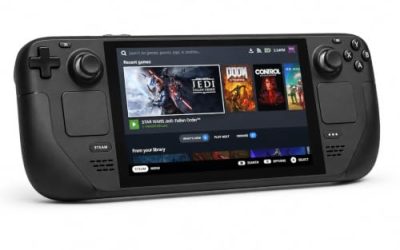
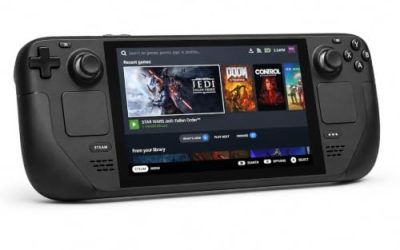
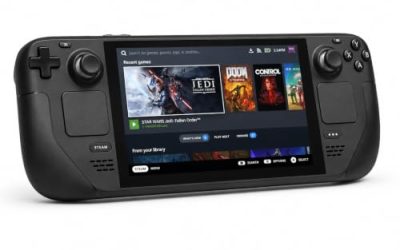
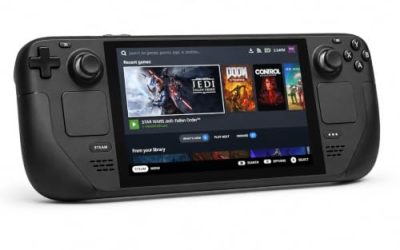
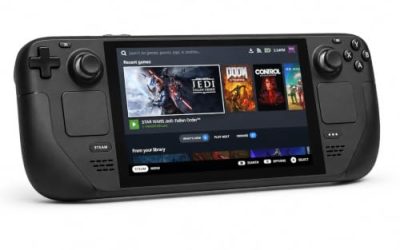
Valve Steam Deck OLED 512GB

The handheld behind the Playable badge. Quern’s published Linux spec sits far below the Deck’s APU, and the default graphics configuration performs well per Valve’s sheet; plan around the controller configuration and small text.
Specs
- Display: 7.4-inch HDR OLED, 1280 by 800, up to 90 Hz
- Processor: AMD Zen 2 and RDNA 2 custom APU
- Memory: 16 GB LPDDR5
- Storage: 512 GB NVMe, plus a microSD slot
- Wireless: Wi-Fi 6E and Bluetooth
- Channel note: Valve sells the Deck mainly through its own store, so Amazon listings are third-party sellers
8BitDo Ultimate 2 Bluetooth Controller

The couch pad. The record lists only partial controller support, so expect the sticks to carry movement and camera while some menus want a pointer; back buttons and a dock make it the flexible option.
Specs
- Connectivity: Bluetooth wireless and USB-C wired
- Joysticks: TMR electromagnetic, anti-drift design
- Triggers: Hall effect, with mode switching
- Extras: two remappable back buttons, motion control
- In the box: charging dock included
Xbox Wireless Controller, Carbon Black

The safest guest pad in PC gaming: Steam Input support is universal, the glyphs match what most games display, and it pairs over Bluetooth or its own wireless standard.
- Connectivity: Xbox Wireless and Bluetooth
- Port: USB-C for wired play
- Controls: hybrid D-pad, dedicated Share button
- Power: AA batteries or optional rechargeable pack
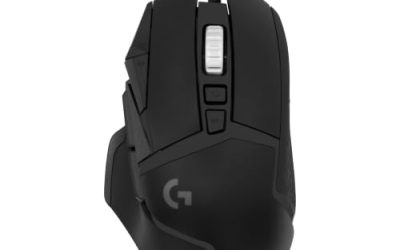
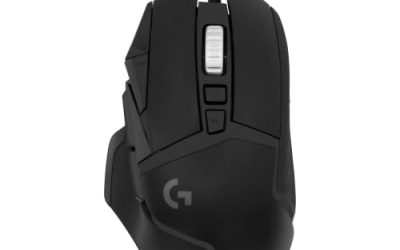
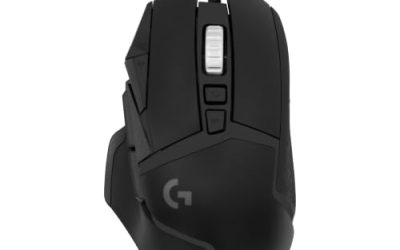
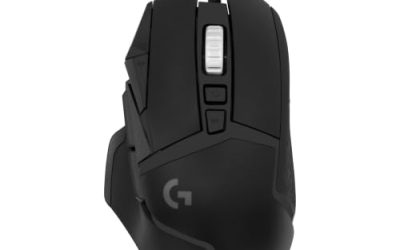
Logitech G502 HERO

Quern is a first-person puzzler whose reference input is the mouse: free look, close inspection of mechanisms, journal work. With controller support only partial, a precise wired mouse at a desk is not the backup plan, it is the primary one.
Specs
- HERO optical sensor, up to 25,600 DPI
- 11 programmable buttons
- Adjustable weight system
- Wired USB connection
- On-board memory profiles
Samsung T9 Portable SSD 2TB

Each Quern build runs a little over 8 GiB, and a native library moves cleanly between desktop and laptop on a fast USB-C drive. The headline figure needs a Gen 2×2 host port; on a lesser port the drive runs at that ceiling instead.
Specs
- Capacity: 2 TB portable SSD
- Interface: USB 3.2 Gen 2×2, USB-C connector
- Maker-rated speeds: up to 2,000 MB per second read, 1,950 MB per second write
- Features: Dynamic Thermal Guard, maker-rated drop resistance
How to choose
Choose either storefront copy on the merits, because both sell the same native build: Steam for the cloud saves, achievements and trading cards its record lists, GOG for the offline installer. On a Linux desktop or laptop no compatibility layer is involved — install the Linux depot and play, against a published spec almost any machine clears. On Steam Deck, budget for the sheet’s two notes: a community controller configuration may serve better than the default, and small text is a real consideration. At a desk, start with the mouse; add a pad for the couch, not as a replacement.
Who should skip
Skip the Deck plan if small in-game text is a deal-breaker, because Valve’s sheet flags exactly that. Skip the pad-only plan if you dislike reaching for a pointer mid-game, because the record promises only partial controller support. Skip Quern if you only trust games whose Proton file runs to hundreds of reports — the native build makes that file beside the point, but the community evidence is 11 reports, stated plainly. And skip the soundtrack as evidence of anything: its Linux flag is real, but it is the game’s depot, not the music, that settles the question.
FAQ
Is Quern: Undying Thoughts native on Linux?
Yes. Steam flags Linux true, the Linux requirements tab is populated at both tiers with Ubuntu named, and SteamDB’s depot table holds a dedicated Linux depot (512793) of 8.25 GiB. All three layers agree, which is rarer than it should be.
What hardware does the Linux build ask for?
The published Linux minimum is a Core i3-2100 or AMD equivalent, 3 GB of RAM, a GTX 650 or HD7770 class card and 9 GB of storage. The recommended tier raises that to a Core i7-3770K, 8 GB of RAM and a GTX 950.
How does Quern play on Steam Deck?
Valve rates it Playable, tested in October 2022: the default graphics configuration performs well and Deck controller icons show, but some functionality needs the touchscreen, virtual keyboard or a community configuration, and some text is small. The paperwork predates the current public build.
Should I buy Quern on Steam or GOG?
Both editions are native. GOG’s own product page lists Linux among the game’s supported systems and sells its usual DRM-free installer; Steam’s copy carries the cloud saves, achievements and trading cards on its record. Pick by the features around the build, not the build itself.
Final verdict
Quern: Undying Thoughts is what a native Linux release looks like when every layer of the record tells the same story: a true flag, a written Ubuntu spec, and a Linux depot that outweighs the Windows one. The blemishes are marginal — a macOS-only metadata string, a Deck sheet that names a Proton runtime and predates the current build, a soundtrack flag that proves nothing alone. Buy either storefront copy, install the native build, and play a Myst-style puzzler as its developer shipped it for Linux: directly.
Product and ASIN Reference
| Product | ASIN |
|---|---|
| Valve Steam Deck OLED 512GB | B0CQ3RWQQZ |
| 8BitDo Ultimate 2 Bluetooth Controller | B0F194QFT2 |
| Xbox Wireless Controller, Carbon Black | B08DF248LD |
| Logitech G502 HERO | B07GBZ4Q68 |
| Samsung T9 Portable SSD 2TB | B0CHFS9K14 |