Tormented Souls is a fixed-perspective survival horror game from Dual Effect and Abstract Digital, published by PQube and released on Steam in August 2021. It sends Caroline Walker through the Winterlake mansion in classic shape: fixed camera angles, scarce resources, item-combining puzzles and save points. None of that answers the Linux question: was any of it built for their system?
The short version is no; the interesting part is where a careless search says yes. Steam’s record flags the game for Windows alone, yet its family carries a Linux flag and ProtonDB’s page wears a native-support header. Both signals point at the wrong app or the wrong layer. This article reads the record layer by layer: flags, tabs, depots, family, Proton file, Deck sheet, second storefront.
As an Amazon Associate, we earn from qualifying purchases.
Quick answer
No. Tormented Souls has no native Linux build: Steam flags the game Windows-only, its Linux requirements tab is an empty shell, and its single depot is a Windows build. The family’s only Linux flag sits on the separate soundtrack app. On Linux the game runs through Proton, where ProtonDB’s headline reads Platinum across 24 reports, and Valve rates it Steam Deck Verified.
The flag that is not the game’s
Start with the trap, because it is the reason this page exists. The Steam family holds exactly two apps: the game, app 1367590, and the Tormented Souls Soundtrack, app 1782240, a music release from October 2021. Read individually, the soundtrack flags all three platforms true, and its Linux requirements field is an empty list outright, with no text behind the flag.
The game flags the opposite on every layer: Windows true, Mac false, Linux false. So the family’s Linux-flag count is one of two, and the one belongs to the audio files. A store filter or database that rolls family flags up to the parent title will report that Tormented Souls supports Linux. It does not: the flag is playback paperwork for audio files, which needs no port. When a family’s only Linux flag sits on a music app, the correct reading is the one the game itself gives: Windows-only.
What Steam’s record actually holds
The game’s requirements fields confirm the flags. The Windows tab is genuinely populated at two tiers: a Core i5-2500K or FX-8150, 4 GB of memory and a GTX 550 Ti at minimum, rising to an i5-4460 or Ryzen 5 1600X, 8 GB and a GTX 960 recommended. The Linux tab is the empty shell: Minimum and Recommended headings over empty lists, the Mac field in the same hollow shape. No distribution is named and no driver floor given, because there is no build for the tab to describe.
SteamDB’s depot table closes the question: exactly one content depot, 1367591, the Windows 64-bit English content at 14.77 GiB on disk, with no Linux or macOS depot in any branch, and the extended operating-system field an empty string. One quirk worth knowing before install: the Windows tab asks for 4 GB of space while the depot delivers 14.77 GiB, so budget for the depot, not the tab.
The categories list is short and exact: single-player, Steam Achievements, full controller support and Family Sharing. The record carries no DRM notice and no external-account notice: gaps to note, not promises. It also lists no Steam Cloud category, so saves live on the machine that made them; moving between desktop and handheld means moving files by hand. On anti-cheat the three sources agree by saying nothing: Steam’s single-player record names none, SteamDB detects the Unity engine with IL2CPP and FBX tooling, XAudio2 and an Epic Online Services SDK entry, a services library rather than an anti-cheat listing, and Are We Anti-Cheat Yet carries no entry for the game.
The Proton file
ProtonDB’s game page carries a Platinum headline across 24 reports, and that is the size of the claim made here. One honesty note: the summary feed could not be read in this session, so no best-reported split, no trending tier and no confidence figure is claimed. The headline and count come from the game page itself.
The same page wears a “Natively Supports” header, wrong in the familiar way: flags, tab and depot all say the opposite, so this article follows Steam and treats it as a stray tag. The reports underneath describe a Proton game whose texture splits by age. Recent reports on current builds describe clean, complete runs, Deck included. The rough entries cluster in the Proton 6 era: cutscene playback problems that pushed players toward experimental or GE builds, combat freezes, and one crash report from the first save room. The Deck sheet’s configuration notes an H264 video requirement, which fits: video was the friction point, and current builds handle it.
The Steam Deck sheet
Valve’s own compatibility endpoint answers directly: resolved category Verified, with all four Verified items passing. The default controller configuration is fully functional, the glyphs match the Deck’s controls, the interface text is legible, and the default graphics configuration performs well. SteamOS separately rates the game Compatible, with game startup functional.
The dated paperwork comes from SteamDB’s republication of Valve’s compatibility data: tested 30 November 2023, on build 12791523, with proton-stable as the recommended runtime. One step of care: the public branch has since moved to build 12879819, dated 5 December 2023, so the sheet sits one step behind the download sold today. The live category still reads Verified and recent Deck reports are clean, so badge and file agree. The configuration asks for no internet for setup or single-player, no manual keyboard invocation and no launcher navigation.
The other storefront
A GOG edition exists, and it settles nothing for Linux. GOG’s live product page sells the game with a works-on line naming Windows alone, and its support answer states the game is officially supported on Windows. Its release came alongside the Steam launch in August 2021, and the build behind it is the same Windows version. Buying there changes the storefront and the installer, not the platform: the GOG copy runs through the same compatibility layer, with no Deck sheet or Proton file written about it. The Steam copy is the one both records describe.
Gear that fits the record
The gear follows the record’s shape: the handheld the badge was written for, two pads for docked and desktop play, a mouse for examination-heavy desktop sessions, and storage for a library whose horror title alone takes 14.77 GiB.
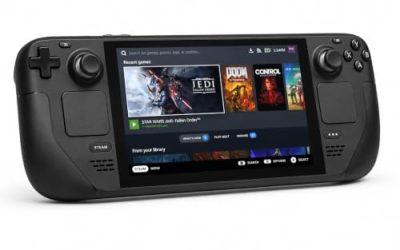
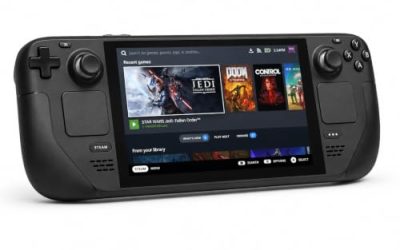
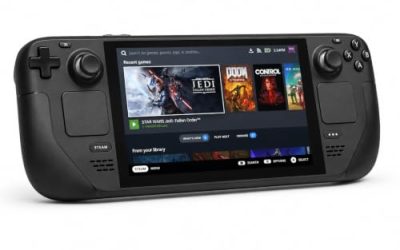
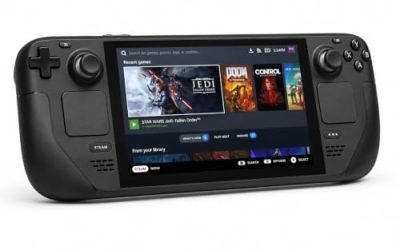
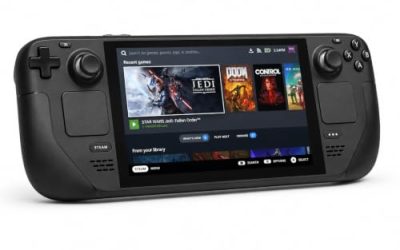
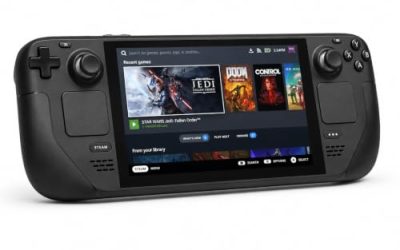
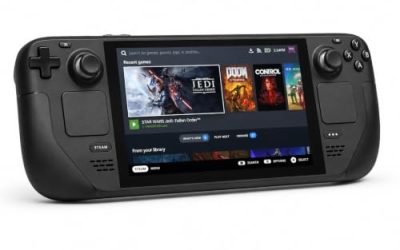
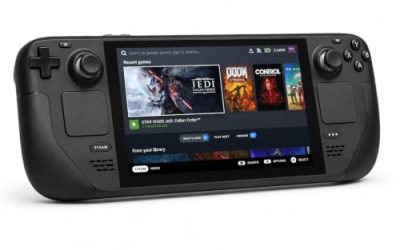
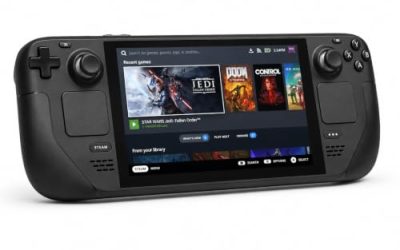
Valve Steam Deck OLED 512GB

The handheld the Verified badge was written for: Valve’s sheet passes this Windows build on all four checks under proton-stable, and the fixed perspectives and legible interface suit the small screen.
Specs
- Display: 7.4-inch HDR OLED, 1280 by 800, up to 90 Hz
- Processor: AMD Zen 2 and RDNA 2 custom APU
- Memory: 16 GB LPDDR5
- Storage: 512 GB NVMe, plus a microSD slot
- Wireless: Wi-Fi 6E and Bluetooth
- Channel note: Valve sells the Deck mainly through its own store, so Amazon listings are third-party sellers
8BitDo Ultimate 2 Bluetooth Controller

The docked and desktop pad pick. Steam lists full controller support, and this pad covers the couch case with modern sticks and triggers plus back buttons for repeated inputs.
Specs
- Connectivity: Bluetooth wireless and USB-C wired
- Joysticks: TMR electromagnetic, anti-drift design
- Triggers: Hall effect, with mode switching
- Extras: two remappable back buttons, motion control
- In the box: charging dock included
Xbox Wireless Controller, Carbon Black

The safest guest pad: Steam Input support is universal, the glyphs match what most games display, and it pairs over Bluetooth or its own wireless standard. On the handheld, an external pad does not take the primary-player slot by default, so a docked pad may need a manual switch.
- Connectivity: Xbox Wireless and Bluetooth
- Port: USB-C for wired play
- Controls: hybrid D-pad, dedicated Share button
- Power: AA batteries or optional rechargeable pack
Logitech G502 HERO

The game is built on examining objects and combining items, and at a desk a precise wired mouse turns those interactions into single clicks. Eleven programmable buttons cover the confirm, cancel and camera inputs.
Specs
- HERO optical sensor, up to 25,600 DPI
- 11 programmable buttons
- Adjustable weight system
- Wired USB connection
- On-board memory profiles
Samsung T9 Portable SSD 2TB

For moving a Linux game library between a desktop and a laptop, or keeping an offline backup of installers, a fast USB-C drive is the simple answer. The headline figure needs a Gen 2×2 host port; on a lesser port the drive runs at that ceiling instead.
Specs
- Capacity: 2 TB portable SSD
- Interface: USB 3.2 Gen 2×2, USB-C connector
- Maker-rated speeds: up to 2,000 MB per second read, 1,950 MB per second write
- Features: Dynamic Thermal Guard, maker-rated drop resistance
How to choose
Choose the Steam copy: it is the build both records describe and the one the Deck badge was issued against. On desktop or laptop, install under Proton and keep the compatibility tool current: the Platinum headline rests on recent builds, while the friction sits in the Proton 6 era, so an up-to-date Proton is the whole strategy. On a Steam Deck, install and launch; the Verified sheet expects no configuration work, and the only manual step is switching an external pad into the primary slot when docking. A pad is the game’s native input shape; the mouse earns its place for desktop examination and inventory work. Remember the save position: with no Steam Cloud category on the record, progress stays on one machine unless copied across by hand.
Who should skip
Skip the native hunt entirely: there is no Linux build to find, and the soundtrack’s flag is not a lead. Skip this route on an unmaintained Proton 6 install, because that is exactly where the cutscene and stability complaints live. Skip the GOG copy if the plan was to escape the compatibility layer; that edition is the same Windows build with a different installer. And skip the game if fixed camera angles, limited saves and deliberate pacing are not the horror being looked for; those are design choices, not platform faults.
FAQ
Is Tormented Souls native on Linux?
No. Steam flags the game Windows-only, the Linux requirements tab is an empty shell, SteamDB’s extended field is an empty string, and the only depot is a Windows 64-bit build.
Why does the soundtrack show Linux support?
Because the separate soundtrack app flags all three platforms true with an empty requirements field. That flag is paperwork for audio files; the game itself flags Linux false on every layer, so one flag across two family apps does not make a port.
How well does Tormented Souls run under Proton?
ProtonDB’s headline is Platinum across 24 reports, with recent reports describing clean completions on current Proton builds. The summary feed could not be read in this session, so no tier split or confidence figure is claimed here; the rough reports on file are old, from the Proton 6 era, and centre on cutscene playback.
Is Tormented Souls Steam Deck Verified?
Yes. Valve’s endpoint returns Verified with all four checks passing, and SteamOS rates it Compatible. The dated test is 30 November 2023 on proton-stable, one build behind the current public branch, and recent Deck reports remain clean.
Final verdict
Tormented Souls on Linux is a clean Proton case wrapped in a misleading family record. The game is Windows-only by flag, by tab and by depot; the Linux support a search seems to promise belongs to its soundtrack. Under a current Proton the file reads Platinum, Valve’s sheet reads Verified, and the GOG alternative changes nothing about the platform. Buy the Steam copy and keep Proton current.
Product and ASIN Reference
| Product | ASIN |
|---|---|
| Valve Steam Deck OLED 512GB | B0CQ3RWQQZ |
| 8BitDo Ultimate 2 Bluetooth Controller | B0F194QFT2 |
| Xbox Wireless Controller, Carbon Black | B08DF248LD |
| Logitech G502 HERO | B07GBZ4Q68 |
| Samsung T9 Portable SSD 2TB | B0CHFS9K14 |