Visage is SadSquare Studio’s first-person psychological horror game, released on Steam on 29 October 2020, after an early access period begun in October 2018. It is a slow, exploration-led haunted-house game with no weapons, built on searching a changing house and managing a sanity mechanic by staying in the light. Readers who meet it in Linux horror catalogues sometimes assume it ships a native build. Steam’s own record says otherwise, on every layer a record can speak on.
The short version: Visage is a Windows-only release that Linux players run through Proton. The longer version is more interesting: the record contains exactly one Linux sentence, sitting not on the game but in the soundtrack’s requirements field, under a flag that also reads false.
As an Amazon Associate, we earn from qualifying purchases.
Quick answer
Visage has no native Linux build. Steam flags it Windows-only, its Linux requirements field is an empty list, and no Linux depot exists; the family’s only Linux text sits on the soundtrack’s requirements page, under a false flag. On Linux it runs through Proton, and Valve rates it Playable on Steam Deck.
Three layers, one answer
Three layers agree completely. First, the flags: Steam’s record for app 594330 reads windows true, mac false, linux false. Second, the requirements fields: the Windows tab is populated at both tiers — a Core i3 or Ryzen 3, 6 GB of memory and a GTX 950 or R7 370 at minimum, rising to a Core i5 or Ryzen 5, 8 GB and a GTX 1060 or RX 480 recommended, with 10 GB of storage. The Linux requirements field — and the Mac field under its own false flag — is an empty list outright: no tab in any form.
Third, the depots: a Windows 64-bit content depot of 7.71 GiB, a Windows 32-bit one of 7.67 GiB, and a third Windows 64-bit depot labelled a dev build at the same size. The only redistributables are the Windows shared installs for Visual C 2015 and DirectX. There is no Linux depot of any kind, and no macOS depot either. The public branch still stands on build 6062332 from January 2021 — the build Valve tested on the Deck. SteamDB’s published configuration carries no extended operating-system value in the extracts read, so none is claimed.
The family sweep: one stray line on the soundtrack
The full DLC array holds exactly one app: the Visage Original Digital Soundtrack (app 938721, type music, released 2 October 2018). Its flags read windows true, mac false, linux false, so the family count on flags is zero of two.
The oddity is in the soundtrack’s requirements fields. Where the game carries an empty list, the soundtrack carries a one-line shell: a minimum entry whose entire content is an operating-system line naming Linux, with a matching Mac one-liner, both under flags that read false. That sentence is the family’s only Linux text, contradicted by the soundtrack’s own flag, with no depot or build behind it. A quick glance can make the family look Linux-friendly; the game’s record is Windows-only on every layer. The trap is weaker than the usual form — even the soundtrack’s flag reads false — but it misleads at a glance, so it is named plainly.
What the record does not say
The record carries no DRM notice and no external-account notice: both are gaps, not promises. SteamDB’s configuration does carry a standard licence-agreement entry — ordinary licence text, not a platform fact. The categories are short and single-player in shape: Single-player, Steam Achievements, Full controller support, Steam Cloud, Remote Play on TV and Family Sharing. The store’s content descriptors name frequent violence or gore and general mature content, and the page carries the studio’s photosensitive-epilepsy seizure warning — label facts from the record.
Anti-cheat was checked from three separate sources. Steam names none, which fits a single-player-only game. SteamDB’s detected technologies are Unreal Engine plus NVIDIA APEX, Nsight Aftermath, PhysX and NvCloth, with Ogg and Vorbis for audio: engine, physics and sound plumbing only. Are We Anti-Cheat Yet carries no entry for it across its full dataset, searched by name and by app id. Three sources, all negative.
The ProtonDB file could not be read
This section is built around an empty file, disclosed rather than smoothed over. The ProtonDB summary record could not be read during this session: the endpoint failed at the network level on repeated attempts, and the game page returned no readable content. This article therefore claims no tier, no best-reported or trending split, and no report count for Visage. The evidence the article leans on instead is Valve’s own paperwork, unusually strong for this game, plus the record’s own shape — single-player, Unreal Engine, full controller support, no anti-cheat — as context, not a substitute tier.
Steam Deck: Playable, tested on the build still served
Valve’s own endpoint returned garbled bytes this session, so the verdict and paperwork were read from SteamDB’s republication of Valve’s data, disclosed here. The sheet rates Visage Playable on Steam Deck, one step below Verified, and Compatible on SteamOS separately. The paperwork is the reassuring part: the test is dated 30 August 2022, the tested build is 6062332, and that is the build still on sale. The recommended runtime is proton-stable, the tested input gamepad, with an H264 requirement noted.
None of the three deductions is a launch failure. Some functionality is not accessible under the default controller configuration, needing the touchscreen, virtual keyboard or a community configuration in places. Some in-game text is small and may be difficult to read. External controllers do not default to primary, so a docked pad may need a manual Quick Access Menu switch. Against those, the game shows Deck controller icons, and its default graphics configuration performs well. The badge certifies the Windows build under Proton; there is no native build for it to certify.
The GOG edition: Windows-only too
A GOG edition of Visage does exist, ruled from GOG’s live product page rather than search: the page sells the game under its own title, its 30 October 2020 release date matches Steam’s record, and its works-on line names Windows alone. The storefront choice is therefore not a platform choice. The GOG copy is the same Windows build with a DRM-free installer, running through the same Proton layer on Linux; it lacks only a Valve test sheet, which belongs to the Steam build’s record. Buy on GOG for the offline installer, or on Steam for the tested build.
Gear that fits the record
The gear follows the record’s shape: the handheld the sheet was written for, two pads, a desktop mouse, and library storage.
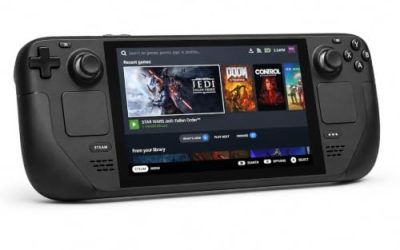
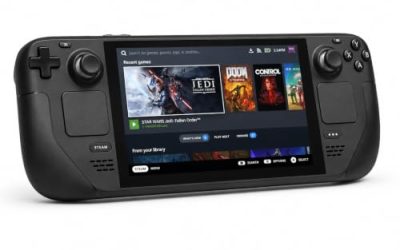
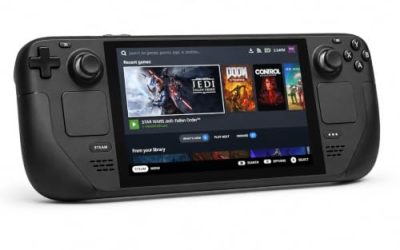
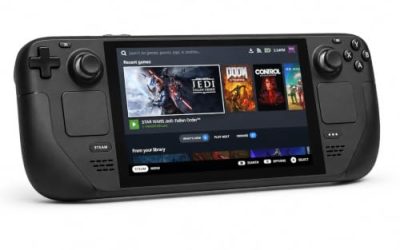
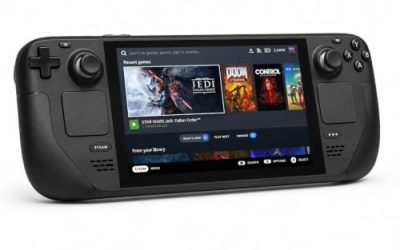
Valve Steam Deck OLED 512GB

The handheld behind the Playable rating: Valve tested the current build on the Deck and passed its default graphics configuration.
Specs
- Display: 7.4-inch HDR OLED, 1280 by 800, up to 90 Hz
- Processor: AMD Zen 2 and RDNA 2 custom APU
- Memory: 16 GB LPDDR5
- Storage: 512 GB NVMe, plus a microSD slot
- Wireless: Wi-Fi 6E and Bluetooth
- Channel note: Valve sells the Deck mainly through its own store, so Amazon listings are third-party sellers
8BitDo Ultimate 2 Bluetooth Controller

The docked and desktop pad pick: Steam lists full controller support, and this pad covers the couch case with modern sticks and triggers.
Specs
- Connectivity: Bluetooth wireless and USB-C wired
- Joysticks: TMR electromagnetic, anti-drift design
- Triggers: Hall effect, with mode switching
- Extras: two remappable back buttons, motion control
- In the box: charging dock included
Xbox Wireless Controller, Carbon Black

The safest guest pad in PC gaming: Steam Input support is universal and the glyphs match what most games display. On the handheld, an external pad may need a manual Quick Access Menu switch before it takes over, per the sheet.
- Connectivity: Xbox Wireless and Bluetooth
- Port: USB-C for wired play
- Controls: hybrid D-pad, dedicated Share button
- Power: AA batteries or optional rechargeable pack
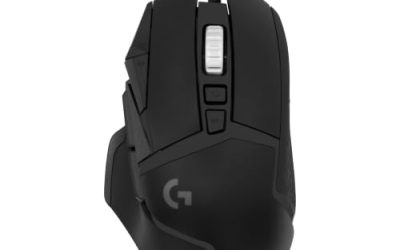
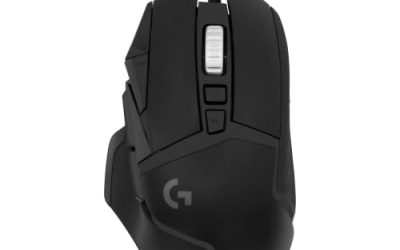
Logitech G502 HERO

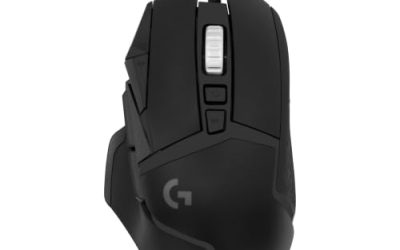
Visage’s exploration is pointer-led at a desk, and a precise wired mouse turns searching drawers and reading notes into single clicks.
Specs
- HERO optical sensor, up to 25,600 DPI
- 11 programmable buttons
- Adjustable weight system
- Wired USB connection
- On-board memory profiles
Samsung T9 Portable SSD 2TB

For moving a game library between machines or backing up installers, a fast USB-C drive is the simple answer. The headline figure needs a Gen 2×2 host port; on a lesser port the drive runs at that ceiling.
Specs
- Capacity: 2 TB portable SSD
- Interface: USB 3.2 Gen 2×2, USB-C connector
- Maker-rated speeds: up to 2,000 MB per second read, 1,950 MB per second write
- Features: Dynamic Thermal Guard, maker-rated drop resistance
How to choose
Choose the Steam copy if the Deck matters to you: it is the build Valve tested, on the branch still served, with every Playable deduction known in advance. Choose the GOG copy if a DRM-free installer matters more, accepting the same Windows build with no Valve paperwork behind it. On desktop or laptop, install under Proton at its default, the proton-stable line the sheet names. The game is pad-shaped on every platform; on the Deck, budget one manual controller switch for a docked pad, and consider a docked display if small text bothers you. With the ProtonDB file unread, treat its tier as a pre-purchase check to run yourself.
Who should skip
Skip this one if you are shopping for a native Linux horror game: Visage is not one, and its family’s only Linux sentence is soundtrack paperwork. Skip it if you need a community tier in writing before buying: this article could not read the ProtonDB summary and claims none. Skip the handheld plan if small in-game text is a deal-breaker — a named Playable deduction. Heed the store page’s own warning if photosensitive epilepsy is a concern. And skip it if you want combat: the player is defenceless by design, in a game built on exploration, sanity management and dread.
FAQ
Is Visage native on Linux?
No. Steam flags app 594330 Windows-only, the Linux requirements field is an empty list outright, and SteamDB’s depot table holds only Windows depots plus Windows redistributables. There is no Linux build; on Linux the game runs through Proton.
Why does the Visage soundtrack mention Linux?
The soundtrack app (938721) carries a one-line minimum entry naming Linux, with a matching Mac line, while its own flags read false for both. It is leftover paperwork on an audio release, not a port: the game flags Linux false with an empty field.
What does ProtonDB say about Visage on Linux?
This article does not quote one: the ProtonDB summary record could not be read during the session in which it was researched, with the endpoint failing repeatedly and the game page unreadable. The gap is disclosed rather than filled; the Deck section leans on Valve’s own test sheet. Check the live page for the current file.
Is Visage Steam Deck Verified?
No — Playable, read from SteamDB’s republication of Valve’s data after Valve’s endpoint returned garbled bytes. The test, dated 30 August 2022, used build 6062332, still the public build. Deductions: controller-configuration reach, small text, and external controllers not defaulting to primary.
Final verdict
Visage’s Linux position is closed. The flags, the empty requirements field and the all-Windows depot table agree that no native build exists, and the family’s single Linux sentence is a soundtrack paperwork line under a false flag. What the record offers instead is a Proton route backed by Valve’s own paperwork: a Playable Deck rating tested in August 2022 on the build still on sale, with three named deductions. The one hole is the unread ProtonDB file, disclosed above. Buy on Steam for the tested build, or on GOG for the same Windows build as an offline installer.
Product and ASIN Reference
| Product | ASIN |
|---|---|
| Valve Steam Deck OLED 512GB | B0CQ3RWQQZ |
| 8BitDo Ultimate 2 Bluetooth Controller | B0F194QFT2 |
| Xbox Wireless Controller, Carbon Black | B08DF248LD |
| Logitech G502 HERO | B07GBZ4Q68 |
| Samsung T9 Portable SSD 2TB | B0CHFS9K14 |