Most games in this series need forensic work: a flag that lies, a tab that is only a shell, a soundtrack carrying a platform the game itself never shipped. The Talos Principle, Croteam’s first-person puzzle game from December 2014, is the opposite case. Steam flags it for Windows, Mac and Linux alike, the Linux requirements tab is written out in full, and the depot table holds a real Linux binary.
The wrinkles are smaller and stranger: one metadata field points at macOS alone, the Steam Deck badge stops a step short of the top tier despite the native build, and the one other storefront selling the game offers an edition whose own product record is Windows only.
As an Amazon Associate, we earn from qualifying purchases.
Quick answer
Yes — The Talos Principle is genuinely native on Linux. Steam flags all three platforms true, the Linux requirements tab is fully written, and SteamDB’s depot table holds a real Linux game binary. The whole five-app family flags Linux too. Valve rates it Playable on Steam Deck with a native recommended runtime, and ProtonDB classifies it Native with a Platinum file.
The status at a glance
| Question | Answer from the record |
|---|---|
| Native Linux build | Yes — flag, written tab and Linux depot agree |
| Family Linux flags | Five of five apps, expansion included |
| ProtonDB record | Native classification, Platinum tiers, 76 reports |
| Steam Deck verdict | Playable, tested July 2022, native runtime |
| GOG edition | A Gold Edition — Windows only on its record |
Steam’s record: three flags, a written tab and a Linux binary
Steam’s appdetails record for The Talos Principle (app 257510) names Croteam as developer, with Devolver Digital and Croteam as publishers, released 11 December 2014. The platform flags read Windows true, Mac true, Linux true — the clean shape, with no dissent behind it.
The Linux requirements field is genuinely populated at both tiers. The minimum names Ubuntu 14.04, a dual-core processor at 2.2 GHz, 2 GB of RAM, a GeForce 8600 or 9600GT class card or a Radeon HD2600 or 3600, and 5 GB of storage; the recommended tier raises that to a quad-core at 3.2 GHz, 4 GB of RAM, a GeForce 480 GTX or Radeon HD 5870 class card and 8 GB. Period hardware, but structurally the point stands: the tab is written, not a heading over an empty list.
SteamDB’s depot table settles the question the tab raises. Alongside the Windows and macOS game binaries sits a Linux depot, GameBin_Linux, at just over 100 MB, plus a small Linux common depot, with the game’s bulk in a shared common depot. The public branch stands on a build from June 2019, plus a legacy Linux branch for older Ubuntu releases. One field points the other way: SteamDB’s osextended value reads macos64. Against a true flag, a populated tab and a delivered Linux depot, that string is packaging metadata, not a build — the same single-dissent shape this series has ruled on before.
The rest of the record is quiet. Steam lists single-player, Steam Achievements, full controller support, Steam Trading Cards, Steam Workshop, Steam Cloud, an included level editor, Remote Play on TV and Family Sharing. No third-party DRM notice and no external account notice appears; both absences are gaps in the record, stated as gaps, not promises. No anti-cheat is named on Steam, SteamDB’s detected technologies are engine and SDK plumbing — Serious Engine, AMD GPU Services, FBX, Lua, OpenAL, Tobii — and Are We Anti-Cheat Yet carries no entry for the game. Its themes, puzzles built around recorded messages and questions of personhood, are described here in gameplay terms only.
The family sweep: five for five
The game’s record lists four family apps, and every one was read individually. The Road to Gehenna expansion (358470) flags all three platforms true, with a Linux tab populated about as fully as the game’s own — the expansion is as native as the base game. The Serious DLC (360820) flags all three true with a populated Linux tab; the Bonus Content pack (322021) and the Soundtrack (322020) flag all three true behind short and empty-list Linux fields respectively.
That last one deserves a sentence, because in this series the soundtrack is usually the trap: a music app carrying a Linux flag that a family scan then credits to a Windows-only game. Here the shape is inverted — the soundtrack’s flag agrees with the game’s own record, and the family’s support does not rest on it, since the game and expansion carry written tabs and depots. The count is five of five, the cleanest sweep this series records. The sequel, the VR edition and the Reawakened edition are separate apps; nothing from their records is read into this one.
The ProtonDB file: a Native classification that agrees
ProtonDB’s summary record for app 257510 reads Platinum on the headline, best-reported and trending tiers, across 76 reports with strong confidence. More telling than the tiers is the classification: ProtonDB’s game page heads the title Native, under a Natively Supports banner, agreeing with Steam’s flags and the depot table rather than contradicting them.
The report texture underneath is mostly desktop players running the native build without tinkering and saying so. A smaller strand, concentrated in Deck reports, describes graphical culling and flicker in the native build’s Vulkan renderer and a preference for the Windows build through Proton instead. That is report-level texture, not a tier claim: the summary stays Platinum, and the split says more about one renderer on one handheld than about the port.
The Steam Deck sheet: Playable, on the native build
Valve’s own compatibility endpoint answered directly this session, with its paperwork cross-read on SteamDB’s republication of the same record. The verdict is Playable, and SteamOS separately reads Compatible. The test dates to 1 July 2022, on build 3897867 — the build the public branch still serves, so unusually for a game of this age, the paperwork describes the current download.
The recommended runtime on the sheet is native: the badge was earned by the Linux build itself, not by the Windows build under Proton. Three checks pass outright — the default controller configuration is fully functional, interface text is legible, and the default configuration performs well. Two deductions hold the badge at Playable: the game sometimes shows mouse, keyboard or non-Deck controller icons, and entering some text requires manually invoking the on-screen keyboard. Both are cosmetic in a slow, deliberate puzzle game.
The storefront ruling: GOG sells a Windows-only edition
There is a second storefront copy, and it is not the native one. GOG’s catalogue carries the game only as The Talos Principle: Gold Edition, and GOG’s own product record for that edition reads Windows true, Mac false, Linux false. That edition is a Windows-only product; one ProtonDB reporter playing that copy notes the same from the other side. The Steam copy is therefore the ruling for Linux players: the only edition shipping the native build.
Gear that fits the record
The gear below follows the record’s shape: the handheld Valve tested, two pads, a mouse for the level editor, and library storage.
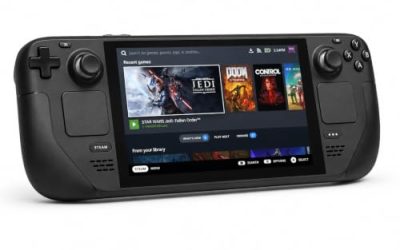
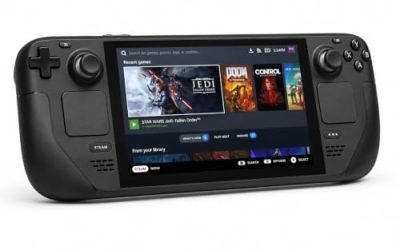
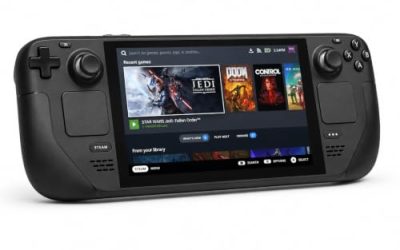
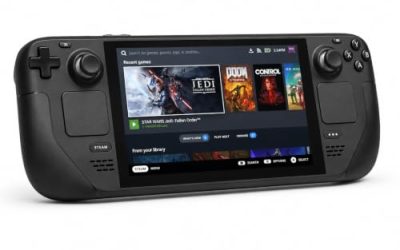
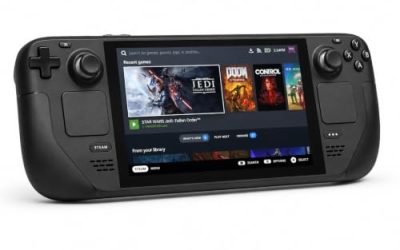
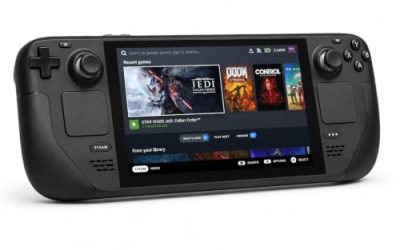
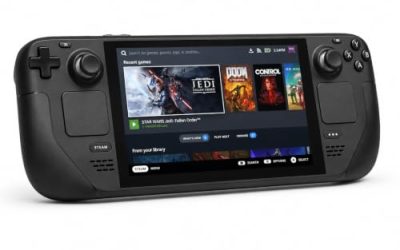
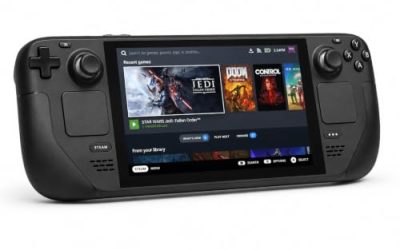
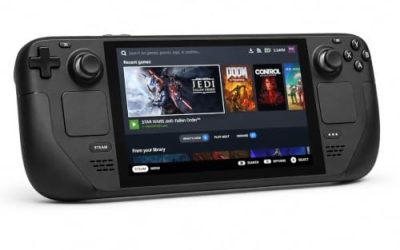
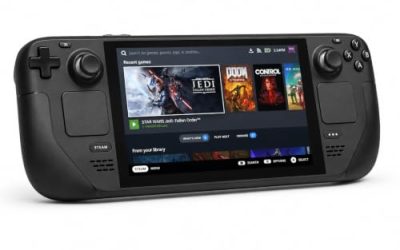
Valve Steam Deck OLED 512GB

The handheld the Playable badge was written for. The game’s 2014 requirements are trivial next to the Deck’s APU; the two deductions are glyphs and keyboard invocation, not performance.
Specs
- Display: 7.4-inch HDR OLED, 1280 by 800, up to 90 Hz
- Processor: AMD Zen 2 and RDNA 2 custom APU
- Memory: 16 GB LPDDR5
- Storage: 512 GB NVMe, plus a microSD slot
- Wireless: Wi-Fi 6E and Bluetooth
- Channel note: Valve sells the Deck mainly through its own store, so Amazon listings are third-party sellers
8BitDo Ultimate 2 Bluetooth Controller

The docked and desktop pad pick. Valve’s sheet confirms the default configuration is fully functional; this pad covers the couch case with modern sticks, triggers and back buttons.
Specs
- Connectivity: Bluetooth wireless and USB-C wired
- Joysticks: TMR electromagnetic, anti-drift design
- Triggers: Hall effect, with mode switching
- Extras: two remappable back buttons, motion control
- In the box: charging dock included
Xbox Wireless Controller, Carbon Black

The safest guest pad in PC gaming: Steam Input support is universal, and its glyphs are the ones most games of this era draw. Note the Deck sheet’s deduction — the game sometimes shows non-Deck controller icons, whichever pad you bring.
- Connectivity: Xbox Wireless and Bluetooth
- Port: USB-C for wired play
- Controls: hybrid D-pad, dedicated Share button
- Power: AA batteries or optional rechargeable pack
Logitech G502 HERO

The game ships with a level editor and a Workshop behind it, and at a desk a precise wired mouse is the right tool for editor work and terminal-style text entry.
Specs
- HERO optical sensor, up to 25,600 DPI
- 11 programmable buttons
- Adjustable weight system
- Wired USB connection
- On-board memory profiles
Samsung T9 Portable SSD 2TB

For moving a Linux game library between machines, or keeping an offline backup of installers, a fast USB-C drive is the simple answer. The headline figure needs a Gen 2×2 host port; on a lesser port the drive runs at that ceiling instead.
Specs
- Capacity: 2 TB portable SSD
- Interface: USB 3.2 Gen 2×2, USB-C connector
- Maker-rated speeds: up to 2,000 MB per second read, 1,950 MB per second write
- Features: Dynamic Thermal Guard, maker-rated drop resistance
How to choose
Choose the Steam copy, because it is the only edition that ships the native Linux build — the GOG Gold Edition’s own record is Windows only. On desktop or laptop, install and launch: no compatibility layer is needed, and ProtonDB’s Platinum file describes the native build running cleanly. On a Steam Deck, expect the Playable shape Valve documents: functional controls and legible text, with occasional wrong glyphs and manual keyboard invocation. Players who hit the Vulkan renderer quirks some Deck reports describe have the Windows build under Proton as a fallback.
Who should skip
Skip the GOG edition if Linux is your platform: its product record is Windows only. Skip this game if you want a Verified-or-nothing handheld badge — the Deck sheet is Playable, held there by glyph and keyboard deductions. Skip it if you are shopping for the sequel or the Reawakened edition; those are separate apps with separate records, and nothing here transfers. And skip it if slow, text-heavy puzzling is not your genre.
FAQ
Is The Talos Principle native on Linux?
Yes. Steam flags Linux true, the requirements tab is populated at both tiers, and SteamDB’s depot table holds a Linux game binary. ProtonDB classifies the game Native, agreeing with Steam.
Is the Road to Gehenna expansion native too?
Yes. The expansion flags all three platforms true with a populated Linux tab, and the whole family flags Linux, five of five.
How does it run on Steam Deck?
Valve rates it Playable, tested in July 2022 on the build the public branch still serves, with a native recommended runtime. The deductions are cosmetic: controller glyphs that sometimes do not match the Deck, and manual keyboard invocation for text entry.
Can I buy the Linux version on GOG?
No. GOG sells the game only as a Gold Edition whose product record reads Windows true, Mac false and Linux false. The Steam copy is the only edition shipping the native build.
Final verdict
The Talos Principle is the cleanest native record in this series: a true flag, a written requirements tab and a real Linux depot, a five-app family that flags Linux without exception, and a ProtonDB file that classifies the game Native at Platinum across 76 reports. The blemishes are small — a macOS-only metadata string the depots overrule, a Playable rather than Verified Deck badge, and a GOG edition that is Windows only. Buy the Steam copy, run the native build, and take the Gehenna expansion without a second thought.
Product and ASIN Reference
| Product | ASIN |
|---|---|
| Valve Steam Deck OLED 512GB | B0CQ3RWQQZ |
| 8BitDo Ultimate 2 Bluetooth Controller | B0F194QFT2 |
| Xbox Wireless Controller, Carbon Black | B08DF248LD |
| Logitech G502 HERO | B07GBZ4Q68 |
| Samsung T9 Portable SSD 2TB | B0CHFS9K14 |