Filter a Steam search by Linux and Fort Solis can look deceptively close to supported. Linux flags genuinely exist somewhere in its store family, and tooling that keys on them can surface the game as if a port were on offer. Open the game’s own record, though, and the picture inverts: the thriller set aboard a storm-battered Mars mining station is a Windows game with a real Mac build beside it, and the Linux ticks belong to two extras, not the game.
This article reads the record layer by layer: the game’s own flags and depots, the family extras where the stray flags live, the ProtonDB file, the Deck badge and the second storefront’s edition.
As an Amazon Associate, we earn from qualifying purchases.
Quick answer
Fort Solis has no native Linux build. Steam flags the game Windows and Mac only, its Linux requirements field is an empty shell, and no Linux depot exists in any branch. The family’s only Linux flags sit on the soundtrack and the artbook. On Linux the game runs through Proton: ProtonDB rates it Gold across 33 reports, and Valve rates the Windows build Verified on Steam Deck.
The flag that is not on the game
Steam’s own record for app 1931730, developed by Fallen Leaf with Black Drakkar Games and published by Dear Villagers, released on 22 August 2023, sets the platform flags plainly: Windows true, Mac true, Linux false. The Windows requirements tab is populated at both tiers, asking for Windows 10 or 11, 16 GB of memory and a Geforce GTX 1060 class card at minimum. The Mac tab is populated too, built around Apple silicon, an M2 at minimum and an M3 recommended. The Linux field is an empty shell: Minimum and Recommended headings printed over lists with nothing in them.
The depot table settles what the fields suggest. SteamDB lists a Windows 64-bit content depot of 10.98 GiB and a macOS depot of 4.41 GiB, and no Linux depot in the public branch, which stands on a build from January 2025. SteamDB’s extended platform string names macOS variants only. The cross-platform effort behind this record is real but aimed elsewhere: a genuine native Mac build exists, while Linux has an absent flag and an empty shell where a specification would go.
Where the Linux flags actually live
The full family sweep explains the store’s confusion. The game’s record carries a DLC array of exactly three apps, each read individually. The Fort Solis Soundtrack, a music app, flags all three platforms true, Linux included, while its own Linux requirements field is an empty list outright. The Fort Solis Artbook flags Linux true as well, behind a Linux requirements field asking for an operating system of All, a processor of All and 541 MB of memory: document-viewer boilerplate, not a game’s specification. The third app, the 1 Year Anniversary Digital Goodies pack, flags Linux false like the game itself.
Counted across the family, two of the four apps carry a Linux flag, and neither is the game. This is the soundtrack trap in doubled form: an audio release and a PDF extra hold the family’s only Linux ticks, and any store filter that reads a family member’s flag as the game’s support will call Fort Solis Linux-ready when no Linux build exists. A flag on an extra describes that extra’s files, never a port.
What the record does not say
Two absences are gaps, not promises. The game’s record carries no DRM notice and no external account notice either; both are unstated here, not guarantees about what a future update could change. The categories, stated exactly as the record lists them, are single-player, Steam Achievements, full controller support, Steam Trading Cards, DualSense controller support, Steam Cloud and Family Sharing, and the content descriptor is General Mature Content, worth weighing before buying. The four-chapter thriller plays out through exploration and recorded logs, in gameplay terms only.
Anti-cheat can be closed from three separate sources. Steam names no anti-cheat on the record. SteamDB’s detected technologies are engine and media components only, Unreal Engine with FMOD audio and AMD and NVIDIA graphics libraries; the one services component it lists, Epic Online Services, is not an anti-cheat product. The community tracker Are We Anti-Cheat Yet carries no entry for this game at all. No anti-cheat layer stands in the way of Proton play.
ProtonDB: Gold on a strong file of 33 reports
ProtonDB’s summary record reads Gold as the headline tier, Platinum as the best-reported tier and Gold as the trending tier, across 33 reports, with strong confidence. That is a healthy file for a demanding Unreal Engine title, with the best runs reaching Platinum.
The texture underneath is worth knowing before a first launch. Several reporters describe a heavy performance cost even on strong hardware, and the recurring tinker steps involve switching to an experimental Proton build and leaning on the game’s upscaling options to hold frame rates steady. None of that changes the tier, but budget a few minutes of settings work. One evidence limit applies here: the ProtonDB game page fetch returned report text without a visible classification header, so no header claim is made; the figures rest on the summary record, which answered in full.
Steam Deck: Verified, and what the badge certifies
Valve’s own compatibility record, read directly for this article, rates the game Verified, category three, with all four Verified checks passing: the default controller configuration is fully functional, the glyphs match the Deck, the interface text is legible, and the default graphics configuration performs well. SteamOS is separately rated Compatible. Because the game has no Linux build, the badge certifies the Windows build running under Proton, and the paperwork, read through SteamDB’s republication of Valve’s compatibility data, names the recommended runtime as proton-stable and a test date of 30 November 2024. The public branch has since moved to a January 2025 build, so the paperwork describes an earlier download than the one on sale today, while the live category still reads Verified. The test configuration also notes an H264 video requirement, a note for minimal Linux installs lacking the codec.
The GOG edition: it exists, and it is Windows-only
A GOG edition of Fort Solis does exist, ruled from GOG’s own live product page rather than from search. That page sells the game with a works-on line of Windows alone, and its support answer states the game is officially supported on Windows. There is no Linux or Mac build in that edition either. For a Linux reader the GOG copy is therefore the same Windows build as the Steam copy, played through the same Proton layer, with the storefront’s offline installer as the only real difference.
Gear for a Proton playthrough
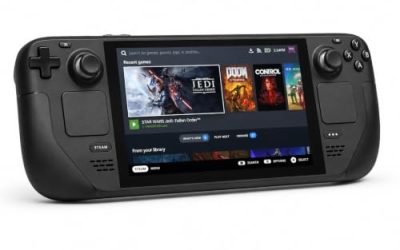
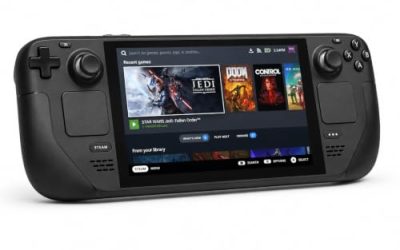
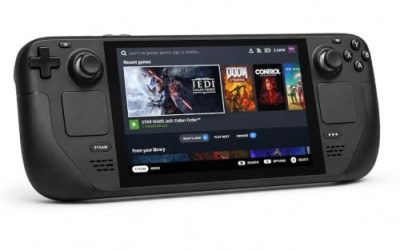
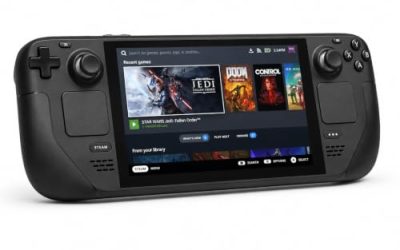
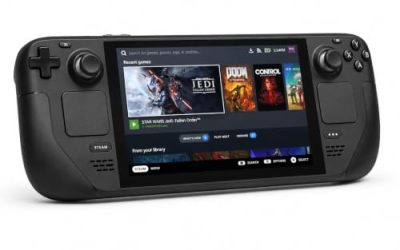
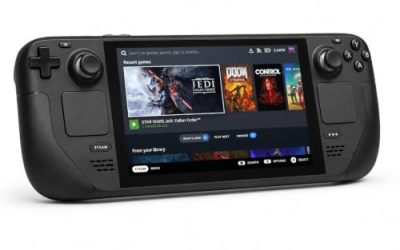
Valve Steam Deck OLED 512GB

The handheld the Verified badge was written for: Valve’s test sheet gives the Windows build a clean pass under proton-stable, and the four-chapter structure suits portable play.
Specs
- Display: 7.4-inch HDR OLED, 1280 by 800, up to 90 Hz
- Processor: AMD Zen 2 and RDNA 2 custom APU
- Memory: 16 GB LPDDR5
- Storage: 512 GB NVMe, plus a microSD slot
- Wireless: Wi-Fi 6E and Bluetooth
- Channel note: Valve sells the Deck mainly through its own store, so Amazon listings are third-party sellers
8BitDo Ultimate 2 Bluetooth Controller

The docked and desktop pad pick. Steam lists full controller support for the game, and this pad covers the couch case with back buttons for menu shortcuts.
Specs
- Connectivity: Bluetooth wireless and USB-C wired
- Joysticks: TMR electromagnetic, anti-drift design
- Triggers: Hall effect, with mode switching
- Extras: two remappable back buttons, motion control
- In the box: charging dock included
Xbox Wireless Controller, Carbon Black

The safest guest pad in PC gaming: Steam Input support is universal, the glyphs match what most games display, and it pairs over Bluetooth or its own wireless standard. On the handheld, an external pad may need a manual Quick Access Menu switch before it takes over.
- Connectivity: Xbox Wireless and Bluetooth
- Port: USB-C for wired play
- Controls: hybrid D-pad, dedicated Share button
- Power: AA batteries or optional rechargeable pack
Logitech G502 HERO

Fort Solis is a slow, deliberate exploration game, and at a desk a precise wired mouse makes its log-reading and keypad entries exact. Eleven programmable buttons cover the inputs a long session repeats.
Specs
- HERO optical sensor, up to 25,600 DPI
- 11 programmable buttons
- Adjustable weight system
- Wired USB connection
- On-board memory profiles
Samsung T9 Portable SSD 2TB

For moving a Linux game library between machines, or keeping an offline backup of installers, a fast USB-C drive is the answer. The headline figure needs a Gen 2×2 host port; on a lesser port the drive runs at that ceiling instead.
Specs
- Capacity: 2 TB portable SSD
- Interface: USB 3.2 Gen 2×2, USB-C connector
- Maker-rated speeds: up to 2,000 MB per second read, 1,950 MB per second write
- Features: Dynamic Thermal Guard, maker-rated drop resistance
How to choose
Choose the Steam copy if the Deck matters: the Verified badge, the proton-stable recommendation and the Gold ProtonDB file all attach to that build. Choose the GOG copy only for its offline installer, knowing it is the same Windows build through the same Proton layer. Either way, plan the first session around settings: pick a current Proton build, expect to use the game’s upscaling options, and ignore the extras’ flags in platform filters.
Who should skip
Skip this one if a native build is a condition of purchase: there is none on either storefront, and the record shows the porting effort went to Mac instead. Skip it if your hardware is modest and you dislike tuning, because the ProtonDB file’s recurring theme is a heavy performance cost that upscaling only partly answers. Skip it if the General Mature Content descriptor is a problem, or if you were eyeing the extras as a sign of Linux support; their flags describe documents and audio files, not a game port.
FAQ
Is there a native Linux version of Fort Solis?
No. Steam flags the game Linux false, its Linux requirements field is an empty shell, SteamDB’s depot table holds Windows and macOS depots only, and GOG’s edition is Windows-only. The native cross-platform build on this record is the Mac one.
Why does the store make Fort Solis look Linux-supported?
Because two of its family apps, the soundtrack and the artbook, flag Linux true. The soundtrack’s Linux field is an empty list and the artbook’s asks for any operating system and any processor, the boilerplate of extras, so tooling that reads family flags can mislabel the game.
Does the Verified Deck badge mean a Linux version exists?
No. The badge certifies the Windows build running under Proton. Valve’s paperwork names proton-stable as the recommended runtime, and the ProtonDB file is a Proton file, Gold across 33 reports, not a native one.
Which ProtonDB figures should I trust for this game?
The summary record answered in full: Gold headline, Platinum best-reported, Gold trending, 33 reports, strong confidence. The game page fetch returned report text without a visible classification header, so no header claim is made.
Final verdict
Fort Solis on Linux is a Proton story with an unusually misleading paper trail. The game is firmly Windows-only, with an empty shell where its Linux specification would sit and no Linux depot behind it, while its soundtrack and artbook carry the family’s only Linux flags. On what actually runs: a Gold ProtonDB file on strong confidence, a Verified Deck badge from Valve’s own record, no anti-cheat in the way, and a GOG edition that changes nothing. Buy it as a Proton game, ignore the extras’ flags, and it earns its place.
Product and ASIN Reference
| Product | ASIN |
|---|---|
| Valve Steam Deck OLED 512GB | B0CQ3RWQQZ |
| 8BitDo Ultimate 2 Bluetooth Controller | B0F194QFT2 |
| Xbox Wireless Controller, Carbon Black | B08DF248LD |
| Logitech G502 HERO | B07GBZ4Q68 |
| Samsung T9 Portable SSD 2TB | B0CHFS9K14 |