Antichamber is a first-person puzzle game built out of impossible geometry: corridors that loop back on themselves, staircases that rearrange when unobserved, and rooms that only exist from one angle. Alexander Bruce made it almost entirely alone; it was released under the Demruth label on 31 January 2013. There is no dialogue and almost no text: coloured signs teach the rules, and a handheld matter gun that picks up and places blocks carries the second half.
For Linux players the question is whether the platform flag on the store page means anything: plenty of 2013-era records carry a Linux flag that nothing behind it supports, so the flag alone settles nothing. This article reads the record layer by layer — flags, requirements, depots, family, ProtonDB, the Deck sheet and the second storefront — before ruling.
As an Amazon Associate, we earn from qualifying purchases.
Quick answer
Yes — Antichamber is genuinely native on Linux. Steam flags all three platforms true, and SteamDB holds a dedicated Linux depot of 663.82 MiB, the largest of the three depots. Two caveats matter: the Linux requirements tab was never filled in, and the native build is a 2014 build some players find unstable today. Valve rates it Playable on Steam Deck.
What Steam’s own record says
Steam’s record for app 219890 reads windows, mac and linux all true, under developer Alexander Bruce and publisher Demruth, released 31 January 2013. The categories are single-player, Steam Trading Cards and Family Sharing. Two absences are worth naming: no controller-support category, and no Steam Cloud category, so saves stay local to one machine.
The requirements tabs are where the paperwork thins out. The Windows tab is populated with a period spec — Windows XP SP2, Vista or 7; a 2.0 GHz processor; 2 GB of memory; a Shader Model 3 graphics card; DirectX 9.0c; 1 GB of drive space. The Linux requirements field, by contrast, is an empty list outright — and the Mac field is the same. A true flag with no filled-in tab is normally a warning sign; here the deciding layer is what Steam delivers.
Two further fields are simply absent — no DRM notice and no third-party account notice — gaps in the paperwork, stated as gaps: an absent notice is not a promise about the future.
The depot table: the Linux build is the biggest file in the room
SteamDB’s depot table lists three content depots, one per platform: Windows holds 602.62 MiB, macOS 460.35 MiB, and the Linux depot, named Antichamber Linux, 663.82 MiB — the largest of the three. The total is 1.69 GiB on disk. A sized depot in the live package is a delivered build, not a placeholder.
The branch data adds the honest wrinkle: the public branch stands on build 296940, built in June 2014 — the native build served today is unmaintained for over a decade. One field points the other way: SteamDB’s extended operating-system string reads macos64, naming macOS only. Against a true flag and a sized Linux depot in the current branch, that string reads as packaging metadata, not evidence — the same single dissent seen on other confirmed native records.
The family sweep: there is no family to sweep
Some records hide their only Linux flag on a soundtrack or art book while the game itself points the other way. That trap cannot form here: there is nothing else to hide it on. The record carries no DLC array at all — no soundtrack, art book, demo or expansion app exists on it. The family Linux-flag count is one of one, and the single flag sits on the game itself, backed by the depot above.
The Proton file: a native classification with a split report base
ProtonDB classifies Antichamber as Native, and its page carries the Natively Supports heading — in full agreement with Steam’s record, since flag and depot both stand behind it. One limit must be stated plainly: ProtonDB’s summary feed for this app could not be read in this session (a page-not-found response by two routes), so no tier split or confidence figure is claimed anywhere here. What the game page shows is a modest report file stretching back years, with a split texture.
Several recent reporters describe the native build failing them: one reports crashes every ten to fifteen minutes while the Windows build runs cleanly through Proton, another describes graphical glitches that made rooms hard to read and switched to Proton for stability, and a third notes occasional crashes around alt-tabbing. Other reporters run the native build out of the box with no complaints. Read at report weight, the pattern is an aging build whose behaviour varies by machine, with the Windows build under Proton as the standing fallback.
On anti-cheat, three sources agree by saying nothing. Steam names no anti-cheat on a single-player-only record. SteamDB’s detected technologies are Unreal Engine plus Bink Video, NVIDIA physics libraries and audio codecs — engine plumbing only. The Are We Anti-Cheat Yet dataset carries no entry for the game either.
The Steam Deck sheet: Playable, on paperwork that still matches the build
Valve’s own compatibility endpoint returned an empty response in this session, so the verdict and its paperwork were read from SteamDB’s republication of Valve’s compatibility data. The rating is Playable, one step below Verified, and SteamOS is separately marked Compatible. The single deduction is cosmetic: the game sometimes shows mouse, keyboard or non-Steam-Deck controller icons. Everything else passes: full functionality on the default controller configuration, legible interface text, and a default graphics configuration that performs well.
The paperwork was tested on 15 February 2022, on build 296940 — exactly the build the public branch still serves, so this sheet still describes the download on sale today. Valve’s recorded runtime is a Proton 7.0 release, so the badge certifies the Windows build under Proton rather than the native build; both routes come in the same purchase, and the certified one is the fallback. One reporter strand adds a first-launch quirk: an Unreal Engine licence window to accept in desktop mode before game mode will proceed.
The second storefront: no GOG edition
There is no GOG edition to compare: the game’s natural product address on GOG redirects to the general games catalogue — GOG’s behaviour for titles it does not sell — and a catalogue query for the name returns no product record. Steam is the only PC storefront carrying the game.
Gear that fits the record
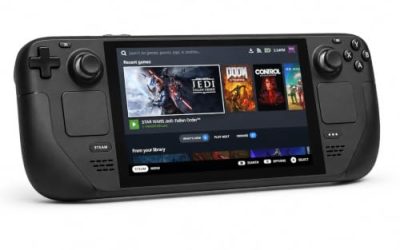
The gear below follows the record’s shape: the handheld the badge was written for, two pads, a desk mouse, and library storage.
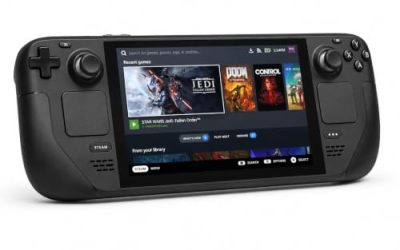
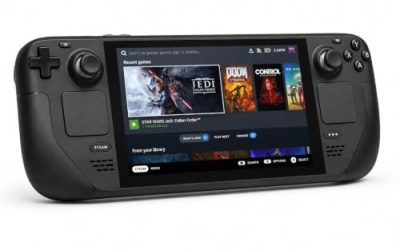
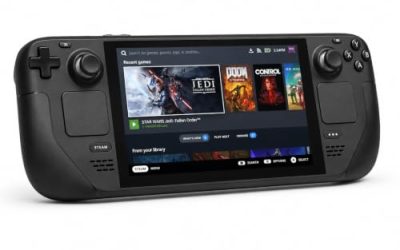
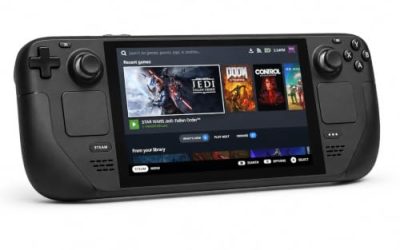
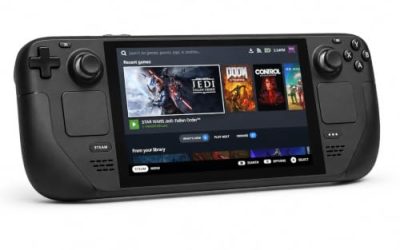
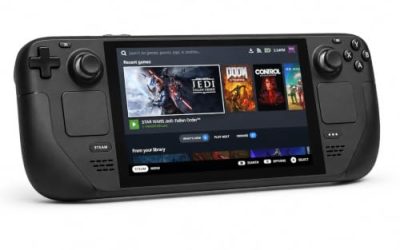
Valve Steam Deck OLED 512GB

The handheld behind the Playable rating. Valve’s sheet passes its default graphics configuration outright, and the 2013 requirements sit far below the APU’s ceiling; the only deduction is on-screen icons.
Specs
- Display: 7.4-inch HDR OLED, 1280 by 800, up to 90 Hz
- Processor: AMD Zen 2 and RDNA 2 custom APU
- Memory: 16 GB LPDDR5
- Storage: 512 GB NVMe, plus a microSD slot
- Wireless: Wi-Fi 6E and Bluetooth
- Channel note: Valve sells the Deck mainly through its own store, so Amazon listings are third-party sellers
8BitDo Ultimate 2 Bluetooth Controller

The docked and desktop pad pick. The Deck sheet confirms gamepad input is the tested configuration, and this pad covers the couch case with modern sticks, triggers and back buttons.
Specs
- Connectivity: Bluetooth wireless and USB-C wired
- Joysticks: TMR electromagnetic, anti-drift design
- Triggers: Hall effect, with mode switching
- Extras: two remappable back buttons, motion control
- In the box: charging dock included
Xbox Wireless Controller, Carbon Black

The safest guest pad in PC gaming: Steam Input support is universal and the glyphs match what most games display. On the handheld, an external pad may need a manual Quick Access Menu switch before it takes over.
- Connectivity: Xbox Wireless and Bluetooth
- Port: USB-C for wired play
- Controls: hybrid D-pad, dedicated Share button
- Power: AA batteries or optional rechargeable pack
Logitech G502 HERO

Antichamber began as a mouse-and-keyboard game, and a precise wired mouse makes the matter gun’s aim-and-place work exact. Eleven programmable buttons cover the interact and gun-swap inputs.
Specs
- HERO optical sensor, up to 25,600 DPI
- 11 programmable buttons
- Adjustable weight system
- Wired USB connection
- On-board memory profiles
Samsung T9 Portable SSD 2TB

For moving a Linux game library between machines, or keeping an offline backup of installers, a fast USB-C drive is the simple answer. The headline figure needs a Gen 2×2 host port; on a lesser port the drive runs at that ceiling instead.
Specs
- Capacity: 2 TB portable SSD
- Interface: USB 3.2 Gen 2×2, USB-C connector
- Maker-rated speeds: up to 2,000 MB per second read, 1,950 MB per second write
- Features: Dynamic Thermal Guard, maker-rated drop resistance
How to choose
Start with the native build: it is the largest depot in the package, and a share of reporters run it untouched. If your machine is one where the 2014 build crashes or glitches, force the Windows build through Proton instead — the route Valve certified on Deck, and the one the unhappy native reporters land on. On the Deck, accept the Playable terms: full functionality and legible text, with occasional desktop controller icons and a first-launch licence window to clear in desktop mode. On any platform, remember saves are local — with no Steam Cloud on this record, a second machine starts from nothing unless you move the save yourself.
Who should skip
Skip it if you need a maintained build: the newest bits in the public branch date to June 2014, and nothing suggests that will change. Skip it if intermittent crashes would ruin the game for you and you will not fall back to the Proton route. Skip it if you rely on cloud saves or want controller-support paperwork on the store record — neither exists here. And skip the GOG hunt entirely; there is no second edition to wait for.
FAQ
Is Antichamber native on Linux?
Yes. Steam flags Linux true, SteamDB holds a dedicated Linux depot of 663.82 MiB — the largest of the three platform depots — and ProtonDB classifies the game as Native. The build is real; its age is the caveat, not its existence.
Why is the Linux system requirements tab empty?
Because it was never filled in: the field is an empty list for Linux and macOS alike, while the Windows tab carries a full 2013-era spec. The empty tab is missing documentation, not a missing build — the delivered depot is the layer that decides, and it is present and sized.
Should I play the native build or use Proton?
Try native first; many reporters run it with no tinkering. If you hit the crashes or glitches some recent reports describe, switch to the Windows build under Proton — the configuration Valve tested for the Deck badge, and the route those reporters finished on. ProtonDB’s summary feed could not be read in this session, so no tier figures are claimed for either route.
Is Antichamber Steam Deck Verified?
Playable, not Verified. Valve’s sheet, tested on 15 February 2022 against the build the public branch still serves, passes functionality, legibility and performance, deducting only for sometimes showing mouse, keyboard or non-Deck controller icons. SteamOS is separately marked Compatible.
Final verdict
Antichamber pairs a clean native record with a scruffy paper trail: a true flag, the largest depot in its own package and a ProtonDB native classification in agreement — set against an empty requirements tab, a macOS-only extended-OS string and a build frozen in June 2014. Buy it knowing both halves: the Linux build exists and needs no compatibility layer, and if the aging binary misbehaves on your machine, the certified Proton route is in the same purchase.
Product and ASIN Reference
| Product | ASIN |
|---|---|
| Valve Steam Deck OLED 512GB | B0CQ3RWQQZ |
| 8BitDo Ultimate 2 Bluetooth Controller | B0F194QFT2 |
| Xbox Wireless Controller, Carbon Black | B08DF248LD |
| Logitech G502 HERO | B07GBZ4Q68 |
| Samsung T9 Portable SSD 2TB | B0CHFS9K14 |