Amnesia: A Machine for Pigs is a first-person horror adventure developed by The Chinese Room and published by Frictional Games, released on Steam on 10 September 2013. It follows industrialist Oswald Mandus through a London of steam, machinery and swine imagery, trading its predecessor’s inventory systems for guided exploration and story. Its themes are handled here in gameplay terms only; this page answers the narrower question of what the game’s own records say about Linux.
The short answer is the clean one: flags, requirements tab and depot table all describe a real native Linux build, the family contains no second app to muddy the count, and the one wrinkle sits in the Steam Deck paperwork, which was written against the Windows build.
As an Amazon Associate, we earn from qualifying purchases.
Quick answer
Amnesia: A Machine for Pigs is natively supported on Linux. Steam flags all three platforms, its Linux requirements tab is genuinely populated at both tiers, and SteamDB lists a dedicated Linux depot beside the shared content. The family has no add-on apps at all. Valve rates it Playable on Steam Deck, though the test paperwork names a Proton runtime.
The store record: three flags, all true
Start with the flags: here they are nearly the whole story. Steam’s record for app 239200 reads windows true, mac true, linux true. The developer field names The Chinese Room, the publisher field Frictional Games, and the categories are exactly: Single-player, Full controller support, Captions available, Steam Cloud, Remote Play on TV, Remote Play Together and Family Sharing. The captions listing is a store-listed capability, stated as such; the content descriptor, General Mature Content, is a label fact.
The Linux requirements field is a genuinely populated tab at both tiers, not a shell. At minimum: a major Linux distribution from 2010, a high-range Core i3 or AMD A6 processor, 2 GB of memory, a GeForce 200 series or Radeon HD 5000 series card, and 5 GB of storage, with a note that integrated Intel graphics should work but are not supported. The recommended tier moves the baseline to a 2012 distribution, a high-range Core i5 or AMD FX, 4 GB of memory and a GeForce 400 series or Radeon HD 6000 series card. Two absences are gaps rather than promises: no DRM notice and no external account notice appear on the record, and its licence-agreement entry is ordinary licence text.
Depots and the family check: one app, one answer
SteamDB’s depot table backs the flag with delivered software: a shared content depot of 4.94 GiB, and beside it three small platform depots — Windows at 28.74 MiB, macOS at 29.43 MiB, and a dedicated Linux depot at 114.18 MiB. The public branch stands on a build set in February 2017. SteamDB’s extracts publish no extended-OS value for this app, so none is claimed; the ruling rests on flag, tab and depot, three layers that agree.
The family check is the shortest in this series. The record carries no add-on array at all: no soundtrack, no artbook, no expansion app exists to read. The recurring trap, a music app flagging Linux and lending the game a false label, cannot form, because there is no second app. The Linux-flag tally is one of one, and the one sits on the game itself, backed by tab and depot. A Linux client icon sits in the asset list too, named here as decoration rather than proof: the depot does the proving.
Anti-cheat: three sources, all negative
Anti-cheat is a three-source negative. Steam’s record names none, expected for a single-player-only game. SteamDB’s detected technologies are the Ogg, OpenAL, SDL and Vorbis libraries: audio and engine plumbing, not an anti-cheat product. The Are We Anti-Cheat Yet dataset, all 1,167 games of it, carries no entry for this title.
ProtonDB: a feed that would not answer
One file could not be read for this article. ProtonDB’s summary feed returned a page-not-found response through every route tried, and the game page fetch timed out, so this article claims no tier, no report count and no confidence figure for the game, and makes no claim about any classification header on its page. The gap is stated plainly rather than filled from memory or other sites. It also matters less here than in most entries in this series: for a native title, that file would only describe the fallback Proton route a Linux player does not need.
Steam Deck: Playable, on paperwork written against Proton
Valve’s own compatibility endpoint answered directly for this app, and its verdict is Playable. The passing items are that the default controller configuration is fully functional, the interface text is legible, and the default graphics configuration performs well. The notes: the launcher or setup tool may need the touchscreen or virtual keyboard, the game sometimes shows mouse, keyboard or non-Deck controller icons, it supports the native resolution without setting it by default, and external controllers do not default to the primary-player slot. SteamOS compatibility is rated Compatible on its own sheet.
The dated paperwork behind the badge comes from SteamDB’s republication of Valve’s compatibility data: a test dated 15 February 2023, run on the same build the public branch still serves, so the paperwork is current against today’s download. One line needs naming exactly as it reads: the sheet’s recommended runtime is a Proton release, which means the Playable rating as tested certifies the Windows build running under Proton, not the native Linux build the store sells. The native build’s case rests on flag, tab and depot; the badge is separate evidence about a different route to the same game.
The GOG edition: Linux listed, Mac not
GOG sells this game, and its own records settle the edition question. GOG’s live product page is this title, and its product record lists Windows and Linux as the supported systems: a GOG edition exists, and it carries the native Linux build. One cross-storefront wrinkle is worth naming: GOG’s record does not list macOS, while Steam’s flags claim a Mac build. On Linux the two storefronts agree, and the GOG copy is an offline installer without Valve’s Deck paperwork behind it.
What the site’s horror catalogue says about this game
The folder’s horror catalogue names this game three times, and each mention was checked against today’s record. Its Quick answer groups Frictional’s Amnesia games among the titles that run natively; its psychological-horror section places the Amnesia series in the class that runs with no compatibility layer; and its native standouts passage names A Machine for Pigs among the series entries carrying native Linux builds. All three agree with today’s record: true flag, populated tab, real Linux depot.
Gear for a first-person descent
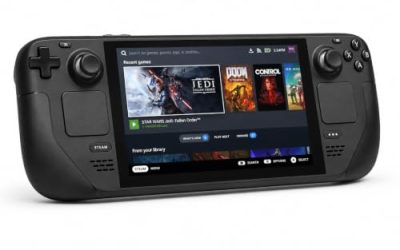
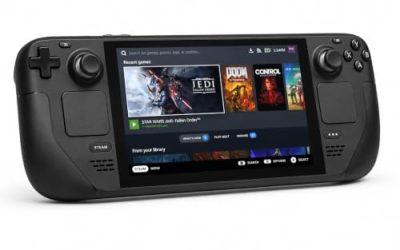
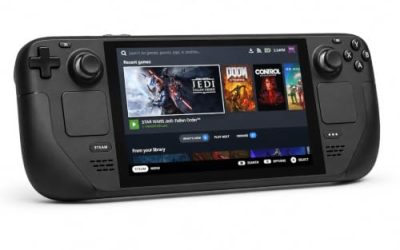
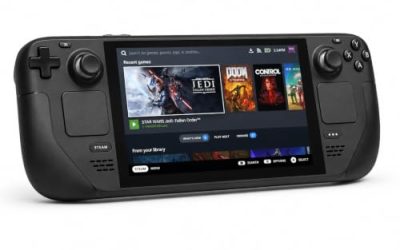
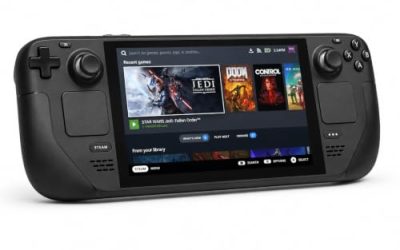
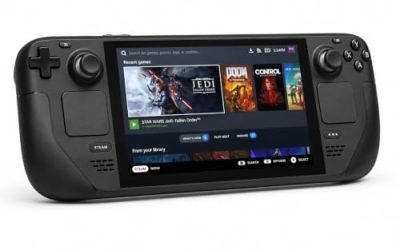
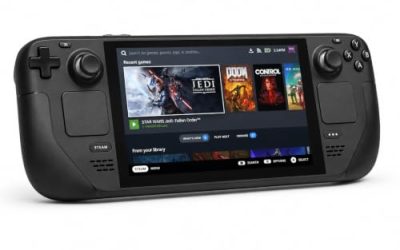
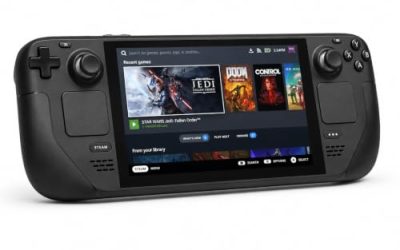
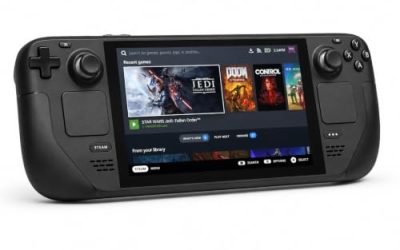
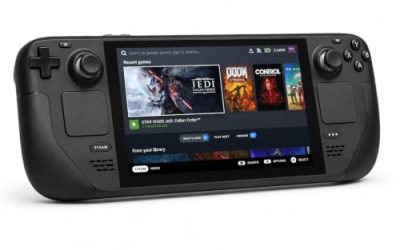
Valve Steam Deck OLED 512GB

The handheld the official sheet rates Playable, running the native build this page recommends; its screen and controls suit a game built around slow exploration and reading.
Specs
- Display: 7.4-inch HDR OLED, 1280 by 800, up to 90 Hz
- Processor: AMD Zen 2 and RDNA 2 custom APU
- Memory: 16 GB LPDDR5
- Storage: 512 GB NVMe, plus a microSD slot
- Wireless: Wi-Fi 6E and Bluetooth
- Channel note: Valve sells the Deck mainly through its own store, so Amazon listings are third-party sellers
8BitDo Ultimate 2 Bluetooth Controller

The couch pad pick: the record lists full controller support, and this pad covers the living-room case with modern sticks, hall-effect triggers and back buttons.
Specs
- Connectivity: Bluetooth wireless and USB-C wired
- Joysticks: TMR electromagnetic, anti-drift design
- Triggers: Hall effect, with mode switching
- Extras: two remappable back buttons, motion control
- In the box: charging dock included
Xbox Wireless Controller, Carbon Black

The safest guest pad in PC gaming: Steam Input support is universal, the glyphs match what most games display, and it pairs over Bluetooth or its own wireless standard. The Deck sheet’s note applies here: an external pad does not default to the primary-player slot and may need a manual switch.
- Connectivity: Xbox Wireless and Bluetooth
- Port: USB-C for wired play
- Controls: hybrid D-pad, dedicated Share button
- Power: AA batteries or optional rechargeable pack
Logitech G502 HERO

Mandus’s world is full of notes, switches and machinery to inspect at close range, and a precise wired mouse makes that searching faster than a stick; eleven programmable buttons cover the inputs a session repeats.
Specs
- HERO optical sensor, up to 25,600 DPI
- 11 programmable buttons
- Adjustable weight system
- Wired USB connection
- On-board memory profiles
Samsung T9 Portable SSD 2TB

A five-gigabyte install is small, but a growing Linux library is not: a fast USB-C drive keeps the collection portable between machines. The headline figure needs a Gen 2×2 host port; on a lesser port it runs at that ceiling instead.
Specs
- Capacity: 2 TB portable SSD
- Interface: USB 3.2 Gen 2×2, USB-C connector
- Maker-rated speeds: up to 2,000 MB per second read, 1,950 MB per second write
- Features: Dynamic Thermal Guard, maker-rated drop resistance
How to choose
Choose the Steam copy if the Deck paperwork matters to you, because Valve’s sheet describes this exact build and its current branch. On Linux, install the native build and skip the compatibility tool entirely: the store sells a Linux depot, and that is the supported path. Choose the GOG copy if the offline installer is the deciding factor, knowing it lists the same native Linux build. A pad is the default input shape, since the game lists full controller support; a mouse earns its place for the document and machinery work.
Who should skip
Skip this one if you want the first game’s systems: this entry is a guided, story-led piece with no inventory management, and that choice is the whole shape of the game. Skip it if an official Deck Verified badge is your buying rule, because the rating here is Playable and its paperwork was written against the Windows build under Proton. Skip it if you need a settled community compatibility file before buying, because the ProtonDB record could not be read for this article. And skip it if the material is not for you: the store’s descriptor is General Mature Content.
FAQ
Is Amnesia: A Machine for Pigs native on Linux?
Yes: the flag is true, the tab is populated at both tiers, and SteamDB lists a dedicated Linux depot beside the shared content. No compatibility layer is required.
Why could this article not report a ProtonDB tier?
ProtonDB’s summary feed returned a page-not-found response through every route tried, and its game page fetch timed out, so no tier, report count or confidence figure is claimed. For a native title that file would only grade the fallback Proton route in any case.
Is Amnesia: A Machine for Pigs Steam Deck Verified?
No: Playable, one step below Verified. The paperwork is from February 2023, on the build still served today, and names a Proton runtime, so the badge as tested describes the Windows build under Proton, not the native build.
Can I buy Amnesia: A Machine for Pigs on GOG instead?
Yes: GOG’s product record lists Windows and Linux, so its edition carries the same native build, with an offline installer and none of Valve’s Deck paperwork. It does not list a Mac edition.
Final verdict
A Machine for Pigs is one of the cleanest native records in this series: a true flag backed by a populated two-tier tab and a sized Linux depot, a family of exactly one app, and a GOG edition that lists Linux too. The wrinkles are small and named: the Deck badge is Playable rather than Verified and was tested against the Windows build under Proton, and the ProtonDB file could not be read this session. Buy it on Steam or GOG and run the native build.
Product and ASIN Reference
| Product | ASIN |
|---|---|
| Valve Steam Deck OLED 512GB | B0CQ3RWQQZ |
| 8BitDo Ultimate 2 Bluetooth Controller | B0F194QFT2 |
| Xbox Wireless Controller, Carbon Black | B08DF248LD |
| Logitech G502 HERO | B07GBZ4Q68 |
| Samsung T9 Portable SSD 2TB | B0CHFS9K14 |