SOMA is Frictional Games’ first-person science-fiction horror from September 2015, set inside PATHOS-II, a damaged underwater research facility where the machines have started to think they are people. Steam’s own description calls it a story about identity, consciousness, and what it means to be human; the play is exploration, stealth, and puzzles, and the store page states plainly that there is no fighting back, only outsmarting or running.
Most games of that vintage send a Linux player into a Proton investigation. SOMA does not. Its Steam record answers the platform question in the flags themselves: this is a native Linux release, from the studio that built its reputation on supporting the platform. This article reads the full record — Steam’s app data, ProtonDB’s feed, Valve’s Deck sheet, and GOG’s page — and reports what each one says.
As an Amazon Associate, we earn from qualifying purchases.
Quick answer
SOMA is native on Linux. Steam’s record for app 282140 flags Windows, Mac and Linux, and its Linux requirements tab is fully populated, down to a 2014-era distribution and OpenGL 3.3. No Proton layer is required on desktop, Valve rates the Steam Deck Verified, and GOG’s edition lists Linux too. There is no DRM notice and no anti-cheat anywhere in the record.
A native record, not a compatibility case
Steam’s appdetails record for SOMA (app 282140, by Frictional Games) sets all three platform flags to true: Windows, Mac, and Linux. A flag alone can be a leftover, so the decisive evidence is the requirements tab — and the Linux tab is genuinely populated, not an empty shell. Its minimum reads: a 64-bit major Linux distribution from 2014; a Core i3 or AMD A6 processor at 2.4 GHz; 4 GB of RAM; an NVIDIA GeForce GTX 260 or AMD Radeon HD 5750 with OpenGL 3.3; and 25 GB of storage. Its notes add that proprietary drivers are assumed, and that integrated Intel graphics are not supported — the HD 4000 series or better should work, the note says, but with issues. The recommended tier raises the processor to a Core i5 or AMD FX at 2.4 GHz, memory to 8 GB, and graphics to a GeForce GTX 480 or Radeon HD 5970, again on OpenGL 3.3.
The category list is complete: single-player only, full controller support, Steam Achievements, Steam Trading Cards, Steam Workshop, Steam Cloud, and Family Sharing. The native build is not a historical claim about the 2015 launch; it is what the listing still publishes today.
The Windows column, for comparison
Steam’s published Windows minimum — 64-bit Windows Vista, a Core i3 or AMD A6 at 2.4 GHz, 4 GB of RAM, a GeForce GTX 260 or Radeon HD 5750 on OpenGL 3.3, 25 GB of storage — is one the Linux tab mirrors almost line for line, changing the operating-system line and adding the proprietary-drivers sentence to the notes. A port abandoned at launch tends to show a stale or missing tab; this one was written as a first-class column of the same table.
A family of one: no add-ons, no soundtrack trap
Many records hide their only Linux flag on a soundtrack album, then get misread as supporting the game. SOMA’s record cannot form that trap. The appdetails entry lists no DLC array and no demo, and a store search for a SOMA soundtrack app returns nothing at all. The whole Steam family is the single game app: the Linux-flag count is one of one, and the flag sits on the game itself. There is no album to misread.
DRM and anti-cheat: two empty files
Steam’s record carries no DRM notice field and no external account notice. The listing names no DRM product and no account layer, so this article names none either. Players who want the position stated as storefront policy rather than absence can look at the GOG edition below, sold under that store’s standing DRM-free terms.
Anti-cheat, reported source by source, is equally empty. Steam’s record names no anti-cheat system, and its category list is single-player only. SteamDB’s detected technologies for the app are Autodesk FBX, FMOD, Ogg, SDL, Tobii, and Vorbis — asset, audio and media middleware, with no anti-cheat among them. Are We Anti-Cheat Yet’s database carries no entry for app 282140 or for the name SOMA. On the Deck side, kept separate, Valve’s test sheet records no anti-cheat deduction. Desktop and Deck positions agree: no anti-cheat is in play, and no bypass question arises.
ProtonDB: a Gold headline over a native game
ProtonDB’s summary feed answered in full: headline Gold, best-reported Platinum, trending Platinum, across 74 reports, with confidence marked strong. The summary response carries no separate native-classification field, so those tiers describe the report pool as the feed measures it; the native ruling rests on Steam’s record above, not on the feed. The two sources do not conflict.
Steam Deck: Verified, with one controller note
Valve’s own compatibility endpoint resolves to Verified for SOMA. All four Verified checks pass: full functionality with the default controller configuration, Steam Deck controller icons shown, interface text legible, and default graphics performing well. The configuration block is clean — gamepad input, no keyboard or launcher steps, no small text, and no internet required for setup or for single-player. SteamOS is rated separately as Compatible.
The test behind the badge is dated. SteamDB’s republication of Valve’s compatibility data — the route this project uses for test paperwork when Valve’s endpoint gives the verdict without the dates — records the test on 11 March 2022, against build 7755316, and lists a recommended runtime of Proton 7.0-1. That runtime field is paperwork; the flags, not the runtime line, establish how the game ships. The sheet’s single note is practical: external Bluetooth or USB controllers do not default to the primary player, and may need a manual switch through the Quick Access Menu.
GOG sells the same native build
GOG’s live product page for SOMA lists its supported systems as Windows, Linux, and Mac OS X, and the page’s own FAQ states that SOMA is officially supported on Windows, Linux, and macOS. The native build is therefore not a Steam exclusive: a second storefront’s record lists the same Linux support, sold under GOG’s DRM-free terms. For a Linux player the choice between the two editions is about storefront preference, not about which copy runs.
Gear that fits the record
The gear below follows the record’s shape: the handheld the badge was written for, two pads for docked and desktop play, a mouse for terminal-heavy exploration, and library storage.
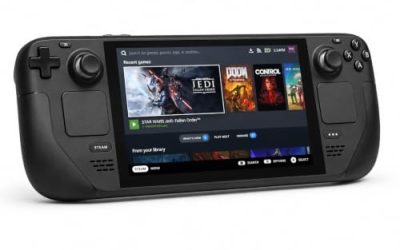
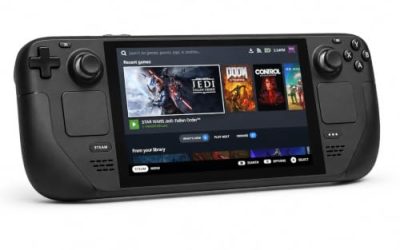
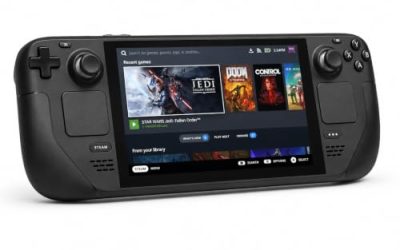
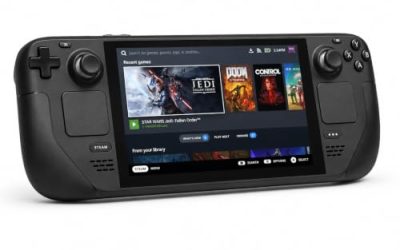
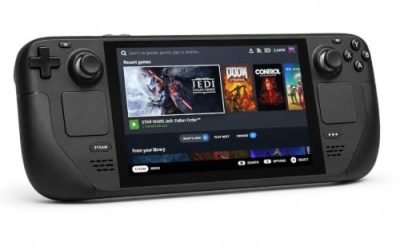
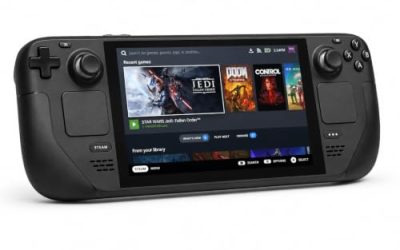
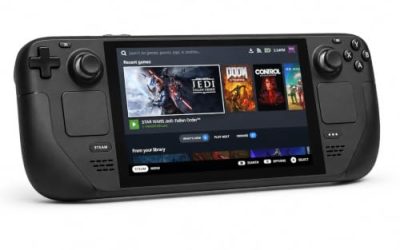
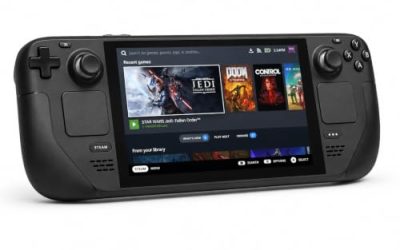
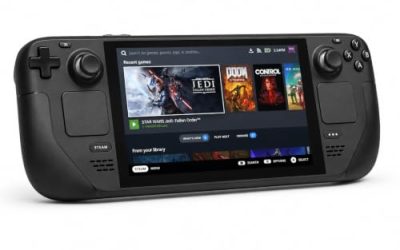
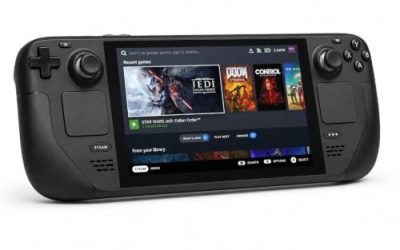
Valve Steam Deck OLED 512GB

The handheld the Verified badge was written for. SOMA’s published requirements sit far below the Deck’s APU, and the native build is what the badge describes: the game installs and runs as a Linux title, with no compatibility layer involved.
Specs
- Display: 7.4-inch HDR OLED, 1280 by 800, up to 90 Hz
- Processor: AMD Zen 2 and RDNA 2 custom APU
- Memory: 16 GB LPDDR5
- Storage: 512 GB NVMe, plus a microSD slot
- Wireless: Wi-Fi 6E and Bluetooth
- Channel note: Valve sells the Deck mainly through its own store, so Amazon listings are third-party sellers
8BitDo Ultimate 2 Bluetooth Controller

The docked and desktop pad pick. Steam lists full controller support for SOMA, and Valve’s sheet confirms the default controller configuration is fully functional; this pad covers the couch case with modern sticks and triggers plus back buttons.
Specs
- Connectivity: Bluetooth wireless and USB-C wired
- Joysticks: TMR electromagnetic, anti-drift design
- Triggers: Hall effect, with mode switching
- Extras: two remappable back buttons, motion control
- In the box: charging dock included
Xbox Wireless Controller, Carbon Black

The safest guest pad in PC gaming, with universal Steam Input support. The test sheet’s one note applies here: an external pad may not default to the primary player on the Deck and might need a Quick Access Menu switch.
- Connectivity: Xbox Wireless and Bluetooth
- Port: USB-C for wired play
- Controls: hybrid D-pad, dedicated Share button
- Power: AA batteries or optional rechargeable pack
Logitech G502 HERO

SOMA’s interaction is first-person and deliberate — terminals to read, documents to search, objects to inspect — and at a desk a precise wired mouse keeps camera and cursor control exact. Eleven programmable buttons cover the inputs the game repeats most.
Specs
- HERO optical sensor, up to 25,600 DPI
- 11 programmable buttons
- Adjustable weight system
- Wired USB connection
- On-board memory profiles
Samsung T9 Portable SSD 2TB

SOMA’s install is 25 GB by its published requirements; a fast portable SSD earns its place moving a whole Linux game library between a desktop and a laptop, or keeping an offline backup of installers such as the GOG copy.
Specs
- Capacity: 2 TB portable SSD
- Interface: USB 3.2 Gen 2×2, USB-C connector
- Maker-rated speeds: up to 2,000 MB per second read, 1,950 MB per second write
- Features: Dynamic Thermal Guard, maker-rated drop resistance
How to choose
Choose either storefront on its own merits: both records list the native Linux build, so the copy itself is not in question. The Steam edition is the one the Deck Verified sheet was written against; the GOG edition is sold DRM-free with an offline installer, per GOG’s own page. Install the native build and leave compatibility-tool settings alone — no Proton selection is part of this game’s setup. Check your graphics driver against the tab’s terms first: the published Linux specification assumes proprietary drivers and warns that integrated Intel graphics are not supported.
Who should skip
Skip SOMA if your only graphics are integrated Intel: the game’s own Linux tab says that hardware is not supported; its note allows that the HD 4000 series or better should work, but promises issues. Skip it if you are looking for multiplayer or co-op, because the record is single-player only. Skip it if you need combat to push back with — the store description is explicit that there is no fighting back, only outsmarting and running. And skip it if you wanted a Proton project to tinker with: this record offers nothing to configure.
FAQ
Is SOMA native on Linux, or does it run through Proton?
It is native. Steam’s record for app 282140 flags Linux as true and publishes a fully populated Linux requirements tab with its own minimum and recommended specifications. No compatibility layer is required.
What does the Linux version require?
The published Linux minimum is a 64-bit major Linux distribution from 2014, a Core i3 or AMD A6 processor at 2.4 GHz, 4 GB of RAM, a GeForce GTX 260 or Radeon HD 5750 with OpenGL 3.3, and 25 GB of storage. Its notes add that proprietary drivers are assumed and integrated Intel graphics are not supported.
Is SOMA Steam Deck Verified?
Yes. Valve’s compatibility record resolves to Verified, with all four checks passing: default controller configuration fully functional, Deck controller icons shown, interface text legible, and default graphics performing well. SteamDB’s republication of Valve’s data dates the test to 11 March 2022. Its one note: external controllers may need a Quick Access Menu switch to take over.
Does the GOG edition include the Linux build?
Yes. GOG’s product page for SOMA lists its supported systems as Windows, Linux, and Mac OS X, and its FAQ names Linux as officially supported. The GOG edition is a second route to the same native build, sold under that store’s DRM-free terms.
Final verdict
SOMA is the easy file this cluster rarely produces: a 2015 horror title whose Linux support is the publisher’s own listing, not a community workaround, and whose paperwork still stands today — all three flags set, a Linux tab written out in full, a Verified Deck sheet, and a second storefront selling the same build. Buy it on Steam or GOG, install the native build, and play.
Product and ASIN Reference
| Product | ASIN |
|---|---|
| Valve Steam Deck OLED 512GB | B0CQ3RWQQZ |
| 8BitDo Ultimate 2 Bluetooth Controller | B0F194QFT2 |
| Xbox Wireless Controller, Carbon Black | B08DF248LD |
| Logitech G502 HERO | B07GBZ4Q68 |
| Samsung T9 Portable SSD 2TB | B0CHFS9K14 |