Wargame: European Escalation opened Eugen Systems’ Cold War RTS series in February 2012, and it belongs to a small club its sequels never joined: it shipped with Mac and Linux builds alongside the Windows one. Listings from that era often keep platform flags that no surviving build backs up, so the claim deserves a layer-by-layer check rather than a glance at the store badges.


The check comes back clean at the decisive layers, and split one layer down. The purchase package sells all three platforms, a dedicated Linux depot carries a full build, and the store page prints a genuine SteamOS + Linux requirements tab. Against that, the four DLC apps flag Windows only on every layer they expose, the community file is thin and quarrelsome about the native build’s graphics, and Valve has never put the game through Steam Deck testing.
As an Amazon Associate, we earn from qualifying purchases.
Quick answer
Yes — Wargame: European Escalation is native on Linux. Steam’s purchase package flags Windows, Mac and Linux, a dedicated Linux depot carries the build, and the store page prints a full SteamOS + Linux requirements tab. Two caveats: the four DLC apps flag Windows only, and Valve has never Deck tested the game, so no Deck verdict exists.
What Steam’s record actually sells
Start with the layer that decides what a buyer receives. The game’s single purchase package, package 13455, reads windows true, mac true, linux true on the packagedetails record, and it grants the base app alone. The app-level platform flags on app 58610 read identically: all three true. A package is what Steam delivers against a purchase, so this is the strongest form the native claim takes — the Linux build is part of what the one buyable package sells, not a leftover flag on a page.
The requirements fields back the flags with text. The Linux field is genuinely populated, minimum only: Ubuntu 12.04 LTS or 12.10, a dual-core processor at 2.5 GHz, 2 GB of memory, a Shader 3.0 graphics card, and 10 GB of disk. The Mac field is populated the same way. These are period specifications in the same register as the Windows field — not the empty shells that mark records where a platform tab exists on paper only.
The depot table completes the delivery picture. SteamDB lists a Linux Main App depot, 58662, at 8.89 GiB, flanked by Linux language depots, beside a Windows main depot of 10.77 GiB and a macOS main depot of 8.88 GiB — the Linux build is the same order of size as the Mac one, which is what a real port looks like in a depot table. A LinuxClientIcon is also registered, with its own asset hash, and here it is backed by the depot it advertises.
One field lags behind the rest. SteamDB’s appinfo shows a ValidOSList reading “macOS Windows”, omitting Linux entirely. That config string is a fossil: the flags, the package, the requirements tab and the depots all include Linux, and the delivery layers outrank a stale summary string. Scans that read only that field will report this game as Windows and Mac only, and they will be wrong.
The add-on apps tell a different story
The base record’s DLC array holds four apps, each read individually: New Battlefields (58645), Conquest (58646), Commander (58648) and Fatal Error (58643). All four flag windows true, mac false, linux false. The three that expose purchase packages — 14151, 15301 and 16916 — repeat the same Windows-only mask; Fatal Error exposes no package at all. The sweep is unanimous in the opposite direction from the base game: 0 of 4 add-on apps claim Linux on any layer.
Their content depots sit inside the base app’s own depot table, labelled Windows: roughly 389 MB for New Battlefields, 120 MB for Conquest, 397 MB for Commander and 779 MB for Fatal Error. Nothing gives those depots a Linux configuration. The honest summary is a split family: the base game is a native Linux purchase, the expansions are recorded as Windows content, and a Linux buyer should treat the DLC shelf as exactly what the flags say. No soundtrack or artbook app exists in the family, so the all-true soundtrack trap never forms.
Anti-cheat and the EugNet account layer
Three sources were checked, and for once they do not stay silent. Steam’s own category list includes “Valve Anti-Cheat enabled”, so VAC is named on the store record itself. The AreWeAntiCheatYet dataset carries an entry for this app — its only Wargame entry — listing VAC with status Supported and the game marked native. SteamDB’s technology detection names only the IRISZOOM Engine. Put together: the anti-cheat in play is VAC, declared in the open, and recorded as supported rather than a blocker.
Separate from anti-cheat, the record carries an account notice: EugNet, described as supporting linking to a Steam account. That is Eugen’s multiplayer account system — an account requirement to know about before buying for multiplayer, not a compatibility barrier. No DRM notice appears on the record.
ProtonDB: a Native label over a thin, mixed file
The ProtonDB summary was read in full: a headline tier of Gold, a best-reported tier of Platinum and a trending tier of Gold — but across only 5 reports, with confidence rated low. The game’s ProtonDB page classifies it as Native and heads its requirements block “Natively Supports:”, and on this title that heading agrees with Steam’s record: the heading check completed, and it is a clean-agreement case.
The thin file needs its texture reported, because the Gold headline is not a verdict on the native build’s polish. Filings from players running the native build report heavy graphical artefacts covering the screen and broken alt-tab behaviour. Several other filings skip the native build, run the Windows version through GE-Proton, and report missions playing well that way, with cutscene audio gaps as the recurring cost. So the record supports two statements at once: the native build exists and is the default install, and a share of the small reporting community prefers the Proton route for graphical reasons.
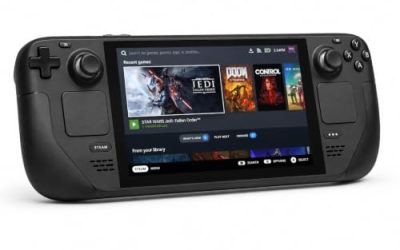
Steam Deck: never tested, no verdict to quote
Valve’s compatibility endpoint returned a redirect rather than data this session, so the verdict was read from the store listing’s own compatibility field, which multiple current crawls of the game’s Steam page agree on: Steam Deck Compatibility reads Unknown. That is Valve’s untested state — resolved category 0 — which means no test sheet exists: no tested build, no test date, no recommended runtime. This article therefore claims no Deck verdict, and the gear below is framed for the desktop. The current public branch build is 13185409, set in January 2024; there is no Deck paperwork to measure it against.
The second storefront check
GOG was checked by routes other than its search box. The natural product address redirects to GOG’s general catalogue; the catalogue API returns no Eugen Wargame title; and the embed store search returns zero products for the game’s name. No GOG edition exists on any of those records, so there is no DRM-free copy and no second storefront selling the Linux build.
Gear for a desktop-first RTS
With no Deck verdict on the record, the picks below are desktop hardware: a keyboard for remapping RTS hotkeys, two pads for wider libraries, a precision mouse, and fast library storage.
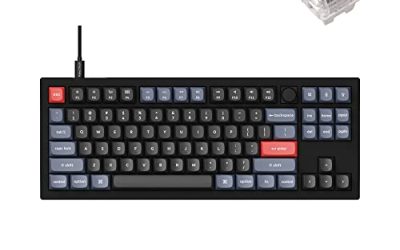
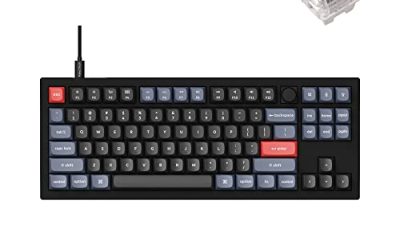
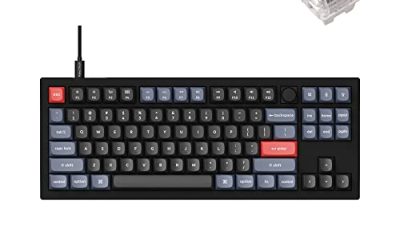
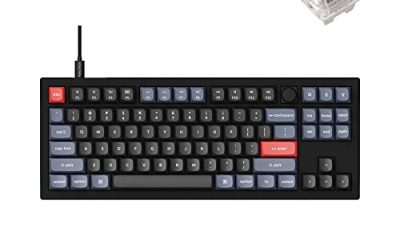
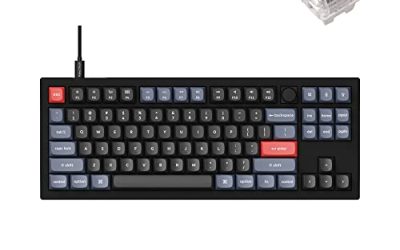
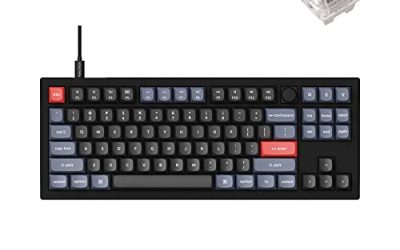
Keychron V3
The keyboard pick for desktop sessions: QMK and VIA support lets you remap keys at the keyboard level, which keeps working across every Linux install you plug it into.
Specs
- Tenkeyless layout with rotary knob
- QMK and VIA remapping support
- Hot-swappable K Pro Brown switches
- Wired USB-C connection
- Maker-rated 1,000 Hz polling
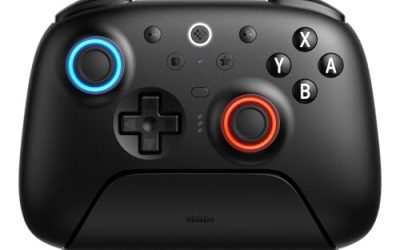
8BitDo Ultimate 2 Bluetooth Controller
The desktop pad pick for a mixed library: modern sticks and triggers plus back buttons, for the titles that use one.
Specs
- Connectivity: Bluetooth wireless and USB-C wired
- Joysticks: TMR electromagnetic, anti-drift design
- Triggers: Hall effect, with mode switching
- Extras: two remappable back buttons, motion control
- In the box: charging dock included
Xbox Wireless Controller, Carbon Black

The safest guest pad in PC gaming: Steam Input support is universal, the glyphs match what most games display, and it pairs over Bluetooth or its own wireless standard.
- Connectivity: Xbox Wireless and Bluetooth
- Port: USB-C for wired play
- Controls: hybrid D-pad, dedicated Share button
- Power: AA batteries or optional rechargeable pack
Logitech G502 HERO

European Escalation is a mouse genre piece: hundreds of units, a zooming camera and constant order-giving. Eleven programmable buttons cover the group, stance and camera inputs a session repeats.
Specs
- HERO optical sensor, up to 25,600 DPI
- 11 programmable buttons
- Adjustable weight system
- Wired USB connection
- On-board memory profiles
Samsung T9 Portable SSD 2TB

For moving a Linux game library between machines, or an offline backup of installers, a fast USB-C drive is the simple answer. The headline figure needs a Gen 2×2 host port; on a lesser port the drive runs at that ceiling.
Specs
- Capacity: 2 TB portable SSD
- Interface: USB 3.2 Gen 2×2, USB-C connector
- Maker-rated speeds: up to 2,000 MB per second read, 1,950 MB per second write
- Features: Dynamic Thermal Guard, maker-rated drop resistance
How to choose
Choose the Steam copy, because it is the only edition on sale anywhere and its single package carries the Linux build. The default download on a Linux desktop is the native build; no compatibility tool needs selecting. Read the four DLC apps before adding them: their records flag Windows only, so buy them for the Windows side of a library, not as Linux content. For multiplayer, budget a minute for the EugNet account link. If the native build’s reported graphical artefacts show up on your hardware, the community file points to the fallback its filers use — the Windows build under GE-Proton — but that is a workaround on a game that is already native, not the main route.
Who should skip
Skip the DLC shelf, not the game, if you play only on Linux: the expansions’ records are Windows-only at every layer. Skip the purchase if your buying rule requires a Steam Deck verdict, because Valve lists the game as Unknown and untested. Skip it if a five-report community file feels too thin to trust — the native claim rests on Steam’s package and depots, but the lived-experience file is genuinely small. And skip it if you want a DRM-free installer, since no GOG edition exists.
FAQ
Is Wargame: European Escalation native on Linux?
Yes. The purchase package flags Windows, Mac and Linux, the store page carries a populated SteamOS + Linux requirements tab, and SteamDB lists a dedicated Linux main depot of 8.89 GiB. Its sequels are separate apps with their own records.
Do the expansions work into the same Linux purchase?
The record says to treat them separately. All four DLC apps flag Windows only on their app records and on the packages they expose, and their content depots carry Windows labels. The native claim belongs to the base game alone.
What is the Steam Deck verdict?
There is none. The store listing’s compatibility field reads Unknown, Valve’s untested category, so no test sheet, tested build or recommended runtime exists for this game. Valve has published no badge for it.
Does the game need anything beyond Steam to play online?
Two things are named on the record. VAC is listed among the game’s categories, and the AreWeAntiCheatYet dataset records it as Supported for this title. Separately, multiplayer runs through a EugNet account, which the store notice says can be linked to Steam.
Final verdict
Wargame: European Escalation is one of the cleaner native records in this cluster: package, flags, requirements tab, depots and client icon all agree that a real Linux build is sold, and ProtonDB’s Native classification agrees. The qualifications are equally concrete — a DLC family that flags Windows only across all four apps, a five-report file whose native-build filings complain about graphical artefacts, a stale ValidOSList string, and no Steam Deck testing at all. Buy the base game on Steam for Linux with confidence; buy the expansions with your eyes open.
Product and ASIN Reference
| Product | ASIN |
|---|---|
| Keychron V3 | B0B2DMMMG2 |
| 8BitDo Ultimate 2 Bluetooth Controller | B0F194QFT2 |
| Xbox Wireless Controller, Carbon Black | B08DF248LD |
| Logitech G502 HERO | B07GBZ4Q68 |
| Samsung T9 Portable SSD 2TB | B0CHFS9K14 |