F.I.S.T.: Forged In Shadow Torch is a dieselpunk metroidvania from TiGames, released on Steam on 2 October 2021. Its protagonist is Rayton, a rabbit who carries a huge mechanical fist through Torch City, a metropolis of anthropomorphic animals ruled by a machine legion. The characters and their city are fiction, and the game built around them is a single-player exploration-and-combat platformer: three interchangeable weapons on the fist, a map that opens as abilities land, and boss fights gating each district.
A game of this profile is exactly the kind that attracts a Linux-port question. This article answers it from the record alone: the Steam store data for app 1330470, the depot table behind it, the one soundtrack app in its family, the community compatibility file, Valve’s Deck sheet and the GOG catalogue were each read directly, and every layer is reported as found.
As an Amazon Associate, we earn from qualifying purchases.
Quick answer
No. F.I.S.T.: Forged In Shadow Torch has no native Linux build: Steam flags Linux false, the Linux requirements field is an empty shell, and the depot table holds only Windows content. The Linux route is Proton, which the community file rates Gold across 24 reports, and the game is Steam Deck Verified.
What the Steam record shows
Start with the platform flags, the shortest version of the answer. The record for app 1330470 flags Windows true, Mac false and Linux false, and everything underneath agrees with them.
The Windows requirements field is genuinely populated at both tiers: a minimum of Windows 10 version 1903, an Intel Core i5-6400 or AMD FX 8320 processor, 8 GB of RAM, an NVIDIA GTX 960 or AMD Radeon R9 280, and 25 GB of storage, rising at the recommended tier to 16 GB of RAM and a GTX 1060 with 6 GB. The Mac and Linux fields, by contrast, are empty shells: each carries a Minimum heading and a Recommended heading over lists that contain nothing at all — the paperwork skeleton of a port, published empty under a flag that already reads false.
Two notice fields complete the store picture by their absence: the record publishes no DRM notice and no external account notice, so there is no account requirement to report and no DRM statement to quote. The categories are Single-player, Steam Achievements, Full controller support and Family Sharing. The genre list is the record’s own: Action, Adventure, Indie, RPG, Simulation and Sports.
The depot table underneath
Store flags can be clerical errors, so the delivery layer is the real test, and the depot database settles it. Behind app 1330470 sit exactly two content depots: a global one of 21.45 GiB and a Steam China one of 21.59 GiB, totalling 43.04 GiB on disk. There is no Linux depot and no macOS depot in any branch, and the redistributables beside the content are Windows components: a Visual C++ 2019 package and a DirectX June 2010 package.
The architecture field reads 64, matching the record’s own 64-bit requirement. The extended-OS field is an empty string, so it names nothing and supports no claim in either direction. The public branch stands on a build dated 6 January 2023. The detected technologies are engine and graphics plumbing: the Unreal Engine plus NVIDIA software kits covering physics, upscaling and cloth, with audio libraries beside them. No Linux build hides in this record at any layer.
The soundtrack in the family
The game’s add-on array holds exactly one app, and it is the reason family sweeps exist. The Original Soundtrack, app 1772090, is a music product released on 14 December 2021, credited to TiGames with bilibili as publisher. Its record flags all three platforms true: Windows, Mac and Linux alike.
That flag is the soundtrack trap in its standard form. The soundtrack’s own Mac and Linux requirements fields are empty lists outright, and its Windows field asks only for storage, 800 MB plus 2 GB for high-quality audio. An audio product carries a Linux flag because audio files play anywhere, not because a port exists. The family count reads one of two, and the flag belongs to the music.
Anti-cheat, from three sources
Three sources were kept separate, and all three come back negative. Steam’s record names no anti-cheat: the game is single-player only and neither notice field exists. The depot database’s detected-technology list is engine, graphics and audio software, no anti-cheat among it. The community tracker’s full dataset, searched by name and app number, carries no entry for this title. There is no multiplayer here to guard.
ProtonDB and the heading that disagrees
Because the Windows build is the only build, the community compatibility file is the Linux story, and its summary answered in full. The headline tier is Gold, the best-reported tier is Platinum and the trending tier is Platinum, across 24 reports, with confidence rated good. The typical report describes a game that runs well under Proton; kept at report weight, a few reporters note DirectX 12 stutter and prefer DirectX 11, and several reports cover other storefronts’ copies rather than the Steam build.
One element of that page does need naming. It displays a heading that presents the game as natively supported. Steam’s record contradicts the heading on every layer: the flag reads false, the requirements field is an empty shell, no Linux depot exists, and every report beneath the heading was filed under a named Proton version. This article follows Steam: the heading is a classification artefact, not evidence of a port.
The Steam Deck sheet
Valve’s own compatibility endpoint answered directly for this app: Verified, resolved category three, all four Verified items passing — controller configuration, glyphs, legible text, performant default graphics. SteamOS separately rates it Compatible.
The dated paperwork behind the badge comes from the depot database’s republication of Valve’s compatibility data, disclosed as such. The test is dated 15 February 2022, the tested build is 7538383, and the recommended runtime is proton-stable. Two consequences follow. First, the badge as tested certifies the Windows build running under Proton, the only build there is. Second, the tested build predates the January 2023 build the public branch now serves, so the paperwork is older than the current branch. The category was read from Valve’s endpoint this session; the date and build come from the republication.
The GOG question
The natural GOG product address for this game resolves to GOG’s general games catalogue, the behaviour GOG shows for titles it does not sell, and no product record for the game can be read there. No GOG edition exists, so Steam under Proton is the only PC route.
Gear that fits the record
The gear below follows the record’s shape: the handheld the badge was written for, two pads, a desktop mouse, and library storage.
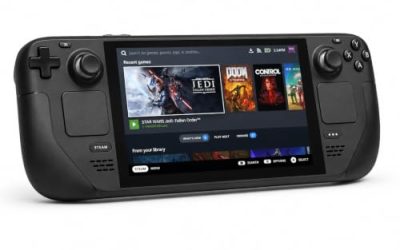
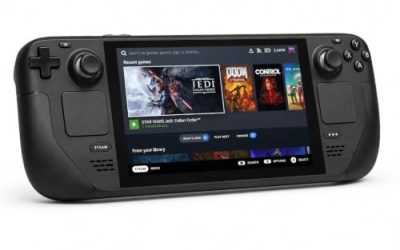
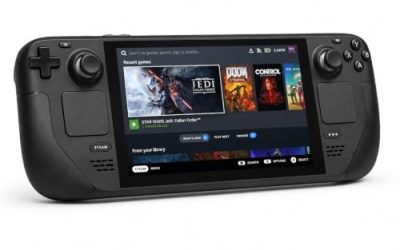
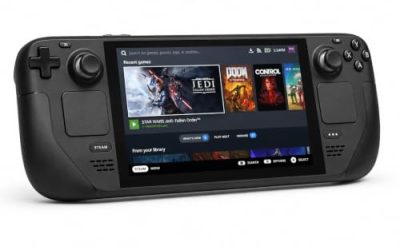
Valve Steam Deck OLED 512GB

The handheld the Verified badge was written for: Valve’s sheet gives the Windows build a clean pass under proton-stable, and the game’s requirements sit far below the Deck’s APU.
Specs
- Display: 7.4-inch HDR OLED, 1280 by 800, up to 90 Hz
- Processor: AMD Zen 2 and RDNA 2 custom APU
- Memory: 16 GB LPDDR5
- Storage: 512 GB NVMe, plus a microSD slot
- Wireless: Wi-Fi 6E and Bluetooth
- Channel note: Valve sells the Deck mainly through its own store, so Amazon listings are third-party sellers
8BitDo Ultimate 2 Bluetooth Controller

The docked and desktop pad pick, covering the couch case with modern sticks, triggers and back buttons.
Specs
- Connectivity: Bluetooth wireless and USB-C wired
- Joysticks: TMR electromagnetic, anti-drift design
- Triggers: Hall effect, with mode switching
- Extras: two remappable back buttons, motion control
- In the box: charging dock included
Xbox Wireless Controller, Carbon Black

The safest guest pad in PC gaming: universal Steam Input support, glyphs that match what most games display, and Bluetooth or its own wireless standard.
- Connectivity: Xbox Wireless and Bluetooth
- Port: USB-C for wired play
- Controls: hybrid D-pad, dedicated Share button
- Power: AA batteries or optional rechargeable pack
Logitech G502 HERO

A pad game first, but its map and upgrade screens are menu work, and at a desk a precise wired mouse turns those trips into single clicks.
Specs
- HERO optical sensor, up to 25,600 DPI
- 11 programmable buttons
- Adjustable weight system
- Wired USB connection
- On-board memory profiles
Samsung T9 Portable SSD 2TB

For moving a Linux game library between machines, a fast USB-C drive is the simple answer; the headline figure needs a Gen 2×2 host port.
Specs
- Capacity: 2 TB portable SSD
- Interface: USB 3.2 Gen 2×2, USB-C connector
- Maker-rated speeds: up to 2,000 MB per second read, 1,950 MB per second write
- Features: Dynamic Thermal Guard, maker-rated drop resistance
How to choose
Choose the Steam copy, the only PC edition on sale and the exact build both compatibility records describe. On desktop, install under Proton and leave the compatibility tool at its default first; the Gold headline with Platinum best-reported and trending tiers says the file is strong, and the one adjustment reporters describe is choosing DirectX 11 if DirectX 12 stutters. On a Steam Deck, the Verified badge means no configuration work is expected: install, launch, and play, with the caveat that an external pad may need the Quick Access Menu switch the test sheet notes. For input, a pad is the native shape of this game, and the fist’s three-weapon switching is built around one.
Who should skip
Skip this game on Linux if a native install is a condition of purchase: there is none, and the community page’s heading does not change that. Skip it if your library lives on GOG, because no edition exists there. Skip it if you dislike the metroidvania loop of locked doors and ability-gated districts, since that structure is the whole design. And skip the soundtrack’s platform flags as buying evidence: they describe where audio files play, not where the game runs.
FAQ
Is F.I.S.T.: Forged In Shadow Torch native on Linux?
No. Steam flags Linux false, the Linux requirements field is an empty shell of headings, and the depot table holds two Windows content depots and no Linux depot. The family’s only Linux flag sits on the soundtrack, whose own Linux field is an empty list.
How well does it run under Proton?
The community summary rates it Gold at headline, Platinum as both the best-reported and trending tier, across 24 reports at good confidence. Reports describe smooth play, some noting DirectX 12 stutter and preferring DirectX 11; those are report-level observations, not guarantees.
Is the game Steam Deck Verified?
Yes. Valve’s own endpoint returns Verified with all four checks passing, and SteamOS separately rates it Compatible. The dated paperwork behind the badge, read through a republication of Valve’s data, is from February 2022 on an earlier build than the branch now serves, and names the stable Proton runtime: the badge certifies the Windows build under Proton.
Why does the community page call it natively supported?
Because its classification heading says so, and the heading is wrong against the store record, which says Windows-only at every layer; every report on that page was filed under a named Proton version.
Final verdict
F.I.S.T.: Forged In Shadow Torch is a Windows-only release, and every layer of its record says so in a different way: a false flag, an empty-shell requirements field, a depot table with no Linux content, and a family whose single Linux flag belongs to the soundtrack. Linux players are not locked out, because the Proton file is genuinely good — Gold at headline, Platinum trending, 24 reports deep — and Valve’s Verified badge covers the Deck. Buy it on Steam as a Proton game, and set expectations by the depot table rather than by a community page heading.
Product and ASIN Reference
| Product | ASIN |
|---|---|
| Valve Steam Deck OLED 512GB | B0CQ3RWQQZ |
| 8BitDo Ultimate 2 Bluetooth Controller | B0F194QFT2 |
| Xbox Wireless Controller, Carbon Black | B08DF248LD |
| Logitech G502 HERO | B07GBZ4Q68 |
| Samsung T9 Portable SSD 2TB | B0CHFS9K14 |