Stikbold! A Dodgeball Adventure DELUXE is a local-multiplayer dodgebrawler from Game Swing, released on Steam on 1 April 2016 and built around shared-screen matches on the same couch. Its Steam record is one of the tidier two-platform files in this cluster: the store sells a Windows build and a Mac build, and Linux is absent in a way that leaves nothing to argue about — no tab to misread, no stray flag in the family, no depot behind the package. What Linux players get instead is a Proton route with a strong paper trail: a Gold community file on ProtonDB and a Verified badge on Steam Deck, both earned by the Windows build.


That split is the whole story here. On the desktop, Stikbold is a Windows game that Linux runs through a compatibility layer, and every layer of the primary record says so in the same words. On the handheld, Valve has tested that Windows build and given it the top grade. The one document that disagrees is a heading on the game’s ProtonDB page.
As an Amazon Associate, we earn from qualifying purchases.
Quick answer
No. Stikbold has no native Linux build on any layer of its record: Steam flags Windows and Mac only, the Linux requirements field is an empty list, and the purchase package ships Windows and Mac depots only. The Linux route is the Windows build under Proton, with a Gold ProtonDB file and a Deck Verified badge.
What the store record actually sells
Start with the flags, because here they are the whole answer. Steam’s record for app 429330 reads windows true, mac true and linux false. The Windows requirements are written out in full on both tiers: the minimum names a Pentium Dual Core E2220 or Athlon 64 X2 5000+, 2 GB of memory, a GeForce GT 610 or Radeon HD 6450 class graphics card, DirectX 11 and 750 MB of storage. The Mac requirements are equally real, naming OS X Lion 10.7.5, a 2.4 GHz Core 2 Duo and 8 GB of memory — two genuinely maintained listings, not one listing and a copy.
The Linux side is not a shell and not copied text. The Linux requirements field is an empty list outright: no headings, no boilerplate, nothing — the paperwork of a platform never part of the release. The record also carries no DRM or external-account notice, so nothing in the fine print changes the picture.
The depot layer closes the question. The purchase package, sub 88865, contains exactly two content depots: 429331 for Windows and 429332 for macOS. There is no Linux depot in any form, and Steam’s own package record reads windows and mac true with linux false, so a purchase can only ever install one of those two builds. SteamDB’s detected technologies are engine plumbing only: Unity, Mono, SteamworksNET and cURL.
The family check: a soundtrack that agrees
The classic trap in this cluster is a soundtrack app wearing a Linux flag the game itself does not carry, so the family gets read app by app. Stikbold’s full DLC array holds exactly one app: the Stikbold! Soundtrack, app 454640, released in July 2016. It is the anti-trap. The soundtrack flags windows and mac true and linux false, agreeing with the game on every platform. Its Windows and Mac fields are pure boilerplate, an operating-system line reading “Windows, Mac” and a single sound-card line, and its Linux field is the same empty list as the game’s.
Anti-cheat, in three separate sources
Stikbold is a local multiplayer game, with online play arriving through Steam’s Remote Play Together rather than through servers of its own; its categories are the shared-screen set, with full controller support, Steam Cloud and Family Sharing. No server claim is made here because the record makes none.
On anti-cheat, the three sources this series keeps separate all come back negative. Steam’s record names no anti-cheat and carries no DRM or account notices. SteamDB detects only the engine plumbing listed above — middleware, not anti-cheat. The Are We Anti-Cheat Yet dataset, all 1,167 games on its master branch, searched by name and by app id 429330, carries no entry for this game. The Proton route is the only hurdle there is.
ProtonDB: a Gold file under a heading that lies
ProtonDB’s summary endpoint failed for this title in this session, returning an error page on repeated attempts, so no tier split and no confidence figure are claimed here; what follows is the page-level record, disclosed as such. The page displays a Gold tier across 12 reports. That is a small file, carried at that weight: the reports run from the Proton 5.13 era up to Proton 10.0-3, mostly positive, with local multiplayer rated Excellent. Two older reports needed a launch flag that disables Direct3D 11, and one early report, on integrated Intel graphics under an old Mint install, is filed as Borked.
The heading check matters more than the tier. The page heads its requirements block “Natively Supports:”, a classification Steam’s record contradicts on every layer: the flag is false, the field is empty and no Linux depot exists. This is the stray-tag pattern, in which the community label claims a native build the primary record has never published. The article follows Steam.
Steam Deck: Verified, and the badge is about the Windows build
Valve’s own compatibility endpoint answered directly this session, and SteamDB’s republication of the same data agrees. The category is Verified, the top grade. All four test items pass: the default controller configuration is fully functional, the game shows Steam Deck controller icons, the interface text is legible, and the default graphics configuration performs well. SteamOS separately reads Compatible. The configuration records gamepad input, no manual keyboard invocation, no launcher step, no small-text flag and no internet requirement for setup or single-player.
Two details deserve naming. The recommended runtime is proton-7.0-5, which settles what the badge certifies: the Windows build under Proton, not a native port. And the test was filed on 26 November 2022 against build 1921681, so the sheet is a 2022 document; the grade stands as Valve’s published verdict, and nothing since has withdrawn it. The single note item is practical for a couch game: external Bluetooth or USB controllers do not default to the primary player and may need a manual switch through the Quick Access Menu — load-bearing for a title built on several pads around one screen.
The gear that fits this record
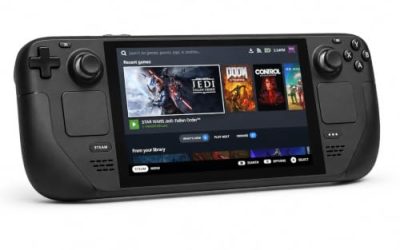
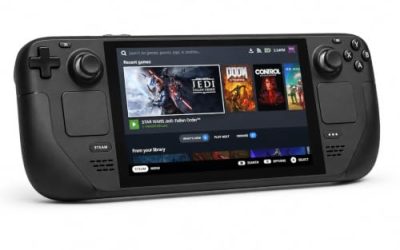
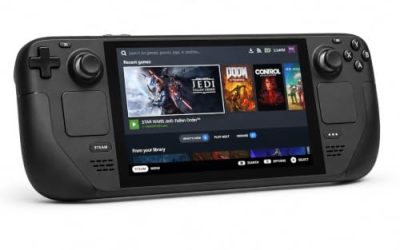
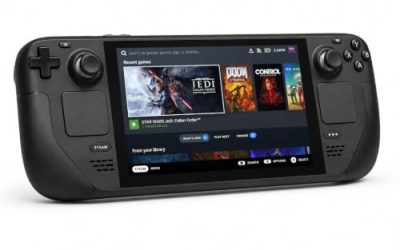
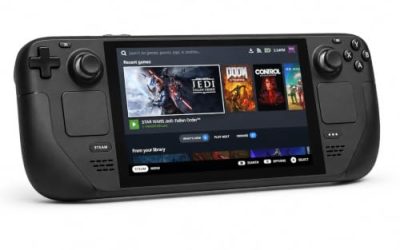
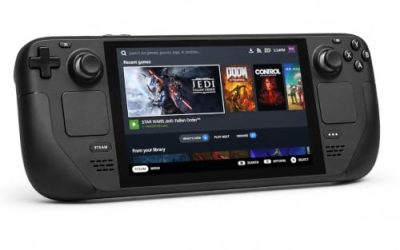
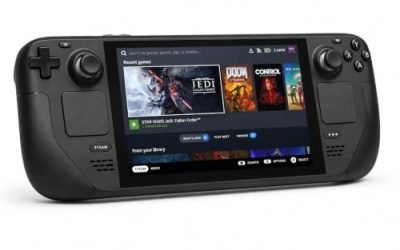
Valve Steam Deck OLED 512GB
The handheld the Verified badge was written for. Stikbold’s requirements are a rounding error next to the Deck’s APU, and Valve’s sheet gives the Windows build a clean pass under proton-7.0-5, with the one external-controller note named above.
Specs
- Display: 7.4-inch HDR OLED, 1280 by 800, up to 90 Hz
- Processor: AMD Zen 2 and RDNA 2 custom APU
- Memory: 16 GB LPDDR5
- Storage: 512 GB NVMe, plus a microSD slot
- Wireless: Wi-Fi 6E and Bluetooth
- Channel note: Valve sells the Deck mainly through its own store, so Amazon listings are third-party sellers
8BitDo Ultimate 2 Bluetooth Controller
The docked and desktop pad pick. Steam lists full controller support, and a shared-screen dodgebrawler lives or dies on spare pads; this one covers the couch case with modern sticks, triggers and back buttons.
Specs
- Connectivity: Bluetooth wireless and USB-C wired
- Joysticks: TMR electromagnetic, anti-drift design
- Triggers: Hall effect, with mode switching
- Extras: two remappable back buttons, motion control
- In the box: charging dock included
Xbox Wireless Controller, Carbon Black

The safest guest pad in PC gaming: Steam Input support is universal, the glyphs match what most games display, and it pairs over Bluetooth or its own wireless standard. On the handheld, the sheet’s note applies: an external pad may need a Quick Access Menu switch before it takes over.
- Connectivity: Xbox Wireless and Bluetooth
- Port: USB-C for wired play
- Controls: hybrid D-pad, dedicated Share button
- Power: AA batteries or optional rechargeable pack
Logitech G502 HERO

Stikbold is a pad game first, but at a desk this mouse covers the other half of a Linux setup: menus, launchers and the Steam client itself, where eleven programmable buttons turn repeated clicks into single presses.
Specs
- HERO optical sensor, up to 25,600 DPI
- 11 programmable buttons
- Adjustable weight system
- Wired USB connection
- On-board memory profiles
Samsung T9 Portable SSD 2TB

For moving a Linux game library between machines, or keeping an offline backup, a fast USB-C drive is the simple answer. The headline figure needs a Gen 2×2 host port; on a lesser port the drive runs at that ceiling.
Specs
- Capacity: 2 TB portable SSD
- Interface: USB 3.2 Gen 2×2, USB-C connector
- Maker-rated speeds: up to 2,000 MB per second read, 1,950 MB per second write
- Features: Dynamic Thermal Guard, maker-rated drop resistance
How to choose
Choose the Steam copy, because it is the only PC edition on sale and the exact build both compatibility records describe. On a desktop or laptop, let Steam Play run the Windows build under Proton at the default setting; the Gold community file says that route works, and if an older Proton build refuses to start, the documented fix is the launch flag that disables Direct3D 11. On a Steam Deck, the Verified badge means no configuration work is expected: install, launch, and only visit controller settings when pairing external pads, where the Quick Access Menu switch may be needed. Pads are this game’s native input shape, so spend on controllers first.
Who should skip
Skip this one if you are shopping for a native Linux build: there is none, on any layer of the record, and the ProtonDB heading that suggests otherwise is a labelling error. Skip it if you want a DRM-free offline installer, because no GOG edition exists to buy. Skip it if your group plays online rather than in the same room, since the multiplayer is shared-screen, with remote sessions handled by Remote Play Together, not game servers. And skip it if a 12-report Gold file feels too thin to trust: that small sample is the whole of the community evidence.
FAQ
Is Stikbold native on Linux?
No. Steam’s record for app 429330 flags Windows and Mac only, the Linux requirements field is an empty list, and the purchase package contains a Windows depot and a macOS depot and nothing else. Even the soundtrack app agrees, flagging the same two platforms.
How well does Stikbold run under Proton?
ProtonDB’s page displays a Gold tier across 12 reports, filed under named Proton versions from the 5.13 era through 10.0-3, with local multiplayer rated Excellent. Two older reports needed a launch flag disabling Direct3D 11; one early report on old hardware is Borked. The summary endpoint failed this session, so no tier split is claimed.
Is Stikbold Steam Deck Verified?
Yes. Valve’s record gives the game its top category, Verified, with all four checks passing, tested in November 2022 under proton-7.0-5. The badge certifies the Windows build under Proton. The one note is that external controllers do not take over by default and may need a Quick Access Menu switch.
Can I buy Stikbold on GOG instead?
No. GOG’s product searches return no listing for the game, and its natural GOG address resolves to the general catalogue rather than to a product page. The Steam copy is the only PC edition on sale.
Final verdict
Stikbold is a Windows and Mac release whose record is honest all the way down: two populated platform listings, an empty Linux field, a two-depot package, and a soundtrack that confirms rather than inflates the answer. The only false note anywhere is a community heading claiming native support that does not exist. What Linux players get is respectable: a Gold Proton file with a documented launch-flag fix in it, and a Deck Verified badge earned by the Windows build under Proton. Buy the Steam copy for the couch, expect Proton to do the work, and do not let a stray heading sell you a port that was never made.
Product and ASIN Reference
| Product | ASIN |
|---|---|
| Valve Steam Deck OLED 512GB | B0CQ3RWQQZ |
| 8BitDo Ultimate 2 Bluetooth Controller | B0F194QFT2 |
| Xbox Wireless Controller, Carbon Black | B08DF248LD |
| Logitech G502 HERO | B07GBZ4Q68 |
| Samsung T9 Portable SSD 2TB | B0CHFS9K14 |