Warhammer 40,000: Inquisitor – Prophecy is the standalone expansion to NeocoreGames’ action RPG Inquisitor – Martyr: a separate game app with its own store record, purchase package and branch, released on 30 July 2019. Because it is sold both on its own and inside the Martyr Definitive Edition bundle, Linux players reasonably ask whether any part of that arrangement delivers a Linux build — a question that has to be answered from Prophecy’s own record, not Martyr’s.


The answer is no, and Prophecy’s record is unusually clear about it. The flags say Windows only, both other platforms’ requirements fields are empty lists, the purchase package in Prophecy’s own name delivers Windows only, and the app itself is a thin shell borrowing its bulk from Martyr’s depots.
As an Amazon Associate, we earn from qualifying purchases.
Quick answer
No. Warhammer 40,000: Inquisitor – Prophecy is not native on Linux. Steam’s flags for app 1042800 read Windows true, Mac false and Linux false, the Mac and Linux requirements fields are empty lists, and Prophecy’s own purchase package delivers Windows only. Linux play means Proton: ProtonDB’s page reads Gold across 12 reports, and Valve rates the Deck Playable.
A standalone app, judged on its own record
Prophecy is not a DLC entry on Martyr’s page. It is app 1042800, a game in its own right, developed and published by NeocoreGames and released on 30 July 2019, with its own categories — single-player, online PvP and online co-op, full controller support — and its own public branch. Nothing about Martyr’s record, good or bad, transfers here.
Start with the store flags: windows true, mac false, linux false. The Windows requirements field is genuinely populated — 64-bit Windows 7 or newer, a Core i3-2120 or FX-6300 class processor, 4 GB of RAM, a GeForce GTX 760 or Radeon HD 7850, DirectX 11 and 30 GB of storage, with a note that the game requires a constant online connection. The Mac and Linux requirements fields are empty lists outright. A port announces itself in a populated field; here there is not even the shell of one.
The depot picture: a shell over borrowed content
SteamDB’s depot view is where Prophecy’s shape gets interesting. The app’s own content depot, 1042801, holds just 427.50 KiB. Everything else arrives through two shared-install depots borrowed from Martyr: 527431, the Martyr content depot, and 527432, the Martyr configuration and executable depot. Prophecy is a thin layer registered over the base game’s installation rather than a self-contained set of platform builds.
For the Linux question the consequence is simple. There is no Linux depot of any size, no depot carrying an operating-system split, and nothing in the shared depots that changes the flags. The registered icon set — clienticon, clienttga, icon and logo — includes no LinuxClientIcon. The public branch has sat on build 4058658 since the day the game shipped: a settled record.
The decisive layer: Prophecy’s own package
Packages decide what a purchase delivers. Package 347428, “Warhammer 40,000: Inquisitor – Prophecy”, reads windows true, mac false and linux false on packagedetails and grants app 1042800 alone. A normal purchase delivers the Windows build by construction.
Prophecy also appears inside a second package, the Martyr Definitive Edition bundle (939400), alongside Martyr and its twenty add-on apps. That package is likewise Windows only at every position, so the bundle route changes nothing.
The family sweep: no DLC array of its own
The base record exposes no DLC field at all — Prophecy has no expansions, soundtrack, art book or demo under its own app. Its family size is zero, and that absence is itself the finding: there is no satellite app whose stray flags could muddy the verdict. The only family relationship runs upward, into the Definitive Edition bundle covered above, and that package agrees. One app, one package, one bundle appearance — all Windows only.
Anti-cheat: three sources, three silences
Prophecy has online PvP and online co-op, so the anti-cheat question matters. The three sources this column keeps separate answer it as follows. Steam’s record names nothing: no anti-cheat category entry, no DRM notice and no external account notice. SteamDB’s technology detection finds the FMOD SDK and the Lua SDK, and no anti-cheat component. Are We Anti-Cheat Yet carries no entry for this app at all; its master list was searched by name and by app id and returned nothing.
Three silences are reported as silence, not as a ruling that the game ships unprotected. At report weight only, ProtonDB’s filings describe online play working under Proton, with one older filing reporting co-op crashes when a second player joined.
The Proton file: Gold on twelve reports, with an era split
ProtonDB’s summary service returned no data this session, so the figures here are read from the game page and phrased that way: the headline tier is Gold across 12 reports. The file’s texture is split by era. Older filings describe out-of-the-box runs — one reports around a hundred hours on a GE-Proton build with no tinkering — while a more recent filing on Proton Experimental reports the game installing but never opening, despite several launch-option attempts.
One surface of the ProtonDB page does mislead, and this article names it rather than repeating it: the page heads the game’s requirements block “Natively Supports:”, a classification line Steam’s record contradicts at every layer. That heading is a formatting artefact, not a port announcement, and the ruling here follows Steam. Read the Gold tier as evidence that the Windows build often runs well through Proton, on a sample too small and too era-split to promise any individual machine the same result.
The Steam Deck sheet: a 2022 test of a 2019 build
Valve rates Prophecy Playable on Steam Deck, with SteamOS separately rated Compatible. The verdict and its items were read through SteamDB’s republication of Valve’s compatibility sheet — Valve’s own endpoint returned no usable response this session — with the route disclosed here so the sourcing is on the record. The passes: Deck controller icons, legible in-game interface text, and a default graphics configuration that performs well. The deductions are input-shaped: some functionality is not accessible under the default controller configuration, requiring the touchscreen, the virtual keyboard or a community configuration; some text entry requires manually invoking the on-screen keyboard; and first-time setup requires an internet connection. The recommended runtime is proton-stable.
The paperwork has the twist this catalogue keeps meeting on older titles. The test is dated 9 February 2022, which would normally make a sheet a candidate for a fresher test — except the tested build is 4058658, exactly the build the public branch still serves. The old test covers the shipping build in full: calendar-stale, build-current.
The storefront ruling: Steam is the only PC edition
There is no GOG edition of Prophecy. The ruling rests on GOG’s own catalogue routes: the catalogue API’s results for this franchise were identity-checked one by one and none is this game — nor Martyr, which GOG does not sell either — and the natural product address resolves to the general catalogue rather than a product page. No identity-verified GOG product record exists.
Gear that fits the record
The gear below follows the record’s shape: a Playable-rated handheld, two pads for docked and desktop play, a mouse for an action RPG’s menus, and library storage.
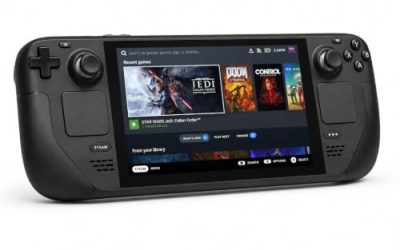
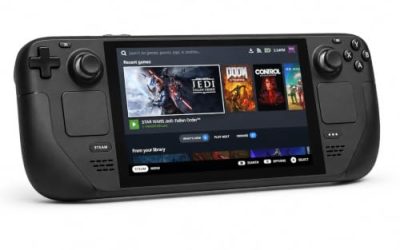
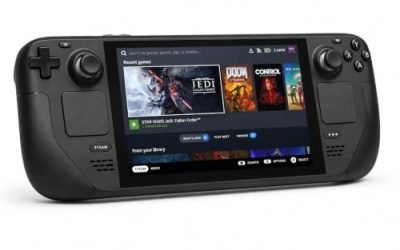
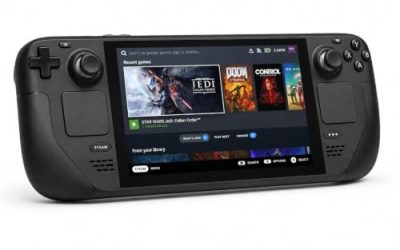
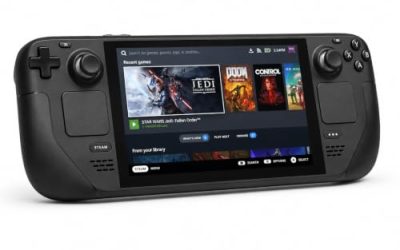
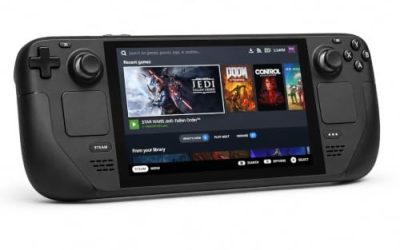
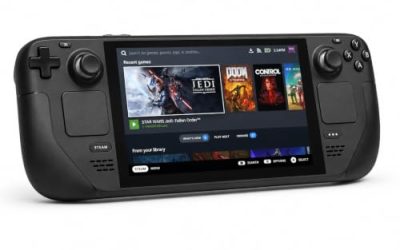
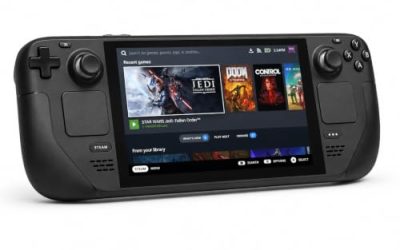
Valve Steam Deck OLED 512GB
The handheld Valve’s Playable sheet was written against: it passes the game’s default graphics configuration and confirms legible interface text, so plan around the controller-configuration deduction rather than performance.
Specs
- Display: 7.4-inch HDR OLED, 1280 by 800, up to 90 Hz
- Processor: AMD Zen 2 and RDNA 2 custom APU
- Memory: 16 GB LPDDR5
- Storage: 512 GB NVMe, plus a microSD slot
- Wireless: Wi-Fi 6E and Bluetooth
- Channel note: Valve sells the Deck mainly through its own store, so Amazon listings are third-party sellers
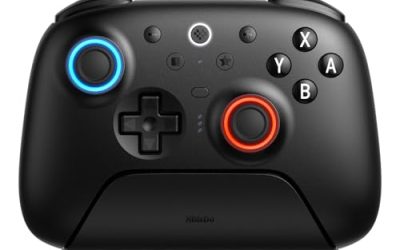
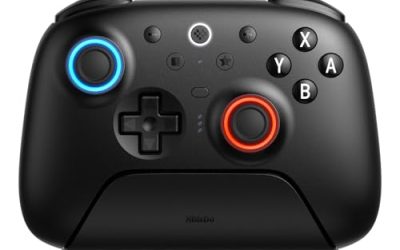
8BitDo Ultimate 2 Bluetooth Controller
The docked and desktop pad pick. Steam lists full controller support for the game, and this pad covers the couch case with modern sticks and triggers plus back buttons.
Specs
- Connectivity: Bluetooth wireless and USB-C wired
- Joysticks: TMR electromagnetic, anti-drift design
- Triggers: Hall effect, with mode switching
- Extras: two remappable back buttons, motion control
- In the box: charging dock included
Xbox Wireless Controller, Carbon Black

The safest guest pad in PC gaming: Steam Input support is universal, the glyphs match what most games display, and it pairs over Bluetooth or its own wireless standard.
- Connectivity: Xbox Wireless and Bluetooth
- Port: USB-C for wired play
- Controls: hybrid D-pad, dedicated Share button
- Power: AA batteries or optional rechargeable pack
Logitech G502 HERO

An action RPG lives in inventory grids, skill screens and loot comparisons, and at a desk a precise wired mouse turns those trips into single clicks. Eleven programmable buttons cover the inputs a long session repeats.
Specs
- HERO optical sensor, up to 25,600 DPI
- 11 programmable buttons
- Adjustable weight system
- Wired USB connection
- On-board memory profiles
Samsung T9 Portable SSD 2TB

For moving a Linux game library between machines, or keeping an offline backup of installers, a fast USB-C drive is the simple answer.
Specs
- Capacity: 2 TB portable SSD
- Interface: USB 3.2 Gen 2×2, USB-C connector
- Maker-rated speeds: up to 2,000 MB per second read, 1,950 MB per second write
- Features: Dynamic Thermal Guard, maker-rated drop resistance
How to choose
Choose your route by which evidence you weight most. If the Deck is your machine, Valve’s Playable sheet is the strongest document available: it tested the exact build still on sale, passes the default graphics configuration, and leaves a controller-configuration caveat and manual keyboard invocation as the known friction. On a Linux desktop, the ProtonDB file points the same general way but rests on 12 reports split across Proton generations, so treat its Gold as encouraging rather than proven.
Who should skip
Skip this one if you buy only native Linux builds on principle: there is none here, and the branch frozen since 2019 means none is coming. Skip it if a 12-report ProtonDB file is too thin for your comfort. Deck players should note the sheet’s controller deduction before buying — some functions need the touchscreen or a community configuration — and co-op players should weigh the conflicting multiplayer reports.
FAQ
Is Warhammer 40,000: Inquisitor – Prophecy native on Linux?
No. Steam’s platform flags for app 1042800 read Windows true, Mac false and Linux false, the Linux requirements field is an empty list, there is no Linux depot or Linux client icon, and the game’s own purchase package delivers Windows only.
How well does Prophecy run under Proton?
ProtonDB’s game page reads Gold across 12 reports, but the file is split by era: older filings describe out-of-the-box runs, including a hundred-hour playthrough on a GE-Proton build, while one recent filing on Proton Experimental reports the game installing but never opening. Co-op reports conflict in the same way.
Is Prophecy Steam Deck Verified?
No — it is rated Playable, one step below Verified, with SteamOS separately rated Compatible. Valve’s sheet passes the game’s Deck controller icons, legible interface text and default graphics performance, and deducts for functionality not accessible under the default controller configuration, manual on-screen keyboard invocation and a first-time setup that requires an internet connection. The test ran in February 2022 on build 4058658, still the shipping build.
Can I buy Prophecy on GOG instead?
No GOG edition exists. GOG’s catalogue routes were checked directly and identity-verified result by result; none of them is this game. Steam is the only PC storefront with a copy, and that copy is the Windows build.
Final verdict
Prophecy is a Windows game that Linux players reach through Proton, full stop. A standalone app whose own content depot is a fraction of a megabyte, borrowing its bulk from Martyr’s installation; false flags on both other platforms; empty-list requirements fields; no Linux depot, no Linux icon; and a purchase package in its own name that delivers Windows only. On the other side sits a friendly but thin picture: a Playable Deck sheet that tested the still-current build, and a Gold ProtonDB tier on 12 era-split reports.
Product and ASIN Reference
| Product | ASIN |
|---|---|
| Valve Steam Deck OLED 512GB | B0CQ3RWQQZ |
| 8BitDo Ultimate 2 Bluetooth Controller | B0F194QFT2 |
| Xbox Wireless Controller, Carbon Black | B08DF248LD |
| Logitech G502 HERO | B07GBZ4Q68 |
| Samsung T9 Portable SSD 2TB | B0CHFS9K14 |