Space Hulk: Ascension is Full Control Studios’ expanded take on the Space Hulk board game: turn-based Terminator squads, genestealer ambushes in derelict corridors, and its chapter packs. The Steam record today carries a “(Classic)” suffix and a new publisher, SNEG, over a game first launched in November 2014. Ask the store page whether a Linux build exists and it says no. Ask the package the store actually sells, and the answer changes.


This is the inverse of the trap this column usually documents. The familiar shape is paperwork claiming a port that was never delivered. Ascension runs the other way: the flags were switched off while the build stayed in the box. The Linux requirements field is filled in properly, a Linux depot with a real manifest sits inside the game’s only purchase package, the registered Linux client icon has that depot behind it, and all four chapter packs still flag Linux true.
As an Amazon Associate, we earn from qualifying purchases.
Quick answer
Yes, with a paperwork caveat. A native Linux build exists and ships inside the game’s only Steam purchase package: the package contains a sized Linux depot, the Linux requirements field names Ubuntu 13.04, and Valve’s Deck sheet recommends the native runtime. The caveat: Steam’s platform flags, on the game and the package summary alike, read Windows only.
The record, layer by layer
Start with the store record for app 317620: “Space Hulk: Ascension (Classic)”, developer Full Control Studios, publisher SNEG, Steam release 12 November 2014 with the store edition dated 12 August 2015. The “(Classic)” suffix is part of the registered name, a label from the current reissue, not a remaster. The platform flags read windows true, mac false, linux false.
The requirements fields refuse to agree with it. The Windows field is genuinely populated: Windows 7, a 2 GHz dual-core processor, 2 GB of RAM, GeForce 400-series graphics and 15 GB of storage. So is the Mac field, which names OSX 10.6. And so is the Linux field, which names Ubuntu 13.04 with the same processor, memory and graphics class.
SteamDB’s depot view is the second layer. The game ships three content depots: 317621 for Windows, 317622 for macOS and 317623 for Linux, each listed at 16.65 GiB on disk with a 3.87 GiB download. The Linux depot is not a zero-byte shell; it carries a live manifest at the same size as its siblings, and the registered LinuxClientIcon has that real build behind it.
The package problem: the summary denies what the contents deliver
The decisive layer in this column is the purchase package. The game has exactly one: package 75074, the “Space Hulk: Ascension Ultimate Pack”. Read through Steam’s packagedetails, its platform summary reads windows true, mac false, linux false, the same denial as the store flags.
Read the package’s actual contents on SteamDB, though, and the summary gives way. The depots inside package 75074 are 317621, 317622 and 317623: Windows, macOS and Linux, all three, in the one package a buyer can purchase. The delivery machinery of the only licence on sale includes the Linux build, whatever the summary line claims.
Two qualifications belong on the record. The Linux and macOS depots were last updated in July 2020, while the Windows depot was refreshed in April 2026, when the reissue rebuilt the public branch to build 22729165. A legacy branch labelled “Last pre-SNEG build” still serves build 1011392 from March 2016, so the native build a Linux buyer receives is that pre-reissue one, carried forward rather than rebuilt for the relaunch.
The family sweep: four chapter packs, unanimous dissent
The base record exposes no DLC array at all, so the family was recovered from SteamDB’s DLC listing. The family is exactly four apps, each read individually: Imperial Fist (335260), Salamanders (347980), Dark Angels (347981) and the Successor Chapter Pack (355900). All four ride inside the same Ultimate Pack package; none is sold separately.
Every one of the four dissents from the base game’s flags. Each flags windows, mac and linux all true, each carries a populated Linux requirements field, and each describes the family exactly as the depot list does: a three-platform release. The disagreement is between the family’s delivery layers and the two summary flags switched off above them.
Anti-cheat: three sources, three silences
Ascension is a single-player game, and the anti-cheat record matches. Steam’s own record names nothing: no anti-cheat category entry, no DRM notice, no external account notice. SteamDB’s detection finds the Unity Engine and the Mono SDK and nothing else. Are We Anti-Cheat Yet carries no entry for this app; its master list was searched by name and by store id and returned nothing. Three silences, reported as silence: no status string exists to quote, and there is no online mode to rule on.
The Proton file and the Deck sheet: Valve tested the native build
ProtonDB’s summary endpoint returned no usable response this session, so the figures here are page-only and no summary tier is claimed. The page heads the game’s requirements block “Natively Supports:”, a heading that, unusually, has a real referent in the depot layer even while the store flags contradict it. The visible report file is thin: two reports, filed on Proton Experimental and on Proton 8.0-3. Both run the Windows build through Proton, which is what players do when the store page denies a native build exists.
Valve’s own paperwork is the stronger document. Steam Deck compatibility rates Ascension Playable, with SteamOS separately Compatible, and the sheet’s recommended runtime is native: Valve’s test ran the Linux build, not the Windows one under Proton. The passes are full functionality on the default controller configuration and a default graphics configuration that performs well; the deductions are non-Deck controller icons at times and small in-game text. One evidence note: Valve’s endpoint returned no usable response this session, so the sheet was read through SteamDB’s republication of Valve’s data.
The paperwork carries one staleness caveat. The test is dated 20 July 2022 and ran on build 1011392, the pre-reissue build that now survives on the legacy branch, while the public branch serves the April 2026 rebuild. The Playable badge therefore certifies the native build as it stood before the relaunch: still selectable, but not the default build now.
The storefront ruling: GOG sells it too, Windows only
A GOG edition exists. The ruling rests on identity-verified records rather than search: GOG’s catalogue lists the game under its own slug as product 1281601346, whose record gives system compatibility as Windows true, Mac false, Linux false, with a single Windows installer. GOG sells a Windows copy of a game whose Steam package quietly contains three builds; the native build reaches Linux players only through Steam.
Gear that fits the record
The gear below follows the record’s shape.
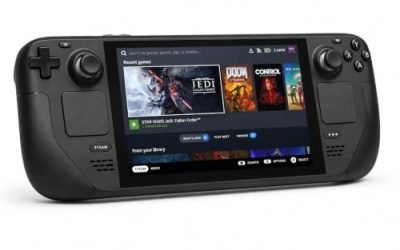
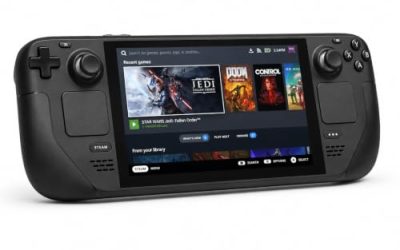
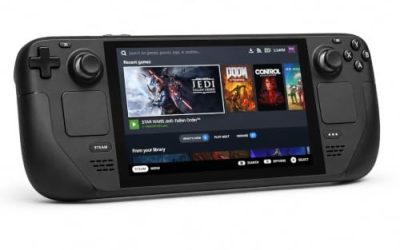
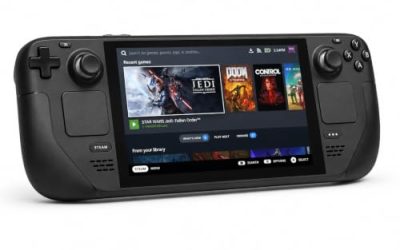
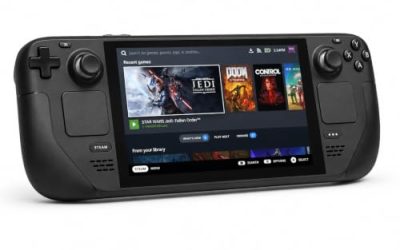
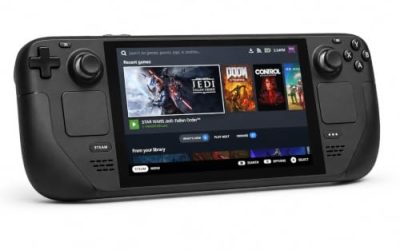
Valve Steam Deck OLED 512GB
The handheld Valve’s Playable sheet was written against. The published requirements sit far below the Deck’s APU, so plan around small text and non-Deck glyphs, not performance.
Specs:
- Display: 7.4-inch HDR OLED, 1280 by 800, up to 90 Hz
- Processor: AMD Zen 2 and RDNA 2 custom APU
- Memory: 16 GB LPDDR5
- Storage: 512 GB NVMe, plus a microSD slot
- Wireless: Wi-Fi 6E and Bluetooth
- Channel note: Valve sells the Deck mainly through its own store, so Amazon listings are third-party sellers
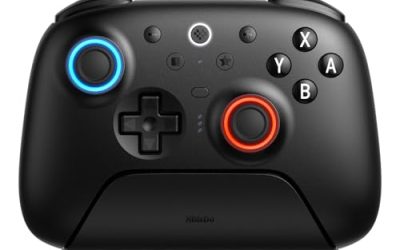
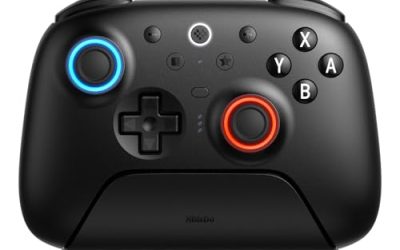
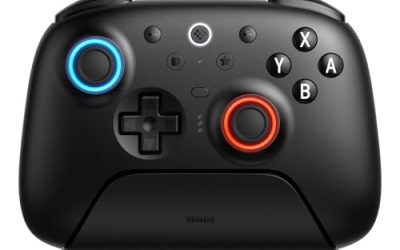
8BitDo Ultimate 2 Bluetooth Controller
The docked and desktop pad pick. The Deck sheet confirms the default controller configuration is fully functional, and this pad covers the couch case with modern sticks, triggers and back buttons.
Specs:
- Connectivity: Bluetooth wireless and USB-C wired
- Joysticks: TMR electromagnetic, anti-drift design
- Triggers: Hall effect, with mode switching
- Extras: two remappable back buttons, motion control
- In the box: charging dock included
Xbox Wireless Controller, Carbon Black

The safest guest pad in PC gaming: Steam Input support is universal, the glyphs match what most games display, and it pairs over Bluetooth or its own wireless standard.
– Connectivity: Xbox Wireless and Bluetooth
– Port: USB-C for wired play
– Controls: hybrid D-pad, dedicated Share button
– Power: AA batteries or optional rechargeable pack
– ASIN: B08DF248LD
Logitech G502 HERO

Ascension is a tile-based tactics game of menus, unit orders and camera pans, and at a desk a precise wired mouse is the natural way to drive it. Eleven programmable buttons cover the repeated inputs.
Specs
- HERO optical sensor, up to 25,600 DPI
- 11 programmable buttons
- Adjustable weight system
- Wired USB connection
- On-board memory profiles
Samsung T9 Portable SSD 2TB

For moving a Linux game library between machines, or keeping an offline backup of installers, a fast USB-C drive is the simple answer. The headline figure needs a Gen 2×2 host port; on a lesser port the drive runs at that ceiling instead.
Specs:
- Capacity: 2 TB portable SSD
- Interface: USB 3.2 Gen 2×2, USB-C connector
- Maker-rated speeds: up to 2,000 MB per second read, 1,950 MB per second write
- Features: Dynamic Thermal Guard, maker-rated drop resistance
How to choose
Buy the Steam copy, because it is the only licence whose package contains the Linux build; the GOG edition is Windows only. On a Linux desktop, install it and let Steam deliver the native depot; if the client defaults to the Windows build under Proton, the legacy branch preserves the exact pre-reissue build Valve tested. On Deck, the Playable sheet is a native-runtime test, so expect the controller configuration to work out of the box and budget for small text.
Who should skip
Skip the GOG copy if Linux is your platform: its installer is Windows only. Skip the game if a split record bothers you on principle. Deck players who struggle with small text should note that deduction, and anyone expecting a maintained port should register that the Linux depot has not been rebuilt since 2020 and was not refreshed by the 2026 reissue.
FAQ
Is Space Hulk: Ascension native on Linux?
A native build exists and ships in the Steam package: the sole purchase package contains a Linux depot of 16.65 GiB, the Linux requirements field names Ubuntu 13.04, and all four chapter packs flag Linux true. The store’s flags read Windows only, so the build is delivered without being advertised.
Why does the Steam store page show Windows only?
The flags on the game record and the package summary both read windows true, mac false, linux false, while the package’s depot contents include all three operating systems. The record is split between its summary layer and its delivery layer; this article reports both.
Is Space Hulk: Ascension Steam Deck Verified?
No, it is rated Playable, with SteamOS separately Compatible. The sheet passes the default controller configuration and graphics performance, and deducts for non-Deck icons and small text. The recommended runtime is native, and the July 2022 test ran on build 1011392, now kept on the legacy branch.
Can I buy Ascension on GOG for Linux?
No. GOG sells the game, but its product record lists Windows as the only supported system, with a single Windows installer. The Linux build is available only inside the Steam package.
Final verdict
Space Hulk: Ascension is a native Linux game whose paperwork was switched off. The build is real by every delivery test this column applies: a populated Ubuntu requirements field, a sized Linux depot inside the only purchase package, a Linux client icon with that depot behind it, four chapter packs in unanimous agreement, and a Deck sheet recommending the native runtime. Against that stand two summary flags and a 2026 reissue that refreshed only the Windows depot.
Product and ASIN Reference
| Product | ASIN |
|---|---|
| Valve Steam Deck OLED 512GB | B0CQ3RWQQZ |
| 8BitDo Ultimate 2 Bluetooth Controller | B0F194QFT2 |
| Xbox Wireless Controller, Carbon Black | B08DF248LD |
| Logitech G502 HERO | B07GBZ4Q68 |
| Samsung T9 Portable SSD 2TB | B0CHFS9K14 |