Warhammer: End Times – Vermintide is the 2015 original: Fatshark’s first four-player co-op melee game, set in the rat-overrun city of Ubersreik. It predates its sequel and lives on a separate Steam app with its own record, add-on shelf and compatibility file — and the sequel’s better-known Linux story, an anti-cheat refusal on the Steam Deck, is not this game’s story.


The short answer is the familiar one: no native Linux build exists. But the details differ from the sequel’s at almost every layer — this one’s Mac and Linux fields are absent outright, and its Deck sheet is a Playable pass where the sequel’s ended in a refusal.
As an Amazon Associate, we earn from qualifying purchases.
Quick answer
No. Warhammer: End Times – Vermintide is not native on Linux. Steam flags Windows only, the Mac and Linux requirements fields are empty lists, both purchase packages deliver Windows only, and all fifteen add-ons agree. Linux play means Proton: ProtonDB reads Gold across 99 reports with strong confidence, and Valve rates the Steam Deck Playable on a current test.
The record, layer by layer
Start with the store record for app 235540: “Warhammer: End Times – Vermintide”, from Fatshark, released 23 October 2015. The platform flags read windows true, mac false, linux false. The Windows requirements field is genuinely populated — 64-bit Windows 7, 8 or 10, a Core2 Quad Q9500 class processor, 6 GB of memory, a GeForce GTX 460 class card, DirectX 11 and 30 GB of storage. The Mac and Linux requirements fields are empty lists outright: no tab, no headings, no template shell.
SteamDB’s depot view confirms the flags. The content depot (235541) holds 49.37 GiB, and every redistributable on the record — Visual C++ 2010 and 2012, DirectX, .NET — is a Windows component. There is no Linux depot of any size. The registered icon set is clienticon, clienttga, icon and logo: no LinuxClientIcon. The public branch has not moved since build 3833958, built in May 2019.
The decisive layer is the purchase package, and both packages agree. Package 63026 (the base game) and package 79384 (the Collector’s Edition) each read windows true, mac false, linux false on packagedetails, and each grants app 235540 alone. Either way, a normal purchase delivers the Windows build by construction.
The family sweep: fifteen add-ons, no dissent
The base record’s downloadable content array holds fifteen apps, and every one was read individually: the Collector’s Edition Upgrade, Sigmar’s Blessing, Schluesselschloss, Last Stand, Drachenfels, Karak Azgaraz, the Lorebook, Quests and Contracts, Stromdorf, Death on the Reik and five character skins. All fifteen read windows true, mac false, linux false — 15 of 15 in agreement with the base game, zero dissent.
One familiar trap is absent here. This family has no soundtrack or art book app, so there is no audio product flying all three platform flags. The Lorebook is a document-style add-on, and it reads Windows-only like everything else.
Anti-cheat: three sources, and what silence means
This is an online co-op game, so the anti-cheat question matters — and this record answers it very differently from the sequel’s. Kept separate, the three sources answer as follows. Steam’s own record names nothing: no anti-cheat category entry, no DRM notice, no external account notice. SteamDB’s technology detection finds the Bitsquid Engine, PhysX, Lua and SteamworksNET — no anti-cheat component in the client. Are We Anti-Cheat Yet carries no entry for this app at all: its only Vermintide entry covers the sequel, a different app whose Easy Anti-Cheat status does not transfer to this one.
Three silences are reported as silence, not as a ruling that the game is unprotected. Player reports on ProtonDB mention an anti-cheat loading step in the main menu, and one Deck report notes that the game is networked and uses an anti-cheat yet runs very well. Nothing in the three records names a component that blocks Proton, and ProtonDB rates online play Excellent across the file.
The Proton file: Gold, with a Platinum ceiling
ProtonDB’s summary for this app was read in full: headline tier Gold, best-reported tier Platinum, trending tier Gold, across 99 reports with confidence marked strong and a score of 0.63.
The report texture matches. Recent filings describe the game simply working on current Proton builds, one adding “unlike Vermintide 2”. Multiplayer is rated Excellent throughout. The recurring costs are two: a launcher that several reports route around, and a strand of filings describing the game complaining about corrupt files between sessions until the file check is run. A minority describe launches failing outright, which is why the headline sits at Gold rather than Platinum.
One surface of the ProtonDB page does mislead, and this article names it rather than repeating it: the page heads the game’s requirements block “Natively Supports:”, a classification line Steam’s record contradicts at every layer — false flag, absent field, no Linux depot, no Linux icon, two Windows-only packages, fifteen agreeing add-ons. That heading is a formatting artefact, not a port announcement, and this article follows Steam.
The Steam Deck sheet: a recent test of a frozen build
Valve rates End Times – Vermintide Playable on Steam Deck, with SteamOS separately rated Compatible (read via SteamDB’s republication of Valve’s sheet; Valve’s own endpoint returned no usable response this session). The passes are the substantive ones: all functionality accessible on the default controller configuration, Steam Deck controller icons shown, and the default graphics configuration performing well. The deductions are launcher interaction, manual on-screen keyboard invocation, and small in-game text. Two notes ride along: single-player requires an active internet connection, and external controllers do not take over by default.
The paperwork has an unusual strength. The test is dated 20 August 2026, and the tested build is 3833958 — the build the public branch still serves — so the recent test covers the shipping build in full: this sheet is current, not a supplement candidate. The sheet’s recommended runtime is a release-candidate Proton build (proton-11.0-2RC), an oddity rather than a requirement.
The storefront ruling: Steam is the only PC edition
There is no GOG edition of End Times – Vermintide. The ruling was made from GOG’s own catalogue routes rather than its search box: the catalogue API’s results were identity-checked one by one and none is this game, the products API returns nothing, the embed search returns zero products, and the natural product address redirects to the general catalogue. Steam is the only PC storefront with a copy.
Gear that fits the record
The gear below follows the record’s shape: a Playable-rated handheld, two pads alongside the game’s partial controller support, a mouse for first-person melee at a desk, and storage for a 51 GB install.
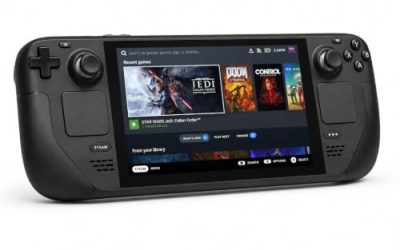
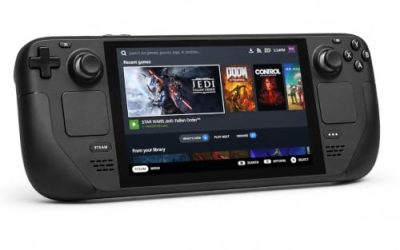
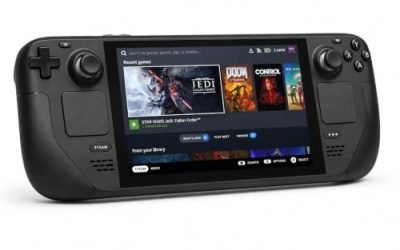
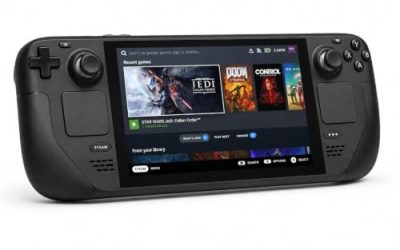
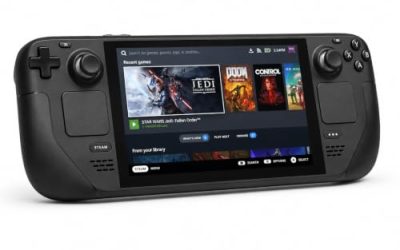
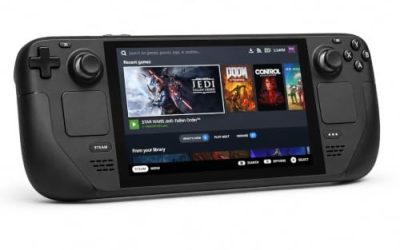
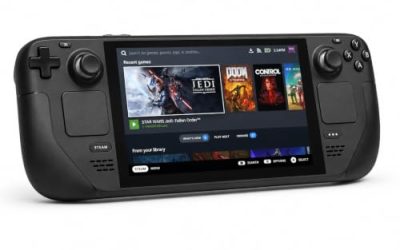
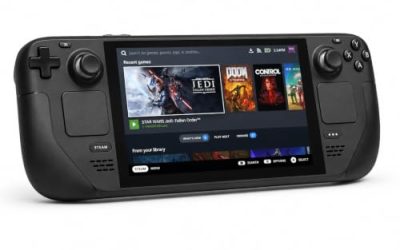
Valve Steam Deck OLED 512GB
The handheld Valve’s Playable sheet was written against. The sheet passes the game on default settings, so plan around the small text and the manual keyboard, not performance.
Specs
- Display: 7.4-inch HDR OLED, 1280 by 800, up to 90 Hz
- Processor: AMD Zen 2 and RDNA 2 custom APU
- Memory: 16 GB LPDDR5
- Storage: 512 GB NVMe, plus a microSD slot
- Wireless: Wi-Fi 6E and Bluetooth
- Channel note: Valve sells the Deck mainly through its own store, so Amazon listings are third-party sellers
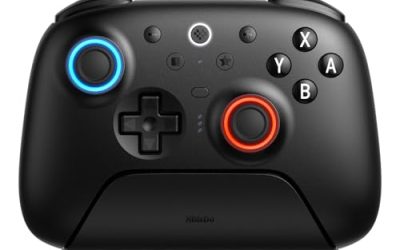
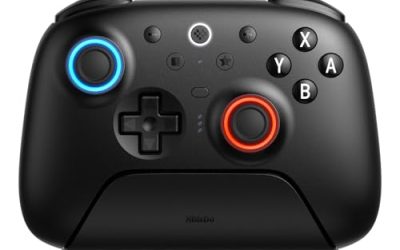
8BitDo Ultimate 2 Bluetooth Controller
The docked and desktop pad pick. Steam lists partial controller support for the game, and this pad covers the couch case with modern sticks and triggers plus back buttons for the block and special-attack inputs.
Specs
- Connectivity: Bluetooth wireless and USB-C wired
- Joysticks: TMR electromagnetic, anti-drift design
- Triggers: Hall effect, with mode switching
- Extras: two remappable back buttons, motion control
- In the box: charging dock included
Xbox Wireless Controller, Carbon Black

The safest guest pad in PC gaming: Steam Input support is universal, and it pairs over Bluetooth or its own wireless standard. On the handheld, the test sheet’s note applies: an external pad may need a manual Quick Access Menu switch before it takes over.
- Connectivity: Xbox Wireless and Bluetooth
- Port: USB-C for wired play
- Controls: hybrid D-pad, dedicated Share button
- Power: AA batteries or optional rechargeable pack
Logitech G502 HERO
First-person melee lives on quick, repeated inputs, and the G502 HERO puts eleven programmable buttons under one hand for the push, dodge and tag calls a horde forces out of you. Its onboard memory keeps profiles on the mouse itself, suiting a Linux desk where the maker’s software does not run.
Specs
- Sensor: HERO 25K optical, 100 to 25,600 DPI
- Buttons: 11 programmable, with a dual-mode hyper-fast scroll wheel
- Weight: 121 g base, with five 3.6 g tuning weights included
- Memory: onboard profile storage
- Connection: wired USB, 1,000 Hz report rate
- Model: 910-005469
Samsung T9 Portable SSD 2TB

A 51 GB install plus fifteen add-ons makes a fast USB-C drive the simple way to move a Proton library between machines. The headline figure needs a Gen 2×2 host port; on a lesser port the drive runs at that ceiling instead.
Specs
- Capacity: 2 TB portable SSD
- Interface: USB 3.2 Gen 2×2, USB-C connector
- Maker-rated speeds: up to 2,000 MB per second read, 1,950 MB per second write
- Features: Dynamic Thermal Guard, maker-rated drop resistance
How to choose
Choose your route by which document you weight most. If the Deck is your machine, Valve’s Playable sheet is the strongest evidence available: tested in August 2026 against the exact build still on sale, it passes the game on default settings. On a Linux desktop, the ProtonDB file points the same way, with the launcher as the main documented cost. For input: Steam lists partial controller support, so a pad is a genuine option, but mouse and keyboard remain the game’s home shape. If you were holding out for a DRM-free copy, the GOG ruling closes that door.
Who should skip
Skip this one if you buy only native Linux builds on principle: there is none here, and the frozen branch means none is coming. Skip it if you play mostly offline, because Valve’s sheet marks an active internet connection as required even for single-player. Skip it if small interface text on a handheld is a deal-breaker. And skip it if you came for the sequel’s larger player base — this is the smaller, older game.
FAQ
Is Warhammer: End Times – Vermintide native on Linux?
No. Steam’s flags for app 235540 read Windows true, Mac false and Linux false, the Linux requirements field is an empty list, there is no Linux depot or client icon, and both purchase packages deliver Windows only. All fifteen add-ons read the same way.
How well does End Times – Vermintide run under Proton?
ProtonDB’s full summary rates it Gold on headline and trending tiers and Platinum on the best-reported tier, across 99 reports with strong confidence. Recent reports describe the game working out of the box on current Proton, with multiplayer rated Excellent; the recurring costs are the launcher and an occasional file-integrity complaint.
Is End Times – Vermintide Steam Deck Verified?
No — it is rated Playable, one step below Verified. Valve’s sheet, tested in August 2026, passes the game on its default controller configuration and graphics settings, and deducts for launcher interaction, manual keyboard invocation and small text. It also notes that single-player requires an internet connection.
Can I buy End Times – Vermintide on GOG instead?
No GOG edition exists. GOG’s catalogue routes were checked directly and identity-verified result by result; none is this game, the embed search returns nothing, and the product address redirects to the general catalogue. Steam is the only storefront with a copy, and that copy is the Windows build.
Final verdict
End Times – Vermintide is a Windows game that Linux players reach through Proton, and its record is unusually tidy about it: false flags, Mac and Linux fields absent outright, no Linux depot or icon, two Windows-only packages, and a fifteen-app family in complete agreement. The compatibility picture is friendlier than its sequel’s: a Gold ProtonDB file with a Platinum ceiling, and a Playable Deck sheet tested recently against the very build on sale. Buy it on Steam with the launcher quirk and the always-online note in mind.
Product and ASIN Reference
| Product | ASIN |
|---|---|
| Valve Steam Deck OLED 512GB | B0CQ3RWQQZ |
| 8BitDo Ultimate 2 Bluetooth Controller | B0F194QFT2 |
| Xbox Wireless Controller, Carbon Black | B08DF248LD |
| Logitech G502 HERO | B07GBZ4Q68 |
| Samsung T9 Portable SSD 2TB | B0CHFS9K14 |