Most games in this series fail Linux support in the open: a false flag, an empty field, no depot. The Case of the Golden Idol, Color Gray Games’ detective game published by Playstack and released on 13 October 2022, does the opposite. It hides a real native build behind paperwork that looks like every broken listing we warn readers about: an empty-shell Linux requirements tab, and two expansion cases whose records flag Linux false.
Follow the record down to the depot layer, though, and the answer flips: SteamDB lists a Linux depot of real size, stocked with Linux libraries and engine data, inside the package a normal purchase delivers.
As an Amazon Associate, we earn from qualifying purchases.
Quick answer
Yes. The Case of the Golden Idol has a native Linux build: Steam flags Linux true and a real Linux depot, about 331 MB of Unity data and libraries, ships inside the store package. The catch is presentation: the store’s Linux requirements tab is an empty shell, the expansions’ own records flag Linux false, and Valve’s Deck test names a Proton runtime.
The status at a glance
| Question | Answer from the record |
|---|---|
| Native Linux build | Yes — real Linux depot in the store package |
| Linux requirements tab | Empty shell — headings over empty lists |
| Expansions | Records flag Linux false; content rides base depots |
| Demo | Windows only, never ported |
| ProtonDB record | Classified Native, 36 reports, mixed filings |
| Steam Deck verdict | Verified, tested October 2024, older build |
| GOG edition | Exists, Windows only |
| Anti-cheat or launcher | None named by any of the three sources |
A Linux flag with an empty tab
Steam’s appdetails record for the game (app 1677770) flags all three platforms true: Windows, Mac and Linux. The requirements fields underneath are where the listing misleads. The Windows field is populated at both tiers, and the Mac field is genuinely filled in, with real hardware named. The Linux field is an empty shell: Minimum and Recommended headings over empty lists. No Linux requirements have ever been published on the page, so judging by the tab alone invites a false-flag reading.
The record names no DRM notice and no external-account notice. Nothing in it settles the Linux question either way; for that, the depot table is the only honest witness.
The depot that settles it
SteamDB lists three content depots: Windows at about 691 MB, macOS at about 424 MB and Linux at about 331 MB. The Linux depot is no stub. Its file census shows dozens of files, including Linux shared libraries as the largest single share and a Unity engine data file of about 89 MB, matching the Unity technology SteamDB detects. Its manifest is current, sitting on build 23663326, served by the public branch since June 2026. And the depot belongs to the game’s store package, so the Linux build is part of the product on sale rather than a file stranded outside it.
The community file explains how this build arrived. ProtonDB’s reports describe two versions in the wild: the original release and a rebuilt version players call Redux, the native one, which Steam installs by default. Reports from the game’s first years were filed against the Windows build under Proton, because that was the only build there was. The native version is a later arrival.
The family, app by app
The base game’s record lists three apps in its DLC array, and each had to be opened individually. The soundtrack (app 2178870) is a music product that flags all three platforms true while its Linux requirements field is an empty list outright; a flag on an audio file says nothing about a game build.
The two expansion cases, Golden Idol Mysteries: The Spider of Lanka (app 2377000, May 2023) and The Lemurian Vampire (app 2377001, August 2023), both flag Linux false, with the same empty-shell field as the base game. Read alone, those records suggest the expansions skip Linux. Their SteamDB depots tell the rest: each is a zero-byte marker whose configuration lists Windows and Linux, because expansion content rides inside the base game’s depots rather than shipping its own build. The demo app (1678010), from September 2021, is the family’s one clean negative: Windows only, never ported.
What ProtonDB’s file actually describes
ProtonDB classifies this game as Native, and its page heads the requirements block with a native-support label that, for once, agrees with Steam’s record instead of contradicting it. The summary API returned an error for this title in this session, so the figures here are the ones the game page itself publishes: the Native classification and 36 reports. Those reports split between Native filings and named Proton versions from 7.0 through 10.0, exactly the split the two-version history predicts.
Kept at report weight, the texture is useful rather than tidy. One reporter found the expansion cases greyed out under the native build and had to force a Proton 9.0 build to unlock them, noting the save transferred across. Another recommends the original version through Proton and calls the native rebuild glitchy. Several native reports note the game renders without a frame-rate cap and suggest a vsync launch option. None of that cancels the native verdict; it marks the native build as the younger, rougher route.
Steam Deck: Verified, on older paperwork
Valve’s own compatibility endpoint returned an unreadable response in this session, so this test sheet is read from SteamDB’s republication of Valve’s data. The category is Verified, the strongest badge Valve gives: all four checks pass, covering full functionality on the default configuration, Deck controller icons, legible interface text and default graphics that perform well. SteamOS carries a separate Compatible rating on the same sheet.
Two details deserve plain statement. The test ran on 17 October 2024 against build 15997527, while the public branch now serves build 23663326, so the paperwork predates today’s download. And the sheet names proton-9.0-3RC as the recommended runtime, an unusual line for a game holding a native depot; it matches a community file where much Deck play is discussed in Proton terms.
Three anti-cheat sources, three silences
Kept separate, as this series keeps them: Steam’s record names no anti-cheat and carries no DRM or external-account notice. SteamDB’s detected technology is engine and SDK plumbing — Godot and Unity entries, a development-kit SDK, UnityBurst, UnityIL2CPP and cURL; an older report’s file paths point at Godot userdata folders, while the current Linux depot is built from Unity data, one for each version. The Are We Anti-Cheat Yet dataset, all 1,167 entries, carries no entry for this game.
The GOG ruling
A GOG edition exists, verified against GOG’s own product page, whose company line matches Steam’s record exactly: Color Gray Games and Playstack, same October 2022 release. Its works-on field, however, reads Windows alone. GOG publishes no Mac and no Linux edition, so the native build is, on both storefronts’ evidence, Steam-only.
The gear that fits a native detective game
Valve Steam Deck OLED 512GB

The handheld on Valve’s test sheet. The badge was earned on an older build than the one now served, but all four checks passed, and a point-and-click case file makes no demands the APU would notice in either version.
Specs
- Display: 7.4-inch HDR OLED, 1280 by 800, up to 90 Hz
- Processor: AMD Zen 2 and RDNA 2 custom APU
- Memory: 16 GB LPDDR5
- Storage: 512 GB NVMe, plus a microSD slot
- Wireless: Wi-Fi 6E and Bluetooth
- Channel note: Valve sells the Deck mainly through its own store, so Amazon listings are third-party sellers
8BitDo Ultimate 2 Bluetooth Controller

The docked and desktop pad pick. Steam lists full controller support for the game, and this pad covers the couch case with back buttons for menu shortcuts.
Specs
- Connectivity: Bluetooth wireless and USB-C wired
- Joysticks: TMR electromagnetic, anti-drift design
- Triggers: Hall effect, with mode switching
- Extras: two remappable back buttons, motion control
- In the box: charging dock included
Xbox Wireless Controller, Carbon Black

The safest guest pad in PC gaming: Steam Input support is universal, the glyphs match what most games display, and it pairs over Bluetooth or its own wireless standard.
- Connectivity: Xbox Wireless and Bluetooth
- Port: USB-C for wired play
- Controls: hybrid D-pad, dedicated Share button
- Power: AA batteries or optional rechargeable pack
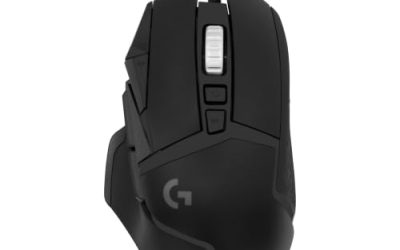
Logitech G502 HERO

A detective game built on frozen scenes and drag-and-drop deduction is mouse work at heart, and a precise wired mouse turns clue hunting into single clicks. Its eleven programmable buttons cover the inputs a long session repeats.
Specs
- HERO optical sensor, up to 25,600 DPI
- 11 programmable buttons
- Adjustable weight system
- Wired USB connection
- On-board memory profiles
Samsung T9 Portable SSD 2TB

For moving a Linux game library between machines, or keeping an offline backup of installers, a fast USB-C drive is the simple answer. The headline figure needs a Gen 2×2 host port; on a lesser port the drive runs at that ceiling instead.
Specs
- Capacity: 2 TB portable SSD
- Interface: USB 3.2 Gen 2×2, USB-C connector
- Maker-rated speeds: up to 2,000 MB per second read, 1,950 MB per second write
- Features: Dynamic Thermal Guard, maker-rated drop resistance
How to choose
Choose the Steam copy, the only edition carrying the native Linux build; the GOG edition is Windows only. Install on Linux and the native version is what Steam delivers by default. Keep the community file’s two warnings in your pocket: if the expansion cases show as unavailable in the native build, forcing a recent Proton build is the workaround reporters used, with saves transferring across; and if the frame rate runs uncapped, the vsync launch option reporters name is the fix. On Steam Deck, the Verified badge covers the default configuration, though the test predates the current build.
Who should skip
Skip the GOG edition if Linux is your platform; it sells a Windows build only. Skip the demo as a Linux trial, because it was never ported and says nothing about the full game’s native build. Skip this one if you require published system requirements before buying, because the store’s Linux tab is an empty shell. And if the report texture around the rebuilt version worries you, the Proton route to the original version remains available in the same purchase.
FAQ
Is The Case of the Golden Idol native on Linux?
Yes. Steam flags Linux true, and SteamDB lists a Linux depot of about 331 MB, filled with Linux libraries and Unity data, inside the package a purchase delivers. The empty requirements tab is a publishing gap, not a missing build.
Why do the expansion cases flag Linux false?
Their store records do flag Linux false, but their depots are zero-byte markers configured for Windows and Linux, because expansion content ships inside the base game’s depots. One ProtonDB reporter did have to force Proton to unlock the cases in-game, so treat expansion access under the native build as reported, not guaranteed.
Is The Case of the Golden Idol Steam Deck Verified?
Yes. Valve’s record, read through SteamDB’s republication after the official endpoint failed in this session, gives the Verified category with all four checks passing. The test dates from October 2024 on an older build and names a Proton runtime, so it certifies an earlier build than the one now served.
Can I buy the native version on GOG?
No. GOG’s own product page lists Windows as the only supported platform; the native build is sold only through Steam.
Final verdict
The Case of the Golden Idol is a native Linux game wearing a broken listing’s clothes. The flag is true, the depot is real, current and delivered by the store package, and ProtonDB’s Native classification agrees with Steam rather than inventing support. Against that stand an empty requirements tab, expansion records flagging the platform false, a Deck badge earned on an older build under a Proton runtime line, and a second storefront selling Windows only. Buy the Steam copy for the native build, keep the Proton workaround in mind for the expansions, and judge this one by its depots.
Product and ASIN Reference
| Product | ASIN |
|---|---|
| Valve Steam Deck OLED 512GB | B0CQ3RWQQZ |
| 8BitDo Ultimate 2 Bluetooth Controller | B0F194QFT2 |
| Xbox Wireless Controller, Carbon Black | B08DF248LD |
| Logitech G502 HERO | B07GBZ4Q68 |
| Samsung T9 Portable SSD 2TB | B0CHFS9K14 |