The Roottrees are Dead is a genealogical mystery set in 1998, developed and published by Evil Trout Inc. and released on Steam on 15 January 2025. A plane crash has wiped out the senior line of the Roottree family, and the inheritance can only be settled once someone works out who the blood relatives actually are. Armed with a dial-up modem, you scour period-style web pages, photographs and articles, then pin the evidence onto a family tree. It is a reading-and-deduction game, which makes the Linux question a practical one: this is the kind of title players want on a desktop, with a mouse and a large screen.
This status check reads the game’s own records layer by layer rather than trusting any single badge: Steam’s flags and requirements fields, the depot table and store package, the one related app in the family, Valve’s Steam Deck test sheet, ProtonDB’s report pool, the anti-cheat sources and the other PC storefront. The short version is the uncommon one for this series: the native Linux build is real, and the only misleading signal in the record belongs to a soundtrack.
As an Amazon Associate, we earn from qualifying purchases.
Quick answer
Yes. The Roottrees are Dead ships a genuine native Linux build: Steam’s record flags Linux, publishes a populated Linux minimum specification, and carries a dedicated Linux 64-bit depot of about 864 MB next to the Windows and Mac depots. No Proton layer is required, and Valve’s recommended runtime for the game is listed as native.
The record, layer by layer
Steam’s platform flags for app 2754380 read true on all three systems: Windows, Mac and Linux. Flags alone settle nothing in this series, so the next layer is the requirements fields, and here the Linux field is genuinely populated at the tier that matters. The published Linux minimum asks for a 64-bit Linux system, a 2.0 GHz dual-core processor, 8 GB of RAM, Intel HD Graphics 510 class graphics, 1 GB of storage, and a note that the graphics hardware needs at least 2 GB of VRAM. These are game-specific lines, not a copied Windows block: the Windows minimum names Windows 10 and the Mac minimum names macOS High Sierra and an Apple M1. One quirk deserves naming: the Linux recommended field is a heading over an empty list, as is the Mac one. Filled minimums and blank recommended tiers are untidy publishing, not a missing port.
The depot table closes the question. SteamDB lists three content depots: Windows 64-bit at about 890 MB, macOS 64-bit at about 968 MB, and Linux 64-bit at about 864 MB. The Linux depot’s manifest is a Godot payload — one large data pack, two native shared libraries and the executable. Decisively, the depot is not stranded: it sits inside the game’s store package, the same package a normal purchase delivers. Flag, field, depot and package all say the same thing.
The one flag that means nothing: the soundtrack
The game’s full DLC array contains exactly one app: The Roottrees are Dead Soundtrack, a music product. Read on its own record, the soundtrack flags all three platforms true, including Linux, while its Linux requirements field is an empty list outright. That is the classic family trap in its mildest form — a bare flag on an audio product, with no requirements text behind it. It proves nothing in either direction: native status rests on the game’s own flag, field, depot and package.
The Steam Deck sheet, read closely
Valve’s compatibility record was read through SteamDB’s republication of Valve’s own compatibility data. The category is Playable, and SteamOS is separately rated Compatible. The line that matters most is the recommended runtime: native — the sheet certifies the Linux build itself, not a Windows build carried by Proton.
The passing items are the functional ones: all functionality is accessible with the default controller configuration, and the default graphics configuration performs well. The three note items hold the game at Playable rather than Verified, and all are interface friction rather than failures: the game sometimes shows mouse, keyboard or non-Steam-Deck controller icons; entering some text requires manually invoking the on-screen keyboard, which matters in a game built around searching names; and some in-game text is small, which matters in a game built around documents.
One paperwork caveat applies. Valve’s test was recorded on 7 April 2025 against build 17943562, while the public branch has since moved to build 26707534. The verdict describes an older build than the one a buyer downloads today, so this file joins the list of Deck paperwork a fresh test could supplement.
ProtonDB’s Gold, read in context
ProtonDB’s summary figures, read in full, are a headline tier of Gold, a best-reported tier of Platinum and a trending tier of Gold, across 17 reports at moderate confidence. A Gold headline next to a native build looks like a contradiction until the pool is understood: ProtonDB accepts reports from players running the Windows build under Proton as well as from the native build, and its headline tier blends both. Steam’s record is the authority on whether a native build exists, and on that question it is unanimous. The figures remain a rough health signal for the Windows route, but they do not outrank the store record or the depot table.
One check here could not be completed. The game’s ProtonDB page itself failed to load during this review, so whether its classification heading agrees with Steam’s native ruling is unresolved for this title. Nothing here rests on that heading; the tiers come from the summary data, and the verdict from Steam.
Three anti-cheat sources, three blanks
Kept separate, as always. Steam’s record names no anti-cheat, and carries neither a DRM notice nor an external-account notice. SteamDB’s detected technology list contains exactly one entry, the Godot Engine — engine plumbing, not protection software. The Are We Anti-Cheat Yet dataset, searched by name and by app id across its full list, carries no entry for this game at all. That is the expected shape for a single-player deduction game; Valve’s configuration flags add that no internet connection is required for single-player. There is no anti-cheat layer here to block anyone.
The storefront ruling
GOG carries no edition of this game. GOG’s own catalogue search returns no product for it, and no GOG product page exists for the title — the address a GOG page would occupy resolves to the general catalogue instead. As of this check, Steam is the PC storefront for this game, and the native build above is a Steam deliverable.
Gear that fits the record
The gear below follows the record’s shape: the handheld the Playable sheet was written for, two pads, a mouse for the desktop game, and library storage.
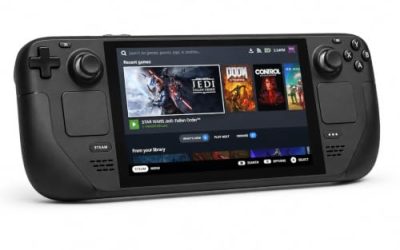
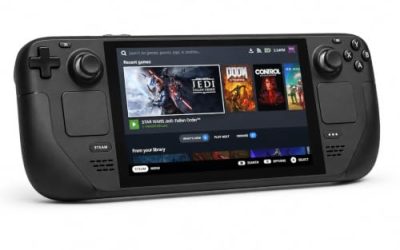
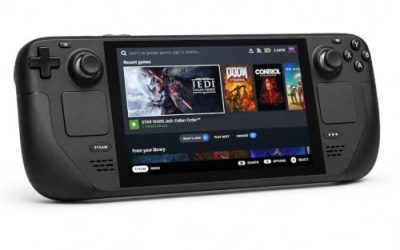
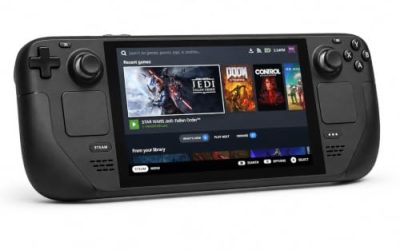
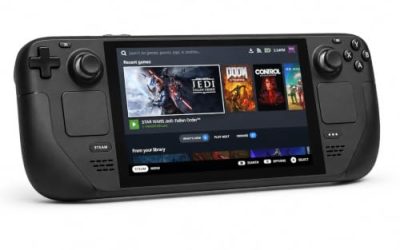
Valve Steam Deck OLED 512GB

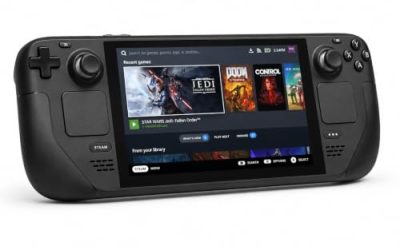
The handheld the Playable sheet was written for. Valve tested the native build itself, the default graphics configuration passed, and the sub-gigabyte game is a rounding error on this drive. The three notes — small text, manual keyboard, occasional non-Deck glyphs — are the honest price of a research game on a small screen.
Specs
- Display: 7.4-inch HDR OLED, 1280 by 800, up to 90 Hz
- Processor: AMD Zen 2 and RDNA 2 custom APU
- Memory: 16 GB LPDDR5
- Storage: 512 GB NVMe, plus a microSD slot
- Wireless: Wi-Fi 6E and Bluetooth
- Channel note: Valve sells the Deck mainly through its own store, so Amazon listings are third-party sellers
8BitDo Ultimate 2 Bluetooth Controller

The docked and desktop pad pick. Valve’s sheet confirms the default controller configuration covers all functionality, and this pad adds modern sticks, triggers and back buttons for menu shortcuts.
Specs
- Connectivity: Bluetooth wireless and USB-C wired
- Joysticks: TMR electromagnetic, anti-drift design
- Triggers: Hall effect, with mode switching
- Extras: two remappable back buttons, motion control
- In the box: charging dock included
Xbox Wireless Controller, Carbon Black

The safest guest pad in PC gaming: Steam Input support is universal, and it pairs over Bluetooth or its own wireless standard. This game’s prompts sometimes show mouse and keyboard icons regardless of the pad, so comfort and reliability carry the pick.
- Connectivity: Xbox Wireless and Bluetooth
- Port: USB-C for wired play
- Controls: hybrid D-pad, dedicated Share button
- Power: AA batteries or optional rechargeable pack
Logitech G502 HERO

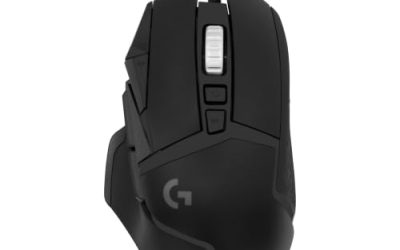
This is a game of documents, photographs and a sprawling family-tree board, and a precise wired mouse turns evidence sorting into single clicks. Eleven programmable buttons cover the confirm, cancel and search inputs a long session repeats.
Specs
- HERO optical sensor, up to 25,600 DPI
- 11 programmable buttons
- Adjustable weight system
- Wired USB connection
- On-board memory profiles
Samsung T9 Portable SSD 2TB

For moving a Linux game library between machines, or keeping an offline backup of installers, a fast USB-C drive is the simple answer. The headline figure needs a Gen 2×2 host port; on a lesser port the drive runs at that ceiling.
Specs
- Capacity: 2 TB portable SSD
- Interface: USB 3.2 Gen 2×2, USB-C connector
- Maker-rated speeds: up to 2,000 MB per second read, 1,950 MB per second write
- Features: Dynamic Thermal Guard, maker-rated drop resistance
How to choose
On a Linux desktop, there is nothing to choose: buy the game on Steam, install it, and the store package delivers the native build directly. Check your machine against the published minimum rather than the blank recommended tier — a 64-bit distro, 8 GB of RAM and almost any graphics hardware from the last decade clears it, with the one line worth respecting being the graphics-memory note. On Steam Deck, choose the handheld knowingly: the game works and performs well, and the trade is text size and manual keyboard calls during searches. Choose the Windows build under Proton only if an external tool assumes Windows; the game itself never asks you to.
Who should skip
Skip the Deck version if small text tires your eyes or if you expect to type constantly; this game’s searches are frequent, and every one means raising the on-screen keyboard by hand. Skip the wait for a GOG edition, because GOG’s catalogue has no listing for the game as of this check. Skip the title itself if reading-heavy deduction is not your genre: the mystery is the gameplay, with no action layer underneath it. Linux desktop players have no record-based reason to skip at all.
FAQ
Is The Roottrees are Dead native on Linux?
Yes. Steam flags Linux on the record, the Linux minimum requirements are published in full, SteamDB lists a dedicated Linux 64-bit depot, and that depot sits inside the store package a purchase delivers.
Why is the game only Playable, not Verified, on Steam Deck?
Because of three interface notes on Valve’s sheet: the game sometimes shows mouse, keyboard or non-Deck controller icons, text entry requires manually invoking the on-screen keyboard, and some in-game text is small. Functionality and performance both passed.
Why does ProtonDB headline Gold if the game is native?
ProtonDB’s pool blends reports from the Windows build under Proton with reports from the native build, so its headline tier is a mixed signal by construction. The store record, not the report pool, decides the native question.
Does the soundtrack’s Linux flag confirm the port?
No. The soundtrack is a music app whose record flags all three platforms while its Linux requirements field is empty. A flag on an audio product is not evidence about the game.
Final verdict
The Roottrees are Dead is one of the clean native cases: a populated Linux specification, a real Linux depot matching its sibling builds in size, that depot inside the store package, a Godot payload in the manifest, and a Deck sheet whose recommended runtime is native. The cautions are paperwork-grade, not port-grade — a blank recommended tier, a Deck test predating the current build, three interface notes behind the Playable badge, and a soundtrack flag that means nothing. A Linux player buying on Steam gets the build the developer shipped for their system, and the record says so on every layer.
Product and ASIN Reference
| Product | ASIN |
|---|---|
| Valve Steam Deck OLED 512GB | B0CQ3RWQQZ |
| 8BitDo Ultimate 2 Bluetooth Controller | B0F194QFT2 |
| Xbox Wireless Controller, Carbon Black | B08DF248LD |
| Logitech G502 HERO | B07GBZ4Q68 |
| Samsung T9 Portable SSD 2TB | B0CHFS9K14 |