NeocoreGames rebuilt the Arthurian legend as a dark tactical role-playing game, and Linux players asking after it usually want one fact first: is there a native build, or does the game live on Proton? The record Steam serves today answers cleanly, and unusually for this series of checks, every layer of it points the same way.


This article reads the record layer by layer: the flags and requirements fields, the purchase package, the depot tree, the add-on family, the anti-cheat picture, the ProtonDB file, Valve’s Deck sheet, and the one other storefront worth checking.
As an Amazon Associate, we earn from qualifying purchases.
Quick answer
King Arthur: Knight’s Tale has no native Linux build. Steam’s record for app 1157390 flags Windows only at every layer, from the platform flags to the sole purchase package, and the Linux requirements field is an empty list. Linux players run the Windows build through Proton, where ProtonDB rates it Gold with a Platinum best-reported tier, and Valve rates it Playable on Steam Deck.
The layer that settles it: the purchase package
A store page can carry stray flags, but the purchase package is what Steam delivers when money changes hands, so it is the decisive layer of any port check. King Arthur: Knight’s Tale sells through a single package, and that package reads Windows true, Mac false, Linux false, granting the base app alone.
The app-level flags above the package agree exactly: Windows true, Mac false, Linux false. When flags and package say the same thing, the verdict needs no interpretation: there is no native Linux build on Steam, and none hidden behind a delisted edition.
The requirements fields: one real spec, two empty lists
The Windows requirements field is genuinely populated in both tiers. The minimum names Windows 10 64-bit, an Intel i5-4690 or AMD FX 4350, 8 GB of memory, a GeForce GTX 780 or Radeon R9 280X class graphics card, DirectX 12, and 39 GB of storage. The recommended tier steps up to an Intel i7-4770K or AMD Ryzen 5 1500X.
The Mac and Linux fields, by contrast, are empty lists outright — not headings over generic text, just nothing. An empty list is the plainest signal a store record gives: no requirements were filed because no build for that platform was ever prepared.
Underneath: depots, icons and the branch
SteamDB’s depot listing shows an install tree built for one operating system. The content depot carries 42.35 GiB and the executable depot 285.04 MiB, and the only other entries are Windows shared-install redistributables: a Visual C++ 2019 package and a DirectX June 2010 package. There is no Linux depot at any size, and no emptied depot left behind by a withdrawn port. The icon set agrees: the standard client icon, icon, logo and logo-small assets are registered, and no Linux client icon — one more layer matching the flags and the package.
The public branch currently serves build 18532639, built in May 2025. That build number matters below, because Valve’s Deck test sheet names the exact build it graded, and the two match.
The add-on shelf: four agreements and one flag-only dissent
The base record’s add-on array lists five apps, each read individually. Four are content add-ons — the Pict Skirmish Pack, the Brigands Skirmish Pack, the Supporter Pack and the Blood Armor Skin — and all four repeat the base game’s mask exactly: Windows true, Mac false, Linux false.
The fifth app is the Soundtrack, and it dissents on paper: its flags read Windows, Mac and Linux all true. That is the familiar soundtrack shape, not a port — a music app ships audio files any operating system can play, and store tooling routinely flags music apps for every platform regardless of the parent game’s builds. With no executable and no game content behind it, the family stands at four agreements on real content and one flag-only dissent.
Anti-cheat: three records, all quiet
The game includes online player-versus-player modes, so the anti-cheat question is a fair one, and three sources were checked. Steam’s own record names no anti-cheat: no anti-cheat category, no DRM notice and no external account notice. SteamDB’s technology detection finds only middleware — FMOD audio, Lua scripting, Oodle compression and cURL networking.
The third source, the AreWeAntiCheatYet dataset, carries no entry for this game across its full catalogue. None of this is a ruling that the game runs no protection anywhere; it is the narrower statement that no public record names one — and nothing identifies a kernel-level blocker of the kind that stops other multiplayer titles under Proton.
ProtonDB’s file: Gold headline, Platinum best
ProtonDB’s summary for this app reads in full. The headline tier is Gold, the best-reported tier is Platinum, the trending tier is Platinum, and the file rests on 28 reports with strong confidence. That split is the classic one between older, fussier filings and the best current results: the long early-access period generated reports against a moving target, while recent filings on the finished build grade it at the top band.
One check on the ProtonDB page itself could not be completed this session: the page rendered report text only, without the requirements block that carries the native-support heading, so no claim is made here about that heading either way. The summary figures above come from the data feed, which read cleanly.
The Deck sheet: Playable, and tested on today’s build
Valve’s own compatibility endpoint rates the game Playable on Steam Deck, with SteamOS separately rated Compatible. The passes are the important ones: all functionality is accessible with the default controller configuration, the game shows Steam Deck controller icons, and the default graphics configuration performs well. The deductions are two: entering some text requires manually invoking the on-screen keyboard, and some in-game text is small and may be difficult to read. The sheet also notes the game does not default to external controllers, so a paired pad may need a manual Quick Access Menu switch.
The paperwork is current, which is rarer than it should be: the test is dated September 2026 and names tested build 18532639, the same build the public branch still serves. Its recommended runtime is proton-stable, the honest footnote to the whole article — the Playable badge grades the Windows build under Proton, because that is the only build there is.
The other storefront: no GOG edition
GOG was checked three ways. The natural product address resolves to the general catalogue rather than a product page. The catalogue’s own data lists other Arthurian games — the older King Arthur Collection and King Arthur II: The Role-Playing Wargame — but no entry for Knight’s Tale, and a storefront search returns nothing either. No GOG edition exists: Steam is the only PC storefront selling it, and the Proton route above is the only Linux route.
Gear for the Proton route
The Deck badge is Playable and the desktop route is a default Proton install, so the picks below cover the handheld, two pads, a mouse and fast storage.
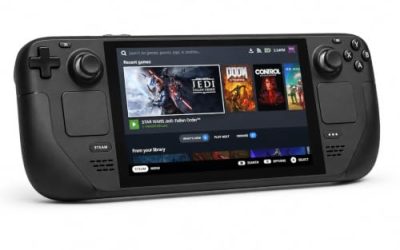
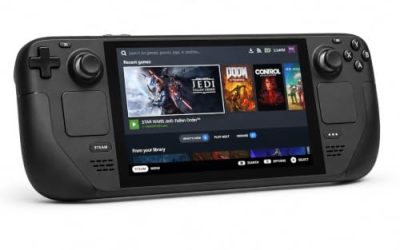
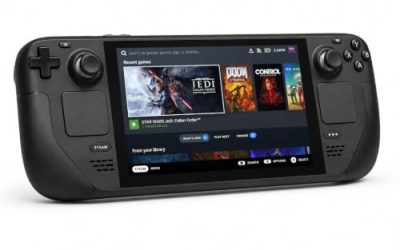
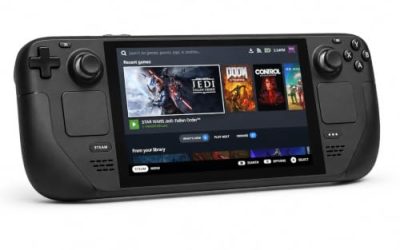
Valve Steam Deck OLED 512GB
The handheld the Playable badge was written for. The game’s requirements sit far below the Deck’s APU, and Valve’s sheet grades the default configuration as performant.
Specs
- Display: 7.4-inch HDR OLED, 1280 by 800, up to 90 Hz
- Processor: AMD Zen 2 and RDNA 2 custom APU
- Memory: 16 GB LPDDR5
- Storage: 512 GB NVMe, plus a microSD slot
- Wireless: Wi-Fi 6E and Bluetooth
- Channel note: Valve sells the Deck mainly through its own store, so Amazon listings are third-party sellers
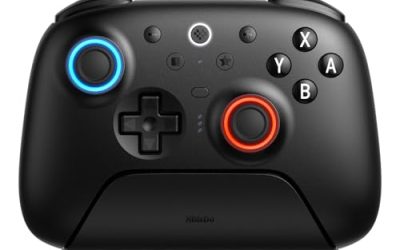
8BitDo Ultimate 2 Bluetooth Controller
The docked and desktop pad pick. Steam lists full controller support, and this pad covers the couch case with modern sticks, triggers and back buttons.
Specs
- Connectivity: Bluetooth wireless and USB-C wired
- Joysticks: TMR electromagnetic, anti-drift design
- Triggers: Hall effect, with mode switching
- Extras: two remappable back buttons, motion control
- In the box: charging dock included
Xbox Wireless Controller, Carbon Black

The safest guest pad in PC gaming: Steam Input support is universal and the glyphs match what most games display. On the handheld, an external pad may need a manual Quick Access Menu switch before it takes over.
- Connectivity: Xbox Wireless and Bluetooth
- Port: USB-C for wired play
- Controls: hybrid D-pad, dedicated Share button
- Power: AA batteries or optional rechargeable pack
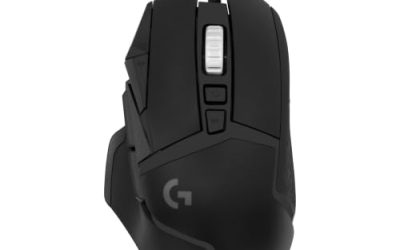
Logitech G502 HERO

Turn-based tactics reward a precise pointer: grid movement, ability targeting and inventory screens all move faster with a mouse than with a stick.
Specs
- HERO optical sensor, up to 25,600 DPI
- 11 programmable buttons
- Adjustable weight system
- Wired USB connection
- On-board memory profiles
Samsung T9 Portable SSD 2TB

For moving a Linux game library between machines or keeping an offline backup, a fast USB-C drive is the simple answer. The headline figure needs a Gen 2×2 host port; on a lesser port the drive runs at that ceiling instead.
Specs
- Capacity: 2 TB portable SSD
- Interface: USB 3.2 Gen 2×2, USB-C connector
- Maker-rated speeds: up to 2,000 MB per second read, 1,950 MB per second write
- Features: Dynamic Thermal Guard, maker-rated drop resistance
How to choose
Choose the Steam copy: it is the only PC edition on sale anywhere, and the exact build both the ProtonDB file and the Deck sheet describe. On a desktop or laptop, install it and leave the compatibility tool at its default; the Gold headline with a Platinum best-reported tier says the finished build runs well without tuning. On a Steam Deck, the Playable badge means install and launch, with two expectations set in advance: small text in places, and a manual on-screen keyboard for typed input. The game ships with full controller support, so a pad is a first-class way to play; a mouse earns its place at a desk for the grid and the menus. The add-on packs follow the same Windows-only record and Proton route, so they need no separate platform check.
Who should skip
Skip this one if a native Linux build is a condition of purchase: there is none, at any layer of the record, and nothing suggests one is coming. Skip it if you want a DRM-free offline installer, because no GOG edition exists. Skip the Deck plan if small in-game text is a deal-breaker, since Valve’s sheet flags exactly that. And skip it if you only play unanimously Platinum games; this one carries a Gold headline from its long early-access period, even though its best and trending tiers sit at Platinum.
FAQ
Is King Arthur: Knight’s Tale native on Linux?
No. The platform flags, the sole purchase package and the depot tree all read Windows-only, and the Linux requirements field is an empty list. Linux players run the Windows build through Proton.
How well does it run under Proton?
ProtonDB’s full summary rates the game Gold on its headline tier, with Platinum as both the best-reported and trending tiers, across 28 reports at strong confidence. The split reflects older early-access filings against the finished build.
What does the Steam Deck Playable badge rest on?
Valve’s test, dated September 2026, graded build 18532639, which is still the current public branch build. The sheet passes the default controller configuration, the Deck glyphs and default performance, and deducts for small text and manual on-screen keyboard use.
Can I buy it on GOG instead?
No. GOG’s catalogue carries the older King Arthur Collection and King Arthur II, but no edition of Knight’s Tale. Steam is the only PC storefront for this game.
Final verdict
King Arthur: Knight’s Tale is a plain, well-documented Windows-only record: one package, one platform, empty Mac and Linux fields, a Windows-only depot tree, and a content family that agrees with the base game except for a flag-only soundtrack. What makes it an easy recommendation anyway is everything behind the Windows build — a full ProtonDB file grading Gold with Platinum best and trending tiers, a Deck Playable sheet tested on the build that still ships, and no anti-cheat named anywhere. Buy it on Steam, run it through Proton, and expect the tactics, not the platform, to be the hard part.
Product and ASIN Reference
| Product | ASIN |
|---|---|
| Valve Steam Deck OLED 512GB | B0CQ3RWQQZ |
| 8BitDo Ultimate 2 Bluetooth Controller | B0F194QFT2 |
| Xbox Wireless Controller, Carbon Black | B08DF248LD |
| Logitech G502 HERO | B07GBZ4Q68 |
| Samsung T9 Portable SSD 2TB | B0CHFS9K14 |