Homeworld: Deserts of Kharak is the ground-based real-time strategy prequel Blackbird Interactive released in January 2016. The classic Homeworld games built their reputation on Mac as well as Windows, so the question that keeps surfacing is a fair one: did the desert expedition ever get a native Linux build of its own, or is Proton the only road onto Kharak from a Linux machine?


The short version is that no native Linux build exists. Steam sells a Windows and macOS game, the macOS port is real and fully documented, and the Linux side is an empty field with nothing behind it. What Linux players actually use is the Windows build through Proton, and that community file is strong, though a later update to the game’s online services gave recent reports something to complain about.
As an Amazon Associate, we earn from qualifying purchases.
Quick answer
No. Homeworld: Deserts of Kharak has no native Linux build: the Steam flags, the single purchase package and the depot table all stop at Windows and macOS, and the Linux requirements field is an empty list. The Linux route is Proton, where the community file reads Gold across 74 reports, and Valve rates the game Playable on Steam Deck.
The app record: two populated fields and one empty list
Start with identity. The Steam record names the game Homeworld: Deserts of Kharak, developed by Blackbird Interactive, published by Gearbox Publishing and 2K, released 20 January 2016: the pinned record this check reads, kept separate from Homeworld 3 and the Remastered Collection.
The platform flags read Windows true, macOS true, Linux false. Flags alone settle nothing, so look at the requirements fields underneath them. The Windows field is genuinely populated in both tiers, asking for a Core i3-2100 class processor and 3 GB of memory at minimum. The macOS field is also genuinely populated, with an OS X 10.10.5 floor and real hardware at both tiers. The Linux field, by contrast, is an empty list outright: no distribution, no hardware, no placeholder text.
The package layer, where the verdict actually sits
The decisive layer is the purchase package, since a store flag can lag behind what a purchase delivers. Deserts of Kharak sells through a single default package, and that package reads Windows true, macOS true, Linux false, granting the base app alone. Every layer that could have contradicted the flags instead repeats them: the purchase is a two-platform game, and Linux is not one of the two.
The depot table: a Mac build you can measure, no Linux build at all
SteamDB’s depot listing shows what the purchase actually downloads. The Windows side carries a main content depot of 7.99 GiB plus separate 32-bit and 64-bit executable depots. The macOS side carries its own depot of 7.67 GiB, sized like a real port rather than a paperwork gesture. There is no Linux depot of any size, and no emptied Linux depot left behind by a withdrawn port. The icon set agrees: standard client icons and a macOS icon file are registered, but no Linux client icon at all. The public branch serves build 12339551, built in October 2023.
The add-on family repeats the base mask, four for four
The base record’s add-on array holds four apps, each read individually. The Expedition Guide, the Soban Fleet Pack and the Khaaneph Fleet Pack all flag Windows and macOS true with Linux false and empty Linux fields, and the soundtrack app repeats exactly the same mask. That matters because the soundtrack is where such sweeps usually find a dissent; here it stops at two platforms like everything else. Four for four, the family agrees with the base game.
The Proton file: Gold, strong, with a recent crack in it
Since Proton is the only Linux route, its file carries the practical weight. The summary record reads a headline tier of Gold, a best-reported tier of Platinum and a trending tier of Gold, across 74 reports with strong confidence: a substantial, settled file.
Two cautions belong beside the tier. The first is the page’s classification heading: the ProtonDB page heads its requirements block with a native-support label, which Steam’s record contradicts at every layer checked above. That heading is a stray tag, not a port, and this article follows Steam. The second is texture from the newest reports. Later patches added an Epic Online Services backend for crossplay multiplayer, and recent filings say that backend fights the newest Proton builds, breaking menus and the mission select screen, while stepping back to Proton 10 makes the problems go away. The tier is earned, but the version you pick decides how smooth the landing is.
Anti-cheat: three sources, and none of them names one
The honest answer is that no source names an anti-cheat for this game. Steam’s record carries no anti-cheat category, no DRM notice and no account notice. SteamDB’s technology detection lists the Unity engine, the Mono and XAudio2 libraries and an Epic Online Services component, a services layer rather than a named anti-cheat product. The AreWeAntiCheatYet dataset carries no entry for this app at all. Silence from three sources is not a ruling, and this article does not present it as one; it is simply the whole of what the records say.
The Deck sheet: Playable, graded on an older build
Valve’s own compatibility endpoint returned an empty response when read for this article, so the Deck sheet here is Valve’s data as republished by SteamDB, a route worth stating plainly. On that sheet the game is rated Playable, with SteamOS separately marked Compatible, and the pass line is that the default graphics configuration performs well. The deductions are the familiar strategy-game set: the default controller configuration is not fully functional, so some functions need the touchscreen, the virtual keyboard or a community configuration; the game sometimes shows non-Deck controller icons; some text entry requires manually invoking the on-screen keyboard; and some text is small.
The paperwork, though, is stale. The test is dated August 2022 and names tested build 2275907 with Proton 7.0-3 recommended, while the public branch has since moved to build 12339551 from October 2023. It predates the services-backend complaints in recent Proton reports.
The other storefront changes nothing for Linux
GOG sells this game, and the ruling there rests on GOG’s own live product page, identity-checked against the same title, developer and January 2016 release date. That page lists the game as working on Windows only, and its compatibility answer says the game is officially supported on Windows. No Linux build hides in the GOG edition, so the choice is about other things: the GOG copy is a DRM-free Windows installer whose multiplayer runs between GOG users, while the Steam copy is the one both compatibility records describe. For a Linux player, both doors lead to the same Windows build.
Gear that fits the record
The record’s shape decides the gear: a handheld the game is rated Playable on, two pads for docked play with community layouts, a wired mouse for strategy control, and fast storage for a travelling library.
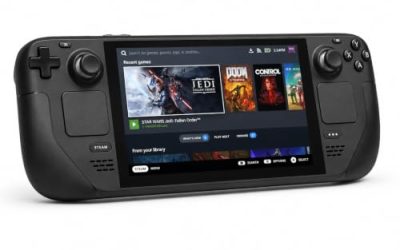
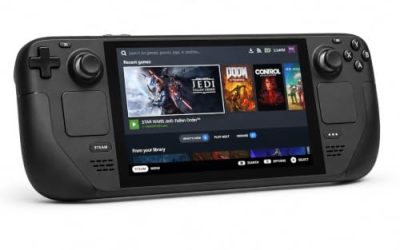
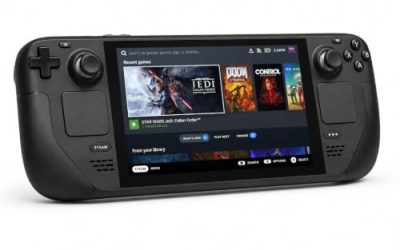
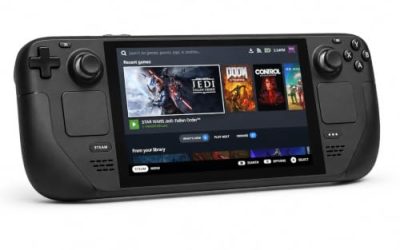
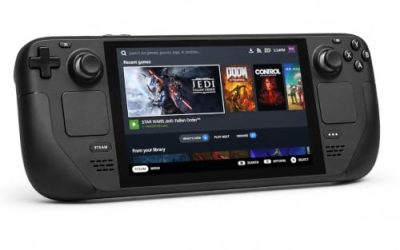
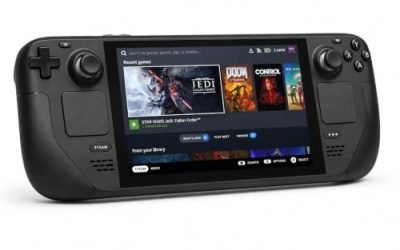
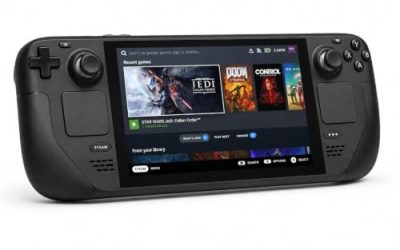
Valve Steam Deck OLED 512GB
The handheld behind the Playable rating. The game’s Windows requirements are modest next to the Deck’s APU, and its strategy layout is the case community controller configurations exist for.
Specs
- Display: 7.4-inch HDR OLED, 1280 by 800, up to 90 Hz
- Processor: AMD Zen 2 and RDNA 2 custom APU
- Memory: 16 GB LPDDR5
- Storage: 512 GB NVMe, plus a microSD slot
- Wireless: Wi-Fi 6E and Bluetooth
- Channel note: Valve sells the Deck mainly through its own store, so Amazon listings are third-party sellers
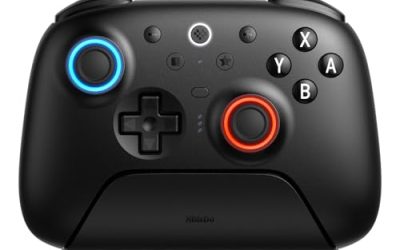
8BitDo Ultimate 2 Bluetooth Controller
The docked pad pick. The store record names no controller support of its own, so a pad earns its place through Steam Input and community layouts, and this one adds modern sticks, triggers and back buttons.
Specs
- Connectivity: Bluetooth wireless and USB-C wired
- Joysticks: TMR electromagnetic, anti-drift design
- Triggers: Hall effect, with mode switching
- Extras: two remappable back buttons, motion control
- In the box: charging dock included
Xbox Wireless Controller, Carbon Black

The safest guest pad in PC gaming: Steam Input support is universal, the glyphs match what most games display, and it pairs over Bluetooth or its own wireless standard.
- Connectivity: Xbox Wireless and Bluetooth
- Port: USB-C for wired play
- Controls: hybrid D-pad, dedicated Share button
- Power: AA batteries or optional rechargeable pack
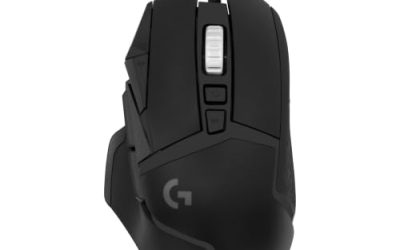
Logitech G502 HERO

A real-time strategy game lives on its mouse: fleet selection, camera work and menu trips are all pointer tasks. Eleven programmable buttons cover the grouping and command inputs a long desert session repeats.
Specs
- HERO optical sensor, up to 25,600 DPI
- 11 programmable buttons
- Adjustable weight system
- Wired USB connection
- On-board memory profiles
Samsung T9 Portable SSD 2TB

For moving a Linux game library between machines, or keeping an offline backup of installers, a fast USB-C drive is the simple answer. The headline figure needs a Gen 2×2 host port; on a lesser port the drive runs at that ceiling.
Specs
- Capacity: 2 TB portable SSD
- Interface: USB 3.2 Gen 2×2, USB-C connector
- Maker-rated speeds: up to 2,000 MB per second read, 1,950 MB per second write
- Features: Dynamic Thermal Guard, maker-rated drop resistance
How to choose
Buy the Steam copy, because it is the build the compatibility records describe: the Proton file’s 74 reports and the Deck sheet are both keyed to this Steam app. Treat the Proton version as part of the setup, since current reports put the smooth experience on Proton 10 while the newest builds trip over the services backend. If you play docked or at a desk, budget for a mouse before a pad, because the record names no controller support. Choose GOG only when a DRM-free Windows installer matters more than the documented Linux route, knowing its multiplayer is a separate, GOG-only pool.
Who should skip
Skip this one if a native Linux build is a condition of purchase, because there is none on Steam, none on GOG and none in the depot record. Skip it if you want multiplayer without friction, since the online layer draws the complaints and the player pool is small. Skip it on the Deck if small text and community controller layouts are deal-breakers, because Valve’s sheet lists both. And skip it if space combat is the draw: this prequel’s fleet battles happen on sand.
FAQ
Is Deserts of Kharak native on Linux?
No. The flags, the single purchase package, the depot table and the requirements fields all agree: the game ships for Windows and macOS, and the Linux requirements field is an empty list. Linux play means the Windows build under Proton.
How well does Deserts of Kharak run under Proton?
The community file is strong: a Gold headline tier, a Platinum best-reported tier and a Gold trending tier across 74 reports. The recent caveat is version choice, with the newest reports steering players to Proton 10 over the services backend.
Is Deserts of Kharak Steam Deck Verified?
It is rated Playable, one step below Verified, with SteamOS marked Compatible. The deductions cover the controller configuration, mismatched icons, manual keyboard invocation and small text, and the badge rests on a test from August 2022, older than today’s build.
Does the GOG version work on Linux?
The GOG edition exists but is Windows-only: GOG’s own product page lists Windows as the sole supported system. It offers a DRM-free installer, not a Linux build.
Final verdict
Homeworld: Deserts of Kharak is a Windows and macOS game at every layer of the record, with a genuine Mac port and an empty space where a Linux build would sit. The verdict is not native: package, depots, fields and family all say the same thing. What saves the game for Linux players is the Proton file, a strong Gold built on 74 reports, plus a Playable Deck rating on dated paperwork. Buy it on Steam, pick the Proton version the recent reports point to, and bring a mouse.
Product and ASIN Reference
| Product | ASIN |
|---|---|
| Valve Steam Deck OLED 512GB | B0CQ3RWQQZ |
| 8BitDo Ultimate 2 Bluetooth Controller | B0F194QFT2 |
| Xbox Wireless Controller, Carbon Black | B08DF248LD |
| Logitech G502 HERO | B07GBZ4Q68 |
| Samsung T9 Portable SSD 2TB | B0CHFS9K14 |