Assassin’s Creed Rogue is the series’ last-generation side entry, built by Ubisoft Sofia and Ubisoft Kiev for the older consoles in 2014; the PC version followed in March 2015. On Steam, that PC version is a Windows build and nothing else. The store’s platform flags read Windows true, Mac false, Linux false, and the Linux requirements field is an empty list outright: no Linux tab exists in any form to misread.
The useful question is therefore the Proton one, and there the paper trail is unusually clean. The community file is unanimous at the top tier, Valve has tested the game on Steam Deck and published a Playable badge, and the add-on family carries no stray Linux flag to inflate a scan. The one real caveat sits in the account layer: the record carries a Uplay notice, and Valve’s test sheet says even single-player play needs an active internet connection.
As an Amazon Associate, we earn from qualifying purchases.
Quick answer
Assassin’s Creed Rogue is not native on Linux: Steam flags the game Windows only and its Linux requirements field is an empty list. The route is Proton: ProtonDB rates the Windows build Platinum on every tier across 44 reports, and Valve rates it Playable on Steam Deck. Buy the Steam copy; no GOG edition exists.
The status at a glance
| Question | Record |
|---|---|
| Native Linux build | No: Steam flags Windows only, Linux requirements field empty |
| ProtonDB file | Platinum headline, best-reported and trending, 44 reports, strong confidence |
| Steam Deck | Playable, tested 3 April 2025 |
| GOG edition | None: Dreamlist wishlist entry only |
What Steam’s own record says
Steam’s appdetails record for app 311560 is plain. The platform block flags Windows and nothing else. The Mac and Linux requirements fields are both empty lists, so neither platform has a tab on the store page, populated or otherwise. The category list describes a strictly single-player game: single-player, Steam Achievements and partial controller support. There is no multiplayer or co-op category anywhere on the record, which matters for Linux, because it means no anti-cheat system stands between the campaign and Proton. SteamDB’s detected-technologies list agrees: it names the Ubisoft Anvil engine, the Ubisoft Launcher, Bink Video and the Tobii SDK, and no anti-cheat.
Two account-layer facts sit on the record. The external account notice reads, verbatim, “Uplay (Supports Linking to Steam Account)”, so the Steam copy still passes through Ubisoft’s launcher layer. And SteamDB’s republication of the app record notes that the publisher has marked the game ineligible for Steam Family Sharing. The record carries no drm_notice at all, so this article names no DRM product: the absence is the record’s own.
The published Windows minimum is modest: Windows 10 in 64-bit form, a Core 2 Quad Q6600 or Athlon II X4 620, 2 GB of RAM, a GeForce GTS 450 or Radeon HD 5670 with 1 GB of video memory, DirectX 11 and 12 GB of storage. No Linux figures exist, because no Linux build was ever published.
The family sweep: five add-ons, zero Linux flags
The game’s record lists exactly five add-on apps, and each one was read individually. The Templar Legacy Pack (339030) is the one content pack, carrying outfits and ship customisation. The other four are Time Saver packs: Activities (339031), Collectibles (339032), Resource (339033) and Technology (339034). Every one is typed “dlc” with the game as its fullgame, flags Windows only, and repeats the parent game’s empty-list Linux field. None carries a drm_notice of its own.
The soundtrack trap cannot fire here: no type-“music” app exists anywhere in this family, and a store search across the whole Rogue name returns only the game and these five add-ons. The Linux-flag count across all six apps is exactly zero, playable and otherwise. A family-level scan that credits Rogue with Linux support is not reading this record; there is no album, artbook or demo flag to blame it on.
The Proton file
ProtonDB’s summary record for app 311560, read directly from its summary feed, is as clean as a community file gets: Platinum on the headline, best-reported and trending tiers, across 44 reports with strong confidence. The honesty note is the pool size. Forty-four reports is a shallow file next to the hundreds behind the series’ bigger entries, so the unanimous split rests on a smaller base; the summary feed’s own confidence rating is strong, and this article reports both halves rather than overselling the badge. Nothing in the record classifies the game as native, which agrees with Steam’s flags.
The Steam Deck sheet
Valve’s own compatibility record, read from the publisher’s endpoint directly, gives resolved category 2: Playable. Three checks pass outright: all functionality is accessible with the default controller configuration, interface text is legible, and the default graphics configuration performs well. Two items are marked as deductions: the game sometimes shows mouse, keyboard or non-Deck controller icons, and entering some text requires manually invoking the on-screen keyboard. SteamOS is rated separately and comes out Compatible.
The sheet carries two informational notes that follow from the Uplay layer: first-time setup requires an active internet connection, and single-player gameplay requires an active internet connection. That second note is the one to plan around: the campaign is not a fully offline proposition on a train or a flight. The test date, build and runtime are not printed on Valve’s sheet; they come from SteamDB’s republication of Valve’s data, disclosed here: tested 3 April 2025, build 13373337, runtime a release candidate of Proton 9.0-4.
The storefront ruling
There is no GOG edition of Assassin’s Creed Rogue. GOG’s catalogue record, checked directly, returns no purchasable product for this title; the game appears there only as a Dreamlist wishlist entry for a Deluxe Edition, and a wishlist page is not an edition you can buy. The Steam copy is therefore the only PC edition on sale, and the build both records describe.
Gear that fits the record
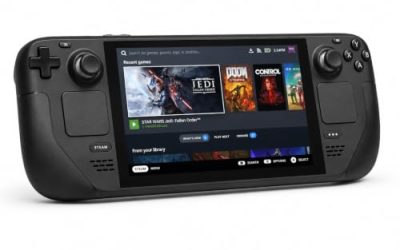
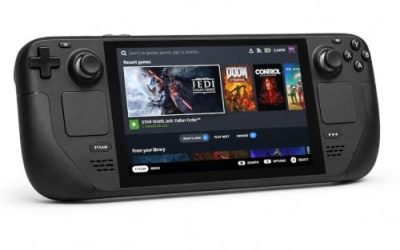
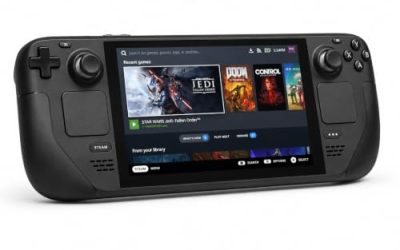
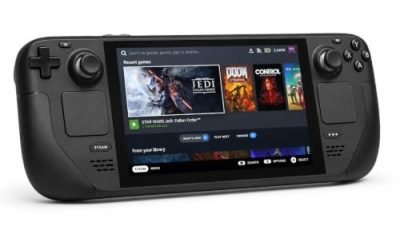
Valve Steam Deck OLED 512GB

The handheld Valve’s Playable badge was written for. Rogue’s published minimums are far below the Deck’s APU, and the test sheet’s deductions are input-side only: glyphs and a manual keyboard call.
Specs
- Display: 7.4-inch HDR OLED, 1280 by 800, up to 90 Hz
- Processor: AMD Zen 2 and RDNA 2 custom APU
- Memory: 16 GB LPDDR5
- Storage: 512 GB NVMe, plus a microSD slot
- Wireless: Wi-Fi 6E and Bluetooth
- Channel note: Valve sells the Deck mainly through its own store, so Amazon listings are third-party sellers
8BitDo Ultimate 2 Bluetooth Controller

The docked and desktop pad pick. Steam lists partial controller support for the game, and this pad covers the couch case with modern sticks and triggers plus back buttons for repeated inputs.
Specs
- Connectivity: Bluetooth wireless and USB-C wired
- Joysticks: TMR electromagnetic, anti-drift design
- Triggers: Hall effect, with mode switching
- Extras: two remappable back buttons, motion control
- In the box: charging dock included
Xbox Wireless Controller, Carbon Black

The safest guest pad: Steam Input support is universal, and it pairs over Bluetooth or its own wireless standard. Note that the game sometimes shows non-Deck controller glyphs, so a familiar layout helps when the prompts disagree with the pad in your hands.
- Connectivity: Xbox Wireless and Bluetooth
- Port: USB-C for wired play
- Controls: hybrid D-pad, dedicated Share button
- Power: AA batteries or optional rechargeable pack
Logitech G502 HERO

Partial controller support is the record’s own wording, and at a desk a precise wired mouse covers the menus and aiming the pad handles less well. Eleven programmable buttons cover the confirm, cancel and camera inputs the session repeats.
Specs
- HERO optical sensor, up to 25,600 DPI
- 11 programmable buttons
- Adjustable weight system
- Wired USB connection
- On-board memory profiles
Samsung T9 Portable SSD 2TB

Rogue itself asks for only 12 GB, so this pick is about the library around it: moving a Linux game library between machines, or keeping an offline backup of installers. The headline figure needs a Gen 2×2 host port; on a lesser port the drive runs at that ceiling instead.
Specs
- Capacity: 2 TB portable SSD
- Interface: USB 3.2 Gen 2×2, USB-C connector
- Maker-rated speeds: up to 2,000 MB per second read, 1,950 MB per second write
- Features: Dynamic Thermal Guard, maker-rated drop resistance
How to choose
Choose the Steam copy, because it is the only PC edition on sale and the exact build both compatibility records describe. On desktop or laptop, install under Proton and leave the compatibility tool at its default; a unanimous Platinum file says current builds run the game well, and there is no anti-cheat or multiplayer layer to negotiate. Expect the Uplay sign-in the record discloses before the first launch. On a Steam Deck, the Playable badge means the default configuration is the tested one; plan around the two deductions (non-Deck glyphs, a manual keyboard call for text entry) and around the internet note, which follows the game into single-player. For input, a pad is the campaign’s natural shape, with a mouse earning its place at a desk where partial controller support leaves gaps.
Who should skip
Skip this one if you are shopping for a native Linux Assassin’s Creed: Rogue is not it, and no flag anywhere in its family says otherwise. Skip it if you want a DRM-free offline installer, because no GOG edition exists to buy. Skip it if your Deck play happens mostly offline: Valve’s own sheet says single-player gameplay requires an active internet connection. Skip it if a 44-report community file feels too thin to trust. And skip it if the Uplay layer itself is a deal-breaker, because the Steam copy carries that notice and no second storefront sells the game without it.
FAQ
Is Assassin’s Creed Rogue native on Linux?
No. Steam’s record for app 311560 flags Windows only, with Mac and Linux both false, and the Linux requirements field is an empty list, so no Linux tab exists in any form. All five add-on apps repeat the same Windows-only flags, and no side app carries a Linux flag either.
How well does Assassin’s Creed Rogue run under Proton?
ProtonDB’s summary record reads Platinum on the headline, best-reported and trending tiers, across 44 reports with strong confidence. The pool is smaller than the series’ flagship entries draw, so treat the unanimous tier as a strong signal on a modest base.
Is Assassin’s Creed Rogue Steam Deck Verified?
No, it is one step below: Valve’s record gives Playable, tested 3 April 2025. The default controller configuration is fully functional, interface text is legible and the default graphics configuration performs well. The deductions are non-Deck controller glyphs, text entry that needs the on-screen keyboard invoked manually, and an internet requirement for single-player gameplay that the sheet notes.
Can I buy Assassin’s Creed Rogue on GOG instead?
No. GOG’s catalogue holds no purchasable product for this game; it appears there only as a Dreamlist wishlist entry for a Deluxe Edition. The Steam copy is the only PC edition on sale, and the build both records describe.
Final verdict
Assassin’s Creed Rogue is a Windows-only release with a clean paper trail in both directions: no Linux tab to misread, no soundtrack flag to inflate a family scan, and no anti-cheat standing over its single-player campaign. What it offers Linux players is a strong Proton route instead: a unanimous Platinum community file on a modest report base, and a Playable Steam Deck badge tested in April 2025, against a published minimum the Deck clears without effort. The honest caveats are the account layer and its consequences: a Uplay sign-in on the record, no Family Sharing, and an internet requirement that follows the single-player mode. Buy the Steam copy, play it under Proton, and plan your sessions around a connection.
Product and ASIN Reference
| Product | ASIN |
|---|---|
| Valve Steam Deck OLED 512GB | B0CQ3RWQQZ |
| 8BitDo Ultimate 2 Bluetooth Controller | B0F194QFT2 |
| Xbox Wireless Controller, Carbon Black | B08DF248LD |
| Logitech G502 HERO | B07GBZ4Q68 |
| Samsung T9 Portable SSD 2TB | B0CHFS9K14 |