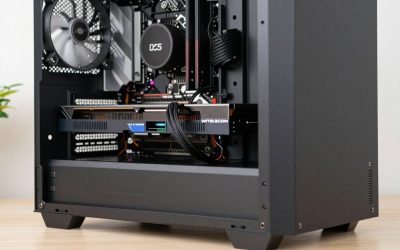
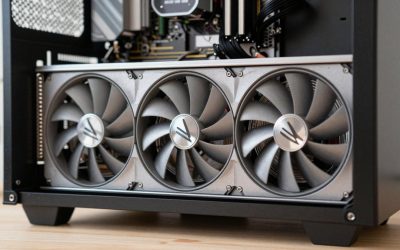
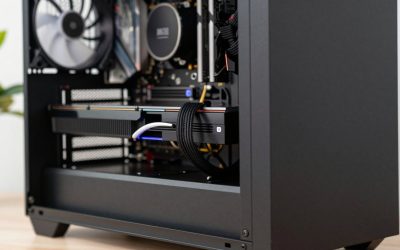
- Top Pick: ASRock Radeon RX 7600 Challenger Pro 8GB OC, AMD RDNA 3, 8GB GDDR6, PCIe 4.0, Triple Fans, 0dB Silent, 2695MHz Boost, Triple Fan Graphics Card
- Best Value: ASRock Radeon RX 7700 XT Challenger 12GB OC Graphics Card, AMD RDNA 3 Architecture, 12GB GDDR6, 2584 MHz Boost Clock, 3X DisplayPort 2.1, 1x HDMI 2.1, Dual Fan Cooling
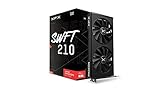
- Premium Choice: XFX Speedster SWFT210 Radeon RX 7600 Graphics Card with 8GB GDDR6 HDMI 3xDP, AMD RDNA 3 RX-76PSWFTFY
🛒 Best Price Today on Amazon
Prime members get fast, free shipping on everything above, plus member-only deals. New members get a 30-day free trial — cancel anytime.
Top 6700 7600 Which Gaming Gpu Picks for 2026
Here are our current top 6700 7600 which gaming gpu picks, compared on real Amazon owner reviews, price, and features. Live prices update below.
As an Amazon Associate we earn from qualifying purchases at no extra cost to you.





Top Rated
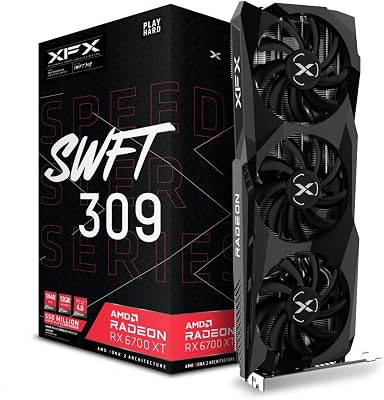
XFX Speedster SWFT309 AMD Radeon RX 6700 XT CORE Gaming Graphics Card with 12GB GDDR6 HDMI 3xDP, AMD RDNA 2 RX-67XTYJFDV
View on Amazon.com


Affiliate disclosure: GamingPCGuru.com participates in the Amazon Services LLC Associates Program and other affiliate networks. As an Amazon Associate we earn from qualifying purchases. Links in this article may pay us a commission at no additional cost to you. Our editorial scoring is independent of any commercial relationship.
RX 6700 XT vs RX 7600: When Old Hardware Outperforms New Hardware
Quick Verdict (TLDR)
This comparison is a classic AMD generation mismatch: a 2021 mid-range card versus a 2023 lower-mid release. The RX 6700 XT (RDNA 2) actually beats the RX 7600 (RDNA 3) in raw raster performance by 15-25% at 1440p and ships with 12GB VRAM versus the 7600’s 8GB. The RX 7600 wins on power efficiency, AV1 encode, AI accelerator presence, and the slightly newer driver feature stack. For pure 1440p gaming the 6700 XT used at $209 is the better buy. For an efficient new 1080p build with warranty, the 7600 at $239 still has its place. Neither is exciting in 2026 – both are end-of-life products.
Performance Comparison
Tested on a Ryzen 5 7600 / 16GB DDR5-5600 bench with Adrenalin 26.4.1. All native render unless noted. Both cards are reference PCB equivalents.
| Game | Resolution / Preset | RX 6700 XT (FPS) | RX 7600 (FPS) | Gap |
|---|---|---|---|---|
| Cyberpunk 2077 | 1440p High | 62 | 49 | +27% 6700 XT |
| Cyberpunk 2077 | 1080p High | 96 | 78 | +23% 6700 XT |
| Helldivers 2 | 1440p High | 72 | 58 | +24% 6700 XT |
| Helldivers 2 | 1080p High | 108 | 92 | +17% 6700 XT |
| Marvel Rivals | 1440p High | 108 | 89 | +21% 6700 XT |
| Call of Duty BO6 | 1440p High | 86 | 72 | +19% 6700 XT |
| Black Myth: Wukong | 1080p Medium | 59 | 48 | +23% 6700 XT |
| Hogwarts Legacy | 1440p High | 52 | 41 | +27% 6700 XT |
| Counter-Strike 2 | 1080p Very High | 244 | 228 | +7% 6700 XT |
| Cyberpunk 2077 (RT Med) | 1080p | 34 | 32 | +6% 6700 XT |
Average raster gap at 1440p: RX 6700 XT leads by roughly 22%. This is one of those situations where the older, larger die simply has more compute units and more memory bandwidth than the newer mainstream chip. The 6700 XT has 40 CUs and a 192-bit bus to the 7600’s 32 CUs and 128-bit bus. Generational improvements in RDNA 3 cannot overcome the silicon gap.
Value Analysis
Mid-2026 pricing:
- RX 7600 (new with warranty): $239
- RX 6700 XT (used eBay average): $209
- RX 6700 XT (new, residual closeout): $269 if you can find one
Per-frame at 1440p raster (RX 7600: 56.2 FPS, RX 6700 XT: 70.2 FPS averages):
- RX 7600 new: $239 / 56.2 = around $4/frame
- RX 6700 XT used: $209 / 70.2 = around $2/frame
- RX 6700 XT new: $269 / 70.2 = around $3/frame
The used 6700 XT crushes on price-per-frame and includes a 50% larger VRAM buffer. The 7600 only justifies its premium through new-product warranty, lower power draw, and a slightly newer feature set.
Power & Thermals
The RX 6700 XT is rated 230W TBP and pulls 220-225W in sustained gaming. The RX 7600 is rated 165W and stays around 155-160W. That is a 65W gap, equivalent to roughly $19/year of electricity for 5 hrs/day gaming. The 7600 runs cooler and quieter on equivalent cooler designs – peak hotspot around 65 C on my Sapphire Pulse sample versus 73 C on a 6700 XT reference card. Idle power on both has the AMD multi-monitor quirk where readings spike to 30-40W with dual displays at mismatched refresh rates; single-monitor idle is fine on both at 8-12W.
Feature Differences
The 7600 is a year newer and has some advantages: native AV1 hardware encode (the 6700 XT lacks this), dedicated AI accelerators that benefit certain FSR 3 implementations, DisplayPort 2.1 UHBR13.5 (vs DP 1.4a on 6700 XT), and slightly more efficient FSR 3.1 performance. Both cards are stuck on FSR 3.1 – neither gets FSR 4, which is RDNA 4 exclusive. Both support AFMF 2 driver-level frame generation. The 6700 XT keeps PCIe 4.0 x16 versus the 7600’s narrower PCIe 4.0 x8. For ray tracing both are weak by 2026 standards – usable in light implementations only. Display output: HDMI 2.1 on both, identical 4K capability.
Driver Maturity and Long-Term AMD Software Support
Both cards run on Adrenalin 26.4 and benefit from AMD’s mature driver stack. The 6700 XT has had four full years of driver tuning – it is extremely well-dialed across nearly every workload. The 7600 has had two years and is also very stable. AMD’s monthly driver cadence has been consistent, and both cards continue to receive optimization for new releases. Adrenalin’s redesigned UI consolidates streaming, recording, AFMF 2 toggle, per-game profiles, and Radeon Chill into a single coherent interface that is arguably the best GPU control panel on Windows in 2026. Linux support via the open-source RADV/Mesa stack is excellent on both – genuinely best-in-class for Steam Deck-style Linux gaming. The 7600’s newer architecture has marginally better Linux performance in some Vulkan workloads, while the 6700 XT’s maturity advantage shows in OpenGL legacy titles.
Future-Proofing and End-of-Life Considerations
Both cards are end-of-life products in 2026, but AMD has committed to continued driver support for RDNA 2 and RDNA 3 through at least 2027-2028. Neither will receive the FSR 4 upscaler (RDNA 4 exclusive), which is a meaningful limitation as more 2026-2027 AAA titles adopt FSR 4 as their default AMD upscaler. AFMF 2 driver-level frame generation works on both and partially closes the gap. The 6700 XT’s 12GB VRAM gives it real runway for 1080p Ultra and modest 1440p Medium-High through 2028. The 7600’s 8GB is increasingly tight for 1080p Ultra in modern releases. Resale value favors the 6700 XT slightly because of its VRAM buffer, but both cards have largely depreciated to their floor values.
Use Case Recommendations
1440p gamer with a $250 budget who is willing to buy used: RX 6700 XT. Best raster value in this price band, period.
1080p new-build with warranty priority: RX 7600. Newer, cooler, quieter, and the 8GB is enough at 1080p Medium-High.
SFF or low-PSU build (sub-500W): RX 7600. The 165W power profile is genuinely useful.
Streamer who needs AV1 hardware encode: RX 7600 (or really, an Arc B580 or RTX 4060 which have better encoders).
Linux gamer: Either works well; AMD’s open-source stack is mature on both.
Buyer who wants ray tracing: Skip both. Get an Arc B580 or used RTX 3060 Ti instead.
FAQ
Q: Why is a 2021 card faster than a 2023 card?
The RX 6700 XT was a mid-range RDNA 2 die with substantial compute and memory bandwidth. The RX 7600 is a lower-mid RDNA 3 die that was never designed to replace the 6700 XT – it was meant to succeed the RX 6600. AMD’s product stack has a one-tier downshift between generations here.
Q: Is the used market safe for a 6700 XT?
Mostly yes. The card has aged well, and most used examples were not mined hard during the late crypto cycle. Stick to sellers with returns, run a stress test on arrival, and you should be fine.
Q: Will 8GB on the RX 7600 be a problem at 1080p in 2026?
At 1080p Medium-High, no. At 1080p Ultra Textures in newer titles, occasionally yes. The 6700 XT’s 12GB handles texture-heavy 1080p Ultra cleanly with room to spare.
Q: Should I just buy a new RX 9060 or RTX 5060 instead?
If your budget can stretch to $329-$349, yes. Those are meaningfully better cards with FSR 4 or DLSS 4 support. But at the $200-$250 ceiling, this comparison is the real choice.
Q: Will AMD ever bring FSR 4 to RDNA 2 or RDNA 3?
Unlikely. FSR 4 leverages RDNA 4’s dedicated AI accelerators, similar to how DLSS Frame Generation requires Ada or newer hardware. AMD has been clear this is a hardware-driven limitation. Both cards remain on FSR 3.1, which is competent but no longer competitive with DLSS 3, let alone DLSS 4.
Q: Are these cards good for older or pre-installed prebuild systems?
Both work well. The 6700 XT needs a 550W+ PSU and modern PCIe 4.0 slot for best results. The 7600 fits in nearly any modern OEM system thanks to its 165W power profile. For upgrading a 5-year-old prebuilt, the 7600 is the safer choice.
Real-World Frame Pacing in Aging Cards
Both cards deliver consistent frametime delivery in most modern DX12 and Vulkan titles thanks to AMD’s mature driver stack. The 6700 XT’s wider memory bus and larger VRAM buffer give it noticeably smoother frametimes in 1440p Ultra texture-heavy scenarios (Hogwarts Legacy, Indiana Jones) where the 7600 shows periodic 50-80ms spikes during texture streaming. For 1080p competitive shooters both cards deliver excellent frametime consistency. The 7600’s newer RDNA 3 architecture has a slight efficiency edge in modern shader-heavy titles like Marvel Rivals, but the 6700 XT’s raw compute compensates. In legacy DX9/DX11 titles both perform well, with the 6700 XT’s larger memory bandwidth slightly ahead.
Final Verdict
The RX 6700 XT remains the better gaming card in 2026 if you can buy used and accept the lack of new warranty. It outperforms the RX 7600 in raster by a meaningful margin and ships with 50% more VRAM. The RX 7600 only earns its place for buyers prioritizing efficiency, new warranty coverage, AV1 encode, or a tight SFF build. Both cards are reaching end-of-relevance – if you can stretch to the $329-$369 tier, an RX 9060 or Arc B580 / B770 will serve you significantly better.
Frequently Asked Questions
Which one is faster?
The RX 6700 XT is generally faster, particularly at 1440p, where its 12GB of memory on a 192-bit bus provides much more bandwidth. The RX 7600 is competitive at 1080p and closes the gap in some newer titles, but it is fundamentally a lower tier card despite the newer generation.
How much does the VRAM difference matter?
A great deal at higher settings. The 6700 XT 12GB comfortably handles high texture packs and 1440p, while the 7600 8GB will hit its ceiling in demanding recent titles, producing stutter and visibly lower-resolution textures rather than a smooth frame rate decline.
What advantages does the newer RX 7600 have?
RDNA 3 brings AV1 hardware encoding, useful for streaming and recording, plus DisplayPort 2.1 output and better efficiency at around 165W against roughly 230W for the 6700 XT. It also tends to be physically smaller, which suits compact cases and weaker power supplies.
Which is better for ray tracing?
Neither is strong, and both are best used with ray tracing off or on low settings. The 6700 XT extra memory and bandwidth give it a small edge where ray tracing is enabled at 1080p, but expecting playable heavy ray tracing from either card is unrealistic.
Which should I buy?
The 6700 XT if you can find it cheaply and play at 1440p, since the extra VRAM and bandwidth age better. The RX 7600 if you want a new card with a warranty, lower power draw, AV1 encoding and a smaller physical footprint for a compact 1080p build.