Dungeons 3, the dungeon-management strategy game from Realmforge Studios and Kalypso Media released in October 2017, belongs to a series whose 2023 sequel, Dungeons 4, shipped with no Linux build at all. A sequel dropping Linux says nothing about the earlier record.
Read layer by layer, the answer is unusually tidy. The flags, the requirements tab, the purchase package and the depot list all say the same thing: Dungeons 3 carries a real native Linux build, sold today, with its add-on family in unanimous agreement and a second storefront selling the same native edition.
As an Amazon Associate, we earn from qualifying purchases.
Quick answer
Dungeons 3 is genuinely native on Linux. Steam’s record agrees at every layer: the flags, the populated Linux requirements tab, the sole purchase package and a dedicated Linux depot of 4.87 GiB. All eight add-on apps repeat the mask, GOG sells a Linux edition too, and Valve rates the native build Playable on Steam Deck.
The Steam record, layer by layer
Steam sells Dungeons 3 through a single package, read directly: Windows true, Mac true, Linux true, granting the base app alone, with full gamepad support recorded at package level. The one licence on sale grants all three builds.
The flags repeat the same mask, and for once the paperwork underneath is real. The Linux requirements tab is genuinely populated, not a header over an empty list: its minimum names Ubuntu 16.04.3 LTS plus SteamOS, an Intel quad core at 2.8 GHz or a 3.5 GHz AMD FX chip, 4 GB of memory, a dedicated AMD or NVIDIA card with 1 GB of video memory, and 5 GB of storage; the recommended tier raises memory to 8 GB and graphics to the Radeon R9 300 or GeForce GTX 900 class.
The depot layer settles it. SteamDB lists a dedicated Linux content depot at 4.87 GiB, beside a macOS depot of the same size and a Windows depot of 5.02 GiB, over a shared common depot just under 1 GiB. A Linux build at full weight is no stranded remnant: it is the game. A LinuxClientIcon is registered as well, and the public branch has stood at build 7363028 since September 2021. No DRM or external-account notice rides on the record, and the store lists full controller support, cross-platform multiplayer and online co-op.
The add-on family: eight apps, one mask
The base record’s add-on array holds eight apps, every one read individually on its own record. Seven are gameplay add-ons typed as DLC, each pointing back at the base game: Once Upon A Time, Evil of the Caribbean, Lord of the Kings, Clash of Gods, An Unexpected DLC, Famous Last Words and A Multitude of Maps. Every one repeats the full mask, Windows, Mac and Linux all true, with its own populated Linux requirements, and each ships a small dedicated Linux depot mirroring its Windows and macOS counterparts, so the expansions install natively too.
The eighth member is the Original Soundtrack, typed as a music app. It too flags all three platforms, but its Linux requirements field is an empty list, the one hollow entry in the family. That shape matters: where a game itself is Windows-only, a flags-only scan crediting this mask to the series is exactly how a false native claim is born. Here it changes nothing, since the game and its expansions hold the same mask with depots to prove it. SteamDB also associates a ring of free seasonal and theme add-ons, none in the store-facing array; every one carries a Linux depot too.
ProtonDB: a Platinum file over a native game
ProtonDB’s summary was read in full. It returns Platinum on the headline, best-reported and trending tiers, across 11 reports with low confidence and a score of 0.65; the low confidence reflects the small count, not disagreement.
The game page classifies Dungeons 3 as Native, and its requirements heading reads “Natively Supports:”, which for once matches Steam’s record exactly. Most of the 11 filings are native reports rather than Proton ones, and their texture is mostly uneventful: works fine natively, no issues encountered, across Fedora, Debian and Arch systems. Two filings carry useful friction. One Fedora player found the ground textures missing after a system update and cured it with a launch option setting MESA_LOADER_DRIVER_OVERRIDE to zink and __GLX_VENDOR_LIBRARY_NAME to mesa ahead of the game command, a graphics-stack workaround. Another reported the native build crashing randomly after fifteen to twenty minutes in game while Proton Experimental ran almost perfectly, at some performance cost. Both are single reports, weighted as such: the native build is the default route, with a Proton fallback in the same entry. No anti-cheat complicates either route: Steam names none, SteamDB’s detection finds only the Unity engine and its networking libraries, and the AreWeAntiCheatYet catalogue, checked in full, carries no entry for this app. That silence is reported as silence, not as a ruling.
Steam Deck: Playable, tested on the native build
Valve’s verdict is Playable, with SteamOS separately rated Compatible. One route note belongs in the open: Valve’s own compatibility endpoint returned unusable bytes in this session, so the test sheet was read through SteamDB’s republication of that data.
The paperwork is as current as a badge for a game of this age can be. The single test, dated 17 December 2022, graded build 7363028, exactly the public branch build still on sale, the branch having been frozen since September 2021: a badge cannot go stale against a build that has not moved. The recommended runtime reads native, so Valve graded the Linux build itself, not a Proton run. The deductions are the familiar input-shaped set for a mouse-led strategy game: some functionality is not accessible under the default controller configuration, requiring the touchscreen, the virtual keyboard or a community configuration; the game sometimes shows mouse, keyboard or non-Deck icons; text entry needs a manual on-screen keyboard invoke; and some in-game text is small. Against those, the sheet records that the default graphics configuration performs well.
The second storefront: GOG sells it with Linux
GOG’s catalogue was ruled from its own records, not from search results. Its product record for Dungeons 3, identity-checked by title and catalogue slug against the Steam record, lists Windows, macOS and Linux all as supported systems, and the live product page under that slug resolves to the same game. GOG also sells a Complete Collection carrying the same three-system mask. The native build therefore has two storefronts.
Gear that fits the record
The gear below follows the record’s shape: the handheld Valve tested the native build on, two pads for a game with full controller support on its record, a mouse for mouse-led dungeon-layout work, and fast storage for a library that travels.
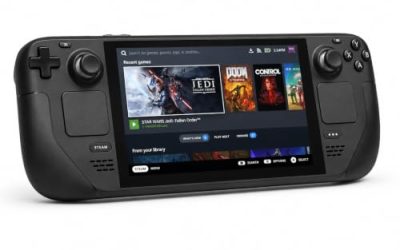
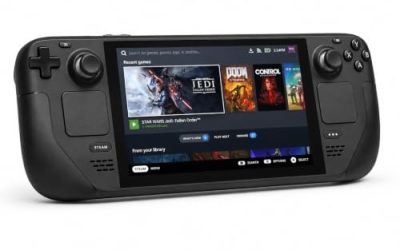
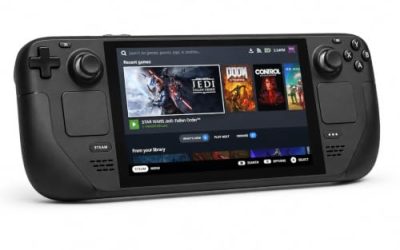
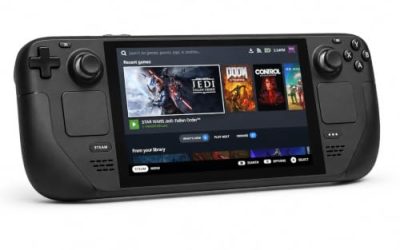
Valve Steam Deck OLED 512GB

The handheld the Playable badge was written for, and the badge here grades the native build itself. The game’s recommended tier asks for a quad core and 8 GB of memory, which the Deck’s APU covers, and Valve’s sheet confirms its default graphics configuration performs well.
Specs
- Display: 7.4-inch HDR OLED, 1280 by 800, up to 90 Hz
- Processor: AMD Zen 2 and RDNA 2 custom APU
- Memory: 16 GB LPDDR5
- Storage: 512 GB NVMe, plus a microSD slot
- Wireless: Wi-Fi 6E and Bluetooth
- Channel note: Valve sells the Deck mainly through its own store, so Amazon listings are third-party sellers
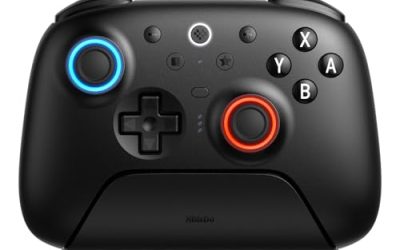
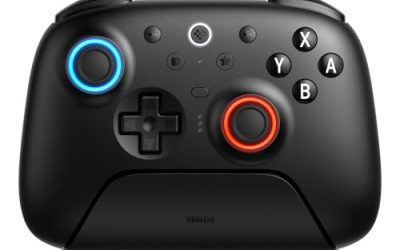
8BitDo Ultimate 2 Bluetooth Controller
The docked and desktop pad pick, for a game whose record lists full controller support: modern sticks and triggers, plus back buttons for menu shortcuts.
Specs
- Connectivity: Bluetooth wireless and USB-C wired
- Joysticks: TMR electromagnetic, anti-drift design
- Triggers: Hall effect, with mode switching
- Extras: two remappable back buttons, motion control
- In the box: charging dock included
Xbox Wireless Controller, Carbon Black
The safest guest pad in PC gaming: Steam Input support is universal, the glyphs match what most games display, and it pairs over Bluetooth or its own wireless standard.
- Connectivity: Xbox Wireless and Bluetooth
- Port: USB-C for wired play
- Controls: hybrid D-pad, dedicated Share button
- Power: AA batteries or optional rechargeable pack
Logitech G502 HERO
At a desk, a precise wired mouse turns dungeon layout and trap placement into single clicks. Eleven programmable buttons cover the confirm, cancel and camera inputs a long session repeats.
Specs
- HERO optical sensor, up to 25,600 DPI
- 11 programmable buttons
- Adjustable weight system
- Wired USB connection
- On-board memory profiles
Samsung T9 Portable SSD 2TB
For moving a Linux game library between machines, or keeping offline installer backups, a fast USB-C drive is the simple answer. The headline figure needs a Gen 2×2 host port; on a lesser port the drive runs at that ceiling.
Specs
- Capacity: 2 TB portable SSD
- Interface: USB 3.2 Gen 2×2, USB-C connector
- Maker-rated speeds: up to 2,000 MB per second read, 1,950 MB per second write
- Features: Dynamic Thermal Guard, maker-rated drop resistance
How to choose
Choose either storefront on preference, because both sell the same native build: Steam if your library and Deck live there, GOG if you want its installer model, with the Complete Collection there gathering the add-ons in one purchase. On a Linux desktop, install and launch the native build as the default route; its requirements are modest, and the ProtonDB file’s mostly native filings describe a game that simply runs, with a Proton fallback if your system hits the friction two individual reports describe. On Steam Deck, expect Playable rather than Verified: the performance is there, and the compromises are text size, touchscreen reaches and a manual keyboard invoke. A pad is fully supported on the game’s record, while a mouse still earns its place for long design sessions.
Who should skip
Skip the Deck plan if small in-game text on a handheld screen is a dealbreaker, because Valve’s sheet flags exactly that. Skip this entry if you are holding out for the series’ newer game on Linux: Dungeons 4 has no native build, and this verdict belongs to Dungeons 3 alone. Skip it if you only buy games with deep ProtonDB files: 11 reports is a thin base, however unanimous. And skip the multiplayer-first purchase if your group cannot be online together, since the co-op here is an online feature, not a couch one.
FAQ
Is Dungeons 3 native on Linux?
Yes. The purchase package grants Linux, the requirements tab is populated with real minimum and recommended tiers, and a dedicated Linux depot of 4.87 GiB sits beside the Windows and macOS depots. GOG’s edition lists Linux as a supported system as well.
Do the Dungeons 3 expansions work on Linux?
Yes, on the record. All seven gameplay add-ons repeat the three-platform mask with populated Linux requirements, and each ships its own Linux depot; the free seasonal packs carry Linux depots too. Only the soundtrack app has an empty Linux requirements field, and it is a music app, not game content.
Is Dungeons 3 Playable on Steam Deck?
Yes, Playable, with SteamOS rated Compatible. Valve’s test of December 2022 graded the exact build still on sale, on the native runtime. The deductions are input-shaped: some functions need the touchscreen or a community configuration, text entry needs a manual keyboard invoke, and some text is small.
What does ProtonDB say about Dungeons 3?
Its full summary returns Platinum on the headline, best-reported and trending tiers across 11 reports, with low confidence reflecting the small count. The page classifies the game as Native, and most filings cover the native build.
Final verdict
Dungeons 3 is the clean case these checks rarely find: a native Linux build confirmed at the flag, requirements, package and depot layers simultaneously, a unanimous add-on family, a Platinum ProtonDB file filed mostly by native players, a Playable Deck badge graded on the build on sale, and a second storefront selling the same edition. The one hollow field in the sweep belongs to a soundtrack. Buy it on either storefront, play the native build, and let its Windows-only sequel be a separate question.
Product and ASIN Reference
| Product | ASIN |
|---|---|
| Valve Steam Deck OLED 512GB | B0CQ3RWQQZ |
| 8BitDo Ultimate 2 Bluetooth Controller | B0F194QFT2 |
| Xbox Wireless Controller, Carbon Black | B08DF248LD |
| Logitech G502 HERO | B07GBZ4Q68 |
| Samsung T9 Portable SSD 2TB | B0CHFS9K14 |