GTFO is the four-player co-op shooter from 10 Chambers, a studio founded by members of the Payday team: coordinated teams descend into a sealed underground complex, manage scarce ammunition and tools, and extract against escalating resistance. It spent two years in Early Access from December 2019 before its full release in December 2021, organised around time-limited Rundown chapters. Its presentation is horror — darkness, tension, dormant hostiles that punish noise — but the Linux question underneath is purely technical.
That question has a plain answer at the top level and a more interesting one underneath. GTFO is a Windows game: every delivery layer on Steam says so. Underneath, the compatibility file is strong but uneven, the anti-cheat picture is a documented silence from all three sources, and Valve’s Deck paperwork describes an earlier build.
As an Amazon Associate, we earn from qualifying purchases.
Quick answer
No. GTFO has no native Linux build: Steam’s record flags Windows only, its Linux requirements field is an empty shell, the depot table holds a single Windows build, and both purchase packages deliver Windows only. Linux players use Proton, where ProtonDB’s file reads Gold across 253 reports, and Valve rates the Steam Deck Playable.
The record, layer by layer
Start with the flags. Steam’s record for app 493520 reads windows true, mac false, linux false. The Windows requirements are genuinely populated at both tiers: a Core i5 2500K class processor, 8 GB of memory and a GeForce GT 1030 or Radeon HD 7850 at minimum, rising to a Core i7-7700, 16 GB and a GeForce GTX 1060 recommended, with 15 GB of storage. The Mac and Linux requirements fields exist on the page, but both are empty shells — the Minimum and Recommended headings sit over empty lists. An empty shell is a formatting artefact, not a port announcement.
The depot table removes any remaining doubt. SteamDB lists exactly one content depot, depot 493521, configured as Windows 64-bit and holding 14.36 GiB; beside it sits only the Windows Visual C++ redistributable. There is no Linux or Mac depot in any form — not a small one, not a zero-byte one, not one stranded outside the packages. The app configuration registers no Linux client icon, so the leftover-icon shape that has misled readers on other records has no surface here.
The package layer is decisive, and the record carries two packages. The standard purchase package, sub 112188, reads windows true, mac false, linux false on Steam’s packagedetails record. The second, sub 429144, is a commercial licence for the same app and reads identically. Either way, a normal purchase delivers the Windows build by construction.
The family sweep is the shortest in recent memory: the record carries no DLC array at all. No soundtrack, art book, supporter pack or demo app is attached to GTFO, so the classic trap — an extra whose flags claim platforms the game does not ship — never forms. The game stands alone, and it is unanimous.
Anti-cheat, from three sources that do not agree by merging
GTFO is an online co-op title, so the anti-cheat layer matters more than it does for a solo game, and the honest summary is that no source names one. The three sources are reported separately, because merging them would invent a ruling none of them issued.
Steam’s own record names no anti-cheat: the appdetails record carries no anti-cheat field and no DRM notice for this app. SteamDB’s detected-technology list is engine and services plumbing only — Unity, the Discord SDK, the Dissonance voice SDK, Opus, UnityBurst, UnityIL2CPP and Wwise — with no anti-cheat component in it. Are We Anti-Cheat Yet, the community dataset that tracks anti-cheat status game by game, carries no entry for GTFO at all: a search of its full 1,167-game dataset by name and by app id 493520 returns nothing.
Read together, that is documented silence, not a Supported ruling and not a block. The practical evidence lives one layer down: ProtonDB reports describe online multiplayer working under Proton, the top report rating online play Good and local play Excellent. Those are reports, not a guarantee.
The ProtonDB file: Gold, with a fork-shaped caveat
One evidence note before the figures. ProtonDB’s summary endpoint did not answer for this title in this session — it returned an error page on repeated attempts — so the tier and count below are read from the game’s ProtonDB page itself, and no tier split or confidence figure is claimed. The page’s headline tier is Gold, and its report index runs to 253 reports.
The page also carries the classification quirk this project keeps meeting: its requirements block is headed “Natively Supports:”, a label Steam’s Windows-only record contradicts at every layer. The article follows Steam; the heading describes the page template, not what a purchase delivers.
The report texture matters more than the headline. Several of the newest reports run community Proton forks — GE-Proton builds and the CachyOS fork recur — and say plainly that stock Proton did not launch the game or ran it poorly, while the fork ran it well, in one detailed filing at close to Windows performance with modifications installed. Other filings report the opposite: installing and running flawlessly on a current stock build with no tinkering. Multiplayer is rated Good to Excellent in the filings that score it. The fair reading is Gold with homework: expect to try a community fork if the default tool stumbles.
Steam Deck: Playable, on old paperwork
Valve’s own compatibility endpoint answered directly in this session: Playable, resolved category 2, with SteamOS separately rated Compatible. Three checks pass outright — the default controller configuration is fully functional, interface text is legible, and the default graphics configuration performs well. Two advisories explain why the grade is Playable rather than Verified: the game sometimes shows mouse, keyboard or non-Steam Deck controller icons, and some text entry requires manually invoking the on-screen keyboard. The configuration notes add gamepad input, no launcher step and no small-text flag.
The paperwork behind the badge is where the caution belongs. SteamDB’s republication of Valve’s test sheet dates the test to 5 March 2022, on build 8105028, with proton-7.0-1 as the recommended runtime. The public branch now serves build 20403457, built in October 2025. The grade is Valve’s current published verdict, but the measurements describe the 2022 build, so this file joins the supplement-candidate list.
The storefront ruling
There is no second storefront copy to weigh. GOG’s embed search returns no GTFO product, and its catalogue search surfaces only an unrelated demo from a different game; no identity-verifiable GOG record for GTFO exists. The Steam copy is the only PC edition.
Gear that fits the record
The gear below follows the record’s shape: the handheld Valve rated Playable, two pads for docked and desktop squads, a mouse for this game’s terminal-heavy desktop sessions, and library storage.
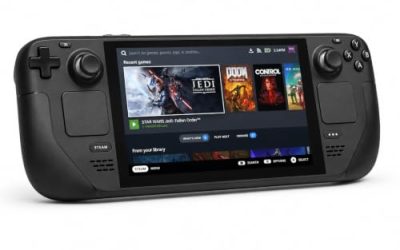
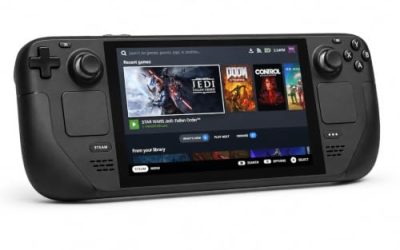
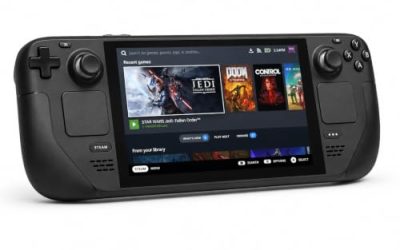
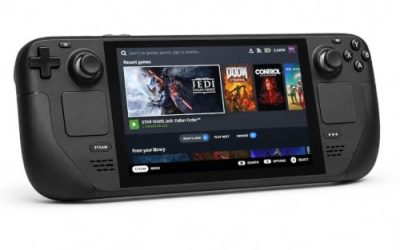
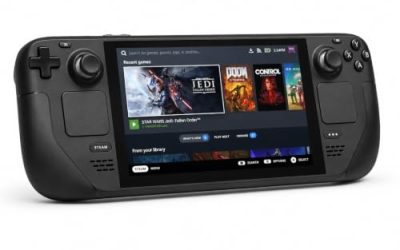
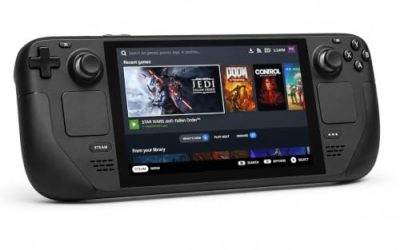
Valve Steam Deck OLED 512GB

The handheld the Playable badge was written for. GTFO’s requirements sit comfortably inside the Deck’s APU, and Valve’s sheet passes its default graphics configuration; the advisories concern glyphs and the on-screen keyboard, not performance.
Specs
- Display: 7.4-inch HDR OLED, 1280 by 800, up to 90 Hz
- Processor: AMD Zen 2 and RDNA 2 custom APU
- Memory: 16 GB LPDDR5
- Storage: 512 GB NVMe, plus a microSD slot
- Wireless: Wi-Fi 6E and Bluetooth
- Channel note: Valve sells the Deck mainly through its own store, so Amazon listings are third-party sellers
8BitDo Ultimate 2 Bluetooth Controller
The docked and desktop pad pick. GTFO lists partial controller support, so a pad is a squad-seat choice rather than the whole input story; this one covers the couch case with modern sticks, triggers and back buttons.
Specs
- Connectivity: Bluetooth wireless and USB-C wired
- Joysticks: TMR electromagnetic, anti-drift design
- Triggers: Hall effect, with mode switching
- Extras: two remappable back buttons, motion control
- In the box: charging dock included
Xbox Wireless Controller, Carbon Black
The safest guest pad in PC gaming: Steam Input support is universal, the glyphs match what most games display, and it pairs over Bluetooth or its own wireless standard. Valve’s sheet warns the game sometimes shows non-Deck icons, so expect an occasional glyph mismatch.
- Connectivity: Xbox Wireless and Bluetooth
- Port: USB-C for wired play
- Controls: hybrid D-pad, dedicated Share button
- Power: AA batteries or optional rechargeable pack
Logitech G502 HERO
GTFO’s expeditions run through in-game terminals and dense menus, and at a desk a precise wired mouse turns those interactions into single clicks. Eleven programmable buttons cover the scan, ping and inventory inputs a session repeats.
Specs
- HERO optical sensor, up to 25,600 DPI
- 11 programmable buttons
- Adjustable weight system
- Wired USB connection
- On-board memory profiles
Samsung T9 Portable SSD 2TB
For moving a Linux game library between a desktop and a laptop, or keeping an offline backup of installers, a fast USB-C drive is the simple answer. The headline figure needs a Gen 2×2 host port; on a lesser port the drive runs at that ceiling.
Specs
- Capacity: 2 TB portable SSD
- Interface: USB 3.2 Gen 2×2, USB-C connector
- Maker-rated speeds: up to 2,000 MB per second read, 1,950 MB per second write
- Features: Dynamic Thermal Guard, maker-rated drop resistance
How to choose
Choose the Steam copy, because it is the only PC edition and the exact build every record describes. On desktop or laptop, install under Proton and try the default tool first; if the game fails to launch or performs badly — a pattern the recent ProtonDB file documents — the reports point to a current GE-Proton or CachyOS fork build as the working route, with online co-op reported working once the game runs. On Steam Deck, the Playable badge means the game runs with two known advisories: non-Deck glyphs at times, and manual keyboard invocation for text entry.
Who should skip
Skip this article’s conclusion if you are shopping for a native Linux GTFO: there is none, at any layer of the record. Skip the game if your squad will not tolerate compatibility homework, because the current Proton file includes a real minority of reports where stock Proton failed and a community fork was the fix. Skip it if you want a DRM-free installer, since no GOG edition exists, or if manual on-screen keyboard calls on Deck would break your sessions.
FAQ
Is GTFO native on Linux?
No. Steam flags the game Windows only, its Linux requirements field is an empty shell, the depot table holds a single Windows 64-bit depot, and both purchase packages deliver Windows only. Linux play happens through Proton.
Does GTFO’s anti-cheat block Linux?
No source says so. Steam’s record names no anti-cheat, SteamDB’s technology detection finds none, and Are We Anti-Cheat Yet carries no entry for the game. ProtonDB reports describe online multiplayer working under Proton — report-level evidence, not a ruling.
How well does GTFO run under Proton?
ProtonDB’s page reads Gold across 253 reports. The recent file is mixed in an instructive way: some players run current stock Proton with no tinkering, while others report stock Proton failing to launch or performing poorly, fixed by a GE-Proton or CachyOS fork build.
Is GTFO Steam Deck Verified?
No — it is rated Playable. Valve’s sheet passes the default controller configuration, legible text and default graphics performance, with advisories for occasional non-Deck glyphs and manual on-screen keyboard use. The test paperwork dates from March 2022, well behind the current build.
Final verdict
GTFO on Linux is a Proton story with unusually clean paperwork underneath it. The native question is closed at every layer — flag, field, depot and both packages agree on Windows only, and the absent DLC array means no extra muddies the record. What remains is a Gold Proton file whose recent reports reward a community fork when stock Proton stumbles, an anti-cheat layer no source names and no source blocks, and a Deck Playable badge whose 2022 test sheet is due a supplement. For a squad willing to pick a Proton build deliberately, the record supports playing; for anyone waiting on a native port, nothing in it suggests one is coming.
Product and ASIN Reference
| Product | ASIN |
|---|---|
| Valve Steam Deck OLED 512GB | B0CQ3RWQQZ |
| 8BitDo Ultimate 2 Bluetooth Controller | B0F194QFT2 |
| Xbox Wireless Controller, Carbon Black | B08DF248LD |
| Logitech G502 HERO | B07GBZ4Q68 |
| Samsung T9 Portable SSD 2TB | B0CHFS9K14 |