Dark and Darker is IRONMACE’s free-to-play, Early Access fantasy extraction game, released on Steam on 7 June 2024, with multiplayer PvP, co-op and in-app purchases on its record. On platform support, Steam’s record is not ambiguous: the game is flagged for Windows only, its Windows requirements are fully written out, and the one content depot Steam delivers is a Windows build. There is no native Linux version of this game, in any layer of the record.


That makes the Linux question here an anti-cheat question rather than a port question. The Windows build runs under Proton, and the community trackers file it as working — but the game is guarded by IRONMACE’s own IRONSHIELD anti-cheat with a boot-protection component, and the newest community filings describe boot checks Proton cannot fully satisfy.
As an Amazon Associate, we earn from qualifying purchases.
Quick answer
Dark and Darker has no native Linux build: Steam flags Windows only, and the single content depot is a Windows build. Through Proton the picture is workable but narrowing. ProtonDB files it Gold across 220 reports and Valve rates it Playable on Deck, yet recent reports describe new anti-cheat boot checks gating some modes.
The Steam record: Windows at every layer
Start with the flags. Steam’s app record reads windows true, mac false, linux false, and the requirements fields tell the same story in more detail. The Windows field is genuinely populated: 64-bit Windows 10 or 11, a 3.0 GHz quad-core processor, 8 GB of memory and a GeForce GTX 1060, Radeon RX 580 or Intel Arc A380 class graphics card at minimum, rising to 16 GB of memory and RTX or RX 5600 class graphics recommended, with 15 GB of storage. The Mac and Linux fields are empty shells — Minimum and Recommended headings over empty lists.
The depot layer settles what a flags reading can only suggest. SteamDB lists a single content depot, depot 2016591, labelled Windows 64-bit and weighing 18.69 GiB, on public build 26782212 dated 19 November 2026. There is no second content depot carrying another operating system’s build, and no Linux client icon stands behind the flags either.
One layer is missing entirely: the package layer cannot be read. The game is free to play, so Steam’s store data exposes no purchase packages, and when the free licence package SteamDB lists is queried directly, Steam’s package endpoint returns success false — the known gap for free-on-demand licences. The ruling therefore rests on the three layers that do answer: flags, requirements fields and depots, all Windows only.
The downloadable content agrees. The full DLC array is exactly two apps, both read individually: Dark and Darker – Legendary Status (app 3211120, December 2024) and Dark and Darker – EAS11 Seasonal Pack (app 5268900, October 2026). Each flags windows true, mac false, linux false, with the same empty-shell Linux field as the base game. Both are content unlocks sold against the same Windows executable rather than separate builds — the family holds no dissenting record, and nothing in the array claims a Linux platform the game itself does not.
The anti-cheat layer: three records, kept separate
Three sources describe this game’s anti-cheat, and they do not say the same thing, so they are reported separately rather than merged into one verdict.
Steam’s own app record is the quietest of the three. It carries no DRM notice and no external account notice, and its category list names no anti-cheat — the anti-cheat attribution attached to the game’s store presence, as republished by SteamDB, is IRONSHIELD, IRONMACE’s in-house system, listed with a boot-protection component requiring both Secure Boot and TPM 2.0. SteamDB’s detected-technology list is otherwise engine and media plumbing: Unreal Engine, Epic Online Services, voice and audio SDKs.
Are We Anti-Cheat Yet, the community tracker that follows anti-cheat support for Linux, carries a full entry: the exact status string is “Running”, the entry marks the game as not native, and it names two anti-cheats, IronShield and Tavern. One qualification belongs with it: its last-changed date is 23 May 2024, before the game’s Steam launch and long before the boot-protection changes described below — a real ruling, but one about an older build. Read together, the sources describe an anti-cheat built to tolerate Proton, wrapped in a boot-protection requirement written against a Windows boot chain — which is where the friction in the next section comes from.
What the community record adds
ProtonDB’s summary endpoint did not answer for this game during this session, so the figures here are page-only: a headline tier of Gold across 220 reports. The page also heads its requirements block “Natively Supports:”, and that heading does not survive contact with Steam’s record — flags, fields and depot all say Windows only, so it is a formatting artefact, not a port. This article follows Steam.
The report texture underneath the Gold headline is the most divided this cluster has seen recently. A substantial run of filings describes online play working well, on Proton Experimental and community Proton builds, with multiplayer rated Good or Excellent. Set against them, a newer strand describes an anti-cheat update that changed the terms: errors about anti-cheat components failing to update, and filings stating that the game now requires Secure Boot, TPM 2.0 and HVCI — memory-integrity protection inside Windows — with the High Roller and Arena modes gated behind the HVCI check Proton cannot provide. That is report-weight evidence, not a tracker ruling: the base game remains widely reported as playable, while unrestricted access is no longer what the newest filings describe.
Steam Deck: Playable, on paperwork from an older build
Valve’s compatibility endpoint answers directly: resolved category 2, Playable, with SteamOS separately rated Compatible and the recommended runtime listed as proton-stable. The deductions are interface issues rather than performance ones — the default controller configuration does not reach every function without the touchscreen, virtual keyboard or a community configuration; the game can show non-Deck controller glyphs; text entry requires manually invoking the on-screen keyboard; and some in-game text is small. The default graphics configuration passes its performance check.
The paperwork has an age worth knowing. Valve’s test sheet is dated 26 August 2026 and was written against build 24762016; the public branch now serves build 26782212, from 19 November 2026. The Playable grade is Valve’s current published verdict, but the sheet describes an earlier build of an Early Access game whose anti-cheat terms have drawn filings since.
There is no GOG edition: GOG’s search and catalogue routes return no product for this title, and its natural GOG address redirects to the general catalogue. The Steam copy is the only PC edition.
Gear for a Proton extraction setup
Valve Steam Deck OLED 512GB
The handheld Valve’s Playable sheet was written against. The game’s published Windows requirements sit comfortably inside the Deck’s APU budget, and the sheet’s recommended runtime is the standard proton-stable.
Specs
- Display: 7.4-inch HDR OLED, 1280 by 800, up to 90 Hz
- Processor: AMD Zen 2 and RDNA 2 custom APU
- Memory: 16 GB LPDDR5
- Storage: 512 GB NVMe, plus a microSD slot
- Wireless: Wi-Fi 6E and Bluetooth
- Channel note: Valve sells the Deck mainly through its own store, so Amazon listings are third-party sellers
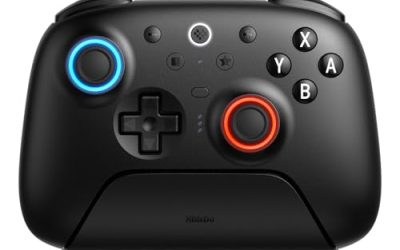
8BitDo Ultimate 2 Bluetooth Controller
The couch supplement, with an honest limit: Steam rates this game’s controller support as partial, so a pad covers part of the interface rather than replacing mouse and keyboard. Modern sticks and triggers plus back buttons still make it the comfortable option for the parts a pad does reach.
Specs
- Connectivity: Bluetooth wireless and USB-C wired
- Joysticks: TMR electromagnetic, anti-drift design
- Triggers: Hall effect, with mode switching
- Extras: two remappable back buttons, motion control
- In the box: charging dock included
Xbox Wireless Controller, Carbon Black

The safest guest pad in PC gaming: Steam Input support is universal, the glyphs match what most games display, and it pairs over Bluetooth or its own wireless standard. On the handheld, an external pad may need a manual Quick Access Menu switch before it takes over.
- Connectivity: Xbox Wireless and Bluetooth
- Port: USB-C for wired play
- Controls: hybrid D-pad, dedicated Share button
- Power: AA batteries or optional rechargeable pack
Logitech G502 HERO

This game’s primary input shape is the mouse: partial controller support and a dense inventory interface make the desk the native way to play. Eleven programmable buttons cover the confirm, cancel and menu inputs a long session repeats.
Specs
- HERO optical sensor, up to 25,600 DPI
- 11 programmable buttons
- Adjustable weight system
- Wired USB connection
- On-board memory profiles
Samsung T9 Portable SSD 2TB

For moving a Linux game library between a desktop and a laptop, or keeping an offline backup of installers, a fast USB-C drive is the simple answer. The headline figure needs a Gen 2×2 host port; on a lesser port the drive runs at that ceiling.
Specs
- Capacity: 2 TB portable SSD
- Interface: USB 3.2 Gen 2×2, USB-C connector
- Maker-rated speeds: up to 2,000 MB per second read, 1,950 MB per second write
- Features: Dynamic Thermal Guard, maker-rated drop resistance
How to choose
Choose the Steam copy, because it is the only PC edition and the exact build every record above describes. The entry cost is nothing but the download — the game is free to play — so the real decision is whether the anti-cheat position suits you. If your play is the standard dungeon modes and you accept Proton as the route, the tracker record — a “Running” status and a Gold ProtonDB headline — says the door is open. If your interest is the gated competitive modes, read the newest filings first: they describe HVCI checks Proton cannot satisfy. On Steam Deck, expect a Playable experience with interface compromises.
Who should skip
Skip this one if you need certainty. The anti-cheat terms of an Early Access game have already moved once, and a setup that works this season can be revised by the next update. Skip it if the modes you care about are the ones recent filings describe as gated behind Windows-only memory-integrity checks. Skip it if you are shopping for a native Linux build or a DRM-free installer — neither exists. And skip it if partial controller support is a deal-breaker for couch play.
FAQ
Is Dark and Darker native on Linux?
No. Steam flags the game Windows only, the Linux requirements field is an empty shell, and the single content depot is a Windows 64-bit build. Linux play happens through Proton, running the Windows version.
Does Dark and Darker’s anti-cheat block Linux?
The specialist tracker Are We Anti-Cheat Yet files the game as “Running” under its IronShield and Tavern anti-cheats, and ProtonDB’s headline is Gold, so the anti-cheat does not refuse Proton outright. Recent filings add a qualification: boot-protection checks requiring Secure Boot, TPM 2.0 and Windows HVCI are described as gating some modes, which Proton cannot provide.
Why does ProtonDB head the game “Natively Supports”?
That heading is a page artefact. ProtonDB prints it over the requirements block, but Steam’s record — flags, requirements fields and the delivered depot — is Windows-only at every layer, and Steam’s record decides what a purchase downloads.
How does Dark and Darker run on Steam Deck?
Valve rates it Playable, with SteamOS Compatible and proton-stable as the recommended runtime. The notes are about interface, not performance: the default controller configuration does not reach everything, text can be small, and the on-screen keyboard needs manual invocation.
Final verdict
Dark and Darker is a Windows-only game whose Linux story is written by its anti-cheat. The platform record is unanimous — flags, populated Windows fields, empty Linux field, one Windows depot, a DLC family in full agreement — and the compatibility record on top of it is encouraging at headline level: a “Running” ruling from the anti-cheat tracker, a Gold headline across 220 ProtonDB reports, and a Playable verdict from Valve. The qualification is equally clear in the newest filings, where boot-protection requirements tied to the Windows security model are described as narrowing what Proton players can reach. Play it on Linux as what it is: a free, working-for-many Proton title with a live anti-cheat caveat.
Product and ASIN Reference
| Product | ASIN |
|---|---|
| Valve Steam Deck OLED 512GB | B0CQ3RWQQZ |
| 8BitDo Ultimate 2 Bluetooth Controller | B0F194QFT2 |
| Xbox Wireless Controller, Carbon Black | B08DF248LD |
| Logitech G502 HERO | B07GBZ4Q68 |
| Samsung T9 Portable SSD 2TB | B0CHFS9K14 |