Katamari Damacy REROLL is MONKEYCRAFT’s remake of the roll-everything-up classic, published by BANDAI NAMCO Entertainment and released on Steam on 6 December 2018. The Prince rolls a sticky ball through houses, streets and towns, growing it from paperclip size to building size, and the remake keeps that single-player campaign alongside shared and split screen versus play. Linux players asking whether it arrives as a native build get a short answer from the store record, and a much friendlier one from the compatibility layer.
This page reads the record layer by layer — flags, requirements fields, the depot table, the ProtonDB file, Valve’s Deck test sheet and GOG’s catalogue — and weighs each layer on what it can actually prove.
As an Amazon Associate, we earn from qualifying purchases.
Quick answer
No native Linux build exists. Steam flags Katamari Damacy REROLL as Windows-only, its Linux requirements field is an empty shell, and the single content depot is a Windows delivery. The practical route is Proton: ProtonDB rates the game Platinum across 68 reports with strong confidence, and Valve rates it Steam Deck Verified.
One depot, one platform: what the record ships
Start with the flags. Steam’s record lists windows as true and both mac and linux as false. The requirements fields match that split. The Windows field is genuinely populated at the minimum tier: a 64-bit Windows 7 SP1 or later, an Intel Core i3-2125 or AMD Phenom II X4 965, 4 GB of RAM, and integrated Intel Iris Pro 580 or AMD Radeon Vega 8 graphics or better. The Mac and Linux fields, by contrast, are empty shells — the Minimum and Recommended headings sit over empty lists.
The depot table settles what flags alone cannot. SteamDB lists exactly one content depot: depot 848351, Kaleid Content, at 3.05 GiB — also the game’s total size on disk to the decimal. That depot sits inside the store package a buyer receives, and its current manifest is a Windows delivery of executables, Windows library files and video files, with no native libraries in it. The only other attached depots are the shared Windows redistributables for Visual C++ 2017 and DirectX from June 2010. There is no Linux or Mac depot in any branch, and the public branch currently serves build 20629440 from November 2025, so this is the record as it stands today, not a fossil.
The family offers no detour either. The record carries no DLC array at all — no soundtrack, art book or expansion app exists under this game — so there is no relative whose Linux flag could be misread as the game’s own. Two absences are named as gaps rather than filled in: the record publishes no DRM notice and no third-party account notice, so nothing is claimed on either front. The app is recorded as a 64-bit program; no extended OS value was published in the records read, so none is claimed.
Anti-cheat and the account layer
Multiplayer here is local only — shared or split screen PvP, plus Remote Play Together — so anti-cheat would be an unusual guest, and three sources agree it never arrived. Steam names no anti-cheat and publishes no account requirement. SteamDB’s detected technologies are the Unity Engine, the CRIWARE SDK and the Mono SDK: engine, media and runtime plumbing only. Are We Anti-Cheat Yet, checked across its full dataset of 1,167 games by both name and app id, carries no entry for this title at all.
ProtonDB: Platinum, under a heading that overpromises
ProtonDB’s summary record answered in full, and it is unambiguous: headline tier Platinum, best-reported tier Platinum, trending tier Platinum, across 68 reports, with confidence rated strong. That is the community grading the Windows build under Proton, and it grades it at the ceiling.
The game page, however, displays a “Natively Supports” heading above its requirements block, and that heading is wrong for this record. Every report beneath it names a Proton version — the recent file runs through Proton 9 and 10 builds — and Steam’s flags, fields and depot all say Windows-only. This article follows Steam: the heading is a display artefact, not evidence of a port.
The report texture matches the grade. Players describe out-of-the-box runs on desktop and Deck, with the recurring friction in input handling rather than compatibility: several reports advise connecting the controller before launch and switching the in-game input setting to the pad, because stray keyboard or mouse input can drop the controller mid-session. Two quirks belong to the game itself on every platform — gameplay is locked to 30 frames per second by design, and fullscreen settings unlock only after the tutorial — and neither is a Linux fault.
Steam Deck: Verified, on paperwork from an older build
Valve’s own compatibility endpoint answered directly this session: resolved category 3, Steam Deck Verified. All four Verified items pass — the default controller configuration is fully functional, the glyphs match the Deck, interface text is legible, and the default graphics configuration performs well. The single note item is the familiar one: the game does not default to external Bluetooth or USB controllers for the primary player, and may need a manual switch through the Quick Access Menu. SteamOS separately rates Compatible.
The dated paperwork behind that badge, read through SteamDB’s republication of Valve’s data, was written on 3 February 2022 against build 3517546, with proton-stable as the recommended runtime — so the badge certifies the Windows build under Proton, as expected for a game with no native port. The public branch has since moved to build 20629440, so the test sheet predates the build a buyer downloads today. The verdict itself is Valve’s current one; only the dated sheet is old.
GOG and the other shelves
There is no second PC edition to weigh. GOG’s own catalogue search returns no product for this game, and the title’s natural product address on GOG resolves to the general games catalogue — how that store answers for a title it does not sell. No product record exists to read, and no wishlist listing counts here as an edition. Steam under Proton is the only PC route.
Gear that fits the record
The picks follow the record’s shape: the handheld the badge was written for, two pads for the local versus modes and docked play, a mouse for desktop menu work, and storage for a library that travels.
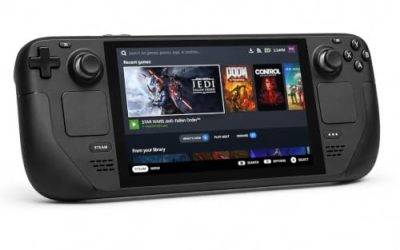
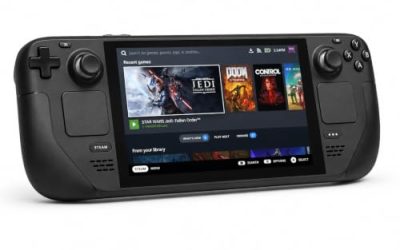
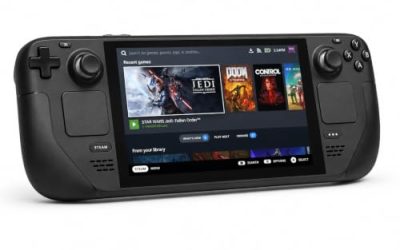
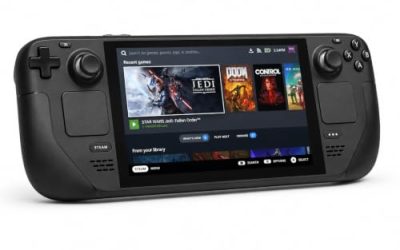
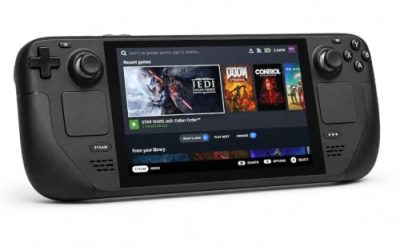
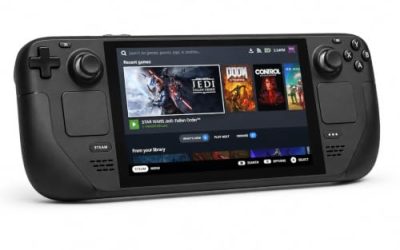
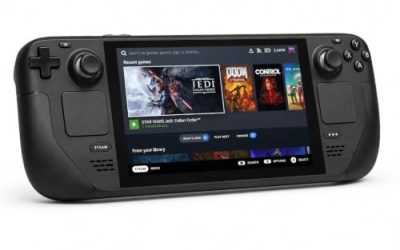
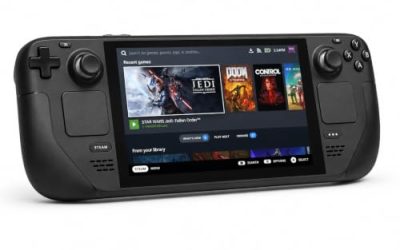
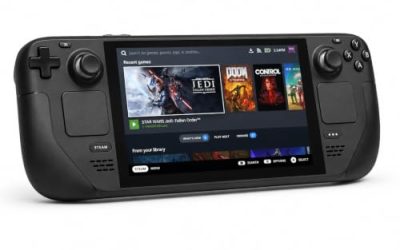
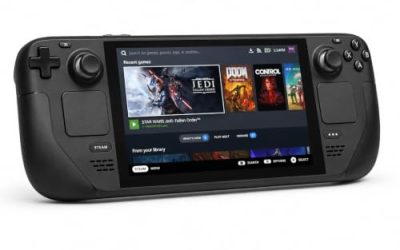
Valve Steam Deck OLED 512GB

The handheld the Verified badge was written for. The game’s published Windows requirements sit far below the Deck’s APU, and Valve’s test sheet passes the build under proton-stable with only the external-controller note attached.
Specs
- Display: 7.4-inch HDR OLED, 1280 by 800, up to 90 Hz
- Processor: AMD Zen 2 and RDNA 2 custom APU
- Memory: 16 GB LPDDR5
- Storage: 512 GB NVMe, plus a microSD slot
- Wireless: Wi-Fi 6E and Bluetooth
- Channel note: Valve sells the Deck mainly through its own store, so Amazon listings are third-party sellers
8BitDo Ultimate 2 Bluetooth Controller

The pad for the versus modes. REROLL’s multiplayer is shared and split screen, so a second pad is the price of admission, and this one adds back buttons and a dock for the couch setup.
Specs
- Connectivity: Bluetooth wireless and USB-C wired
- Joysticks: TMR electromagnetic, anti-drift design
- Triggers: Hall effect, with mode switching
- Extras: two remappable back buttons, motion control
- In the box: charging dock included
Xbox Wireless Controller, Carbon Black

The safest guest pad in PC gaming: Steam Input support is universal, the glyphs match what most games display, and it pairs over Bluetooth or its own wireless standard. On the handheld, the test sheet’s note applies: an external pad may need a manual Quick Access Menu switch before it takes over.
- Connectivity: Xbox Wireless and Bluetooth
- Port: USB-C for wired play
- Controls: hybrid D-pad, dedicated Share button
- Power: AA batteries or optional rechargeable pack
Logitech G502 HERO

Rolling is pad work, but the desktop around the game — library, settings menus, community layouts — is mouse work, and eleven programmable buttons cover the repeated inputs.
Specs
- HERO optical sensor, up to 25,600 DPI
- 11 programmable buttons
- Adjustable weight system
- Wired USB connection
- On-board memory profiles
Samsung T9 Portable SSD 2TB

For moving a Linux game library between a desktop and a laptop, or keeping an offline backup of installers, a fast USB-C drive is the simple answer. The headline figure needs a Gen 2×2 host port; on a lesser port the drive runs at that ceiling instead.
Specs
- Capacity: 2 TB portable SSD
- Interface: USB 3.2 Gen 2×2, USB-C connector
- Maker-rated speeds: up to 2,000 MB per second read, 1,950 MB per second write
- Features: Dynamic Thermal Guard, maker-rated drop resistance
How to choose
Choose the Steam copy, because it is the only PC edition on sale and the build both compatibility records describe. On a Linux desktop or laptop, install it and leave the compatibility tool at its default Proton setting; a Platinum headline on 68 reports with strong confidence says current builds need no tinkering. Connect your controller before launching and set the in-game input option to the pad, since the report file identifies stray keyboard or mouse input as the one recurring way to lose controller control mid-level. On a Steam Deck, the Verified badge means install and launch; the only expected adjustment is the Quick Access Menu switch if you pair an external controller. Expect the game’s own limits — a 30 frames per second gameplay lock and settings that open after the tutorial — on every platform, Windows included.
Who should skip
Skip this route if a native Linux build is a condition of purchase: none exists, the store record is explicit, and a community page heading does not change that. Skip it if the 30 frames per second lock or the windowed tutorial would spoil the game for you, because those are properties of the port itself, not of Proton. Players who want online multiplayer should look elsewhere — the versus modes are local and shared-screen, with Remote Play Together as the only route to a distant friend. And if controller-detection fuss at first launch sounds like a deal-breaker rather than a two-minute setup step, wait for a platform where the game ships natively.
FAQ
Is Katamari Damacy REROLL native on Linux?
No. Steam flags the game Windows-only, the Linux requirements field is an empty shell, and the single content depot is a Windows delivery inside the store package. There is no Linux depot in any branch.
Why does the ProtonDB page say “Natively Supports”?
That heading appears on the community page above its requirements block, but every report under it was filed under a named Proton version, and Steam’s record contradicts a native build on every layer. Treat the Platinum tier as the real signal and the heading as a display artefact.
How well does it run under Proton?
ProtonDB’s summary rates it Platinum as headline, best-reported and trending tier across 68 reports, with strong confidence. Reports describe out-of-the-box play, with controller setup at first launch as the recurring note.
Is it Steam Deck Verified?
Yes — Valve’s endpoint returns Verified directly, with all four checks passing and one note about external controllers not defaulting. The dated test sheet behind the badge is from February 2022 on an older build, while the verdict itself is current.
Final verdict
Katamari Damacy REROLL on Linux is a Proton story, and a good one. The store record is unanimously Windows-only — an empty Linux shell, one Windows depot carrying the whole 3.05 GiB delivery — yet the Windows build runs at ProtonDB’s ceiling and carries a current Steam Deck Verified badge. Buy the Steam copy, plug the controller in before you launch, and roll. Do not let a community page heading convince you a native port exists; it does not.
Product and ASIN Reference
| Product | ASIN |
|---|---|
| Valve Steam Deck OLED 512GB | B0CQ3RWQQZ |
| 8BitDo Ultimate 2 Bluetooth Controller | B0F194QFT2 |
| Xbox Wireless Controller, Carbon Black | B08DF248LD |
| Logitech G502 HERO | B07GBZ4Q68 |
| Samsung T9 Portable SSD 2TB | B0CHFS9K14 |