Some games claim Linux support in one corner of their Steam record and deny it in another. Prison Architect, the prison construction and management simulator from Introversion Software and Double Eleven, published by Paradox Interactive and released on Steam on 6 October 2015, is the opposite case. Every layer points the same way, and this article checks them in order: flags, requirements field, packages, depots, add-on shelf, Proton file, Deck sheet and second storefront.


The usual traps are all absent: no soundtrack app wearing the Linux flag on the game’s behalf, no populated field that no package sells, no storefront quietly dropping the Linux build. Two honest caveats remain: a Deck test sheet written against an older build, and a native build whose filings are mostly clean but not spotless.
As an Amazon Associate, we earn from qualifying purchases.
Quick answer
Yes. Prison Architect is genuinely native on Linux, and every layer of Steam’s record agrees: the flags, a populated Linux requirements field, both purchase packages and a dedicated Linux depot all say so, and all twelve DLC repeat it. ProtonDB classifies it Native, Valve rates it Playable on Steam Deck, and GOG sells a Linux edition too.
The record, layer by layer
Start with the flags, because here they happen to be true. Steam’s record for app 233450 reads windows true, mac true and linux true. Flags alone never settle anything in this series, so the next layer is the Linux requirements field, genuinely populated rather than an empty shell: Ubuntu 18 or later, an Intel Core2 Duo at 2.4 GHz or an AMD chip at 3 GHz or higher, 6 GB of RAM, a 2009-era Nvidia 8600 or Radeon equivalent, and 500 MB of hard drive space. That describes a build somebody shipped and specced.
The purchase packages repeat the mask exactly. Steam sells two: the base package, granting the base app alone, and a Starter Edition bundling the base game with the Gangs, Island Bound and Psych Ward add-ons. Both were read on packagedetails and both read windows, mac and linux all true. The licence sold today grants the Linux build; no port was withdrawn while its paperwork lingered.
The depot layer is decisive, and the cleanest part of the record. SteamDB lists three content depots, one per platform: Windows at 512.11 MiB, macOS at 538.91 MiB, and a dedicated Linux content depot at 524.55 MiB, full-sized and in line with its siblings, not emptied, stranded or a zero-byte shell. The only Windows-flavoured extra is a shared VC redistributable, which belongs to the Windows leg. Two honesty notes: SteamDB’s icon list shows the standard set with no separate Linux client icon, a cosmetic gap the real depot outweighs, and the record carries no server flag, no DRM notice and no account notice. Detection finds the Paradox Launcher and the SDL library; remember that launcher when the filings come up.
The add-on shelf: twelve for twelve
The base record’s add-on array holds twelve apps, each read on its own record rather than trusted from the base game’s flags: Jungle Pack, Future Tech Pack, Undead, Free For Life, Gangs, Perfect Storm, Second Chances, Going Green, Island Bound, Cleared For Transfer, Psych Ward: Warden’s Edition and Aficionado. Every one is typed as downloadable content, and every one reads windows, mac and linux all true. The family is unanimous; no newest-DLC dissent of the kind that has split other families here.
Two extras sit at the family’s edge. SteamDB associates an Art Book depot (35.17 MiB) and a Soundtrack depot (727.50 MiB) with the base app, but the apps behind those depots publish no readable store record, so no platform mask is claimed for them. They cannot form the familiar all-true soundtrack trap: there is no readable record to form it from, and the base game’s layers need no help.
What the Proton file adds
ProtonDB holds a full summary: headline Gold, best-reported Platinum, trending Platinum, across 69 reports with strong confidence. Read it correctly, though. ProtonDB classifies the game as Native, and its page heads the requirements block “Natively Supports:”, which for once agrees with Steam’s record. The tiers describe the filings underneath: native runs mixed with players who forced the Windows build through Proton anyway.
The filing texture, at report weight, is mostly calm: native filings report clean runs across a spread of distributions, several with no tinkering. The exceptions are specific: one Steam Deck filing advises forcing Proton because the native build mishandled pipe hookups in that player’s prison; one Wayland filing reports the launcher crashing until the session switched to X11, matching the Paradox Launcher detection; one older filing renames a bundled SDL library to cure a launch fault. None of that overturns the record; it marks the native build as real, used and occasionally quirky.
Steam Deck: a Playable badge on older paperwork
Valve’s own compatibility endpoint returned no usable sheet this session, so the verdict here is read through SteamDB’s republication of Valve’s data, stated openly. The sheet rates the game Playable on Steam Deck, SteamOS separately Compatible. Positives: all functionality accessible under the default controller configuration, and default graphics performing well. The deductions are input-shaped: mouse, keyboard or non-Deck glyphs sometimes shown, some text small, entering text needs the on-screen keyboard invoked manually, and an external pad does not take over by default, so a Bluetooth or USB controller may need a manual Quick Access Menu switch.
Two qualifications belong beside the badge. First, the record declares no controller support: no controller-support field, no controller category, and the sheet’s supported-input entry reads “other”, so the Playable rating rests on Steam Input mapping a mouse-and-keyboard game, not native pad support. Second, the paperwork is old. The single test is dated 19 March 2022 and graded build 7609607 with a proton-stable recommended runtime, while the current public branch stands at build 10630057, assembled in February 2023. The badge grades a close ancestor of the build on sale, making this a supplement candidate: the verdict is real, but a fresh test would be worth more.
The second storefront agrees
GOG sells Prison Architect, and its edition was ruled from GOG’s own product record, identity-checked by title and slug, never from search results. That record reads windows true, osx true and linux true: GOG’s copy carries the Linux build, and GOG stocks the expansions too. The split ruling some games here produce, native on Steam but Windows-only elsewhere, does not arise. Two storefronts sell the same native proposition; the choice is library preference, not platform survival.
Gear that fits a mouse-first builder
The record shapes the gear: a native desktop build that rewards a precise mouse, a Playable handheld badge for the couch, and pads that earn their place through Steam Input and the wider library, not through any controller support this game declares.
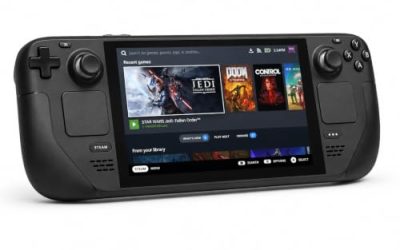
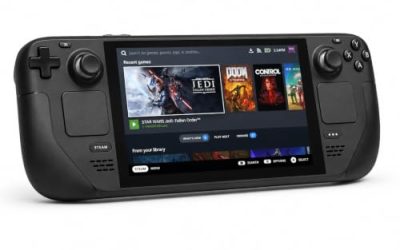
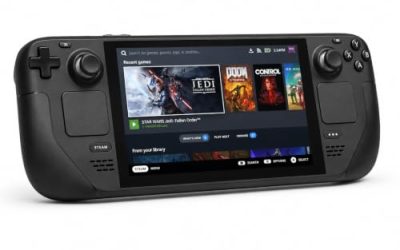
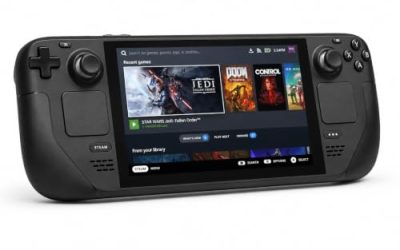
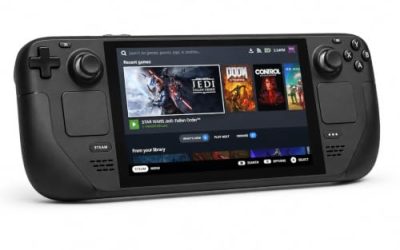
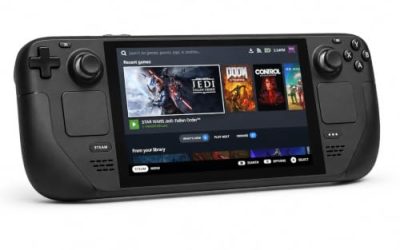
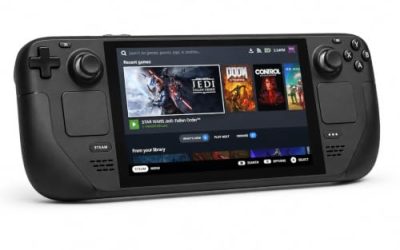
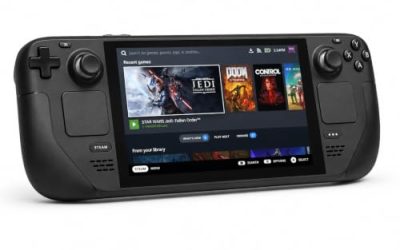
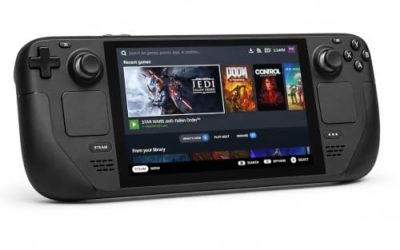
Valve Steam Deck OLED 512GB
The handheld behind the Playable badge. The game’s Linux specification is modest next to the Deck’s APU, and the sheet confirms the default configuration is fully functional, small text and manual keyboard calls aside.
Specs
- Display: 7.4-inch HDR OLED, 1280 by 800, up to 90 Hz
- Processor: AMD Zen 2 and RDNA 2 custom APU
- Memory: 16 GB LPDDR5
- Storage: 512 GB NVMe, plus a microSD slot
- Wireless: Wi-Fi 6E and Bluetooth
- Channel note: Valve sells the Deck mainly through its own store, so Amazon listings are third-party sellers
Logitech G502 HERO
Prison Architect is a mouse game at heart: foundations, walls, wiring and patrol routes are all drawn, dragged and clicked. A precise wired mouse with programmable buttons for build-menu shortcuts is the most useful desktop upgrade for it.
Specs
- HERO optical sensor, up to 25,600 DPI
- 11 programmable buttons
- Adjustable weight system
- Wired USB connection
- On-board memory profiles
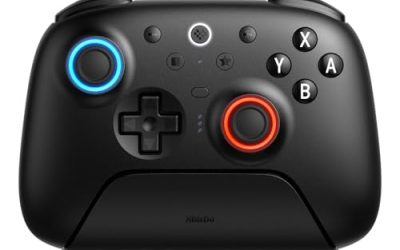
8BitDo Ultimate 2 Bluetooth Controller

The docked and desktop pad pick. This game declares no controller support, so any pad works through Steam Input; this one covers the couch case with modern sticks, triggers and back buttons for menu shortcuts.
Specs
- Connectivity: Bluetooth wireless and USB-C wired
- Joysticks: TMR electromagnetic, anti-drift design
- Triggers: Hall effect, with mode switching
- Extras: two remappable back buttons, motion control
- In the box: charging dock included
Xbox Wireless Controller, Carbon Black

The safest guest pad in PC gaming: Steam Input support is universal, and it pairs over Bluetooth or its own wireless standard. On the handheld, the sheet’s note applies: an external pad may need a manual Quick Access Menu switch before it takes over.
- Connectivity: Xbox Wireless and Bluetooth
- Port: USB-C for wired play
- Controls: hybrid D-pad, dedicated Share button
- Power: AA batteries or optional rechargeable pack
Samsung T9 Portable SSD 2TB

For moving a Linux game library between desktop and laptop, or an offline backup of installers, a fast USB-C drive is the simple answer. The headline figure needs a Gen 2×2 host port; on a lesser port the drive runs at that ceiling.
Specs
- Capacity: 2 TB portable SSD
- Interface: USB 3.2 Gen 2×2, USB-C connector
- Maker-rated speeds: up to 2,000 MB per second read, 1,950 MB per second write
- Features: Dynamic Thermal Guard, maker-rated drop resistance
How to choose
Choose either storefront on library grounds, because both sell the native build. On Steam, install and play the Linux version directly; no compatibility tool needs configuring, and the requirements (Ubuntu 18 or later, 6 GB of RAM) are an easy bar for any current distribution. Add the add-ons freely: all twelve repeat the base game’s mask. On GOG, the same build arrives without a client requirement. Take the Deck version only with the caveat in mind: the Playable badge is genuine but predates the current build, and text-heavy play suits a docked setup with a mouse.
Who should skip
Skip the Deck as your only screen if small text and manual keyboard calls irritate you; Valve’s sheet flags both. Skip the game if you want native gamepad support, because the record declares none and every pad route runs through Steam Input. And skip it if launcher friction on Wayland would end the evening early: one filing reports exactly that crash, cured by an X11 session.
FAQ
Is Prison Architect native on Linux?
Yes, at every layer Steam publishes. The flags read all true, the Linux requirements field is populated, both purchase packages grant the Linux build, and SteamDB lists a dedicated Linux content depot of 524.55 MiB beside its Windows and macOS siblings. All twelve add-ons repeat the same mask.
Does Prison Architect work on Steam Deck?
Valve rates it Playable, SteamOS Compatible, read here through SteamDB’s republication of Valve’s sheet. The default controller configuration is fully functional and default graphics perform well; deductions are small text, non-Deck glyphs and manual keyboard calls. The single test dates from March 2022, grading an older build than the one on sale.
Should I run the native build or force Proton?
The native build is the default and the one most filings praise. ProtonDB’s Gold headline and Platinum best-reported tier cover a mixed file of native and Proton runs. One Deck filing prefers Proton over a pipe-placement bug in the native build, so forcing Proton is a fallback for a specific fault, not the starting point.
Can I buy Prison Architect on GOG for Linux?
Yes. GOG’s own product record reads windows, mac and linux all supported, so its edition carries the same native build, expansions included. No compatibility layer is involved on either storefront.
Final verdict
Prison Architect is one of the cleanest native records in this series: flags, requirements field, both packages, a full-sized Linux depot and a unanimous twelve-strong add-on shelf all agree, ProtonDB’s Native classification and heading agree with Steam for a change, and GOG sells the Linux build too. The reservations are paperwork, not platforms: a Playable sheet written against an older build, no declared controller support behind that badge, and a launcher one Wayland filing caught crashing. None touch the central fact. Buy it on either storefront and build natively.
Product and ASIN Reference
| Product | ASIN |
|---|---|
| Valve Steam Deck OLED 512GB | B0CQ3RWQQZ |
| Logitech G502 HERO | B07GBZ4Q68 |
| 8BitDo Ultimate 2 Bluetooth Controller | B0F194QFT2 |
| Xbox Wireless Controller, Carbon Black | B08DF248LD |
| Samsung T9 Portable SSD 2TB | B0CHFS9K14 |