Knights and Merchants is the slow, economy-first medieval strategy game Joymania built in the late nineties — The Shattered Kingdom and its expansion The Peasants Rebellion — where every soldier marches only as far as his supply chain reaches. The Steam edition, published by TopWare Interactive on 14 October 2013, flags all three PC platforms at once.


That triple flag is the shape that usually hides a trap: an all-true mask can sit on an empty requirements tab, a soundtrack app or a package that grants Windows alone. So this piece checks the layers underneath — requirements fields, purchase package, depot table, the single add-on app, the Proton file, Valve’s Deck sheet and the second storefront — and rules only from what they show.
As an Amazon Associate, we earn from qualifying purchases.
Quick answer
Yes. Knights and Merchants is native on Linux as Steam sells it: the Linux requirements tab is fully populated, nine Linux depots carry 1.28 GiB each, and the purchase package grants all three platforms. ProtonDB files the Windows build at Platinum across eight reports, Valve rates it Playable on Steam Deck, and GOG sells only the Windows build.
What Steam’s own record says
The app record (app 253900) names TopWare Interactive as developer and publisher and flags Windows, macOS and Linux true. Flags are the weakest evidence on the page, so the next check is the requirements tabs, where fake support shows up as a header over an empty list. That is not what is here. The Linux tab is genuinely populated: minimum Ubuntu 12.04 or SteamOS, a single-core Intel or AMD processor, 512 MB of memory, a 3D graphics card with OpenGL support and 500 MB of storage; recommended Ubuntu 15.10 or SteamOS with 1 GB of memory. These are the requirements of a real SteamOS-era port, not boilerplate.
The purchase layer agrees. Steam sells one package, package 31119, granting the base app with all three platforms true — the licence a buyer receives today includes the Linux build. The record carries no third-party DRM notice and no external account notice. It also declares no controller support at all: no controller field on the app record, and the package reads full gamepad false, which matters for how the gear further down is framed.
The depot layer: where the native build actually lives
Depots are the decisive layer, because a depot is content Steam actually delivers. The table lists nine dedicated Linux depots, one per supported language — Czech, Dutch, English, French, German, Hungarian, Polish, Russian and Spanish — each sized at roughly 1.28 GiB. Nine full-weight language depots are not a stub, a redirect or a leftover: they are the complete game, built for Linux nine times over. The macOS side mirrors the structure at roughly 880 MiB per depot; the Windows main content depot reads 521.87 MiB.
The table holds one fossil, on the Windows side: depot 253911, the Windows HD Version depot, reads 0 B — an emptied shell that changes nothing here, since no Linux depot is emptied, stranded or size-less. The branch build, 3404581, has stood since 17 December 2018, so the build on sale is the build the paperwork describes. The listed icon set is the standard one, with no Linux client icon among the assets — an absence that carries no weight against nine sized depots, since an icon is decoration, not delivery.
The family sweep: one add-on, and it agrees
The base record’s add-on array holds one app: Knights and Merchants – Digital Deluxe Content (app 986240), released 19 December 2018 and typed as downloadable content with a fullgame pointer back to the base game. An extras package — the digital artbook and the official soundtrack — it repeats the family’s shape exactly: its own flags read all three platforms true, its Linux tab is populated, its own package (324697) grants all three platforms, and its content depot is sized at 352.68 MiB. Soundtrack and artbook apps are the classic source of false native readings, because their flags can claim platforms the game itself lacks. Here there is nothing to unmask: the extras agree with the base game on every layer, and the ruling rests on the base game’s own record.
The Proton file
ProtonDB’s summary reads in full: headline tier Platinum, best-reported Platinum, trending Platinum, across 8 reports, with moderate confidence. That file grades the Windows build through Proton — the fallback route here, not the main one, but a strong one. Two cautions apply. First, the sample is thin: eight reports show a pattern without settling one. Second, the heading check could not be completed this session: the game page returned report text only, with no readable requirements heading, so no claim is made about how that page labels the game. The report texture, at report weight, matches the two-route picture: some filings tinker with older Proton generations and winetricks, and one Deck filing describes running a Windows copy bought elsewhere, with the fan-made KaM Remake, under Wine.
The Steam Deck sheet
Valve rates Knights and Merchants Playable on Steam Deck, with SteamOS separately rated Compatible. The verdict here was read through SteamDB’s republication of Valve’s own compatibility data, because Valve’s endpoint returned unusable bytes this session; the sheet underneath is Valve’s. Its single test, dated 21 August 2026, graded build 3404581 — exactly the current public branch build, unmoved since December 2018 — so the paperwork is current by construction.
Two details deserve care. The recommended runtime is a Proton release candidate, proton-11.0-2RC: the test graded the Windows build through Proton, not the native Linux build, so the badge is a Proton-route result and native players on the handheld may see a different picture. The deductions are input-shaped, not performance-shaped: non-Deck glyphs at times, small text, and no support for the Deck’s native display resolution. Against those, Valve records full functionality under the default controller configuration and good performance from the default graphics. That configuration is Steam Input mapping a mouse-and-keyboard game onto the handheld — workable, by Valve’s own test, but not gamepad-native.
The storefront ruling
There is a second storefront, and it splits. GOG sells Knights and Merchants — ruled from GOG’s own product record, not from search results: the product record (product 1207658772, sold there under The Peasants Rebellion name) reads Windows true, macOS false, Linux false, and GOG’s Digital Deluxe Content product reads the same mask. So GOG’s edition is the Windows build alone. A Linux buyer has one storefront: Steam, and the GOG copy is a Proton-or-Wine project rather than a native one.
Gear that fits the record
The record is a mouse-and-keyboard strategy game with a Playable handheld badge and no declared controller support, so the gear follows that shape: the handheld Valve tested, two pads as Steam Input picks, a precise mouse, and fast storage.
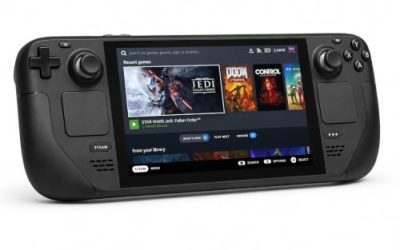
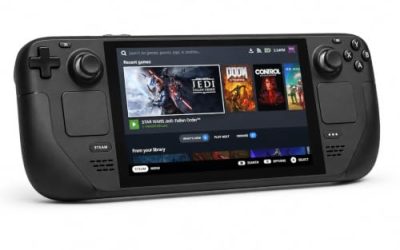
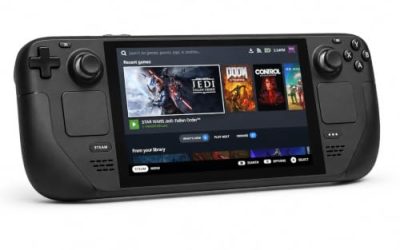
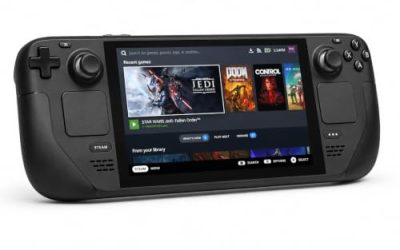
Valve Steam Deck OLED 512GB
The handheld the Playable badge was written for. The game’s requirements are tiny next to the Deck’s APU, and Valve’s sheet confirms the default configuration is fully functional and performant, with small text as the caveat.
Specs
- Display: 7.4-inch HDR OLED, 1280 by 800, up to 90 Hz
- Processor: AMD Zen 2 and RDNA 2 custom APU
- Memory: 16 GB LPDDR5
- Storage: 512 GB NVMe, plus a microSD slot
- Wireless: Wi-Fi 6E and Bluetooth
- Channel note: Valve sells the Deck mainly through its own store, so Amazon listings are third-party sellers
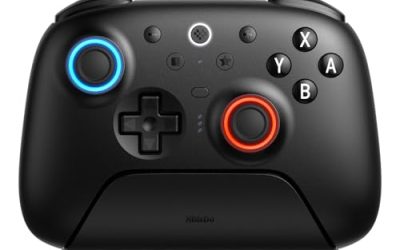
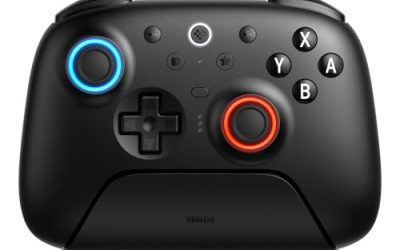
8BitDo Ultimate 2 Bluetooth Controller
A docked and desktop pad for the wider library. This game declares no controller support, so on the Deck it is Steam Input that maps the controls; a pad like this earns its place across a strategy library, with back buttons for repeated shortcuts.
Specs
- Connectivity: Bluetooth wireless and USB-C wired
- Joysticks: TMR electromagnetic, anti-drift design
- Triggers: Hall effect, with mode switching
- Extras: two remappable back buttons, motion control
- In the box: charging dock included
Xbox Wireless Controller, Carbon Black

The safest guest pad going: Steam Input support is universal, and it pairs over Bluetooth or its own wireless standard. For this title it is a Steam Input device like any other, not a natively supported pad.
- Connectivity: Xbox Wireless and Bluetooth
- Port: USB-C for wired play
- Controls: hybrid D-pad, dedicated Share button
- Power: AA batteries or optional rechargeable pack
Logitech G502 HERO

This is a mouse game: placing buildings, routing serfs and nudging production queues are pointer work, and at a desk a precise wired mouse is the natural way to play it. Eleven programmable buttons cover the repeated inputs.
Specs
- HERO optical sensor, up to 25,600 DPI
- 11 programmable buttons
- Adjustable weight system
- Wired USB connection
- On-board memory profiles
Samsung T9 Portable SSD 2TB

For moving a Linux game library between machines, or keeping an offline backup of installers, a fast USB-C drive is the simple answer. The headline figure needs a Gen 2×2 host port; on a lesser port the drive runs at that ceiling.
Specs
- Capacity: 2 TB portable SSD
- Interface: USB 3.2 Gen 2×2, USB-C connector
- Maker-rated speeds: up to 2,000 MB per second read, 1,950 MB per second write
- Features: Dynamic Thermal Guard, maker-rated drop resistance
How to choose
Buy the Steam edition if you play on Linux: it is the only copy with the native build, and the licence grants all three platforms in the single package Steam sells. Choose the native build as your default route — the port the publisher shipped and still sells — and keep the Platinum-rated Proton route as a fallback if it misbehaves on a newer distribution, since the requirements tab speaks the language of Ubuntu 12.04 and SteamOS. On Steam Deck, set expectations by the badge: Playable through Proton with Steam Input controls, small text and non-native resolution. The GOG edition makes sense only for a Windows-first library; on Linux it means running the Windows build through a compatibility layer.
Who should skip
Skip this one if you want a modern real-time strategy pace: the game is famously deliberate, and battles grow out of logistics. Skip it if you play controller-first and dislike Steam Input mapping, because the record declares no controller support and the Deck badge rests on a mapped configuration. Skip the GOG edition if native Linux is the point of the purchase, and skip it if small text is a deal-breaker, since Valve’s sheet flags exactly that.
FAQ
Is Knights and Merchants native on Linux?
Yes, as Steam sells it. The Linux requirements tab is fully populated, the sole purchase package grants all three platforms, and SteamDB lists nine Linux depots of about 1.28 GiB each. Flags, field, package and depots all agree.
Is Knights and Merchants Playable on Steam Deck?
Valve rates it Playable, with SteamOS Compatible. The test, from August 2026, graded the current build through a Proton release candidate; its deductions are non-Deck glyphs, small text and no native-resolution support. The badge describes the Proton route, and the game declares no controller support, so play rests on Steam Input’s default mapping.
Can I buy the Linux build on GOG?
No. GOG sells the game and its Digital Deluxe Content, but its product records read Windows only for both. The native build is sold only on Steam; a GOG copy on a Linux machine means running the Windows build through Proton or Wine.
Does the Digital Deluxe Content change the platform picture?
No. The artbook and soundtrack package is typed as downloadable content for the base game, and its own record repeats the same all-platform mask, with a populated Linux tab and its own sized depot.
Final verdict
Knights and Merchants is one of the clean cases: a genuinely native Linux build, sold as native, with every layer in agreement — populated requirements, an all-platform package, nine sized Linux depots and an add-on that matches. The honest caveats are about age and input, not existence: the build has been frozen since 2018, the Deck badge was earned through Proton rather than the native port, the game wants a mouse, and GOG holds only the Windows build. For a Linux player, the Steam edition is the definitive copy.
Product and ASIN Reference
| Product | ASIN |
|---|---|
| Valve Steam Deck OLED 512GB | B0CQ3RWQQZ |
| 8BitDo Ultimate 2 Bluetooth Controller | B0F194QFT2 |
| Xbox Wireless Controller, Carbon Black | B08DF248LD |
| Logitech G502 HERO | B07GBZ4Q68 |
| Samsung T9 Portable SSD 2TB | B0CHFS9K14 |