Stronghold 3 is the awkward middle child of Firefly Studios’ castle series: a full 3D sequel that launched in October 2011 to a rough reception, then settled into the Gold edition Steam has sold since 25 May 2012. For Linux players it carries a stranger distinction. Buried in its record is a genuine Linux binary, a populated Linux requirements tab and a registered Linux client icon — the complete paperwork of a native port — yet the game cannot be bought for Linux today, because every layer governing a purchase reads Windows only.


That split is the whole story. The build layer says a port was made; the sales layer says it was withdrawn. This article reads each layer in turn — flags, package, requirements, depots, the Proton file, Valve’s Deck sheet and the GOG catalogue — and rules on what a Linux player can buy and run in 2026: the Windows build through Proton.
As an Amazon Associate, we earn from qualifying purchases.
Quick answer
Stronghold 3 Gold has no native Linux build you can buy today: Steam’s flags and its only purchase package read Windows only. A Linux binary still sits in the depot layer, a leftover of a withdrawn port, so Proton is the working route — Silver on ProtonDB, Playable on Steam Deck, and no GOG edition exists.
The sales layer: flags and the single package
Start where a purchase starts. The app record for Stronghold 3 Gold (app 47400, developed and published by Firefly Studios) lists its platforms as Windows true, Mac false, Linux false. Steam sells the game exactly one way — a single purchase package — and the package repeats the mask. No second edition, no bundle, no platform-specific package: one package, one app, Windows only.
Other paperwork points the same way. The record carries no controller support declaration and the package’s gamepad flag reads false, so this is a mouse-and-keyboard game whose pads are Steam Input devices, not supported hardware. Two period artefacts ride along: a third-party CD key flag from the retail era, and a NoServers flag recording that the multiplayer infrastructure no longer runs.
The ghost in the record: a populated Linux tab and a real Linux depot
Against that clean mask, the deeper layers argue back. The Linux requirements field is not the empty list most Windows-only games carry: it names Ubuntu 14.10 and Mint 17 as supported systems, a Core 2 Duo at 2.4 GHz, 4 GB of RAM, 8 GB of disk and an OpenGL 2.1 capable card, with Nvidia and fglrx drivers named. The Mac field is populated too, with a notice that the 32-bit Mac build cannot run on Catalina or later. These are the tabs of real, shipped ports, written when the ports were live.
The depot layer backs the paperwork with content. Alongside the Windows depot (4.11 GiB) and the shared data depot (3.34 GiB) sit two platform binaries: a macOS binary depot of 25.83 MiB and a Linux binary depot of 33.81 MiB, configured for Linux and carrying real size — no zero-byte shell, no stranded manifest. A Linux client icon is registered as well. One counterweight: SteamDB’s valid-OS list reads Windows and macOS, Linux absent, so even the depot layer is not unanimous. A Linux build was built, uploaded and documented — and the sales layers were switched off around it.
The family tells the same folded-in story. The record exposes no DLC array; the Gold extras live in the depot list instead — the Blackstaff Campaign and castle packs (Warwick and Marksburg banners, the Tower of London, Edinburgh and Harlech) as depots inside the one app, next to the language depots and one unused, size-less Chinese depot. No soundtrack or artbook app exists, so the all-true trap cannot form here.
The Proton file: Silver, thin, and split down the middle
Because the native build is not sold, ProtonDB’s file grades the Windows build under Proton, and it is one of the thinnest in the series: Silver headline, Platinum best-reported, Silver trending, across just five reports with low confidence. That split is the file in miniature — the best runs are genuinely good, and the average run is not.
The filings explain the gap. The newest report, on a current Proton branch, calls the game playable but documents save files rolling back to earlier states and units sticking in textures or becoming uncontrollable. A second filing, on a community Proton build inside a gamescope session, reports a clean run — while noting the standard Steam Linux Runtime crashed at the intro screen, a striking detail on a record that once shipped its own Linux runtime. An older filing becomes usable only with a popup-window launch flag. And one five-year-old report states the quiet part directly: Proton Experimental runs this game better than the native Linux version — a sentence that only makes sense because a native version existed.
ProtonDB’s game page heads its requirements block “Natively Supports:”, and for once the heading is not pure template noise: it has a real referent in the depot layer. It is still not a buying guide — the native build it gestures at cannot be purchased, so this article follows the package mask, not native as sold, and treats the heading as a fossil of the withdrawn port.
The Steam Deck sheet: Playable, and unusually current
Valve’s compatibility sheet — read here through SteamDB’s republication of Valve’s data, after Valve’s own endpoint returned unusable bytes this session — rates the game Playable on Deck, SteamOS separately Compatible. The recommended runtime is proton-stable, so the badge grades the Windows build through Proton, not the depot-layer native build.
The paperwork is in better shape than most of this series enjoys. Valve’s single test, dated 4 July 2026, graded build 23644558 — exactly the current public branch build, assembled in June 2026 — so the badge describes the build on sale today and cannot be called stale. The deduction list has one entry: entering text requires manually invoking the on-screen keyboard. Against it, the sheet credits the game with all functionality accessible under the default configuration, matching glyphs, legible text and default graphics that perform well. The configuration’s supported input reads “other”, consistent with a record declaring no controller support: the badge rests on Steam Input translating a mouse-first game.
The GOG ruling: no edition
GOG carries no copy of Stronghold 3 in any form. The ruling rests on the catalogue itself rather than on search: a full enumeration of GOG’s Stronghold products returns seventeen items — the two HD re-releases, Crusader 2 and Warlords with their campaigns and special editions, and one unrelated kingdom simulator — and Stronghold 3 is not among them. The natural product addresses redirect to the catalogue and product search returns nothing; neither would be decisive alone, but with the complete enumeration in hand the conclusion is firm.
Anti-cheat is a non-issue recorded as silence: Steam names none, SteamDB’s detection finds only engine toolkits, and the community anti-cheat database carries no entry for this app.
Gear that fits the record
The picks follow the record’s shape: the handheld whose badge this article just read, two pads for Steam Input play, a mouse for a game designed around one, and library storage.
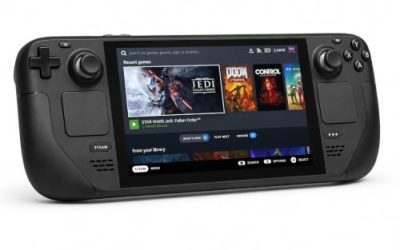
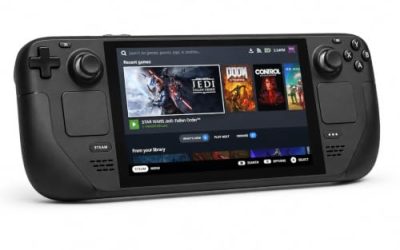
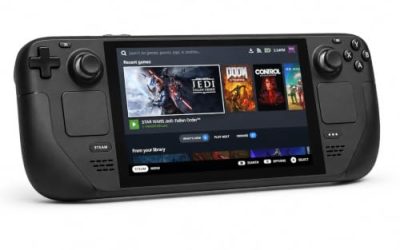
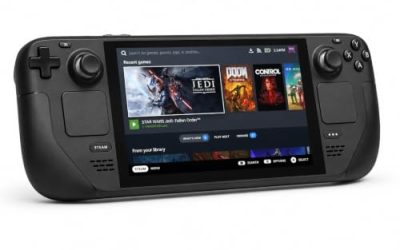
Valve Steam Deck OLED 512GB
The handheld seat for a Playable badge whose paperwork is current: Valve tested the exact build on sale.
Specs
- Display: 7.4-inch HDR OLED, 1280 by 800, up to 90 Hz
- Processor: AMD Zen 2 and RDNA 2 custom APU
- Memory: 16 GB LPDDR5
- Storage: 512 GB NVMe, plus a microSD slot
- Wireless: Wi-Fi 6E and Bluetooth
- Channel note: Valve sells the Deck mainly through its own store, so Amazon listings are third-party sellers
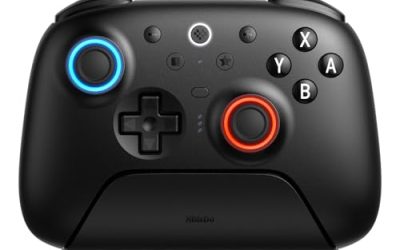
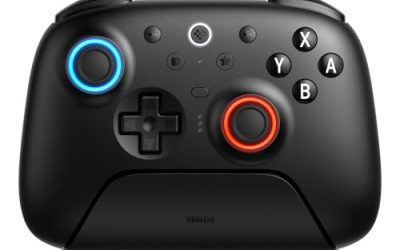
8BitDo Ultimate 2 Bluetooth Controller
The docked pad pick. This record declares no controller support, so any pad is a Steam Input device here.
Specs
- Connectivity: Bluetooth wireless and USB-C wired
- Joysticks: TMR electromagnetic, anti-drift design
- Triggers: Hall effect, with mode switching
- Extras: two remappable back buttons, motion control
- In the box: charging dock included
Xbox Wireless Controller, Carbon Black

The safest guest pad in PC gaming: Steam Input support is universal, the glyphs match what most games display, and it pairs over Bluetooth or its own wireless standard.
- Connectivity: Xbox Wireless and Bluetooth
- Port: USB-C for wired play
- Controls: hybrid D-pad, dedicated Share button
- Power: AA batteries or optional rechargeable pack
Logitech G502 HERO

Stronghold 3 was designed for a mouse before anything else — at a desk, the native instrument is still the right one. Eleven programmable buttons cover the camera and selection inputs a long siege repeats.
Specs
- HERO optical sensor, up to 25,600 DPI
- 11 programmable buttons
- Adjustable weight system
- Wired USB connection
- On-board memory profiles
Samsung T9 Portable SSD 2TB

For moving a Linux game library between machines, a fast USB-C drive is the simple answer. The headline figure needs a Gen 2×2 host port; on a lesser port the drive runs at that ceiling.
Specs
- Capacity: 2 TB portable SSD
- Interface: USB 3.2 Gen 2×2, USB-C connector
- Maker-rated speeds: up to 2,000 MB per second read, 1,950 MB per second write
- Features: Dynamic Thermal Guard, maker-rated drop resistance
How to choose
Buy the Steam copy knowing exactly what it is: a Windows build of the Gold edition, campaign and castle packs folded in, run through Proton. On a desktop, expect the Silver-to-Platinum spread the community file describes — a current Proton branch first, a community build and gamescope session as the documented fallback if the intro screen misbehaves, and saves treated with suspicion. On Steam Deck, the Playable badge is current paperwork on the exact build sold today. Choose this entry for its 3D castle assaults, not as the series’ safest Linux bet — the Definitive Editions carry deeper Proton files.
Who should skip
Skip Stronghold 3 Gold if you buy native ports on principle and read a withdrawn port as a reason to walk away: the depot binary cannot be bought or installed through Steam today, and nothing suggests it will return. Skip it if a five-report, low-confidence Proton file feels too thin, or if save-rollback bugs would ruin a long campaign. Skip it as a multiplayer purchase — the NoServers flag makes the listed multiplayer a historical note. And skip the GOG hunt; there is no edition to find.
FAQ
Is Stronghold 3 Gold native on Linux?
Not as sold. A real Linux binary depot, a populated Linux requirements tab and a registered Linux client icon survive on the record, but the platform flags and the only purchase package read Windows only, so no Linux build can be bought or installed through Steam today.
How well does Stronghold 3 Gold run under Proton?
ProtonDB rates it Silver overall with Platinum as its best-reported tier, from five reports at low confidence. Filings range from clean runs on community Proton builds to save rollbacks and stuck units on stock branches — playable with documented rough edges, not a safe Platinum-class bet.
Is Stronghold 3 Gold playable on Steam Deck?
Yes — Valve rates it Playable, SteamOS Compatible, and the paperwork is current: the July 2026 test graded the exact branch build on sale now. The only deduction is manually invoking the on-screen keyboard for text entry; text is legible and the default configuration performs well.
Can I buy Stronghold 3 Gold on GOG instead?
No. A full enumeration of GOG’s Stronghold catalogue — seventeen products covering the HD re-releases, Crusader 2 and Warlords — contains no Stronghold 3 product in any edition. Steam is the only route, and on Linux that means Proton.
Final verdict
Stronghold 3 Gold is the series’ withdrawn-port case: a game whose Linux build demonstrably exists on its own record — depot, requirements tab, client icon — and demonstrably cannot be bought, because the flags and the single package were switched to Windows only around it. Ruled as sold, it is a Windows-only game with a Silver, five-report Proton file and an unusually current Playable badge. Buy it on those terms, with Proton as the plan and the native build as a footnote.
Product and ASIN Reference
| Product | ASIN |
|---|---|
| Valve Steam Deck OLED 512GB | B0CQ3RWQQZ |
| 8BitDo Ultimate 2 Bluetooth Controller | B0F194QFT2 |
| Xbox Wireless Controller, Carbon Black | B08DF248LD |
| Logitech G502 HERO | B07GBZ4Q68 |
| Samsung T9 Portable SSD 2TB | B0CHFS9K14 |