SpellForce 2: Demons of the Past is the standalone closing chapter of the SpellForce 2 storyline, released on 16 January 2014 by THQ Nordic and Mind Over Matter Studios. It mixes real-time strategy base-building with a hero-led role-playing campaign, and it is a separate purchase from the Anniversary Edition reissue. Searches for a Linux version surface claims in both directions, because one member of this game’s own family carries a Linux flag.
The full record settles the question cleanly. Steam’s app entry, both purchase packages and the complete depot list describe a Windows-only game whose branch has not moved since May 2014, and the single Linux tick anywhere near this title belongs to its soundtrack.
As an Amazon Associate, we earn from qualifying purchases.
Quick answer
SpellForce 2: Demons of the Past has no native Linux build. Steam’s app record and both purchase packages read Windows only, the depot list is Windows-configured throughout, and the only Linux flag in the family belongs to the soundtrack. Linux players run the Windows build through Proton; Valve rates it Playable on Steam Deck.
The app record: one populated requirements field out of three
The Steam record for app 245050 types Demons of the Past as a game, a standalone app with no parent pointer, credited to THQ Nordic and Mind Over Matter Studios. Its platform flags read windows true, mac false, linux false. The requirements fields agree: the Windows field is genuinely populated (dual-core 2.4 GHz, 1 GB of RAM, a 512 MB DirectX 9.0c card, 9 GB of storage), while the Mac and Linux fields are empty lists outright.
The rest of the record is period paperwork: no drm notice, no external-account notice. No anti-cheat is named anywhere, and SteamDB’s detection pass finds only the Bink Video, Lua and Miles Sound System libraries. The AreWeAntiCheatYet database, checked in full across its 1,167 entries, carries no entry for this app or any SpellForce title, so no anti-cheat ruling exists to report: the sources are silent.
Controller support matters for the gear section below: the record declares none at all, and both packages read full gamepad support as false, so any pad play is Steam Input translation rather than shipped support.
The packages: the decisive layer reads Windows only
Flags can be edited carelessly, so the purchase packages decide what a buyer actually receives. Steam sells this game two ways. The standard package, holding the base app alone, reads windows true, mac false, linux false; the Soundtrack Edition package, holding the base app plus the soundtrack, repeats the same mask. Money spent on Steam buys the Windows build, full stop: a native port would have to appear in a package mask, a populated Linux requirements field or a Linux-configured depot, and it appears in none of them.
The family sweep: the Linux flag belongs to the soundtrack
The base record’s DLC array holds exactly one app, and it is the source of every misleading scan result for this title. App 273290 is the Demons of the Past soundtrack, typed as music, carrying a fullgame pointer back to the base game, and its platform flags read windows, mac and linux all true. Its own standalone purchase package repeats the all-true mask. A soundtrack ticking every platform box is ordinary storekeeping, not evidence of a port.
This family has form: the Anniversary Edition’s own DLC array contains a soundtrack app with the same all-true pattern, the origin of that game’s false Linux signals. Strip the music app out here and the sweep is unanimous: the game reads Windows-only on its flags, both of its packages and every depot it ships. SteamDB’s depot table also lists one further depot tagged to an app numbered 255410, marked unused and size-less; that app’s store record returns no readable record at all, so no mask can be claimed for it. A fossil, not a build.
Depots and the frozen branch
SteamDB’s depot list is short and uniform. The content depot holds 6.35 GiB, the English language depot 2.01 GiB and the German depot 2.11 GiB, every one configured for Windows. Two further depots marked unused, one English and one German multiplayer depot, carry no size at all. There is no Linux depot and no macOS depot; no Linux client icon is registered. The public branch build is 270251, built on 16 May 2014 and never replaced since, which also makes the Steam Deck paperwork below unusually easy to judge.
The ProtonDB file: four reports and a pending headline
ProtonDB’s summary for this app is one of the thinnest in the series. The headline tier reads pending, the trending tier reads pending, and the best-reported tier reads Platinum, drawn from four reports in total with the confidence marker set to inadequate. Read honestly, the few players who filed had an excellent time, and the sample is far too small to grade the game: no settled Proton tier is claimed here, only the shape of the file.
The heading check on the ProtonDB game page could not be completed this session: the page renders through client-side scripting and returns only a script shell to every fetch route, so no heading claim is made. The summary does establish something narrower: the Windows build runs under Proton well enough for its small pool to file top-tier results, and no filing describes a native version, because none exists.
The Steam Deck sheet: Playable, graded on the build still on sale
Valve’s compatibility record, read through SteamDB’s republication of Valve’s own data after Valve’s endpoint returned unusable bytes this session, rates the game Playable on Steam Deck, with SteamOS separately marked Compatible. The single test is dated 14 January 2023, names the recommended runtime as proton-7.0-5, and graded build 270251: exactly the current public branch build. The paperwork therefore cannot be stale.
The deductions are the familiar input-shaped trio for a mouse-first strategy game: the game sometimes shows mouse, keyboard or non-Steam-Deck controller icons, entering some text requires manually invoking the on-screen keyboard, and some in-game text is small. Against those, the sheet confirms all functionality is accessible under the default controller configuration and that the default graphics configuration performs well. Its supported input field reads other: the badge rests on Steam Input, not on controller support the record never claimed.
GOG: the same Windows build, sold DRM-free
GOG carries its own edition, checked independently of every other SpellForce reading. Its live product page states that the game works on Windows, and its product record reads system compatibility as windows true, osx false, linux false. The DRM-free copy is the same 2014 Windows build Steam sells, and no Linux build hides there either.
Gear for a mouse-first campaign
The record shapes the gear: mouse and keyboard first, Steam Input standing in for controller support the developers never shipped.
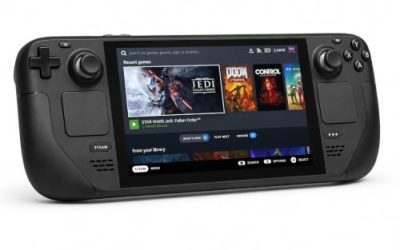
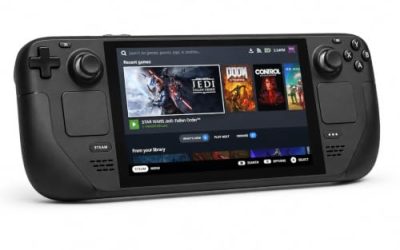
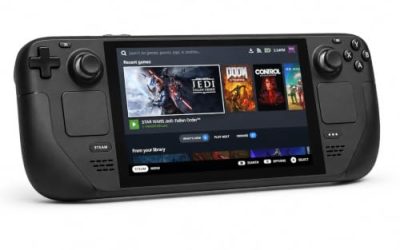
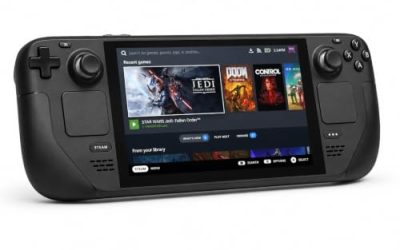
Valve Steam Deck OLED 512GB
The handheld Valve’s Playable badge was written for. The graded build is the build on sale and the default configuration is fully functional and performant; the only frictions are small text and the on-screen keyboard.
Specs
- Display: 7.4-inch HDR OLED, 1280 by 800, up to 90 Hz
- Processor: AMD Zen 2 and RDNA 2 custom APU
- Memory: 16 GB LPDDR5
- Storage: 512 GB NVMe, plus a microSD slot
- Wireless: Wi-Fi 6E and Bluetooth
- Channel note: Valve sells the Deck mainly through its own store, so Amazon listings are third-party sellers
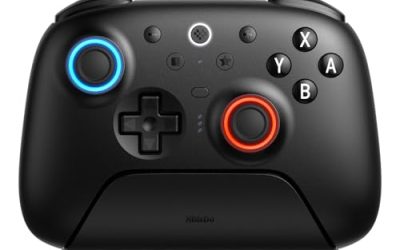
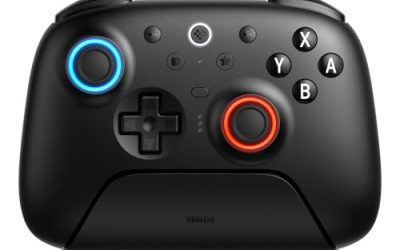
8BitDo Ultimate 2 Bluetooth Controller

A pad for the Steam Input route: any pad play here is Steam Input translating mouse and keys, and this model’s back buttons suit the camera and confirm inputs.
Specs
- Connectivity: Bluetooth wireless and USB-C wired
- Joysticks: TMR electromagnetic, anti-drift design
- Triggers: Hall effect, with mode switching
- Extras: two remappable back buttons, motion control
- In the box: charging dock included
Xbox Wireless Controller, Carbon Black
The fallback pad for couch sessions. An external pad is a guest device here: the game’s prompts will keep showing mouse and keyboard icons regardless of what is in your hands.
- Connectivity: Xbox Wireless and Bluetooth
- Port: USB-C for wired play
- Controls: hybrid D-pad, dedicated Share button
- Power: AA batteries or optional rechargeable pack
Logitech G502 HERO
The honest primary input for this game: base-building, army selection and hero ability targeting are pointer work, and eleven programmable buttons cover the production and group-selection keys a long mission repeats.
Specs
- HERO optical sensor, up to 25,600 DPI
- 11 programmable buttons
- Adjustable weight system
- Wired USB connection
- On-board memory profiles
Samsung T9 Portable SSD 2TB
The game itself is small, but a strategy library built over a decade is not. A fast USB-C drive keeps the collection together between desktop and dock; the headline speed figure needs a Gen 2×2 host port.
Specs
- Capacity: 2 TB portable SSD
- Interface: USB 3.2 Gen 2×2, USB-C connector
- Maker-rated speeds: up to 2,000 MB per second read, 1,950 MB per second write
- Features: Dynamic Thermal Guard, maker-rated drop resistance
How to choose
Choose by where you want to play the Windows build, because that is the only build either storefront sells. On a Linux desktop or laptop, the Steam copy under Proton is the straightforward route: the reporting pool is tiny, but its filings are top-tier and the frozen 2014 build makes behaviour predictable. On Steam Deck, the Playable badge was graded on the exact build on sale, making it a trustworthy badge; expect small text and occasional keyboard prompts. Choose the GOG copy only if a DRM-free installer matters more than the Deck badge and Proton integration.
Who should skip
Skip this one if you are holding out for a native Linux port: every layer of the record says none exists, and the branch has been frozen since 2014. Skip it if small text on a handheld screen is a dealbreaker. Skip it if you need a deeply evidenced Proton record before buying, since four reports at inadequate confidence is a promise-shaped gap rather than a grade. And skip it if you are expecting the Anniversary Edition’s content: this is the later standalone chapter, a separate purchase with its own campaign.
FAQ
Is SpellForce 2: Demons of the Past native on Linux?
No. The flags read Windows only, the Mac and Linux requirements fields are empty lists, both purchase packages repeat the Windows-only mask, and every depot is Windows-configured. The only Linux flag in the family belongs to the soundtrack app, which is audio-only.
Why do some listings show Demons of the Past as supporting Linux?
Because the game’s soundtrack, sold as a separate app inside its DLC array, carries all three platform flags, and scanners that read family members indiscriminately attribute them to the game. The Anniversary Edition has the same trap in its own array; the game packages never carry the flag.
How does it run on Linux through Proton?
The ProtonDB file is thin: four reports, a pending headline tier, a Platinum best-reported tier and an inadequate confidence marker, which is not a settled grade. Valve’s own Deck testing, graded on the current build with a Proton 7 runtime, found the game fully functional under its default configuration.
Is the GOG version any different for Linux players?
No. GOG’s product record reads Windows as the only supported system, matching Steam layer for layer. It removes DRM from the Windows build, but it does not add a Linux build that Steam lacks.
Final verdict
Demons of the Past is a Windows-only release wearing a borrowed Linux flag: the game is unanimous across flags, packages and depots, and the flag belongs to its soundtrack. The honest summary is a frozen 2014 build that Valve rates Playable on the exact version still on sale, a Proton file too thin to grade but friendly where it speaks, and a DRM-free GOG twin that changes the licensing, not the platform list. Buy it as a Proton title with a trustworthy Deck badge and the record supports the purchase; buy it expecting a native port and every layer says otherwise.
Product and ASIN Reference
| Product | ASIN |
|---|---|
| Valve Steam Deck OLED 512GB | B0CQ3RWQQZ |
| 8BitDo Ultimate 2 Bluetooth Controller | B0F194QFT2 |
| Xbox Wireless Controller, Carbon Black | B08DF248LD |
| Logitech G502 HERO | B07GBZ4Q68 |
| Samsung T9 Portable SSD 2TB | B0CHFS9K14 |