Commander: The Great War is The Lordz Games Studio’s turn-based hex wargame of the First World War, published by Slitherine Ltd. It first shipped in November 2012 and reached Steam on 25 July 2014, carrying a grand campaign from the opening offensives to the collapse of the Central Powers, plus scenarios and emailed-turn multiplayer. This article reads only what the game’s own records say about Linux.


The short version is one-sided at every layer that describes delivered software. Steam sells a Windows game and nothing else, and no second storefront offers another build. The interest sits in the margins: a thin ProtonDB file whose reports agree on one specific fault, a font fix that decides whether the game survives its intro movie, and a Deck verdict that reads Unsupported even though its paperwork is completely current.
As an Amazon Associate, we earn from qualifying purchases.
Quick answer
No. Commander: The Great War has no native Linux build: Steam’s flags, its single purchase package and its only content depot are all Windows-only, and no GOG edition exists. The desktop route is Proton, where ProtonDB rates the game Gold across three reports once a documented font fix is applied. Valve rates the Steam Deck Unsupported.
The record, layer by layer
Start with the flags. Steam’s record for this app reads windows true, mac false, linux false, and the developer and publisher fields name The Lordz Games Studio and Slitherine Ltd. The categories are Single-player, Multi-player, Cross-Platform Multiplayer and Family Sharing. There is no controller support entry, no DRM notice and no third-party account notice; that last absence is worth stating precisely, because many Slitherine and Matrix titles carry a PBEM++ account notice for their play-by-email multiplayer, and this one carries none.
The purchase layer agrees, and the purchase layer is decisive. Steam sells exactly one package for this game, and its platform mask repeats the flags exactly: windows true, mac false, linux false. The package grants the base app alone, so a licence bought today delivers the Windows build and nothing else. No second edition or bundle variant exists whose mask could read differently.
The requirements fields close the same door. The Windows tab is genuinely populated with period hardware: a Pentium 4 class processor, 2 GB of memory, a graphics card with OpenGL 1.3 support in the GeForce FX or Radeon R300 class, and 2 GB of storage. The Mac and Linux requirements fields are empty lists outright. There is no Linux tab in any form, and no leftover text suggesting a port was ever specced.
The depot table is the shortest in this series of checks. SteamDB lists exactly one content depot, configured for Windows, holding 832.93 MiB. There is no Linux depot of any size, nothing emptied after a withdrawn port and nothing stranded under a misleading name. The redistributables behind it are all Windows components: the Visual C++ 2012 runtime, the DirectX June 2010 package and OpenAL. The icon set registers no Linux client icon, so not even a leftover asset hints that a Linux build was ever staged.
One app, no family around it
This record also has no family to hide an answer in. The base record exposes no downloadable-content field at all, and SteamDB’s listing associates no add-on apps with it: no expansions, no scenario packs, no soundtrack app whose flags could dissent.
Anti-cheat is a three-source silence, reported here as exactly that. Steam names no anti-cheat system and carries no DRM notice. SteamDB’s detection finds only the Lua, OpenAL and SDL software development kits, an engine scripting layer, an audio library and a platform toolkit, not protection software. The AreWeAntiCheatYet database, checked in full, carries no entry for this app, and its multiplayer runs on emailed turns rather than a protected live service.
Proton: three reports and one missing font
ProtonDB’s summary for this app is fully readable, and it is thin: a Gold headline tier, a Platinum best-reported tier and a Gold trending tier, drawn from just three reports at low confidence. The page also heads its requirements block with the words “Natively Supports:”, a template label Steam’s record contradicts at every layer. The article follows Steam; the same page’s own report file grades the game as a Proton title.
What the three reports agree on is unusually concrete. Two of them, filed years apart on different Proton generations, describe the same failure: the game crashes immediately after the intro movie. Both trace it to missing Windows fonts. The game’s log names the absent file, and the fix is to supply the fonts it asks for, in particular the Impact, Lucida Console and Verdana typefaces, either through the system font folder or by copying them into the fonts folder inside the game’s own data directory. With the fonts present, both filings run the game, and one rates the online multiplayer as Excellent. The third report, the oldest, records the intro playing and the game crashing afterwards with no fix attempted, which reads less like a contradiction than the same fault met before its cause was written down.
The Gold headline therefore rests on a small sample, and every successful filing needed the same manual step, so this is not an install-and-play file. But the fault is singular, documented twice, cheap to remedy, and no report describes a second problem behind it. On a desktop or laptop, the expectation is a short detour through a fonts folder and then a working game.
The Deck sheet: Unsupported, and completely current
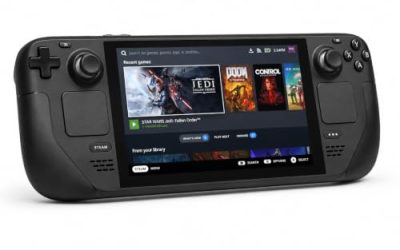
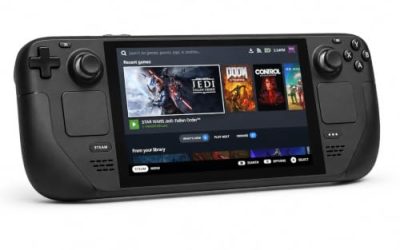
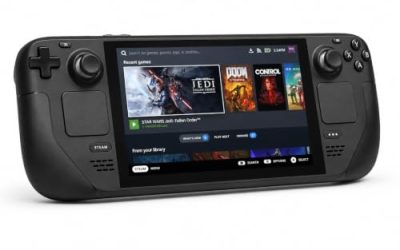
Valve’s own compatibility endpoint returned garbled data on repeated reads this session, so the Deck verdict here was read through SteamDB’s republication of Valve’s sheet. The sheet records the category as Unsupported, with SteamOS rated Unsupported as well, and a single test result stating that SteamOS does not support the game. Its recommended runtime is a release candidate build of Proton 9, and its supported input class is listed simply as other, matching a record that lists no controller support at all.
What makes this Unsupported verdict stronger than most is its paperwork. Valve’s test is dated 16 April 2024 and it graded build 1284413. SteamDB’s branch table shows the public branch still sitting on that build, where it has rested since August 2016; the beta branch holds the same build. The test graded exactly the build a buyer downloads today, so the verdict cannot be dismissed as stale.
There is no second storefront to soften any of this. GOG was checked directly rather than by search: the natural product address for the game redirects to GOG’s general catalogue, its catalogue records return only an unrelated near-name from a different series, and no product page for this title exists there. Steam’s Windows build is the only PC copy on sale.
Gear for a desktop wargame
Because the Deck sheet reads Unsupported, the picks below are framed for the desktop, where the Proton route actually runs. The game lists no controller support, so the two pads are wider-library picks rather than tools this title will ever recognise natively.
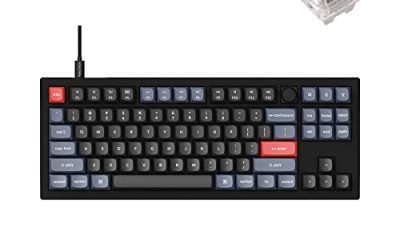
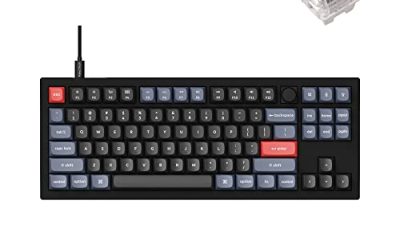
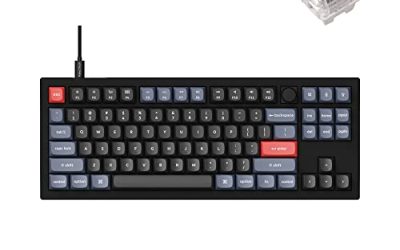
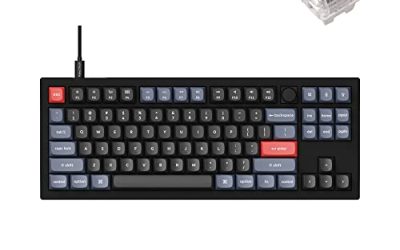
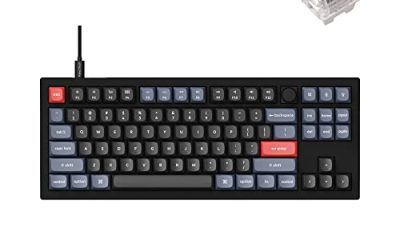
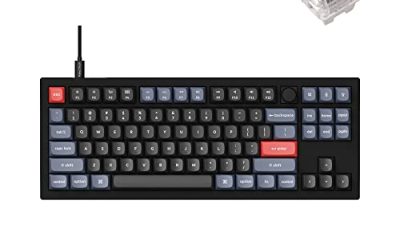
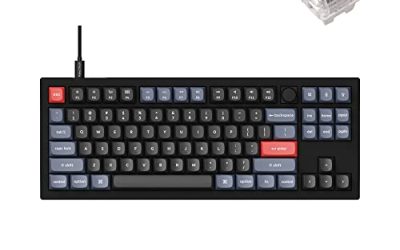
Keychron V3
The keyboard pick for desktop sessions: a tenkeyless board with QMK and VIA support lets you remap keys at the keyboard level, across every Linux install you plug it into.
Specs
- Tenkeyless layout with rotary knob
- QMK and VIA remapping support
- Hot-swappable K Pro Brown switches
- Wired USB-C connection
- Maker-rated 1,000 Hz polling
Logitech G502 HERO
A turn-based map game lives under the mouse: selecting stacks, issuing orders and reading a front line are pointer work from the first turn to the last. A precise wired sensor and programmable buttons for end-turn and menu commands are the natural fit.
Specs
- HERO optical sensor, up to 25,600 DPI
- 11 programmable buttons
- Adjustable weight system
- Wired USB connection
- On-board memory profiles
8BitDo Ultimate 2 Bluetooth Controller

The pad for the rest of the shelf. This game will never ask for it, since its record lists no controller support, but a Linux desktop library is rarely one wargame deep.
Specs
- Connectivity: Bluetooth wireless and USB-C wired
- Joysticks: TMR electromagnetic, anti-drift design
- Triggers: Hall effect, with mode switching
- Extras: two remappable back buttons, motion control
- In the box: charging dock included
Xbox Wireless Controller, Carbon Black

The safest guest pad in PC gaming: Steam Input support is universal, the glyphs match what most games display, and it pairs over Bluetooth or its own wireless standard.
- Connectivity: Xbox Wireless and Bluetooth
- Port: USB-C for wired play
- Controls: hybrid D-pad, dedicated Share button
- Power: AA batteries or optional rechargeable pack
Samsung T9 Portable SSD 2TB

For moving a Linux game library between machines, or keeping an offline backup of installers, a fast USB-C drive is the simple answer. The headline figure needs a Gen 2×2 host port; on a lesser port the drive runs at that ceiling.
Specs
- Capacity: 2 TB portable SSD
- Interface: USB 3.2 Gen 2×2, USB-C connector
- Maker-rated speeds: up to 2,000 MB per second read, 1,950 MB per second write
- Features: Dynamic Thermal Guard, maker-rated drop resistance
How to choose
Choose the Steam copy, because it is the only PC edition on sale anywhere. Install it under Proton on a desktop or laptop, and before the first long session, do the one piece of preparation the report file documents: make sure the Impact, Lucida Console and Verdana fonts are available to the game, either installed system-wide or copied into the fonts folder inside its data directory. Leave the compatibility tool at its default first; the successful filings span several Proton generations, suggesting the font, not the Proton version, is the variable that matters. Treat the Steam Deck as out of scope: the official sheet says Unsupported, and unusually for a game of this age, that sheet is recent and graded on the build still on sale.
Who should skip
Skip this one if the Steam Deck is your only Linux machine, because Valve’s verdict is Unsupported and no tested workaround is on record for the handheld. Skip it if you want a native build on principle: no layer of the record offers one and no other storefront sells an alternative. Skip it if a three-report compatibility file feels too thin to buy on, or if copying font files before a first campaign puts you off. And skip it if you want controller-first play, because the record lists no controller support at all.
FAQ
Is Commander: The Great War native on Linux?
No. Steam’s flags read Windows only, the single purchase package repeats that mask, the Linux requirements field is an empty list, and SteamDB lists one Windows content depot with no Linux depot behind it.
Why does the game crash after the intro movie under Proton?
ProtonDB’s reports trace the crash to missing Windows fonts. The game’s log names the absent file, and supplying the Impact, Lucida Console and Verdana typefaces, system-wide or inside the game’s fonts folder, is the documented fix.
Why does ProtonDB say Natively Supports?
That line is a heading from the site’s page template, contradicted by Steam’s record at every layer. The same page’s report file grades the game as a Proton title, which is the part the evidence supports.
Can I play it on Steam Deck?
Valve rates the game Unsupported, and the April 2024 test behind that verdict graded the same build the public branch still ships, so the answer on record is no.
Final verdict
Commander: The Great War on Linux is a Proton story with a footnote. The native question is closed at every layer: flags, package, requirements fields and a lone Windows depot all agree, and GOG sells no edition. The Proton file is thin at three reports but coherent, a Gold headline whose successful filings share one documented font fix. The Deck answer is the firmest of the three: Unsupported, recently tested, graded on the build still on sale. Buy the Steam copy for a Linux desktop and apply the font fix first; look elsewhere if the handheld is the plan.
Product and ASIN Reference
| Product | ASIN |
|---|---|
| Keychron V3 | B0B2DMMMG2 |
| Logitech G502 HERO | B07GBZ4Q68 |
| 8BitDo Ultimate 2 Bluetooth Controller | B0F194QFT2 |
| Xbox Wireless Controller, Carbon Black | B08DF248LD |
| Samsung T9 Portable SSD 2TB | B0CHFS9K14 |