For the Glory is the 2009 grand strategy game built by Crystal Empire Games, the team behind the AGCEEP mod, and published by Paradox Interactive. It takes the Europa Universalis II formula as its base and extends it: a world map running from 1399 to 1836, more than 400 playable countries and over 10,000 historical events, with a modernised interface layered over the older engine. For players who prefer that generation of the series it remains the definitive edition of it. This article reads its Steam record: what a purchase delivers, what the compatibility files say, and what Valve’s Deck sheet records.
The platform answer itself is one-sided, and the interesting evidence sits around it. Steam’s record is Windows-only at every layer a buyer can check, yet its ProtonDB page claims native support in a heading, its Proton tier is Platinum on just three ageing reports, and Valve has published a Verified Deck badge for a mouse-driven game with no controller support on record.
As an Amazon Associate, we earn from qualifying purchases.
Quick answer
No. For the Glory is not native to Linux: Steam’s flags, its single purchase package and its only depot are all Windows-only, and no Linux build exists on any layer. The route in is Proton, where three reports give a Platinum tier at low confidence, and Valve rates the game Verified on Steam Deck. GOG sells the same Windows build.
The record, layer by layer
Start with the layer that decides what a purchase delivers. Steam sells exactly one package for this game, package 2458, and on packagedetails it reads windows true, mac false, linux false, granting the base app alone. The app-level platform flags repeat the same mask. No second edition or platform variant sits behind it: the Windows build is the only build this record sells.
The requirements fields agree. The Windows minimum is genuinely populated with period hardware, down to a Pentium II processor, 256 MB of memory and a gigabyte of drive space. The Mac and Linux fields are empty lists outright, not empty shells, which rules out a port sold through a different package.
The depot layer closes the question. SteamDB lists exactly one content depot, depot 42811, holding 501.47 MiB on disk with no operating system split. There is no Linux depot, emptied or stranded, and the icon set has no Linux client icon among its entries. The public branch sits on build 20376024, built in October 2025.
The family sweep is the shortest in this cluster. The base record exposes no DLC field at all, and SteamDB associates no add-on apps with the game, so the family size is zero: no expansions sold as separate apps, no soundtrack app, and therefore no all-true soundtrack trap. The single package grants the whole game, folded into one app since 2009.
Anti-cheat is a three-way silence, presented here as exactly that rather than as a ruling. Steam names none: no anti-cheat category, no DRM notice and no third-party account notice on the record. SteamDB’s detection flags no anti-cheat technology for the app. The AreWeAntiCheatYet database, checked in full, carries no entry for this game. The one legacy artefact present, a registry-based CD key registration from the retail era, is not an anti-cheat system.
A Platinum tier resting on three reports
ProtonDB’s summary for this app reads Platinum on every tier it publishes: headline, best-reported and trending. That sounds conclusive until the rest of the summary is read alongside it. The file holds three reports in total, the confidence rating is low, and every filing is six to seven years old. The honest reading of this full summary is that the Windows build has run well under Proton whenever anyone has filed, on a sample too small and too old to be treated as settled.
The page also carries the familiar stray heading. Its requirements block is headed with a claim of native support, a template label that appears across the catalogue. Steam’s record contradicts it at the flag, package, field and depot layers simultaneously, so this article follows Steam: the heading is a page artefact, and the tier beside it grades the Windows build under Proton.
The report texture is unusually consistent for such a thin file. The oldest filing, graded Gold on a Proton 4 series build, found the game crashing the moment a campaign or tutorial started; disabling the Steam Overlay, and the desktop game theatre setting alongside it, made both run normally. A later filing on Proton 5.13 repeats the same instruction: disable the overlay, then it works. The third reports Platinum with no issues at all, out of the box. Together they offer one practical fix and no evidence of deeper breakage.
Verified on Deck, with fine print
Valve’s own compatibility endpoint returned garbled and redirected responses on repeated reads for this app, so the verdict was read through ProtonDB’s republication of Valve’s Deck status: Verified. No test date and no tested build were readable through that route, and the public branch has been rebuilt as recently as October 2025, so the badge is presented as Valve’s published verdict without claiming it covers today’s build.
The second piece of fine print is input. The Steam record lists no controller support field at all, unsurprising for a 2009 map-and-menus strategy title designed around a mouse. The Verified badge therefore rests on Steam Input’s translation layer: on the handheld that means trackpads standing in for the pointer. Pointer play, not pad play, is what the badge certifies.
The GOG copy is the same build
GOG sells an edition of this game, and the ruling rests on the live product page rather than on any search result: the natural product address resolves, and the page is identity-verified on title, on the Crystal Empire Games and Paradox Interactive company line, and on the November 2009 release date. Its compatibility line reads Windows only. GOG’s own embed search returned no result for the game at all, the known blind spot in that endpoint, not relied on here; the page itself is the evidence.
In practice the GOG copy is the same Windows build without the Steam client attached, so on Linux it runs through Proton and inherits the same three-report file and the same overlay note. It is an alternative storefront, not an alternative platform.
Gear that fits the record
The record points at a short list: the handheld whose badge this article graded, two pads for docked play through Steam Input, a precise mouse, and fast storage for a moving library.
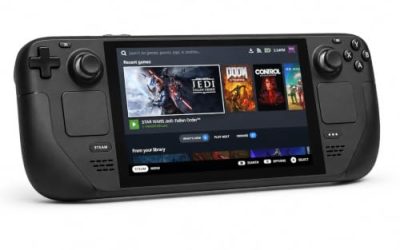
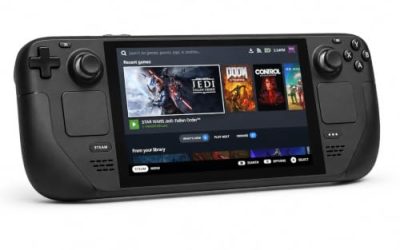
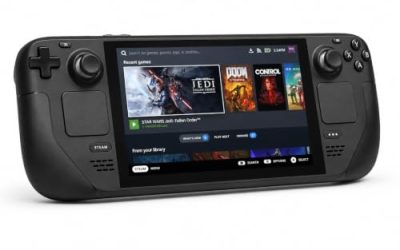
Valve Steam Deck OLED 512GB

The handheld the Verified badge was written for. Its hardware dwarfs the game’s requirements, and play on the device is trackpad pointer work, which suits a map-and-menus strategy game better than most genres.
Specs
- Display: 7.4-inch HDR OLED, 1280 by 800, up to 90 Hz
- Processor: AMD Zen 2 and RDNA 2 custom APU
- Memory: 16 GB LPDDR5
- Storage: 512 GB NVMe, plus a microSD slot
- Wireless: Wi-Fi 6E and Bluetooth
- Channel note: Valve sells the Deck mainly through its own store, so Amazon listings are third-party sellers
8BitDo Ultimate 2 Bluetooth Controller
The docked-play pad. The record claims no controller support for this game, so any pad works purely as a Steam Input device; this one adds back buttons that map well to menu shortcuts.
Specs
- Connectivity: Bluetooth wireless and USB-C wired
- Joysticks: TMR electromagnetic, anti-drift design
- Triggers: Hall effect, with mode switching
- Extras: two remappable back buttons, motion control
- In the box: charging dock included
Xbox Wireless Controller, Carbon Black
The safest guest pad: Steam Input support is universal and it pairs over Bluetooth or its own wireless standard. Here it is a docked extra, not a primary input.
- Connectivity: Xbox Wireless and Bluetooth
- Port: USB-C for wired play
- Controls: hybrid D-pad, dedicated Share button
- Power: AA batteries or optional rechargeable pack
Logitech G502 HERO
The primary input pick for this game. For the Glory is driven by map clicks, ledger screens and event dialogs, and a precise wired mouse turns the confirm, cancel and speed controls into single presses.
Specs
- HERO optical sensor, up to 25,600 DPI
- 11 programmable buttons
- Adjustable weight system
- Wired USB connection
- On-board memory profiles
Samsung T9 Portable SSD 2TB
For moving a Linux game library between machines, or keeping an offline backup of installers, a fast USB-C drive is the simple answer. The headline figure needs a Gen 2×2 host port; on a lesser port the drive runs at that ceiling.
Specs
- Capacity: 2 TB portable SSD
- Interface: USB 3.2 Gen 2×2, USB-C connector
- Maker-rated speeds: up to 2,000 MB per second read, 1,950 MB per second write
- Features: Dynamic Thermal Guard, maker-rated drop resistance
How to choose
Choose between the two storefronts on wrapper, not on platform, because the build underneath is identical. The Steam copy is the one the ProtonDB file and the Deck badge describe, and it is the natural buy for Deck owners. The GOG copy suits buyers who want a client-free installer; expect the same Proton behaviour and the same first fix. On any Linux machine, disable the Steam Overlay for the game before the first campaign: two of the three reports on file needed exactly that. On the Deck, launch under the Verified badge and plan on trackpad play. At a desk, put the mouse at the centre of the setup and keep a pad paired only for other games.
Who should skip
Skip this one if only a native Linux port will do: none exists on Steam, none exists on GOG, and nothing on either record suggests one is coming. Skip it if a three-report Proton file feels too thin to trust, because that is the whole file, and its evidence predates current Proton by years. Skip it if you want gamepad-first play, since the record lists no controller support and the experience is pointer-driven everywhere. And skip it if you want the modern series instead: Europa Universalis IV is a different, much larger game with its own record.
FAQ
Is For the Glory native on Linux?
No. Steam’s platform flags, its single purchase package and its only content depot are all Windows-only, and the Linux requirements field is an empty list. The GOG edition is the same Windows build. Linux play means Proton.
Why does the ProtonDB page claim native support?
The claim is a heading from the site’s page template, contradicted by Steam’s record at every layer. The tier data on the same page grades the game as a Proton title. Treat the heading as an artefact and the Platinum tier as a verdict on the Windows build under Proton.
What is the one fix the reports agree on?
Disabling the Steam Overlay. The oldest report crashed whenever a campaign or tutorial started until the overlay and the desktop game theatre setting were switched off, and a later report repeats the same instruction. The third report needed nothing.
How does it play on Steam Deck?
Valve rates the game Verified, read here through ProtonDB’s republication of the Deck status after the direct endpoint returned garbled responses. The game lists no controller support, so handheld play is trackpad pointer work under Steam Input. No test date was readable through that route, and the public branch has moved since, most recently in October 2025.
Final verdict
For the Glory on Linux is a Proton story with unusually clean edges. The native question is closed at every layer of Steam’s record and again on GOG, the family has no DLC apps to complicate the sweep, and no anti-cheat is named by any of the three sources that would carry one. What remains is a Platinum Proton tier earned by three old but consistent reports, one overlay fix worth applying first, and a Verified Deck badge for trackpad play. Buy it as a Windows build that Proton handles well, not as a port.
Product and ASIN Reference
| Product | ASIN |
|---|---|
| Valve Steam Deck OLED 512GB | B0CQ3RWQQZ |
| 8BitDo Ultimate 2 Bluetooth Controller | B0F194QFT2 |
| Xbox Wireless Controller, Carbon Black | B08DF248LD |
| Logitech G502 HERO | B07GBZ4Q68 |
| Samsung T9 Portable SSD 2TB | B0CHFS9K14 |