Coffee Talk, Toge Productions’ 2020 visual novel about running a late-night café, is a conversation game: the play happens in dialogue, between drinks mixed from clues in what each guest says. Its Linux paper trail is short at the top and misleading one layer down. Steam’s record is a clean two-platform negative, yet the game’s ProtonDB page carries a heading claiming the opposite, and that single line is what most quick searches surface.
This piece separates the records before judging any of them: Steam’s flags and fields, the depot table and the package a purchase delivers, the two add-on apps on their own records, the community file with its stray heading named as such, Valve’s Deck test sheet, and the second storefront’s compatibility data.
As an Amazon Associate, we earn from qualifying purchases.
Quick answer
No. Coffee Talk is not native on Linux: Steam’s record flags Windows and Mac only, the Linux requirements field is an empty list, and SteamDB’s depot table holds no Linux depot. The route is Proton: ProtonDB’s page rates the Windows build Platinum across 24 reports, and Valve rates the game Verified on Steam Deck under proton-stable.
The status at a glance
| Question | Answer from the record |
|---|---|
| Native Linux build | No — Steam flags read Windows and Mac only |
| Linux requirements tab | Absent — the field is an empty list |
| ProtonDB record | Platinum headline on the page, 24 reports |
| Steam Deck verdict | Verified, tested March 2023 |
| GOG edition | Exists, Windows and Mac only |
What Steam’s own record says
Steam’s appdetails record for Coffee Talk (app 914800) names Toge Productions as both developer and publisher and dates the release to 29 January 2020. The platform flags read Windows true, Mac true, Linux false. The categories include single-player, Steam Achievements, full controller support, Steam Cloud and Family Sharing.
The Linux requirements field is an empty list outright — not the empty shell, where Minimum and Recommended headings sit over blank lists; here there is no tab in any form. The two real platforms publish modest minimums: Windows 7 SP1 or newer, a 2.4 GHz processor, 2 GB of RAM, 512 MB of display memory and 600 MB of storage, with the Mac field near-identical. No third-party DRM notice appears on the record, and no external account or launcher is named.
SteamDB’s depot table closes the question the flags open. It lists exactly two game depots: 914801, the Windows content at just under 536 MiB, and 914802, the macOS content at just under 557 MiB. No Linux depot exists, so no package can deliver one. The Windows depot sits inside sub 293569, the store package a normal purchase grants, so the Windows build is exactly what buying delivers. The public branch has stood on build 12284838 since late 2023.
The family sweep: two add-ons, and both agree
The game’s record carries a DLC array of exactly two apps, both read individually. The Soundtrack OST (1231980), a music app, flags Windows and Mac true and Linux false, with the same empty-list Linux field as the game. The Artbook (1231690), with its own small depot on SteamDB’s table, reads identically.
That agreement matters because the soundtrack is where this series usually finds its trap: an audio product carrying a Linux flag that a family scan then credits to the game. Here the trap has nowhere to form. The two sequels, Episode 2: Hibiscus & Butterfly and Coffee Talk Tokyo, are separate apps with their own records; nothing about them is inherited here.
The Proton file, and the heading that overstates it
ProtonDB’s summary endpoint failed this session, returning an error page, so no best-reported tier, trending tier or confidence figure is claimed from it here. What the game’s ProtonDB page itself publishes can be read, and it is favourable: a Platinum headline across 24 reports, filed under named Proton versions from 5.0 through 10.0, on desktops and Steam Decks, with recent entries describing routine out-of-the-box runs.
The page also carries the stray-tag pattern this series keeps meeting. Its requirements block is headed with a native-support label. Steam’s record contradicts that heading on every layer: the flag is false, the field is an empty list, and no Linux depot exists for the heading to describe. Every report beneath it was filed against the Windows build under a named Proton version. This article follows Steam: the heading is a labelling quirk, not evidence of a port. The Platinum headline is the honest part of the file; the heading is not.
Three anti-cheat sources, kept separate
Steam names no anti-cheat and carries no DRM or account notice. SteamDB detects only the Unity engine and the Mono SDK. The Are We Anti-Cheat Yet dataset, all 1,167 games on its master branch, searched by name and app id, has no entry for this game. Three sources, read separately, agree.
The Steam Deck sheet
Valve rates Coffee Talk Verified on Steam Deck, its top category, and SteamOS separately Compatible. One evidence note: the verdict and paperwork were read through SteamDB’s republication of Valve’s compatibility record, the fallback route this project uses when Valve’s own endpoint misbehaves.
All four Verified checks pass: the default controller configuration is fully functional, the game shows Steam Deck controller icons, interface text is legible, and the default graphics configuration performs well, with no deductions in the configuration notes. The recommended runtime is proton-stable, the correct line for this record: the badge certifies the Windows build under Proton, and since no native build exists, Proton is the route rather than a fallback. The test paperwork dates the check to 4 March 2023, on build 10672478; the public branch now serves build 12284838, so the paperwork predates the build a purchase installs today, and the sheet joins the list worth a factual refresh. The test configuration also flags an H.264 video requirement, carried here as a record fact.
The storefront ruling
A GOG edition of Coffee Talk exists, and its own record settles what it is. GOG’s product API entry, with the page identity verified against Steam’s record (same title, same studio, same January 2020 release), lists its system compatibility as Windows true, Mac true, Linux false: the same two builds Steam sells. One process note: GOG’s search endpoints returned no product despite the live page, the known blind spot in its search surfaces, so the ruling rests on the product page and API record, never on search.
Gear that fits the record
The gear below follows the record’s shape: the handheld the badge was written for, two pads for docked and desktop play, a mouse for drink-mixing clicks, and library storage.
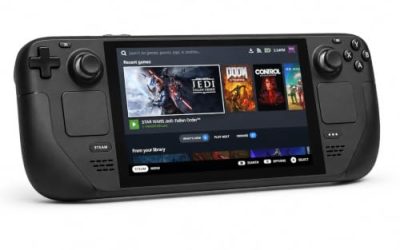
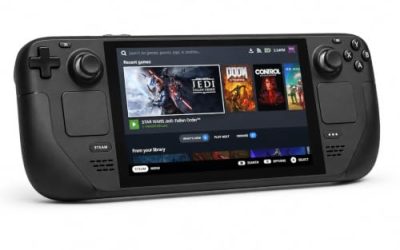
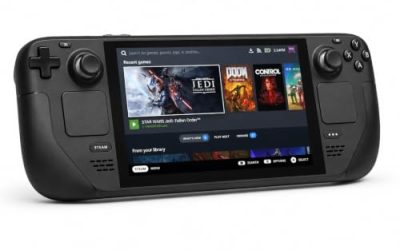
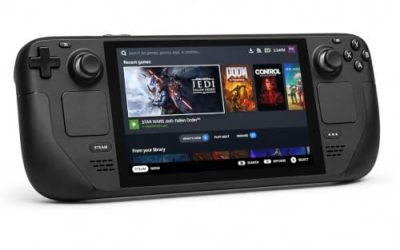
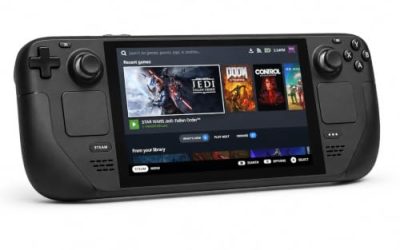
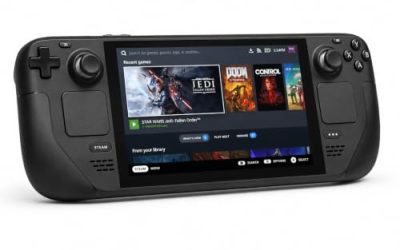
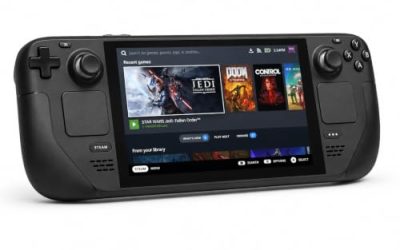
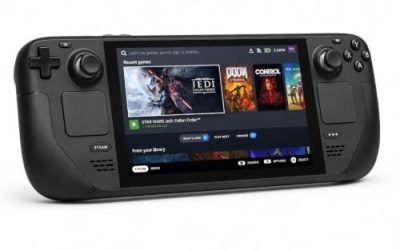
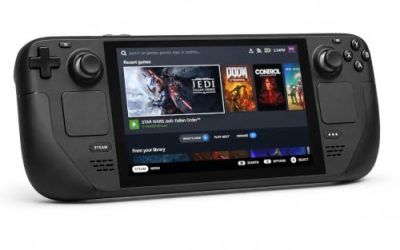
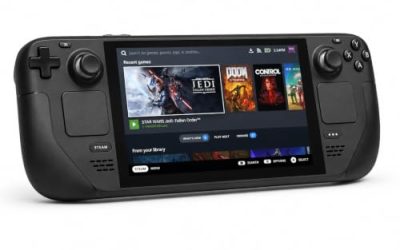
Valve Steam Deck OLED 512GB

The handheld the Verified badge was written for. The game’s published requirements are a rounding error next to the Deck’s APU, and Valve’s test sheet gives the Windows build a clean pass under proton-stable.
Specs
- Display: 7.4-inch HDR OLED, 1280 by 800, up to 90 Hz
- Processor: AMD Zen 2 and RDNA 2 custom APU
- Memory: 16 GB LPDDR5
- Storage: 512 GB NVMe, plus a microSD slot
- Wireless: Wi-Fi 6E and Bluetooth
- Channel note: Valve sells the Deck mainly through its own store, so Amazon listings are third-party sellers
8BitDo Ultimate 2 Bluetooth Controller

The docked and desktop pad pick. Steam lists full controller support, and this pad covers the couch case with modern sticks and triggers plus back buttons for menu shortcuts.
Specs
- Connectivity: Bluetooth wireless and USB-C wired
- Joysticks: TMR electromagnetic, anti-drift design
- Triggers: Hall effect, with mode switching
- Extras: two remappable back buttons, motion control
- In the box: charging dock included
Xbox Wireless Controller, Carbon Black

The safest guest pad in PC gaming: Steam Input support is universal, the glyphs match what most games display, and it pairs over Bluetooth or its own wireless standard. A dialogue-driven game asks little beyond confirm and cancel, and this pad covers both without setup.
- Connectivity: Xbox Wireless and Bluetooth
- Port: USB-C for wired play
- Controls: hybrid D-pad, dedicated Share button
- Power: AA batteries or optional rechargeable pack
Logitech G502 HERO

Coffee Talk’s play is pointing and clicking through conversations and drink orders; at a desk a precise wired mouse turns recipe checks and menu trips into single clicks. Eleven programmable buttons cover the confirm, cancel and journal inputs.
Specs
- HERO optical sensor, up to 25,600 DPI
- 11 programmable buttons
- Adjustable weight system
- Wired USB connection
- On-board memory profiles
Samsung T9 Portable SSD 2TB

For moving a Linux game library between a desktop and a laptop, or keeping an offline backup of installers, a fast USB-C drive is the simple answer. The headline figure needs a Gen 2×2 host port; on a lesser port the drive runs at that ceiling.
Specs
- Capacity: 2 TB portable SSD
- Interface: USB 3.2 Gen 2×2, USB-C connector
- Maker-rated speeds: up to 2,000 MB per second read, 1,950 MB per second write
- Features: Dynamic Thermal Guard, maker-rated drop resistance
How to choose
Choose either storefront copy on the record: Steam and GOG sell the same Windows and Mac builds, and neither sells a Linux one. On a Linux desktop or laptop, the Steam copy is the practical pick, because the Proton file and the Deck sheet both describe that build; install it, leave the compatibility tool at its default, and expect the behaviour the recent Platinum reports describe; on a Steam Deck, the Verified badge means no configuration work is expected. A pad covers the whole game; a mouse suits the desktop case, where drink mixing and recipe browsing are pointer work.
Who should skip
Skip this one if you are shopping for a native Linux visual novel: this record is Windows and Mac only, and the community page’s native-support heading does not change what the store sells. Skip it if you only buy games whose Deck paperwork matches the current build, because Valve’s test predates it. Skip it if reading is the part of games you skip: the play is carried in text, by design, and the drink mixing is a light frame around the conversations. And skip the GOG copy as a Linux plan: a fair DRM-free buy, but not a Linux edition.
FAQ
Is Coffee Talk native on Linux?
No. Steam’s record for app 914800 flags Windows and Mac only, the Linux requirements field is an empty list, and SteamDB’s depot table holds a Windows depot and a macOS depot with no Linux depot beside them. The native-support heading on the ProtonDB page is a labelling quirk the store record contradicts.
How well does Coffee Talk run under Proton?
ProtonDB’s page rates the Windows build Platinum across 24 reports, filed under Proton versions from 5.0 to 10.0 on desktops and Steam Decks, with recent entries describing out-of-the-box runs. The summary endpoint failed during this check, so no best-reported tier or confidence figure is claimed beyond the page’s headline.
Is Coffee Talk Steam Deck Verified?
Yes. Valve’s record gives the game its top category, Verified, with all four checks passing, tested in March 2023 under proton-stable. The badge certifies the Windows build under Proton, and the test predates the current branch build.
Can I buy Coffee Talk on GOG instead?
Yes, but it does not change the platform answer. GOG’s own product record lists the game for Windows and Mac only, the same two builds Steam sells, and the Steam copy is the one the Proton file and the Deck sheet describe.
Final verdict
Coffee Talk’s record is a tidy negative with one noisy neighbour. Steam flags Windows and Mac, publishes no Linux tab in any form, and ships no Linux depot; the soundtrack and artbook agree with the game instead of inflating it; GOG’s edition repeats the same shape. The only false signal anywhere is a heading on the community page, and the reports beneath it tell the true story: a Windows build running at Platinum level under Proton, with a Verified Deck badge earned the same way. Buy the Steam copy, play it under Proton, and read the heading as a quirk, not a port.
Product and ASIN Reference
| Product | ASIN |
|---|---|
| Valve Steam Deck OLED 512GB | B0CQ3RWQQZ |
| 8BitDo Ultimate 2 Bluetooth Controller | B0F194QFT2 |
| Xbox Wireless Controller, Carbon Black | B08DF248LD |
| Logitech G502 HERO | B07GBZ4Q68 |
| Samsung T9 Portable SSD 2TB | B0CHFS9K14 |