Citizen Sleeper 2: Starward Vector is the dice-driven sequel from Jump Over The Age, published by Fellow Traveller and released on 31 January 2025. The Sleeper has a ship now, a crew and contracts across the Starward Belt. For a Linux player the record looks confusing at first glance, because the game and everything attached to it point in opposite directions.
That split is what this article pulls apart. The game’s own record says one thing, while its soundtrack, its art book and a free tabletop add-on all say another, and ProtonDB’s page adds a heading that muddies the water further. Each layer is read on its own terms below.
As an Amazon Associate, we earn from qualifying purchases.
Quick answer
No. Citizen Sleeper 2: Starward Vector has no native Linux build: Steam flags Windows and Mac only, its Linux requirements tab is an empty shell, and SteamDB lists only Windows and macOS depots. The working route is Proton, where ProtonDB rates it Platinum from 13 reports, and Valve rates the game Steam Deck Playable.
What Steam’s own record says
The appdetails record for app 2442460 names the game exactly as pinned: Citizen Sleeper 2: Starward Vector, developed by Jump Over The Age, published by Fellow Traveller, released 31 January 2025, in the Adventure, Indie and RPG genres. Its platform flags read windows=true, mac=true, linux=false.
The requirements tabs tell the same story. The Windows minimum is genuinely written: Windows 10 on a 64-bit system, 4 GB of RAM, a DirectX 11 compatible GPU and 2 GB of storage. The Mac minimum is also real (Mac OS X 10.10.5 or above, 4 GB of RAM, 2 GB of video memory), though its Recommended tier is a heading over an empty list. The Linux tab is an empty shell: Minimum and Recommended headings with nothing under either. There is no DRM notice and no external-account notice on the app, and the categories include single-player, full controller support, Steam Cloud, Family Sharing and adjustable text size.
The depot layer: nothing for a package to deliver
The depot table is the next check. SteamDB lists exactly two game depots for app 2442460: depot 2442462, the Windows build at 1.59 GiB, and depot 2442461, the macOS build at 1.57 GiB. No Linux depot exists anywhere in the app; the only other depots present belong to two of the attached apps, and neither is a build of the game.
That settles the package question too. The store package a purchase grants, sub 878972, can only hand over depots that exist, and the two that exist are the Windows and macOS builds: the Linux build simply was not made. The public branch serves build 24313348, updated in July 2026, so the record is maintained, not abandoned.
The family sweep: three Linux flags, none of them the game
The game’s DLC array holds three apps, each opened on its own record. All three flag Linux true: the classic false-flag pattern in three costumes.
App 3718020 is Citizen Sleeper – Spindlejack, released in May 2025. Despite sitting in this game’s DLC array it is not game content: its own page describes a free solo tabletop role-playing game, a thank-you gift to the community. It flags all three platforms true, and its only published requirement anywhere is 2 MB of storage: its Linux flag describes a download, not a port.
App 3398420 is the Starward Vector Soundtrack, type music. It flags all three platforms true while its Mac and Linux requirement fields are empty lists outright, and its Windows field asks only for storage. An audio package carries nothing that runs, so the flag is paperwork. App 3415120 is The Sleeper’s Sketchbook, a collection of character sketches, flagging all three platforms true with storage-only requirements of 15 MB: a flag on a file collection, not a Linux version of the game. The one app here that is actually a game is the one app that flags Linux false.
Anti-cheat, from three separate sources
The anti-cheat question closes with the three sources kept separate. Steam’s record names no anti-cheat and shows no external-account requirement. SteamDB’s detected-technology list is engine and middleware plumbing only: the Unity Engine, FMOD, Mono, Resonance Audio, SteamworksNET, UnityBurst, cURL and a game development kit SDK, with no anti-cheat among them. The Are We Anti-Cheat Yet dataset, checked in full, carries no entry for this game at all. It is a single-player game, and Valve’s Deck configuration shows no internet requirement for single-player play.
The Proton file, and a heading that disagrees with Steam
ProtonDB’s summary for app 2442460 was read in full: headline Platinum, best-reported Platinum, trending Platinum, drawn from 13 reports at moderate confidence. The reports underneath describe out-of-the-box runs on the Steam Deck and on desktop distributions, filed under named Proton versions including 9.0-4, 10.0-3 and a GE-Proton build. Thirteen reports is a thin pool, but it holds no failure pattern.
The heading check produces the file’s second false signal. The game’s ProtonDB page heads its requirements block with the words Natively Supports. Steam’s record contradicts that heading on every layer: the flag is false, the tab is an empty shell and no Linux depot exists, and every report beneath the heading is filed under a Proton version, the behaviour of a Windows build being translated rather than a native build being run. The heading is a labelling error; this article follows Steam.
The Steam Deck sheet: Playable, tested before launch
Valve’s own compatibility endpoint was read directly for this article, and SteamDB’s republication of the same data agrees with it. The resolved category is Playable, not Verified. The passing items are the standard set: all functionality is accessible with the default controller configuration, the game shows Steam Deck controller icons, and the default graphics configuration performs well. The single deduction is text: Valve records that some in-game text is small and may be difficult to read, the deduction that matters most in a game built out of reading. The recommended runtime is proton-stable. SteamOS is separately rated Compatible.
Valve tested build 16680807 on 13 December 2024, before the game’s release, and the public branch now serves build 24313348. The Playable paperwork therefore predates the build a buyer installs today, so this title joins the list of Deck paperwork worth a factual refresh.
The GOG ruling
A GOG edition of this game exists. GOG’s own product record (product 1300644817, slug citizen_sleeper_2_starward_vector) names Jump Over The Age as developer and Fellow Traveller as publisher, matching Steam’s record, and its catalogue data lists the operating system as Windows alone. No Mac edition on GOG and no Linux edition, so GOG sells the same Windows build without Steam’s automatic Proton handling, and a Linux buyer there would set the game up manually.
Gear that fits the record
The gear below follows the record’s shape: a Playable rating earned under Proton.
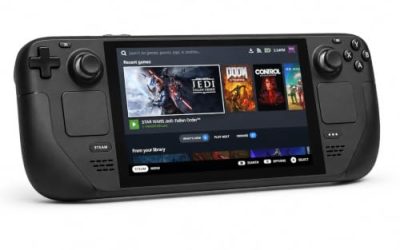
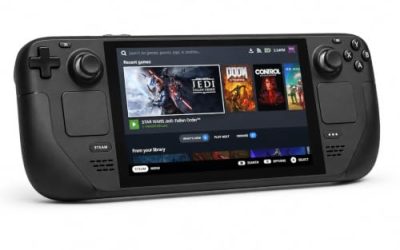
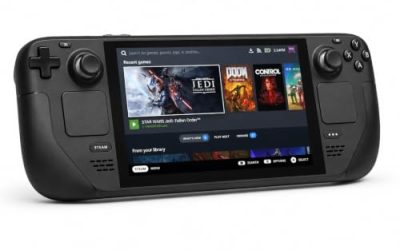
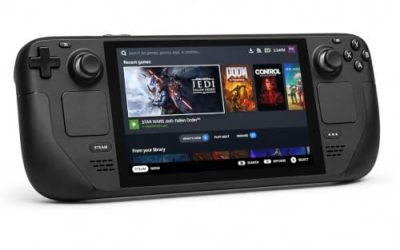
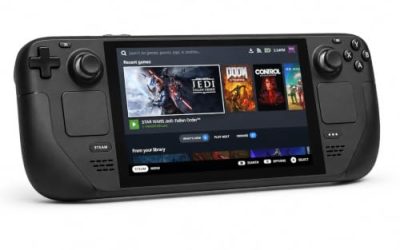
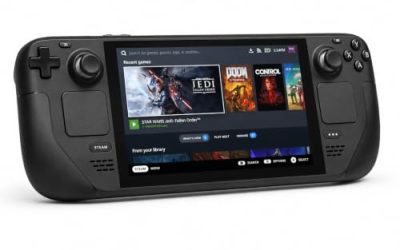
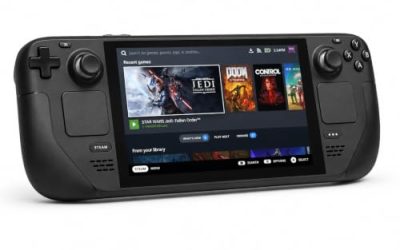
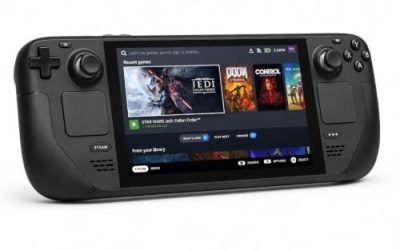
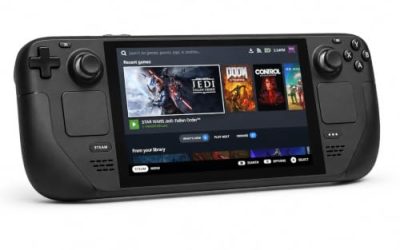
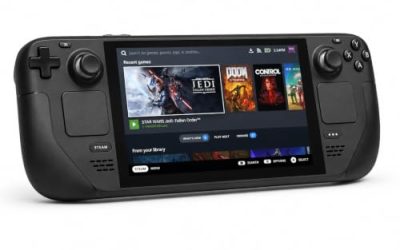
Valve Steam Deck OLED 512GB

The handheld Valve’s Playable sheet was written for. The game runs on it through proton-stable with every function accessible; the one deduction is small text, which the OLED contrast softens.
Specs
- Display: 7.4-inch HDR OLED, 1280 by 800, up to 90 Hz
- Processor: AMD Zen 2 and RDNA 2 custom APU
- Memory: 16 GB LPDDR5
- Storage: 512 GB NVMe, plus a microSD slot
- Wireless: Wi-Fi 6E and Bluetooth
- Channel note: Valve sells the Deck mainly through its own store, so Amazon listings are third-party sellers
8BitDo Ultimate 2 Bluetooth Controller

The docked and desktop pad pick. Steam lists full controller support, and this pad covers the couch case with modern sticks and triggers plus back buttons.
Specs
- Connectivity: Bluetooth wireless and USB-C wired
- Joysticks: TMR electromagnetic, anti-drift design
- Triggers: Hall effect, with mode switching
- Extras: two remappable back buttons, motion control
- In the box: charging dock included
Xbox Wireless Controller, Carbon Black

The safest guest pad in PC gaming: Steam Input support is universal, and it pairs over Bluetooth or its own wireless standard.
- Connectivity: Xbox Wireless and Bluetooth
- Port: USB-C for wired play
- Controls: hybrid D-pad, dedicated Share button
- Power: AA batteries or optional rechargeable pack
Logitech G502 HERO

Starward Vector is steered through menus, journals and dice trays; at a desk a precise wired mouse turns those screens into single clicks.
Specs
- HERO optical sensor, up to 25,600 DPI
- 11 programmable buttons
- Adjustable weight system
- Wired USB connection
- On-board memory profiles
Samsung T9 Portable SSD 2TB

For moving a Linux game library between machines, or keeping an offline backup of installers, a fast USB-C drive is the simple answer. The headline figure needs a Gen 2×2 host port; on a lesser port the drive runs at that ceiling.
Specs
- Capacity: 2 TB portable SSD
- Interface: USB 3.2 Gen 2×2, USB-C connector
- Maker-rated speeds: up to 2,000 MB per second read, 1,950 MB per second write
- Features: Dynamic Thermal Guard, maker-rated drop resistance
How to choose
Buy on Steam if you want the automatic route: Proton is configured for you, the Deck rating applies, and the Platinum file says the Windows build behaves. Choose the Steam Deck knowing the one documented caveat, and turn on the game’s adjustable text size setting before judging readability. Choose desktop Linux if text comfort is your priority, because the desktop reports in the pool are clean. Choose GOG only if a DRM-free copy matters more than automatic setup, since its edition is the same Windows build with the compatibility work left to you. And judge the platform question by the game’s record, never by its attachments: the soundtrack, sketchbook and tabletop flags are the loudest wrong answer in this file.
Who should skip
Skip this game on Linux if you buy native builds only: no native version exists on Steam or GOG, and nothing in either record suggests one is coming. Skip the Deck as your only screen if small interface text genuinely strains you, because the deduction lands on the activity this game consists of. Skip it for now if you want a Proton record proven by dozens of reports rather than a clean but thin pool of 13.
FAQ
Is Citizen Sleeper 2: Starward Vector native on Linux?
No. Steam flags the game for Windows and Mac only, its Linux requirements tab is an empty shell, and SteamDB’s depot table holds a Windows build and a macOS build with no Linux depot at all.
Why do the soundtrack and sketchbook pages show Linux support?
Because all three attached apps flag Linux true while asking only for storage space. The soundtrack is audio, the sketchbook is artwork and Spindlejack is a tabletop document; none is an executable build of the game.
How well does Starward Vector run under Proton?
ProtonDB’s summary rates it Platinum on all three tiers, from 13 reports at moderate confidence, with out-of-the-box runs reported on Deck and desktop. One caution: the site’s page heads the game as natively supported, which Steam’s record contradicts, so read the tier and ignore the heading.
Is Citizen Sleeper 2 good on Steam Deck?
Valve rates it Playable. Every function is accessible with the default controller configuration and the default graphics perform well; the one deduction is small in-game text, and the adjustable text size setting is the documented mitigation. The test ran on a pre-release build, so the sheet is older than the build on sale today.
Final verdict
Citizen Sleeper 2: Starward Vector is not a native Linux game. The flag is false, the tab is an empty shell, the depot table holds two builds and neither is for Linux, and GOG’s edition is Windows only. Against that, the Proton file is genuinely good: Platinum across all three tiers, a clean if thin report pool, and a Deck Playable rating whose only deduction is text size. The two false signals, the family’s three Linux flags and ProtonDB’s native heading, are worth knowing about precisely because everything else agrees. Buy it as a Proton game, not as a native one.
Product and ASIN Reference
| Product | ASIN |
|---|---|
| Valve Steam Deck OLED 512GB | B0CQ3RWQQZ |
| 8BitDo Ultimate 2 Bluetooth Controller | B0F194QFT2 |
| Xbox Wireless Controller, Carbon Black | B08DF248LD |
| Logitech G502 HERO | B07GBZ4Q68 |
| Samsung T9 Portable SSD 2TB | B0CHFS9K14 |