Kine is a 3D puzzle game about three musical machines — a trombone, a drum and an accordion on little legs — tipping, sliding and stacking through more than a hundred stages on the road to forming a band. Chump Squad released it on 19 October 2020, and its Steam record is a small one: single-player, full controller support, one content depot. Small records should be easy to read, and this one is, provided you read the game’s own pages rather than its family’s.
The Linux paper trail around Kine is a tour of the false signals this series has catalogued, arranged around a plain negative. The game flags Windows only. Its soundtrack flags all three platforms over an empty field. Its demo publishes a Linux tab that is a hollow form. And the app configuration still carries a Linux client icon, sharing its file with the Mac icon, for a build that does not exist. This article separates those layers and rules on each one.
As an Amazon Associate, we earn from qualifying purchases.
Quick answer
No. Kine is not native on Linux. Steam’s record for app 824570 flags Windows only, the Linux requirements field is an empty list, and the depot table holds a single Windows content depot. The only Linux flag in the family sits on the soundtrack, an audio package with no executable. Linux play means the Windows build under Proton.
| Question | What the record says |
|---|---|
| Native Linux build | No — Windows flag only |
| Linux depot | None — one Windows depot |
| Family Linux flags | Soundtrack only, empty field |
| ProtonDB record | Unreadable this session |
| Steam Deck verdict | Unreadable this session |
| GOG edition | None exists |
What Steam’s own record says
The store record names the game Kine, developed and published by Chump Squad, released 19 October 2020. Its platform flags read windows true, mac false, linux false. The one written specification is the Windows minimum: Windows 7 in its 64-bit form, a dual-core processor at 2.5 GHz or higher, 4 GB of memory, a DirectX 11 class video card, and 370 MB of storage. The Linux requirements field is an empty list outright — not headings over nothing, not copied Windows text, just no content at all. The Mac field is the same empty list, matching its false flag.
The categories are single-player, Steam Achievements, full controller support, Steam Cloud and Family Sharing. There is no DRM notice and no external-account notice, so nothing adds a launcher or account layer over the download. The verdict is settled one layer down, at the depot table.
One depot, one platform
SteamDB lists exactly one content depot: depot 824571, named simply Kine Content, at 348.57 MiB on disk. It carries no operating-system split, because there is nothing to split — the Windows build is the only build. The store package a purchase delivers, package 253153, grants the game app alone and flags windows true, mac false, linux false. Every delivery layer agrees: buy Kine and the Windows build is what arrives.
The public branch has not moved in years: its current build, 6124675, dates to January 2021, and the testing branch serves the same build. This is a finished, frozen record, not a port in progress.
One fossil deserves naming. The app’s asset list includes a LinuxClientIcon entry, but its file hash is identical to the Mac client icon’s, and no Linux depot, flag or field stands behind it — leftover plumbing of the same species this series met on Shadows of Doubt. An icon is not a build.
The family sweep: a soundtrack flag and a hollow demo tab
The game’s full DLC array contains exactly one app: app 1422920, the Kine Soundtrack, type music, released the same day as the game. It flags all three platforms true — two more than the game delivers. Its Linux requirements field is an empty list outright, and an audio package has no executable to port. This is the soundtrack trap in textbook form: a bare three-platform flag on the one app in the family that cannot act on it. It counts as evidence of nothing.
The demo is a separate app, 1325240, judged on its own record. It agrees on the flags — windows true, mac and linux false — but wears a different paperwork shape: its Linux requirements field is an empty shell, Minimum and Recommended headings over empty lists. So the family offers every failure shape side by side: no field content, headings over nothing, and a true flag with nothing behind it. Three shapes, one answer.
Anti-cheat: three empty files
Kine is single-player, so this section is short, but the three sources stay separate. Steam names no anti-cheat and publishes no DRM or account notices. SteamDB’s detected technologies are engine and middleware only — Unreal Engine, the NVIDIA APEX, PhysX and NvCloth SDKs, Ogg and Vorbis. The Are We Anti-Cheat Yet dataset, all 1,167 games on its master branch, carries no entry for Kine by name or app id. Nothing raises a compatibility-layer concern.
ProtonDB: an unreadable file this session
ProtonDB could not be read for this title in this session, and the article claims nothing from it. The summary endpoint returned an error page on repeated attempts, and the game’s page returned only its empty shell — the same session-wide failure that has hit several titles in this run. No headline tier, report count or confidence figure is claimed, and the classification-heading check is recorded as not completed: whether the page carries the stray native-support heading this series keeps meeting is unresolved for Kine, and nothing here rests on it.
Practically, the community grade for the Windows build under Proton is, for now, a blank — anyone who wants one before buying will have to read ProtonDB in a healthier session than this one.
Steam Deck: no sheet to read
Valve’s compatibility record for Kine could not be read this session either. The Deck endpoint returned empty responses on repeated attempts, and the republication route this project falls back on carried no compatibility block for this app. So this article claims no Deck verdict — not Verified, not Playable, not Unsupported — and the gear below uses the standard set on that basis, the same treatment this series gave Signs of the Sojourner when its sheet went unreadable.
Two things can still be said from records that did answer. The game’s categories promise full controller support, the input shape the Deck’s controls mirror. And the build a Deck would install is the frozen January 2021 build, so the software has not changed underneath any paperwork since.
The GOG question
No GOG edition of Kine exists. The title’s natural product address on GOG resolves to the store’s general catalogue rather than to a product page, and GOG’s catalogue search returns no product for the game. No DRM-free route exists; the Steam copy is the only PC edition.
Gear for a Windows-only puzzler
The gear below follows the record’s shape: a handheld, two pads for docked and desktop play, a mouse for pointer-led sessions, and library storage.
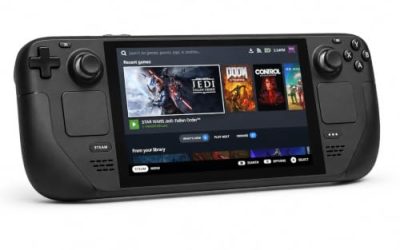
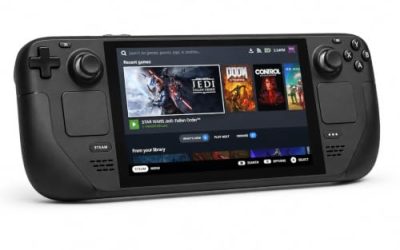
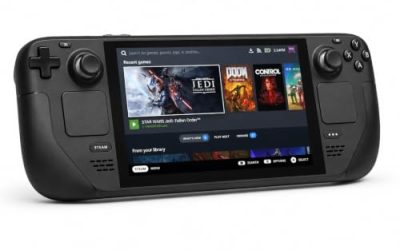
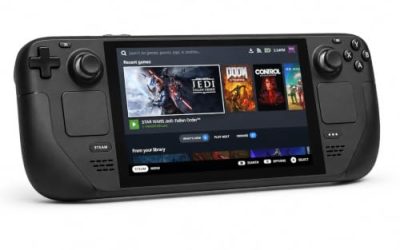
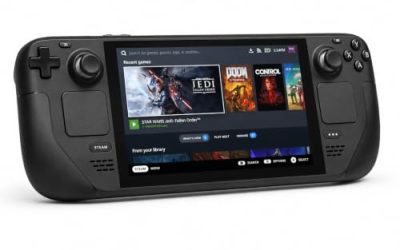
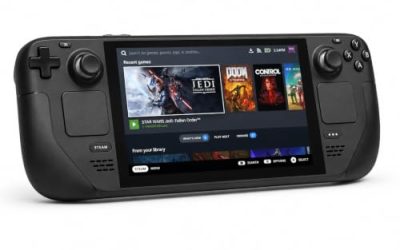
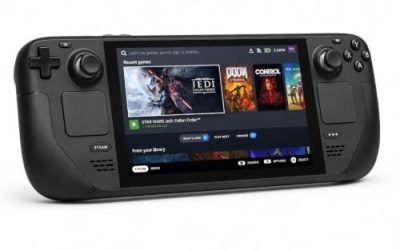
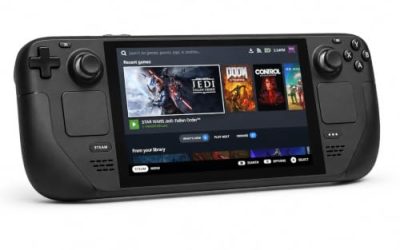
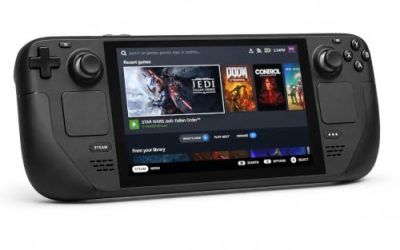
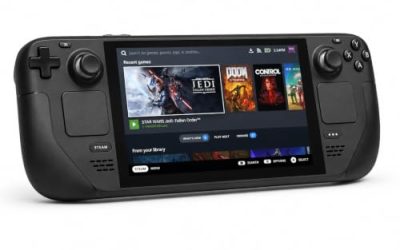
Valve Steam Deck OLED 512GB

The handheld this record cannot grade: Valve’s sheet was unreadable this session, so no badge is claimed for it here. It remains the natural Proton handheld for a game of this size, built around the game’s full controller support.
Specs
- Display: 7.4-inch HDR OLED, 1280 by 800, up to 90 Hz
- Processor: AMD Zen 2 and RDNA 2 custom APU
- Memory: 16 GB LPDDR5
- Storage: 512 GB NVMe, plus a microSD slot
- Wireless: Wi-Fi 6E and Bluetooth
- Channel note: Valve sells the Deck mainly through its own store, so Amazon listings are third-party sellers
8BitDo Ultimate 2 Bluetooth Controller

The docked and desktop pad pick. Steam lists full controller support for the game, and this pad covers the couch case with modern sticks and triggers plus back buttons for menu shortcuts.
Specs
- Connectivity: Bluetooth wireless and USB-C wired
- Joysticks: TMR electromagnetic, anti-drift design
- Triggers: Hall effect, with mode switching
- Extras: two remappable back buttons, motion control
- In the box: charging dock included
Xbox Wireless Controller, Carbon Black

The safest guest pad in PC gaming: Steam Input support is universal, the glyphs match what most games display, and it pairs over Bluetooth or its own wireless standard.
- Connectivity: Xbox Wireless and Bluetooth
- Port: USB-C for wired play
- Controls: hybrid D-pad, dedicated Share button
- Power: AA batteries or optional rechargeable pack
Logitech G502 HERO

Kine’s stages are spatial puzzles worked at a deliberate pace, and at a desk a precise wired mouse suits pointer-led sessions. Eleven programmable buttons cover the confirm, cancel and camera inputs a long session repeats.
Specs
- HERO optical sensor, up to 25,600 DPI
- 11 programmable buttons
- Adjustable weight system
- Wired USB connection
- On-board memory profiles
Samsung T9 Portable SSD 2TB

For moving a Linux game library between a desktop and a laptop, or keeping an offline backup of installers, a fast USB-C drive is the simple answer. The headline figure needs a Gen 2×2 host port; on a lesser port the drive runs at that ceiling instead.
Specs
- Capacity: 2 TB portable SSD
- Interface: USB 3.2 Gen 2×2, USB-C connector
- Maker-rated speeds: up to 2,000 MB per second read, 1,950 MB per second write
- Features: Dynamic Thermal Guard, maker-rated drop resistance
How to choose
Choose the Steam copy, because it is the only PC edition on sale. On a Linux desktop or laptop, install it and leave the compatibility tool at its default: the record promises a small, finished Windows build with full controller support and no anti-cheat, account or DRM layer in the way — the profile Proton handles most routinely. Read the soundtrack’s flag as packaging on an audio app, and do not let it, the demo’s hollow tab or the leftover icon argue you into expecting a port.
Who should skip
Skip this one if you are shopping for a native Linux puzzler: the record is Windows only at every layer that delivers software. Skip it if you only buy games with a readable Deck sheet, because Valve’s file could not be read in this session. Skip it if you want a DRM-free installer, because no GOG edition exists. And skip the soundtrack as a Linux signal entirely: it is an album, and its flag describes nothing installable.
FAQ
Is Kine native on Linux?
No. Steam’s record for app 824570 flags Windows only, the Linux requirements field is an empty list, and SteamDB’s depot table holds a single Windows content depot. The store package flags Windows only too, so a purchase delivers the Windows build.
Why does the Kine soundtrack claim Linux support?
Because soundtrack apps commonly carry a three-platform flag while publishing no requirements at all. The Kine Soundtrack flags Windows, Mac and Linux true over an empty Linux field, and as an audio package it has no executable to port. The flag is packaging, not a build.
Can I play Kine on a Steam Deck?
Valve’s compatibility sheet could not be read in this session — the endpoint returned empty responses and the fallback route carried no block — so no verdict is claimed here. What the game’s record promises is full controller support and a small, unchanged Windows build from January 2021, the profile the Deck’s Proton layer is built around.
Is the Kine demo a Linux version?
No. The demo is a separate app with the same flags as the game — Windows true, Mac and Linux false. Its Linux tab is an empty shell, headings over empty lists: a different paperwork shape from the game’s empty list, but the same answer.
Final verdict
Kine’s record is a plain negative wearing three disguises: a soundtrack that flags Linux over an empty field, a demo that prints Linux headings over nothing, and a client icon left behind for a build never delivered. Strip those away and the purchase is simple: a finished Windows puzzler from 2020, played on Linux through Proton, with no anti-cheat or account layer complicating the route — and with its community and Deck files, in this session at least, still unread.
Product and ASIN Reference
| Product | ASIN |
|---|---|
| Valve Steam Deck OLED 512GB | B0CQ3RWQQZ |
| 8BitDo Ultimate 2 Bluetooth Controller | B0F194QFT2 |
| Xbox Wireless Controller, Carbon Black | B08DF248LD |
| Logitech G502 HERO | B07GBZ4Q68 |
| Samsung T9 Portable SSD 2TB | B0CHFS9K14 |