SpeedRunners is the four-player competitive platformer from DoubleDutch Games, published by tinyBuild and released on 19 April 2016, a side-scrolling racer won by leaving every rival behind the edge of the screen. It is built around online PvP and cross-platform multiplayer, with a level editor and local shared-screen racing alongside.
Because the game’s heart is online competition, the Linux question has two halves: whether a native build exists at all, and whether anything in the anti-cheat layer stands between a Linux player and the online modes. This article works through both halves from the primary records only: Steam’s app record, the depot and package data, the downloadable content read app by app, the anti-cheat sources, the ProtonDB file, Valve’s Deck sheet and the GOG catalogue.
As an Amazon Associate, we earn from qualifying purchases.
Quick answer
Yes. SpeedRunners ships a real native Linux build: Steam flags Linux true with written Debian and SteamOS requirements, SteamDB lists a full-size Linux depot inside the store package a purchase delivers, and Valve’s Deck sheet names the native runtime. Its three character packs agree, and no anti-cheat is named by any source.
The record, layer by layer
Steam’s app record for app 207140 is the cleanest kind of native paperwork. The platform flags read windows true, mac true and linux true, and the Linux requirements field is genuinely written rather than copied or left hollow: it asks for the latest Debian redistributable or SteamOS, a processor of 1 GHz and up, 3 GB of RAM, a dedicated video card recommended, a broadband connection and 800 MB of storage.
The record is minimum-only: no platform publishes a recommended tier. It also carries no DRM notice and no external-account notice. The categories underline the game’s shape: Online PvP, Cross-Platform Multiplayer, Full controller support, Steam Workshop and a level editor all sit on the same record as the Linux flag.
The depot test: a build a purchase actually delivers
A flag and a written tab still do not prove a build ships; SteamDB’s depot table settles that layer. The game holds three platform depots: Windows at 682.04 MiB, macOS at 725.68 MiB, and Linux depot 207142, labelled SpeedRunners All Linux Files, at 733.99 MiB — the largest of the three. Its current manifest is a real payload, not a marker: close to three thousand files including a native 64-bit executable and shared libraries, last updated on 5 June 2026 against build 23583477, exactly the build the public branch serves today.
Delivery matters as much as existence, and the package layer is decisive. Depot 207142’s package list includes sub 101765, named SpeedRunners (Store or CD Key) — the same sub Steam’s record offers as the default purchase package. A normal store purchase therefore grants the Linux depot directly, the opposite of the stranded-depot shape, where a build exists on the server but sits in no package a buyer receives.
The family sweep: three character packs, all in agreement
The record’s downloadable content array holds exactly three apps, each read on its own record rather than trusted from the game’s flags. The Civil Dispute! Character Pack (app 895440, 2018) and the two Youtuber packs (apps 317480 and 317490, both 2014) are character content, and all three flag windows, mac and linux true, each with its own populated Linux field naming the same Debian and SteamOS baseline. One nuance: SteamDB marks the depots attached to those pack apps as unused, with no size of their own — character packs of this era ride inside the base game’s depots rather than shipping separate payloads. The packs therefore count as agreeing paperwork, neither proof nor disproof of delivery; the base game’s own layers carry the verdict. The family contains no soundtrack or artbook app at all, so the classic false-flag surface has nowhere to form.
The anti-cheat file: three sources, all silent
For an online racer, this is the layer that usually decides the article, so the three sources are reported separately and exactly as read. Steam’s own record names no anti-cheat: no DRM notice and no external-account notice is attached to the game. SteamDB’s detected-technology list is engine and middleware only — FNA and XNA, the SDL library, SteamworksNET and the Vorbis audio library — with no anti-cheat product among them. The Are We Anti-Cheat Yet dataset carries no entry for SpeedRunners at all, searched by name and by app id.
Read together, online play here rests on Steam’s own networking categories, with no third-party anti-cheat gate named anywhere — and nothing in this article speculates about server populations or matchmaking health, which the record does not speak to.
The Proton file: a fallback grade for a native game
ProtonDB’s summary feed answered in full for this title: Platinum as headline tier, Platinum as best-reported tier and Platinum as trending tier, across 28 reports, with confidence rated good. For a game holding a native build, that file describes the fallback route — the Windows build under Proton — rather than the main road.
One check could not be completed this session: the game’s ProtonDB page itself did not load, so whether its classification heading claims native support, and whether that heading agrees with Steam’s record, is unresolved for this title. Nothing in the verdict rests on that heading.
The Steam Deck sheet: Playable, on the native runtime
Valve’s compatibility record for SpeedRunners, read through SteamDB’s republication of Valve’s data, rates the game Playable on Steam Deck and Compatible on SteamOS. The decisive line is the recommended runtime, which reads native: the sheet certifies the Linux build itself, not the Windows build under Proton. Its passing items: Deck controller icons shown, interface text legible, default graphics configuration performant.
One note holds the badge at Playable rather than Verified: some functionality is not accessible when using the default controller configuration, requiring the touchscreen or the virtual keyboard, or a community configuration — a menus-and-setup caveat, not a performance finding. The paperwork also carries a staleness caveat: Valve tested on 5 January 2024 against build 11138213, while the public branch now serves build 23583477, so the sheet belongs on the list of Deck paperwork worth a factual refresh.
The storefront ruling: Steam is the only shelf
GOG’s catalogue was checked directly, because a search-shaped absence is not a ruling. GOG’s own search surfaces returned no product for this game — the nearest catalogue match is an unrelated hell-themed runner from a different studio — and the game’s natural product address on GOG resolves to the store’s general catalogue rather than to a product page. There is no GOG edition to verify, so the native build is a Steam-only purchase as of this check; a wishlist listing would not be an edition.
Gear that fits the record
The gear below follows the record’s shape: the handheld Valve’s sheet was written for, two pads, a mouse for the level editor, and library storage.
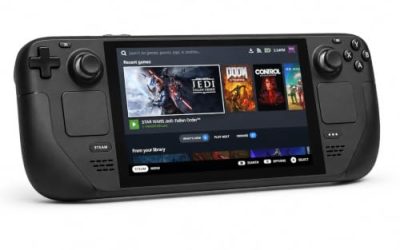
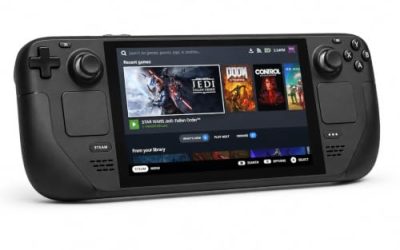
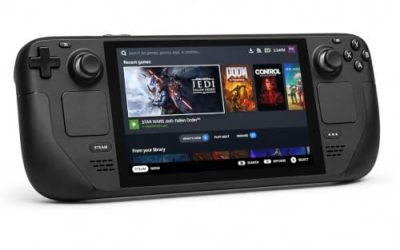
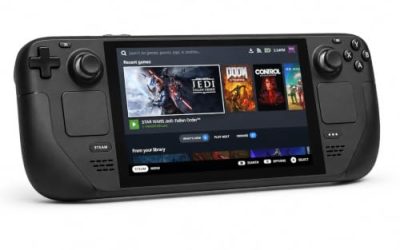
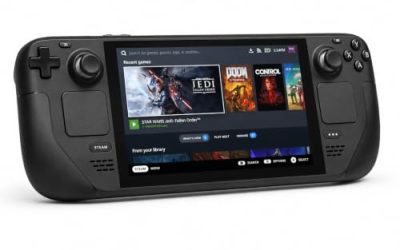
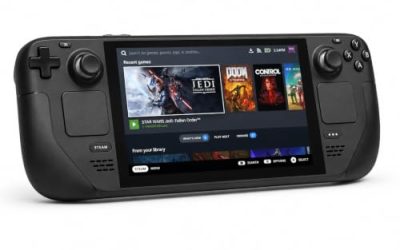
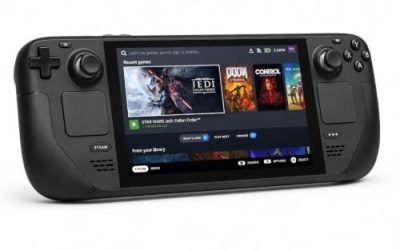
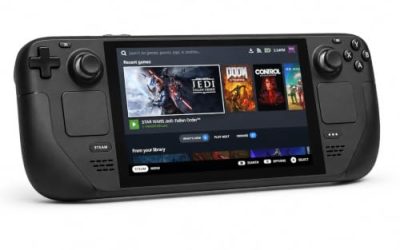
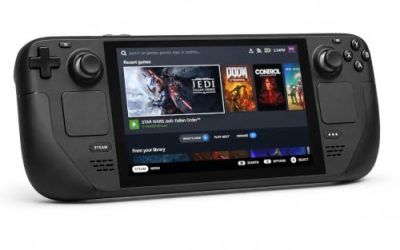
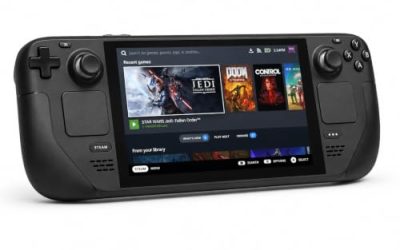
Valve Steam Deck OLED 512GB

The handheld the Playable badge was written for. Valve’s sheet certifies the native Linux build on the Deck, with legible text and a performant default configuration, and the game’s requirements sit far below the APU’s ceiling.
Specs
- Display: 7.4-inch HDR OLED, 1280 by 800, up to 90 Hz
- Processor: AMD Zen 2 and RDNA 2 custom APU
- Memory: 16 GB LPDDR5
- Storage: 512 GB NVMe, plus a microSD slot
- Wireless: Wi-Fi 6E and Bluetooth
- Channel note: Valve sells the Deck mainly through its own store, so Amazon listings are third-party sellers
8BitDo Ultimate 2 Bluetooth Controller

The docked and desktop pad pick. Steam lists full controller support, and this pad covers the couch case with modern sticks and triggers plus back buttons for menu shortcuts.
Specs
- Connectivity: Bluetooth wireless and USB-C wired
- Joysticks: TMR electromagnetic, anti-drift design
- Triggers: Hall effect, with mode switching
- Extras: two remappable back buttons, motion control
- In the box: charging dock included
Xbox Wireless Controller, Carbon Black

The safest guest pad in PC gaming: Steam Input support is universal, the glyphs match what most games display, and it pairs over Bluetooth or its own wireless standard. For a four-player local race, pads in this class are the standard way to fill the couch.
- Connectivity: Xbox Wireless and Bluetooth
- Port: USB-C for wired play
- Controls: hybrid D-pad, dedicated Share button
- Power: AA batteries or optional rechargeable pack
Logitech G502 HERO

SpeedRunners races on a pad, but its level editor and Workshop browsing are mouse work, and a precise wired mouse turns course building into single clicks. Eleven programmable buttons cover the inputs a long session repeats.
Specs
- HERO optical sensor, up to 25,600 DPI
- 11 programmable buttons
- Adjustable weight system
- Wired USB connection
- On-board memory profiles
Samsung T9 Portable SSD 2TB

For moving a Linux game library between a desktop and a laptop, or keeping an offline backup of installers, a fast USB-C drive is the simple answer. The headline figure needs a Gen 2×2 host port; on a lesser port the drive runs at that ceiling.
Specs
- Capacity: 2 TB portable SSD
- Interface: USB 3.2 Gen 2×2, USB-C connector
- Maker-rated speeds: up to 2,000 MB per second read, 1,950 MB per second write
- Features: Dynamic Thermal Guard, maker-rated drop resistance
How to choose
Start from the record’s strongest layer: the native build is in the store package and maintained on the current branch, so the default install on any Debian-family or SteamOS system is the right route. Pad players are covered by the record’s full controller support and Valve’s glyph and legibility passes on Deck; the Deck sheet’s one note concerns setup screens, not the racing itself. Proton, graded Platinum across the community file, is the documented fallback for an unusual distribution, not the first choice. The character packs are cosmetic and their paperwork agrees with the base game; add or skip them on taste.
Who should skip
Skip the GOG route entirely, because no edition exists there; anyone whose library policy is GOG-only has no purchase to make. Skip the Deck as your only screen if that caveat matters to you and you will not touch a community layout. And skip the game itself if competitive online racing is not your genre: the record’s centre of gravity is online PvP, with single-player and local modes as the supporting cast.
FAQ
Is SpeedRunners native on Linux?
Yes. Steam flags Linux true with written Debian and SteamOS requirements, SteamDB lists a full-size Linux depot updated in June 2026 on the current public branch build, and that depot sits inside the store package a normal purchase delivers.
Does SpeedRunners use anti-cheat that blocks Linux?
No source names one. Steam’s record carries no DRM or external-account notice, SteamDB’s detected technology is engine and middleware only, and the Are We Anti-Cheat Yet dataset carries no entry for the game.
Is SpeedRunners Steam Deck Verified?
It is rated Playable. The sheet certifies the native build, with legible text and a performant default graphics configuration; the single note is that some functionality needs the touchscreen, the virtual keyboard or a community configuration. The test dates from January 2024, before the current branch build.
Can I buy SpeedRunners on GOG instead?
No. GOG’s catalogue holds no edition of this game, so Steam is the only seller of the native build.
Final verdict
SpeedRunners is one of the straightforward native cases: a true flag backed by a written requirements field, a full-size Linux depot maintained on the current branch and delivered by the ordinary store package, character packs whose paperwork agrees, and an anti-cheat file empty in all three sources. The caveats are paperwork-grade: a Playable badge resting on a controller-configuration note, and a Valve test predating the current build. For competitive platform racing on Linux, the native build is the route.
Product and ASIN Reference
| Product | ASIN |
|---|---|
| Valve Steam Deck OLED 512GB | B0CQ3RWQQZ |
| 8BitDo Ultimate 2 Bluetooth Controller | B0F194QFT2 |
| Xbox Wireless Controller, Carbon Black | B08DF248LD |
| Logitech G502 HERO | B07GBZ4Q68 |
| Samsung T9 Portable SSD 2TB | B0CHFS9K14 |