Eliza is the 2019 visual novel from Zachtronics, a studio better known for engineering puzzle games. Here the machinery is a counseling program, also named Eliza, and you play Evelyn Ishino-Aubrey, a proxy who sits with the program’s users and reads aloud the responses it scripts for her. The play is dialogue: client sessions, messages and emails between them, and a protagonist reconnecting with people from her past.
A visual novel lives or dies on whether it launches and reads well on the machine in front of you, so the Linux question matters more than the genre’s low demands suggest. This article works through the record layer by layer — flags, requirements, depots, packages, the one DLC app, the Deck sheet, ProtonDB and GOG.
As an Amazon Associate, we earn from qualifying purchases.
Quick answer
Yes. Eliza is genuinely native on Linux. Steam flags Linux true and publishes written Linux requirements, SteamDB lists a dedicated Linux depot about the size of the Windows build inside the package a purchase delivers, and Valve’s Deck sheet rates the game Playable on the native runtime. GOG sells a Linux edition too — no compatibility layer required anywhere.
What Steam’s own record says
The store record for app 716500 names the game Eliza, developed and published by Zachtronics, released 12 August 2019. Its platform flags read windows, mac and linux all true, backed by paperwork: the Linux requirements field is genuinely populated at both tiers. The minimum names Ubuntu 16.04 or newer plus SteamOS, a 2.0 GHz processor, 4 GB of memory, OpenGL 3.3 graphics at 1366 by 768, and 1 GB of storage; the recommended tier raises only the display line. That is a written specification for a real port, not a copied Windows block — the Windows field names Windows versions and DirectX 11, the Mac field macOS 10.9 or newer.
Two absences belong on the record: no DRM notice and no external-account notice, so nothing adds a launcher or account layer over the download. The categories are the friendly kind for a story game: single-player, Steam Achievements, full controller support, Steam Cloud and Family Sharing.
The depot layer: a real Linux build in the store package
Flags and requirement text can lie, so the deciding layer is the depot table. SteamDB lists three content depots under the game’s internal name, Project Nagoya: 716501 for Windows at 2.06 GiB, 716502 for macOS at 2.09 GiB, and 716503 for Linux at 2.11 GiB — the largest of the three. The Linux depot’s current manifest runs to thousands of files, including native x86 and x86_64 executables plus shared libraries. The app record also carries a dedicated Linux client icon.
Delivery matters as much as existence. The Linux depot’s package list includes sub 207670, named simply Eliza, billed as Store or CD Key — the ordinary package a purchase delivers, and the opposite of the stranded-depot shape seen elsewhere in this series, where a build sits in no package a buyer receives. The public branch is current, too: its build was updated in November 2026, so the build is maintained rather than frozen at launch.
The family sweep: one soundtrack, flagged like a trap, counting for nothing
The record’s full DLC array contains exactly one app, read individually: app 1237020, the Eliza Original Soundtrack, type music, released 1 February 2020. On its face it wears the classic trap shape — it flags all three platforms true while its Mac and Linux requirements fields are empty lists outright and its Windows field asks only for storage space.
Read properly, it proves nothing either way: a soundtrack is an audio package with no executable to port, and a bare flag over an empty field is the weakest evidence in this method. It counts neither for nor against the game’s status, which rests entirely on the game’s own depot and package. Nothing else is attached to the record: no artbook, no demo, no supporter pack.
Anti-cheat and account layers: three empty files
For a single-player visual novel this section is short, but the three sources stay separate. Steam’s record names no anti-cheat and publishes no DRM or external-account notice. SteamDB’s detected technologies are engine plumbing only: Ogg, Vorbis, SDL and SteamworksNET. The Are We Anti-Cheat Yet dataset, all 1,167 games on its master branch, carries no entry for Eliza by name or app id. No source raises a compatibility-layer concern — the native build makes the question moot.
ProtonDB: the heading agrees with Steam for once
ProtonDB’s summary feed could not be read for this title in this session: the endpoint returned an error page on repeated attempts, so no headline tier, trending tier or confidence figure is claimed here — treat any such number as unread rather than negative.
What the game’s ProtonDB page itself shows can be reported. The page classifies Eliza as Native and heads its requirements block “Natively Supports:” — and this time the heading agrees with Steam’s record on every layer, the inverse of the stray-tag pattern that recurs across this series. The page carries a small file of five reports, split between native filings — including an Ubuntu desktop report with current Mesa drivers describing the game working natively — and Steam Deck reports filed under named Proton versions by owners who ran the Windows build that way. The native filings match the record a buyer receives.
Steam Deck: Playable, on the native runtime
Valve’s own compatibility endpoint did not answer cleanly in this session, so the verdict and paperwork were read from SteamDB’s republication of Valve’s data. The category is Playable, SteamOS separately Compatible. The decisive configuration line is the recommended runtime: native — the badge certifies the Linux build itself, not the Windows build under Proton.
The passing items: all functionality is accessible with the default controller configuration, the game shows Steam Deck controller icons, and the default graphics configuration performs well. One item holds it at Playable rather than Verified: some in-game text is small and may be difficult to read — a real consideration in a game made of text. The test behind the sheet was run on 28 April 2022 against build 7394914; the public branch now serves a much newer build, updated in November 2026, so the paperwork predates the current branch build and belongs on the list of Deck sheets worth a factual refresh. The gap does not cut against the verdict — the badge was simply earned on an older build.
The GOG edition
GOG sells Eliza, and its product page — identity checked against Steam’s record: same title, studio and premise — gives its works-on line as Windows, Linux and Mac OS X. The native build is not a Steam exclusive, and the DRM-free installer is the same three-platform product. One process note: GOG’s embed search returned nothing for this title despite the live page, the known search blind spot, so this ruling rests on the product page itself.
Gear for a text-heavy native build
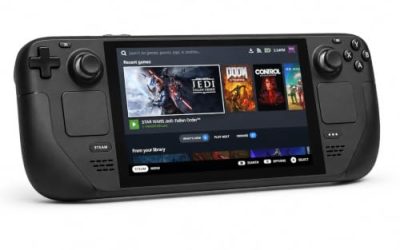
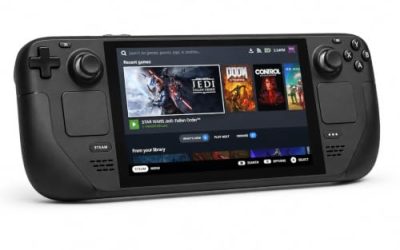
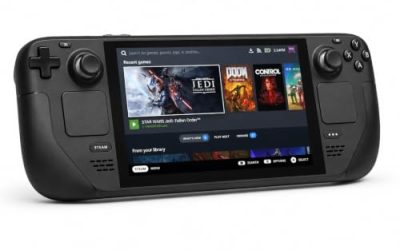
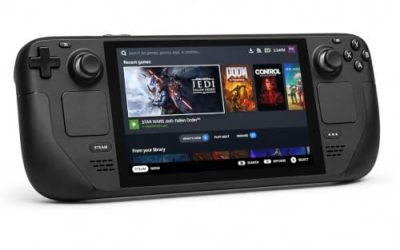
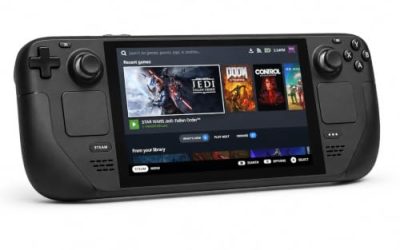
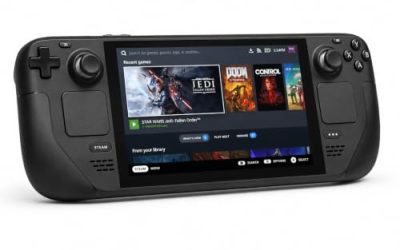
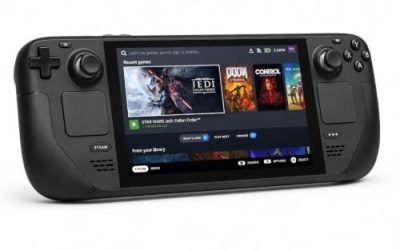
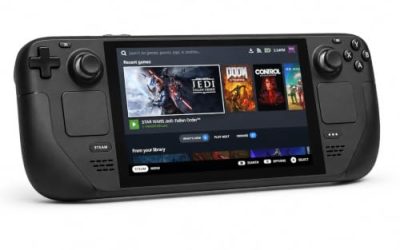
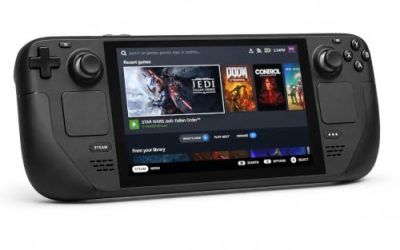
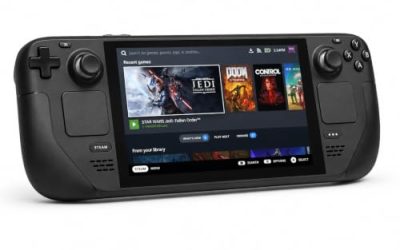
Valve Steam Deck OLED 512GB

The handheld Valve’s Playable sheet was written for, and the natural home for a visual novel: the native runtime means the Deck runs the Linux build itself. Keep one note in mind — some text is small.
Specs
- Display: 7.4-inch HDR OLED, 1280 by 800, up to 90 Hz
- Processor: AMD Zen 2 and RDNA 2 custom APU
- Memory: 16 GB LPDDR5
- Storage: 512 GB NVMe, plus a microSD slot
- Wireless: Wi-Fi 6E and Bluetooth
- Channel note: Valve sells the Deck mainly through its own store, so Amazon listings are third-party sellers
8BitDo Ultimate 2 Bluetooth Controller

The docked and desktop pad pick. Steam lists full controller support, and this pad covers the couch case with modern sticks and triggers plus back buttons for menu shortcuts.
Specs
- Connectivity: Bluetooth wireless and USB-C wired
- Joysticks: TMR electromagnetic, anti-drift design
- Triggers: Hall effect, with mode switching
- Extras: two remappable back buttons, motion control
- In the box: charging dock included
Xbox Wireless Controller, Carbon Black

The safest guest pad in PC gaming: Steam Input support is universal, the glyphs match what most games display, and it pairs over Bluetooth or its own wireless standard. On the handheld, an external pad may need a manual Quick Access Menu switch first.
- Connectivity: Xbox Wireless and Bluetooth
- Port: USB-C for wired play
- Controls: hybrid D-pad, dedicated Share button
- Power: AA batteries or optional rechargeable pack
Logitech G502 HERO

Eliza reads as happily with a pointer as with a pad: sessions advance on clicks, and the inbox and message threads are pure menu work. At a desk, a precise wired mouse makes long sessions single-click affairs, its programmable buttons carrying the advance and back inputs.
Specs
- HERO optical sensor, up to 25,600 DPI
- 11 programmable buttons
- Adjustable weight system
- Wired USB connection
- On-board memory profiles
Samsung T9 Portable SSD 2TB

For moving a Linux game library between machines, or keeping an offline backup of installers, a fast USB-C drive is the simple answer. The headline figure needs a Gen 2×2 host port; on a lesser port the drive runs at that ceiling.
Specs
- Capacity: 2 TB portable SSD
- Interface: USB 3.2 Gen 2×2, USB-C connector
- Maker-rated speeds: up to 2,000 MB per second read, 1,950 MB per second write
- Features: Dynamic Thermal Guard, maker-rated drop resistance
How to choose
Choose either storefront on its own merits: both sell the same native build. Steam adds the Deck sheet, cloud saves and the soundtrack as an optional extra; GOG offers a DRM-free installer with Linux on the box. On desktop or laptop, install and play the native build directly — no compatibility tool to configure, no reason to reach for the Windows version. On a Steam Deck, expect the Playable experience Valve describes: everything works with the default configuration, and the only judgment call is whether the small-text note matters in a game built out of text.
Who should skip
Skip the Deck version if small interface text is a deal-breaker: Valve flags it directly, and this is a game you read for hours, so a desktop monitor may be the better screen. Skip Eliza entirely if you want systems to master or fail states to beat — it is a linear visual novel of conversations and choices, with none of the studio’s usual engineering puzzles. Skip the soundtrack as Linux evidence: it is an audio extra whose flags say nothing about the game.
FAQ
Is Eliza native on Linux?
Yes. Steam flags Linux true with written Ubuntu and SteamOS requirements, SteamDB lists a dedicated Linux depot slightly larger than the Windows build, and that depot sits inside the store package a purchase delivers. Valve’s Deck sheet names the native runtime as the recommended one.
Does the soundtrack’s Linux flag mean anything?
No. The soundtrack flags all three platforms while its Mac and Linux fields are empty lists. It is an audio package with no executable, so its flags are evidence neither way; the game’s status rests on its own depot and package.
How does Eliza play on Steam Deck?
Valve rates it Playable, SteamOS Compatible: all functionality works with the default controller configuration, controller icons are shown, and the default graphics configuration performs well. The single note is small in-game text; the test dates from April 2022, on an older build than the branch now serves.
Can I buy Eliza on GOG instead?
Yes. GOG’s product page lists Windows, Linux and Mac OS X, with Zachtronics as the studio, so the DRM-free edition carries the same native build as the Steam copy.
Final verdict
Eliza is one of the clean cases in this series: a genuinely native release whose paperwork agrees at every layer — a true flag over written requirements, a full-size Linux depot inside the store package, a Deck sheet certifying the native runtime, a ProtonDB heading that matches Steam instead of contradicting it, and a GOG edition listing Linux outright. The blemishes are paperwork-grade only: a soundtrack wearing the trap’s shape while proving nothing, and a Deck test older than the current build. Buy it anywhere and play the native build.
Product and ASIN Reference
| Product | ASIN |
|---|---|
| Valve Steam Deck OLED 512GB | B0CQ3RWQQZ |
| 8BitDo Ultimate 2 Bluetooth Controller | B0F194QFT2 |
| Xbox Wireless Controller, Carbon Black | B08DF248LD |
| Logitech G502 HERO | B07GBZ4Q68 |
| Samsung T9 Portable SSD 2TB | B0CHFS9K14 |