Darkest Hour: A Hearts of Iron Game is the stand-alone Hearts of Iron variant built by a team of experienced modders from the Paradox forum, credited on the record to developer Martin Ivanov and publisher Paradox Interactive, and released on 8 April 2011. It stretches the series formula across the first half of the twentieth century, from the outbreak of the Great War to the onset of the Cold War, in short scenarios and deep campaigns. It is a separate game from Hearts of Iron 2 Complete, Hearts of Iron III and Hearts of Iron IV, and this article reads only its own record.


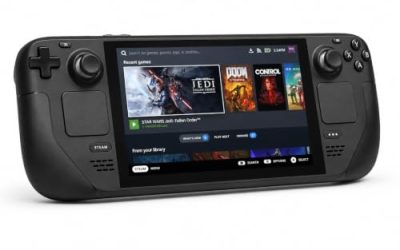
The platform question has two halves that point in opposite directions. On paper, the record is as closed as a record can be: every layer Steam publishes says Windows and only Windows. In practice, the community file is warm — a Gold headline on ProtonDB with a Platinum ceiling — while the one official Steam Deck test is both negative and old enough that it graded a build Steam no longer leads with.
As an Amazon Associate, we earn from qualifying purchases.
Quick answer
No native Linux build exists. Steam’s flags, its single purchase package and its only depot are all Windows-only, and no Linux requirements field exists. Proton is the route: ProtonDB rates the game Gold overall with Platinum best-reported and trending tiers across 28 reports. Valve rates the Steam Deck Unsupported.
Four layers, one answer
Start where a purchase is decided. Steam sells exactly one package for this game, package 7776, and on packagedetails it reads windows true, mac false, linux false, granting the base app alone. The app-level platform flags repeat the same mask exactly. No second edition, bundle or licence route on the record softens that answer.
The requirements fields agree. The Windows field is genuinely populated with a period specification: Windows 98 through Windows 7, a Pentium III at 800 MHz, 128 MB of memory, 2 GB of disk space and a 4 MB DirectX-compatible video card. The Mac and Linux fields are empty lists outright — no tab in any form.
The depot layer closes the question. SteamDB lists exactly one content depot, depot 73171, holding 1.57 GiB with no operating-system split, backed by the Windows shared-install redistributables for the Visual C++ 2005 and 2010 runtimes. There is no Linux depot of any size, nothing emptied and nothing stranded, and the registered icon set contains no Linux client icon, so no leftover asset hints at a staged port.
The family sweep is the shortest in this series so far: size zero. The base record exposes no DLC array at all, and SteamDB associates no add-on apps. The old 1.02 through 1.05.1 releases survive only as selectable version branches, while the public branch stands at build 13978584, built in April 2024. With no soundtrack or expansion apps, the all-true trap that haunts this cluster cannot even form.
Anti-cheat takes one line, because three sources are all silent and silence is not a ruling. Steam names none: the categories are Single-player, Multi-player and Family Sharing, with no DRM or account notice. SteamDB’s detection surfaces no anti-cheat technology. The AreWeAntiCheatYet catalogue carries no entry for this app.
ProtonDB: a Gold headline over a Platinum ceiling
The summary file is full and comparatively healthy. ProtonDB’s headline tier is Gold, the best-reported tier is Platinum, the trending tier is Platinum, across 28 reports, with strong confidence and a score of 0.61 — a thicker, more settled file than most games of this vintage here carry.
The heading check was completed, and it is stray. The game page heads its requirements block “Natively Supports:”, a template label Steam’s record contradicts at the flag, package, field and depot layers simultaneously. This article follows Steam; the heading is decoration, not evidence.
The report texture underneath is consistent. Recent filings on current Proton, including GE-Proton builds, describe a game that plays with minor artifacts. The recurring wrinkle is window switching: alt-tabbing during a loading screen can break the sprites, while alt-tabbing after the load completes is reported safe. The second note is patience — starting a scenario or loading a save can take three to five minutes, which filers blame on a Linux-side bottleneck, and one filing reports music cutting off early. The oldest filings lean on a period workaround, renaming the game executable to the launcher’s name; modern filings no longer mention it.
The Deck sheet grades a build Steam no longer leads with
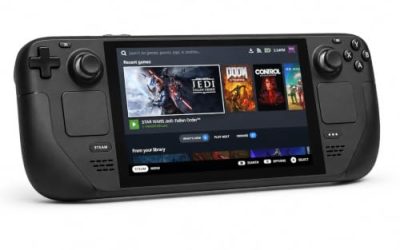
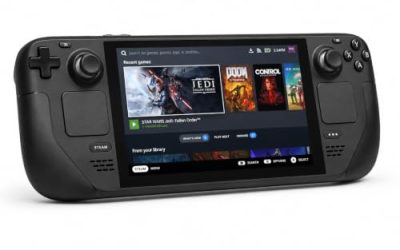
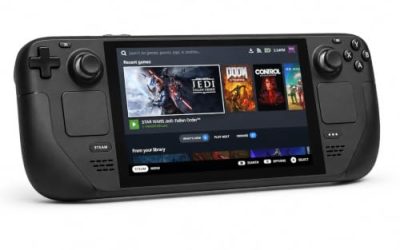
Valve’s own compatibility endpoint returned no usable response for this app, so the verdict here was read through SteamDB’s republication of Valve’s data. The sheet’s category is Unsupported, and SteamOS compatibility is likewise Unsupported; the single machine-test result is the token that says SteamOS does not support the game. The configuration notes add the expected friction for a mouse-driven title of this age: small text, non-Deck display glyphs, a manual keyboard invoke, and an input class of “other” rather than any controller profile — unsurprising, since the record lists no controller support and the game’s own Windows specification asks for a mouse with a scroll wheel and a keyboard.
The paperwork, though, is stale in a specific and checkable way. The test is dated 1 November 2022 and graded build 2526608 — the build of the old 1.05.1 branch, from February 2018 — under the proton-stable runtime. The public branch has since moved to build 13978584, built in April 2024. The badge is a real verdict on a real test, but the test graded a build two branch moves behind the one a buyer downloads today, and no retest exists. Treat it as the only official word, and as an old one.
The GOG edition exists, and it is the same Windows build
GOG does sell this game. The ruling rests on identity-checked records rather than on search: the natural product address resolves live, the catalogue API returns the game under its exact title, and the product record — product 1445505773, slug darkest_hour_a_hearts_of_iron_game — reads windows true, osx false, linux false. GOG’s embedded search returned zero for the title, the known blind spot of that endpoint, and was not relied on.
So the DRM-free copy is an alternative storefront, not an alternative platform: the same Windows build, running through Proton on a desktop, and no change to the Deck picture.
Desktop gear for a mouse-first classic
Because the Deck verdict is Unsupported, the picks below are framed for the desktop, where the Proton file is genuinely good. The record lists no controller support, so the mouse and keyboard picks are primary; the two pads are wider-library picks, not peripherals this game will ever address directly.
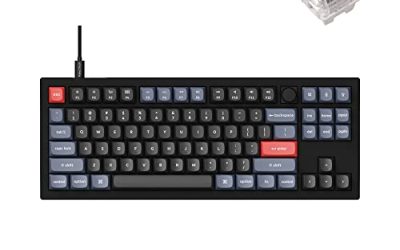
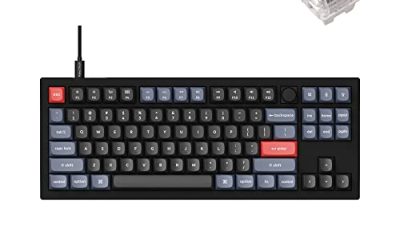
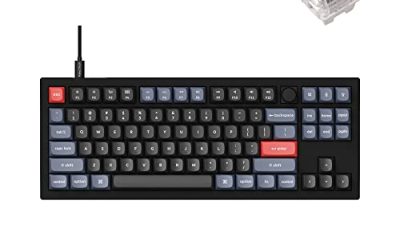
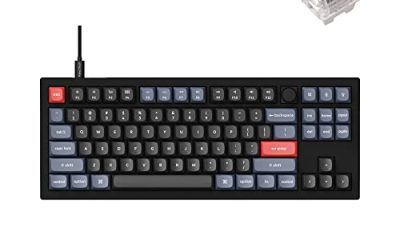
Keychron V3
The keyboard pick for a game whose interface is built on hotkeys, map modes and pause-and-issue orders. Keyboard-level remapping moves the most-used keys where your hands already are, and the remap survives every reinstall because it lives on the board.
Specs
- Tenkeyless layout with rotary knob
- QMK and VIA remapping support
- Hot-swappable K Pro Brown switches
- Wired USB-C connection
- Maker-rated 1,000 Hz polling
Logitech G502 HERO
The primary input pick, because the game’s own specification demands a mouse with a scroll wheel — the wheel is how the map zooms — and a grand-strategy session is thousands of precise clicks on small provinces. Eleven programmable buttons give the speed controls and map modes a permanent home.
Specs
- HERO optical sensor, up to 25,600 DPI
- 11 programmable buttons
- Adjustable weight system
- Wired USB connection
- On-board memory profiles
8BitDo Ultimate 2 Bluetooth Controller

A wider-library pick, stated honestly: Darkest Hour will never use it, since the record carries no controller support. For the rest of a Linux library it is the docked pad to beat, with modern sticks, triggers and back buttons, and it pairs cleanly with Steam Input.
Specs
- Connectivity: Bluetooth wireless and USB-C wired
- Joysticks: TMR electromagnetic, anti-drift design
- Triggers: Hall effect, with mode switching
- Extras: two remappable back buttons, motion control
- In the box: charging dock included
Xbox Wireless Controller, Carbon Black

The second wider-library pick, for the same reason: not for this game, but for everything around it. Steam Input support is universal, and it pairs over Bluetooth or its own wireless standard.
- Connectivity: Xbox Wireless and Bluetooth
- Port: USB-C for wired play
- Controls: hybrid D-pad, dedicated Share button
- Power: AA batteries or optional rechargeable pack
Samsung T9 Portable SSD 2TB

For moving a Linux game library between machines, or keeping an offline backup of installers, a fast USB-C drive is the simple answer. The headline figure needs a Gen 2×2 host port; on a lesser port the drive runs at that ceiling.
Specs
- Capacity: 2 TB portable SSD
- Interface: USB 3.2 Gen 2×2, USB-C connector
- Maker-rated speeds: up to 2,000 MB per second read, 1,950 MB per second write
- Features: Dynamic Thermal Guard, maker-rated drop resistance
How to choose
Buy it for a Linux desktop, on the Proton evidence, the strongest signal in the file: a Gold headline with a Platinum ceiling across 28 reports at strong confidence. Between storefronts, Steam and GOG deliver the same Windows build, so the choice is about the client — GOG for a DRM-free installer, Steam for the legacy version branches. Set expectations before the first launch: do not alt-tab during loading screens, and give scenario and save loads their minutes rather than assuming a hang. Start with a current Proton or GE-Proton build; the old filings’ executable-rename trick belongs to an earlier era.
Who should skip
Steam Deck-first players should skip it, or buy with open eyes: the only official test says Unsupported, and although it graded a superseded build, no newer verdict exists. Players who want a native Linux build should skip it entirely — there is none, on any layer, from either storefront. Players who dislike period interface friction should also pass: the desktop filings add slow loads and a window-switching quirk to the sheet’s small-text and glyph issues. And anyone who already owns Hearts of Iron 2 Complete or a later entry and wants a different game rather than a different cut of the same design should think twice — this is a sibling, not a sequel.
FAQ
Is there a native Linux version of Darkest Hour?
No. The flags, the sole purchase package, the requirements fields and the single content depot are all Windows-only, the icon set registers no Linux client icon, and the GOG edition is Windows-only too. Linux play means the Windows build under Proton.
Why does the ProtonDB page say “Natively Supports”?
That line is a heading from the site’s page template, contradicted by every layer of Steam’s own record. The same page’s report file grades the game as a Proton title — Gold headline, Platinum best-reported — which is the part the evidence supports.
Can I play it on Steam Deck?
Valve’s sheet says Unsupported, for Deck and SteamOS alike, so there is no badge to rely on. One caveat: the test is dated November 2022 and graded the old 1.05.1 branch build, while the public branch moved in April 2024, so the current build has never been officially retested either way.
Is the GOG version any different under the hood?
No. GOG’s product record, identity-checked against the Steam record, lists Windows as its only supported system, so the DRM-free copy is the same Windows build without the Steam client. On Linux it runs through Proton and inherits the same report file.
Final verdict
Darkest Hour on Linux is a clean split between a closed record and an open community file. The record could not be plainer: one package, one depot, empty Mac and Linux fields, no family, no Linux build anywhere, and a GOG edition that mirrors it. The community file could hardly be warmer for a 2011 release: Gold over Platinum across 28 reports, with quirks that are named, old and mostly avoidable. On a Linux desktop this is an easy recommendation. On the Steam Deck it is an old Unsupported verdict against an untested current build. Buy it for the desk, not for the handheld.
Product and ASIN Reference
| Product | ASIN |
|---|---|
| Keychron V3 | B0B2DMMMG2 |
| Logitech G502 HERO | B07GBZ4Q68 |
| 8BitDo Ultimate 2 Bluetooth Controller | B0F194QFT2 |
| Xbox Wireless Controller, Carbon Black | B08DF248LD |
| Samsung T9 Portable SSD 2TB | B0CHFS9K14 |