Mika and The Witch’s Mountain is Chibig and Nukefist’s broom-flying delivery adventure: an aspiring witch carries packages around the island of Mont Gaun, upgrading her broom toward the mountain top. It launched in Early Access in August 2024 and reached full release on 22 January 2025, and through both launches the PC record never gained a second platform.
That record is the subject here: Steam’s data decides whether a native build exists, the family records decide whether anything disagrees, and ProtonDB and Valve’s Deck sheet decide how the Windows build behaves under Proton.
As an Amazon Associate, we earn from qualifying purchases.
Quick answer
No native Linux build exists: Steam flags Mika and The Witch’s Mountain Windows-only, publishes no Linux requirements and ships no Linux depot, and the soundtrack and demo agree. The Windows build is the game Linux players get: ProtonDB rates it Platinum on nine reports, and the Steam Deck badge reads Verified.
The platform record on Steam
Steam’s app record (app 1819460) reads windows true, mac false, linux false. The Linux requirements field is an empty list outright — no Linux tab in any form, at either tier — while the Windows tab is populated: Windows 10 minimum, a 2.5 GHz processor, 8 GB of RAM, a GeForce GTX 1660 and DirectX 11. A missing tab is stronger evidence than an empty one.
SteamDB’s depot table agrees: a single content depot, 1819461, holding 2.75 GiB on disk, no depot configured for Linux, and an osextended string that is empty and carries no platform claim either way. Flag, field and depot table agree: no native build was ever shipped, and the public branch, still updated in June 2025, is the Windows build.
The release history closes the last loophole: five months in Early Access from 21 August 2024, a record that today files the state as released, and a full launch dated 22 January 2025. No port is pending behind an unfinished game; the finished game is Windows-only.
The family sweep: soundtrack and demo
The game’s record carries one app in its DLC array: the Soundtrack (app 3165080, type music). On its own record the soundtrack flags windows true, mac false, linux false, with the same empty-list field. The free demo (app 2252840), outside the DLC array and read anyway, also flags Windows only.
The Linux-flag count is zero of two across the DLC family, zero of three counting the demo. That matters because of the trap this project usually defuses: in many families the soundtrack carries a stray Linux flag readers mistake for the game’s. Here the trap cannot form: the music app and the demo agree with the game, and no flag in the family points the other way.
DRM and account requirements
Neither field exists on this record. The app data carries no drm_notice, so no third-party DRM is named, and no ext_user_account_notice, so no external account is named either. The requirements text adds nothing: the Windows tab closes with hardware, not an account or activation condition.
That is a gap in both directions, stated as one: nothing on the record imposes a DRM or account layer on the Windows build, and nothing certifies the build free of one. The categories add only that the game is single-player, with achievements, full controller support including DualShock and DualSense pads, Steam Cloud and Family Sharing.
Anti-cheat: three sources, all silent
Steam names no anti-cheat: no category entry, no notice, which fits a single-player-only record with no multiplayer to protect.
SteamDB’s detected technologies are the Unity Engine and the Mono, SteamworksNET, UnityBurst, UnityURP and cURL SDKs: engine plumbing for a Unity title, with no anti-cheat product among them.
Are We Anti-Cheat Yet carries no entry for the game; its full dataset, searched by name and app id, returned nothing. Three sources, kept separate, all negative — and no gate is needed to explain a Linux position the platform record already settles.
ProtonDB: Platinum on a thin file
ProtonDB’s summary record answered in full: headline Platinum, best-reported Platinum, trending Platinum, across nine reports at moderate confidence. Nine reports is a thin file, claimed at exactly that size everywhere here: a strong signal with a small sample behind it.
The reports beneath it agree: recurring verdicts describe out-of-the-box runs on Proton 9-series and 10-series builds and a GE-Proton build, on desktop and Deck. One desktop report notes a handful of crashes, and notes in the same breath that Windows players report the same behaviour — which keeps that strand at report weight, not a Proton fault.
One contradiction has to be named: ProtonDB’s game page carries a “Natively Supports” classification header for this title, and Steam’s record contradicts it on every layer — false flag, empty-list field, no Linux depot. The reports filed under it are Proton runs, every one naming a Proton version. This article follows Steam: the header is a database-side artefact on a Windows build with a Platinum Proton record.
Steam Deck: Verified, on Early Access paperwork
Valve’s own compatibility endpoint returned no usable data this session, so the verdict and paperwork were read from SteamDB’s republication of Valve’s data, disclosed here rather than hidden. On that record the category reads Verified: all four items pass, covering full functionality on the default controller configuration, Deck icons, legible text and default graphics that perform well. SteamOS compatibility is listed separately as Compatible. The configuration names gamepad input, no manual keyboard invocation, no launcher navigation, and no internet requirement for setup or single-player play.
The date on that sheet is the caveat: the test timestamp reads 24 August 2024, on build 15448465, three days after the Early Access launch and months before the full release, and the public branch has since moved on. The sheet’s recommended runtime, a Proton 9.0 release candidate, matches that period. The badge is genuine paperwork earned on an Early Access build; the fresher signal for today’s build is the ProtonDB file above, whose Deck reports describe no-tinkering runs.
GOG: a wishlist entry, not an edition
No GOG edition exists. The evidence is GOG’s own behaviour: the address the game’s page would live at redirects to the store’s general games catalogue, what that storefront does for titles it does not sell, and its catalogue holds no product record for the game. What the game has on GOG is a Dreamlist entry, the community wishlist where players vote for titles they want carried. A Dreamlist page is a request, not a product; it cannot be bought or installed.
The Steam copy is therefore the only PC edition, and the buy: it is the build the ProtonDB file rates and Valve’s sheet tested.
Gear that fits the record
The gear below follows the record’s shape.
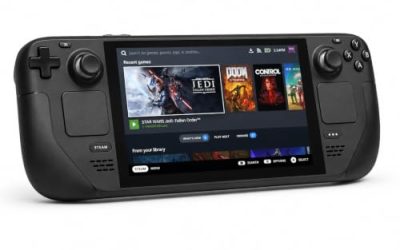
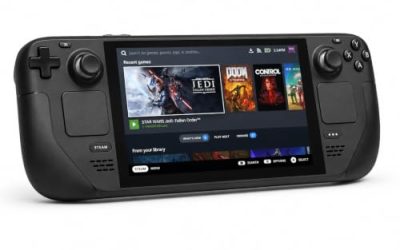
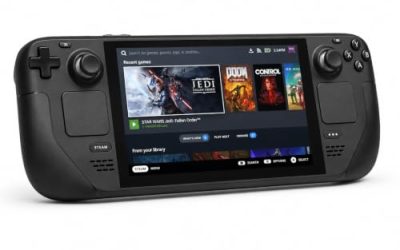
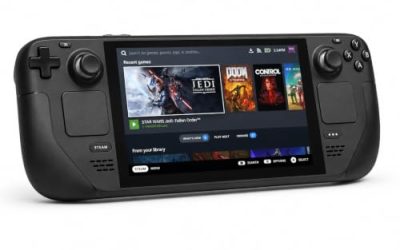
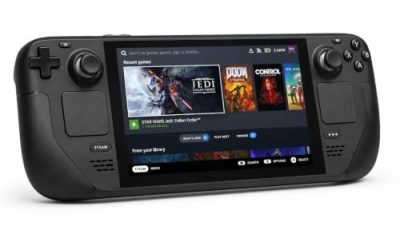
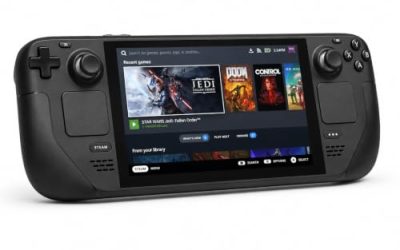
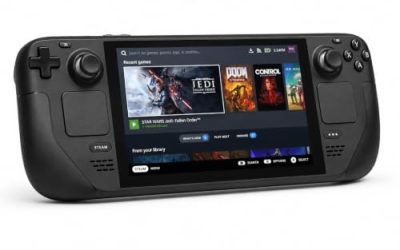
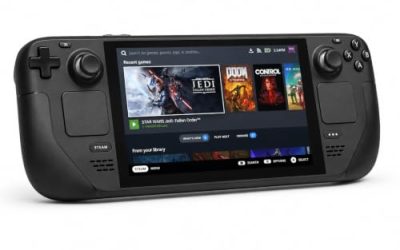
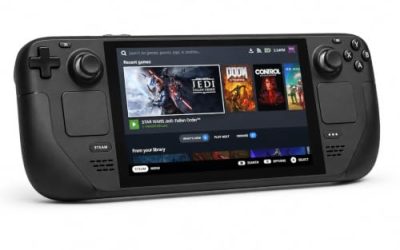
Valve Steam Deck OLED 512GB

The handheld the badge was written for. The Windows minimum is modest next to the Deck’s APU, the install is under three gigabytes, and the sheet records no internet needed for single-player rounds.
Specs
- Display: 7.4-inch HDR OLED, 1280 by 800, up to 90 Hz
- Processor: AMD Zen 2 and RDNA 2 custom APU
- Memory: 16 GB LPDDR5
- Storage: 512 GB NVMe, plus a microSD slot
- Wireless: Wi-Fi 6E and Bluetooth
- Channel note: Valve sells the Deck mainly through its own store, so Amazon listings are third-party sellers
8BitDo Ultimate 2 Bluetooth Controller

The docked and desktop pad pick: full controller support is on the record, broom flight is a stick-and-trigger workload, and this pad’s back buttons suit the inputs a delivery route repeats.
Specs
- Connectivity: Bluetooth wireless and USB-C wired
- Joysticks: TMR electromagnetic, anti-drift design
- Triggers: Hall effect, with mode switching
- Extras: two remappable back buttons, motion control
- In the box: charging dock included
Xbox Wireless Controller, Carbon Black

The safest guest pad in PC gaming: Steam Input support is universal, its glyphs match what most games display, and it pairs over Bluetooth or its own wireless standard. The record also names DualShock and DualSense support, so a PlayStation pad in the house works too.
- Connectivity: Xbox Wireless and Bluetooth
- Port: USB-C for wired play
- Controls: hybrid D-pad, dedicated Share button
- Power: AA batteries or optional rechargeable pack
Logitech G502 HERO

At a desk, a precise wired mouse turns menus, map checks and delivery lists into single clicks, and eleven programmable buttons cover the inputs a long session repeats.
Specs
- HERO optical sensor, up to 25,600 DPI
- 11 programmable buttons
- Adjustable weight system
- Wired USB connection
- On-board memory profiles
Samsung T9 Portable SSD 2TB

For moving a Linux game library between machines or keeping an offline backup, a fast USB-C drive is the simple answer. The headline figure needs a Gen 2×2 host port; on a lesser port the drive runs at that ceiling.
Specs
- Capacity: 2 TB portable SSD
- Interface: USB 3.2 Gen 2×2, USB-C connector
- Maker-rated speeds: up to 2,000 MB per second read, 1,950 MB per second write
- Features: Dynamic Thermal Guard, maker-rated drop resistance
How to choose
Choose the Steam copy: it is the only PC edition on sale and the exact build both records describe. On desktop or laptop, install under Proton and leave the tool at its default; a Platinum headline, even on nine reports, says the default route is the right starting point. On a Deck, the Verified badge means no configuration work: install and launch. A pad is the game’s native input shape — full controller support is listed and the Deck sheet was written around gamepad input — so a mouse earns its place only for long desktop menu sessions.
Who should skip
Skip this one if you are shopping for a native Linux build: this game is not one, and no app in its family flags Linux. Skip it if you want a DRM-free offline installer, because no GOG edition exists. Skip it if a Platinum tier on nine reports is not reassurance enough. And skip it if the delivery loop does not appeal: no compatibility layer changes what the game is.
FAQ
Is Mika and The Witch’s Mountain native on Linux?
No. Steam flags it Windows-only, the Linux requirements field is an empty list, and SteamDB’s depot table holds no Linux depot. The soundtrack and demo flag Windows only too, so no part of the family offers a native build.
How well does it run under Proton?
ProtonDB rates it Platinum as headline, best-reported and trending tier, on nine reports at moderate confidence. Reports describe out-of-the-box runs on Proton 9-series and 10-series builds and on Deck, with one crash report its own author notes Windows players share.
Is it Steam Deck Verified?
Yes, on Valve’s record as republished by SteamDB: all four Verified items pass, and SteamOS is listed Compatible. The sheet is dated 24 August 2024, from the Early Access period, so it describes an earlier build than the current branch; ProtonDB’s Deck reports are the fresher signal, and they agree.
Can I buy it on GOG instead?
No. GOG sells no edition: the would-be product address redirects to the general catalogue, and the game’s only presence there is a Dreamlist wishlist entry. Steam is the only PC edition.
Final verdict
Mika and The Witch’s Mountain is a Windows-only release whose Linux story is simple once the layers are kept apart. Natively there is nothing: a false flag, an empty requirements field, no Linux depot, and a soundtrack and demo that agree. Through Proton there is a Platinum record, thin at nine reports but unanimous across headline, best and trending tiers. On the Deck, a Verified badge whose paperwork dates from Early Access points the same way as the newer reports. Buy the Steam copy, run the default Proton route, and expect the delivery rounds to work; do not mistake any of it for a native port.
Product and ASIN Reference
| Product | ASIN |
|---|---|
| Valve Steam Deck OLED 512GB | B0CQ3RWQQZ |
| 8BitDo Ultimate 2 Bluetooth Controller | B0F194QFT2 |
| Xbox Wireless Controller, Carbon Black | B08DF248LD |
| Logitech G502 HERO | B07GBZ4Q68 |
| Samsung T9 Portable SSD 2TB | B0CHFS9K14 |